“I couldn’t have done this without you.” Doulas share the challenges facing under supported moms this Mother’s Day

May 8, 2026

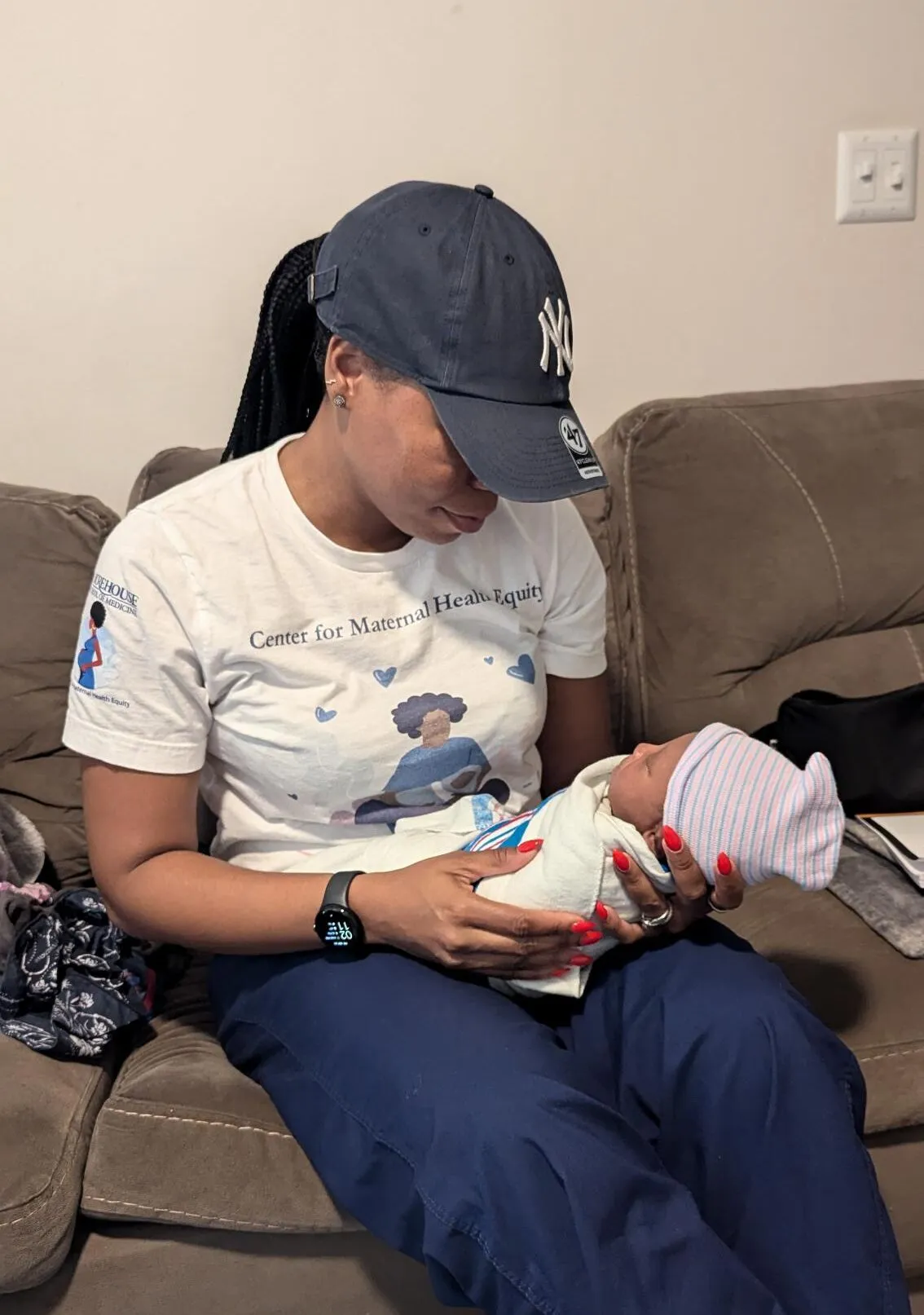
A woman, childbirth educator, holds a baby on a couch.

Danielle Mauzy, doula and perinatal patient navigator with the Center for Maternal Health Equity at Morehouse School of Medicine, holds a baby of one of her patients. Photo: Danielle Mauzy/CARE

Mother’s Day in the United States is often associated with gifts and flowers. But in many communities across the country, mothers have trouble fulfilling basic needs. Two childbirth educators say what many moms really need for Mother’s Day is access to proper care.

Want more stories like this?

Sign up for the CARE Newsletter to find out more about what’s happening around the world through vibrant, engaging stories that put humanity at the center.

Subscribe

For Black women in the U.S., lack of access to healthcare can be very dangerous. According to the Centers for Disease Prevention and Control (CDC), Black women are three times more likely to die from “pregnancy-related causes” than white women. And out of all pregnancy-related deaths in the U.S., more than 80% are preventable.   

Bashellia Williams, a doula and perinatal patient navigator at the Morehouse School of Medicine, thinks it’s getting worse.  

“It’s not even a stagnant number. We’re finding now that number’s trying to creep up.” 

Helping mothers is something Bashellia has wanted to do since she was in high school. She says it’s something that’s “woven into my bones.When she first became pregnant at 17, she started by becoming a champion for herself.  

“My resource was the library. I didn’t have it in the palm of my hand. We had to read and learn and figure things out,” Bashellia said. “That inner-knowing got me through it.” 

Now a mother of six, she recalls feeling “under-informed” about her first pregnancy. When she thinks of her own daughter’s pregnancy 3 years ago, those same emotions come flooding back. That is when the weight of the challenges facing pregnant women hit her in the “most intimate, personal way.”

During a hospital visit, Bashellia said staff didn’t think her daughter was going into labor. They eventually sent them home.  

“I got her somewhere where she was comfortable, I think on the couch, and I went to my room and I just cried,” she said. “They sent us home about three in the morning. The baby was born in my bathroom at 7.55 a.m. the next morning.”

That really awakened my inner advocate.” 
CARE's Maternal Health Program

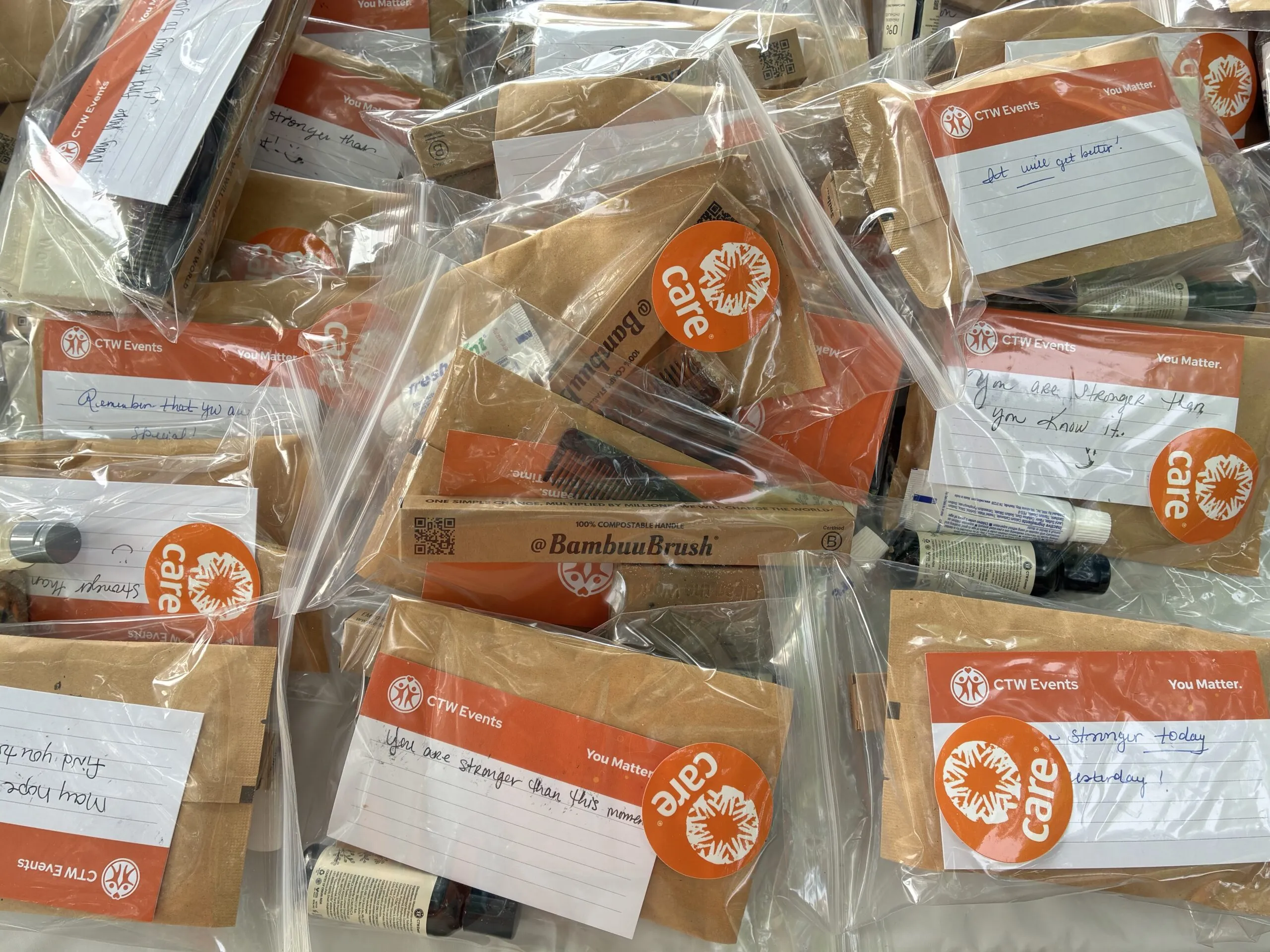
CARE and partners, including the AbbVie Foundation, Morehouse School of Medicine, Lyft, and the Atlanta Community Food Bank, are redefining maternal health support for mothers in need.

Bridge between mom and medical provider 

The lack of accessibility is one of the biggest issues Bashellia sees for mothers in overlooked communities. Pregnant people and new moms in these communities need access to healthcare, healthy foods, transportation, and overall support 

Many in communities with limited access to services live in food deserts where access to fresh food is limited and public transportation is either inconvenient or inaccessible. When a mom must take long bus or metro rides with multiple transfers just to get to a grocery store that carries fresh lettuce and strawberries, it impacts their health.

That’s why Bashellia is now working as an advocate for her community as one of the doulas in a new maternal health initiative supporting Black mothers in Atlanta. CARE and the AbbVie Foundation, along with the Morehouse School of Medicine, have initiated the program, which is designed to give mothers access to the care they need – from prenatal to labor and delivery to postpartum.

The program is designed to be a “coordinated ecosystem of support” to improve maternal health.  

It provides cash assistance, delivery of healthy foods from the Atlanta Community Food Bank, Lyft vouchers for rides, and doula support and education from the Morehouse School of Medicine. Soon, with recent support from the UPS Foundation, the program will add psychosocial well-being services for not only the mothers, but the perinatal navigators as well.

“A lot of the expecting moms that we support and serve, they could not and would not be able to afford this type of support,. said Bashellia. 

The work of a doula might not be common knowledge for some, but Danielle Mauzy, a doula and perinatal patient navigator at the Morehouse School of Medicine, believes it’s important for people in the community to know what they do, especially expecting mothers.   

“We hold safe spaces for mothers during pregnancy and their postpartum period,” said Danielle. “We are a bridge between a mom and her medical provider.” 

 Doulas do not provide medical care, but they educate moms on their pregnancy, advocate for them with health providers and help during the postpartum period with things like breastfeeding.  

In this program, support from doulas can begin in the first or second trimester and can continue all the way until the baby’s first birthday. In high-risk pregnancies, such as when a mother has gestational diabetes or hypertension, doulas can be on hand during labor and delivery if needed.

Inspiring hope 

Limited access to mental health resources is also a significant issue. Danielle believes that without the right support, many moms don’t know where to find assistance or that it’s even available to them.  

“I encounter more moms than I would like to who are dealing with some type of mental health issue,” Danielle said. “I see a lot of mothers dealing with anxiety, some form of depression, and a lot of mental health issues that are something they’ve experienced in their past, that pregnancy may trigger it.” 

She says a big part of her work is just showing up and being present for her patients with “no judgement.” The most rewarding part is when a mom says, “I couldn’t have done this without you.” 

Despite the challenges facing mothers in these communities, the initiative has so far helped around 150 women. Both Danielle and Bashellia are hoping this program will expand so more mothers can get these kinds of support. They can see the work is providing more than just childbirth care; it’s inspiring hope.  

“We bring light to them, to show there is a way out,” Bashellia said. “This [program] is working. It’s making a difference.” 

That’s the Mother’s Day gift that Bashellia and Danielle have been working towards seeing a happy, healthy mom and baby.  

Back to Top