More than a monthly cycle: Why menstrual health is a human right

By Hillol Sobhan & CARE Staff May 28, 2026

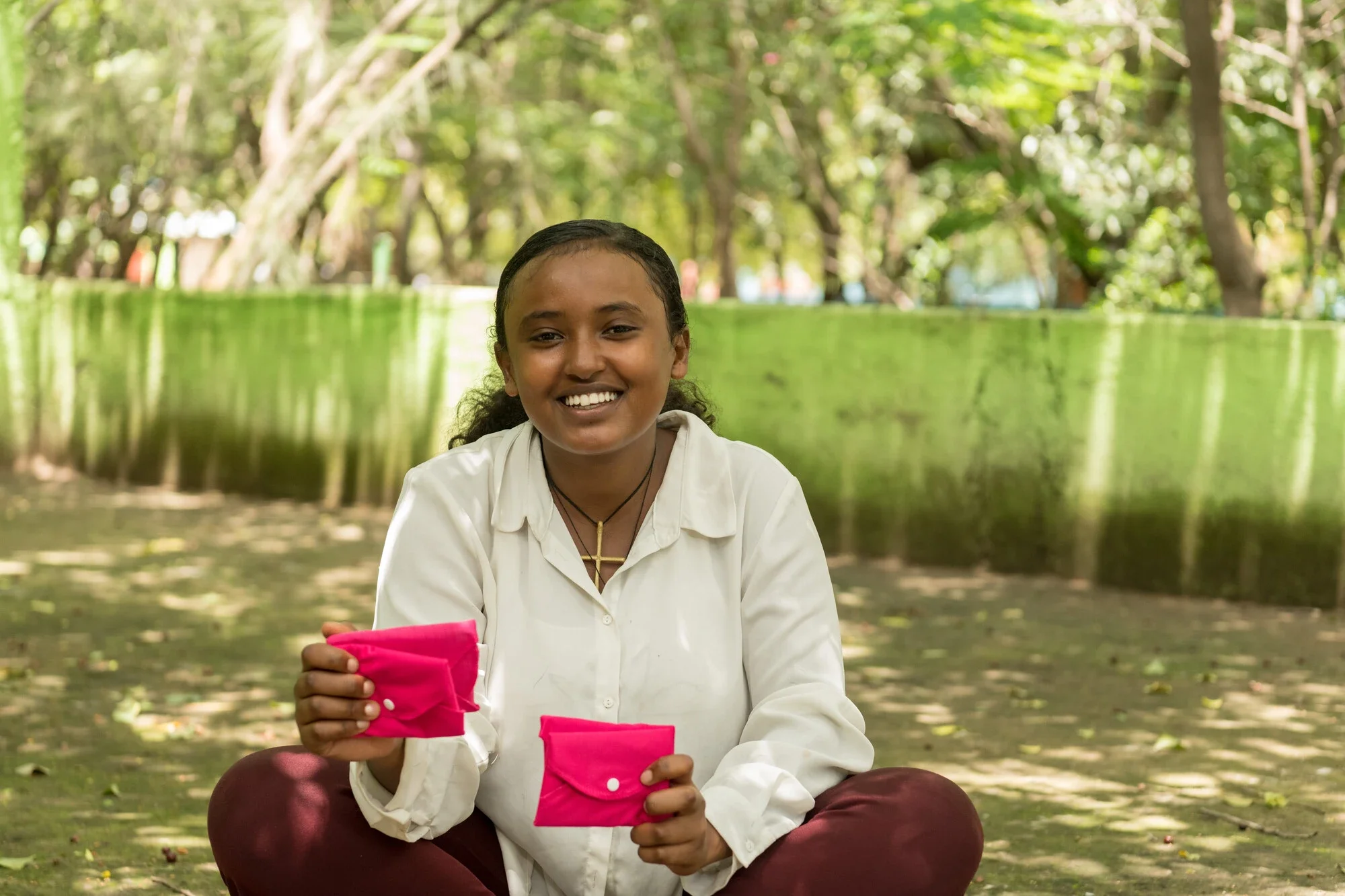
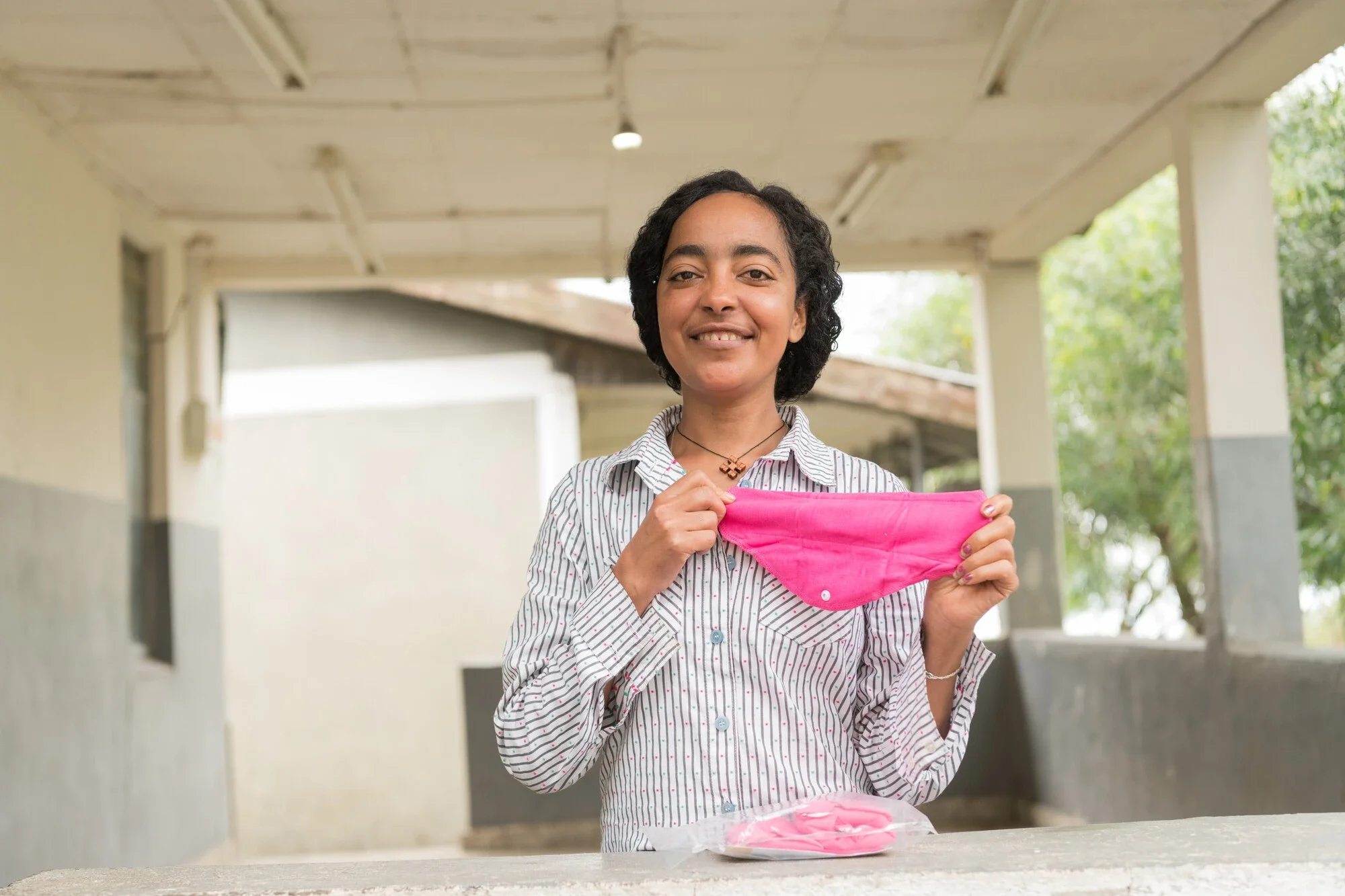
A smiling young woman in Ethiopia holding up a reusable pink sanitary pad, with a packaged set resting on the surface in front of her.

A reusable sanitary pad: a simple innovation — and for millions of women and girls worldwide, a step toward dignity. Photo: Maheder Haileselassie Tadese / AFD

Menstruation should never threaten someone’s health, safety, or education. But for millions of women and girls, the lack of access to menstrual products, clean water, private sanitation, and basic information can turn a natural cycle into a monthly crisis. CARE is working to change that — from displacement camps to classrooms and beyond.

Be part of what CARE makes possible.

Get stories, updates, and actions you can take to support women and families worldwide.

Subscribe

On any given day, more than 300 million women and girls are menstruating worldwide. Despite the universality of this cycle, an estimated 500 million women and girls lack access to the basic facilities required to manage their periods safely and privately. Menstrual health is often treated as a private concern. But in crisis settings, schools, and under-resourced communities, it becomes a public health, education, and dignity issue — one that shapes whether women and girls can stay safe, stay in school, and participate fully in daily life.

The gap is sharpest in emergencies, where infrastructure can collapse overnight and privacy may vanish entirely. This is period poverty: the inability to access menstrual products, safe sanitation, and the basic dignity every woman deserves.

For women and girls in conflict zones and displacement camps, managing a period is not just inconvenient. It is a monthly crisis inside a larger one. Globally, 2.3 billion people still lack access to basic sanitation services — the foundation on which menstrual health depends. From refugee camps in Bangladesh to classrooms in Ethiopia, women and girls are finding ways to manage their periods with dignity — while CARE and local communities work to expand access, break taboos, and create lasting change.

In the dense refugee camps of Cox’s Bazar, Bangladesh, more than one million Rohingya refugees live packed into a sprawling maze of makeshift shelters. Since 2017, CARE has delivered vital water, sanitation, and hygiene (WASH) services to these communities.

CARE Bangladesh also constructed 20 dedicated Menstrual Hygiene Management (MHM) blocks across Camp 15. Somima, a hygiene promotion volunteer, notes: “Before having this MHM block, we could not wash menstrual things properly. We had to bury disposables in the soil or throw them here and there. This block helped us a lot!”
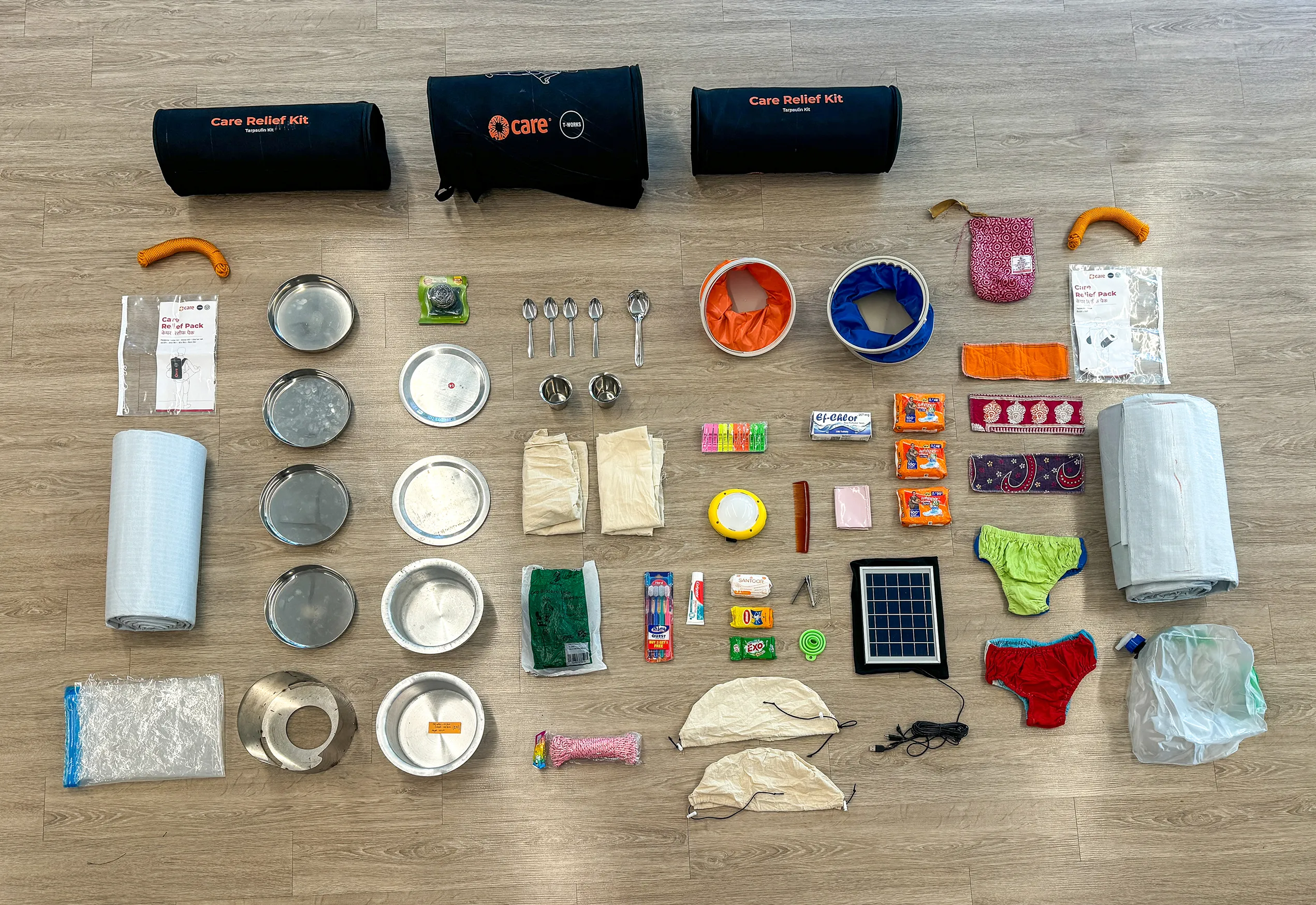
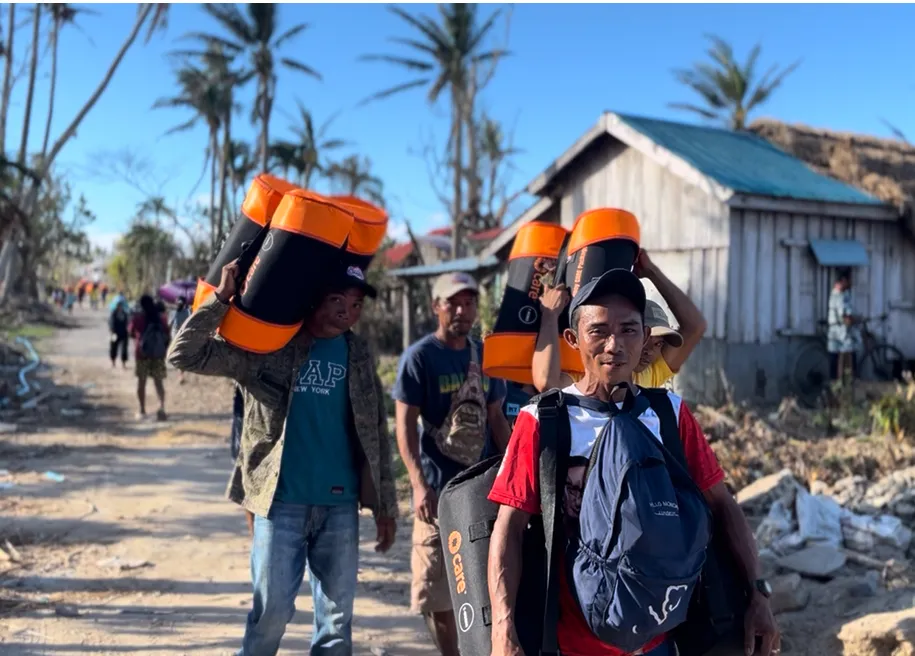
A top-down view of a CARE PACKAGE for Emergencies laid out on a wooden floor, displaying essential items, including cooking pots, plates, utensils, a solar lamp and panel, hygiene supplies, clothing, and a dedicated dignity kit with reusable sanitary pads and undergarments.
Inside every CARE PACKAGE® for Emergencies is a dignity kit — including sanitary pads, soap, and undergarments — because in crisis, dignity cannot wait. Photo: CARE

That same principle guides CARE’s emergency response far beyond Bangladesh: when disaster or conflict strips away privacy, income, and access to basic services, menstrual health cannot be treated as secondary. It has to be built into response from the start.

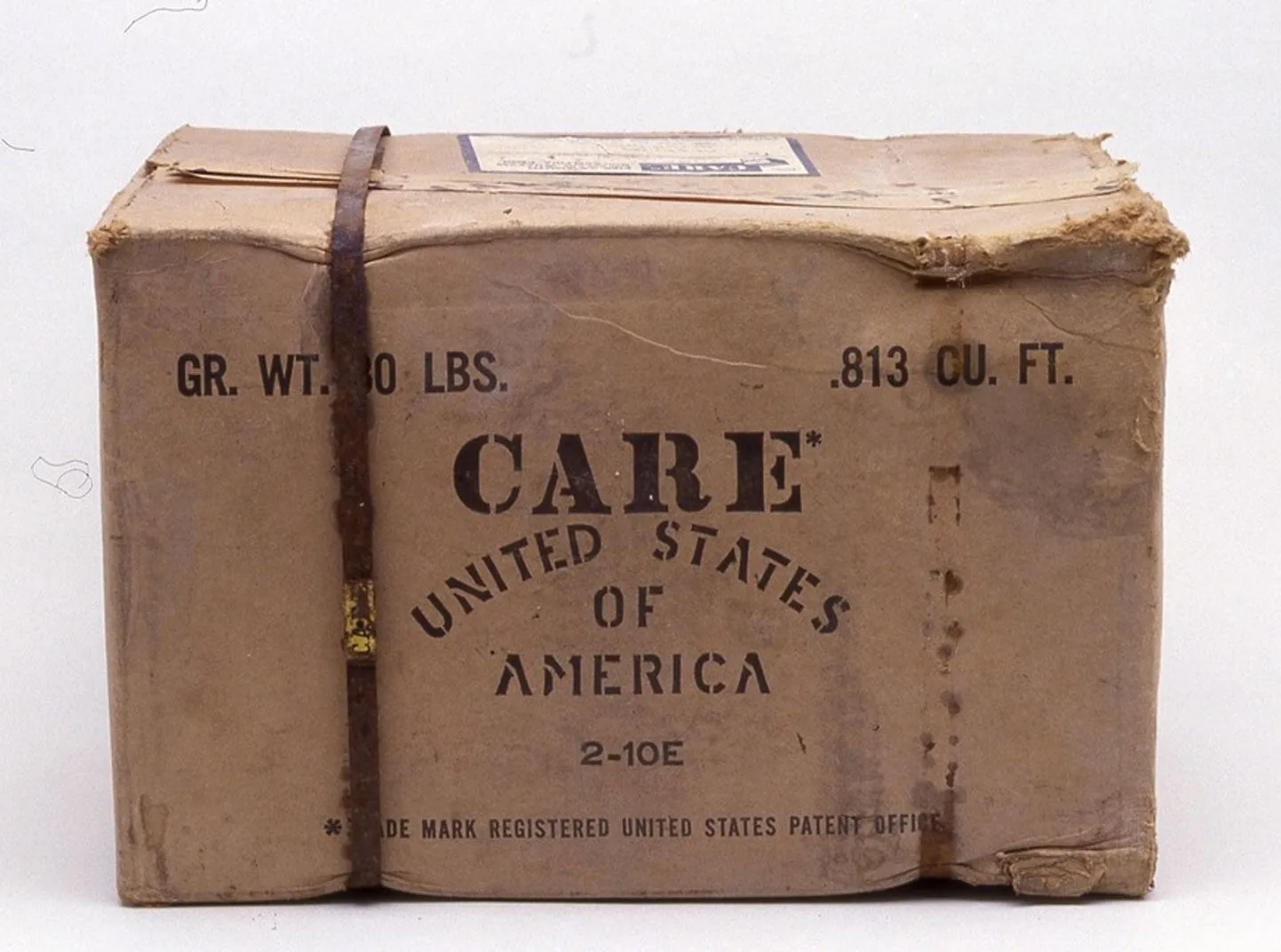
Ensuring dignity in emergencies has been central to CARE’s work since the first CARE PACKAGE® deliveries reached families recovering from World War II in 1946. Today, that legacy continues through the CARE PACKAGE® for Emergencies: a portable kit designed to help a family of four through the first critical month after disaster strikes. Each package includes a dedicated dignity kit — with sanitary pads, soap, and undergarments — because menstrual health is not a secondary need. In any emergency, it is a part of survival.

No safe place, no safe period: From Lebanon to Gaza to Cuba

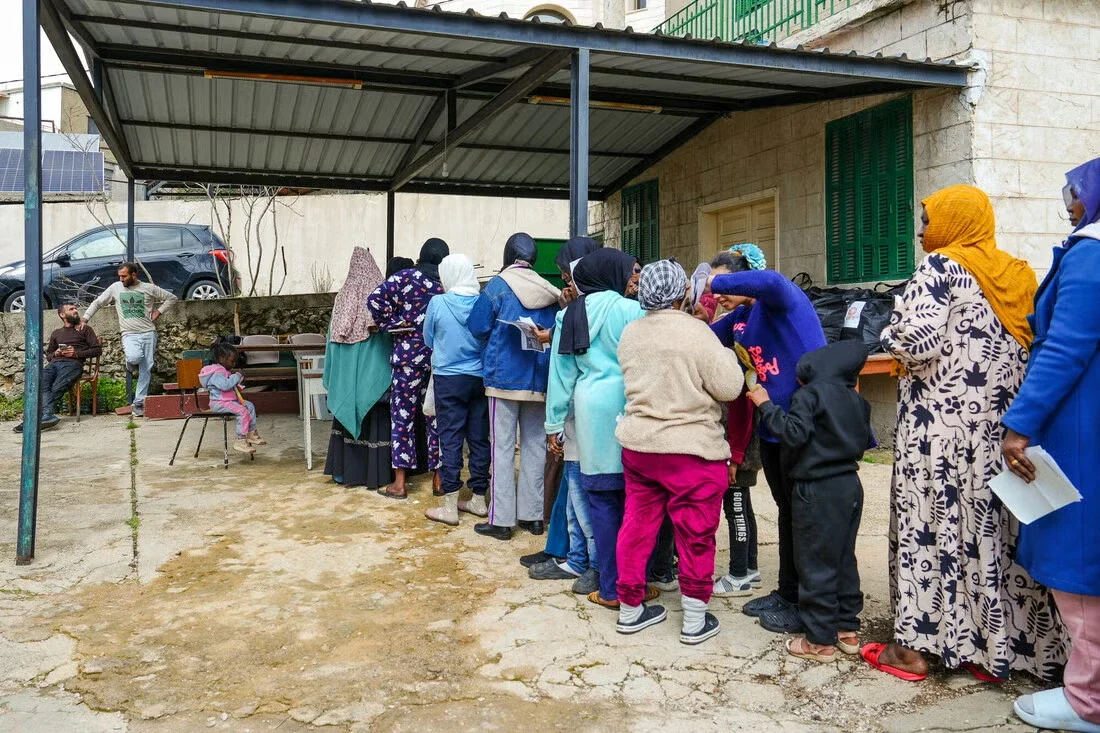
A line of displaced women and children waiting outdoors under a covered structure in Lebanon for a CARE distribution, where teams provide essential dignity kits and menstrual supplies as part of their emergency response.
Access to menstrual care is a top priority for displaced women and girls. Pictured here in Lebanon, CARE teams provide essential dignity kits and supplies as a core part of emergency response. Photo: CARE

In Lebanon, where conflict has displaced over 1.2 million people, managing one’s menstrual cycle only adds to the strain of daily survival. Displacement disrupts routines, privacy, and access to basic services, and stress can take a physical toll. “Some of us got our period twice in one month due to the stress,” one displaced mother shared. Another added: “We need water, food, and clothes — but we also need to preserve our dignity.”

Lack of menstrual hygiene materials is directly linked to urogenital infections — studies show the risk rises by up to 30%, turning basic hygiene items into an essential part of survival.

In neighboring Gaza, the crisis is even more acute. Nearly 700,000 women and girls lack basic sanitary pads, making it essentially impossible to manage periods safely. Farah, displaced in Gaza, describes the grueling daily toll on physical and emotional well-being: “If you are a woman, you know what it is like to have your period,” she says. “Right now, we have no sanitary supplies. In the shelters, women must sometimes queue for hours to use the bathroom while feeling unwell and unable to dispose of tissues soaked in blood, as they do not have any hygiene pads.”

But period poverty is not limited to conflict or displacement. Environmental disasters and economic collapse can be equally devastating. In Cuba, back-to-back disasters — including Hurricanes Óscar (2024) and Melissa (2025) — combined with soaring inflation have pushed menstrual products off pharmacy shelves, forcing women to find what they need in expensive informal markets.

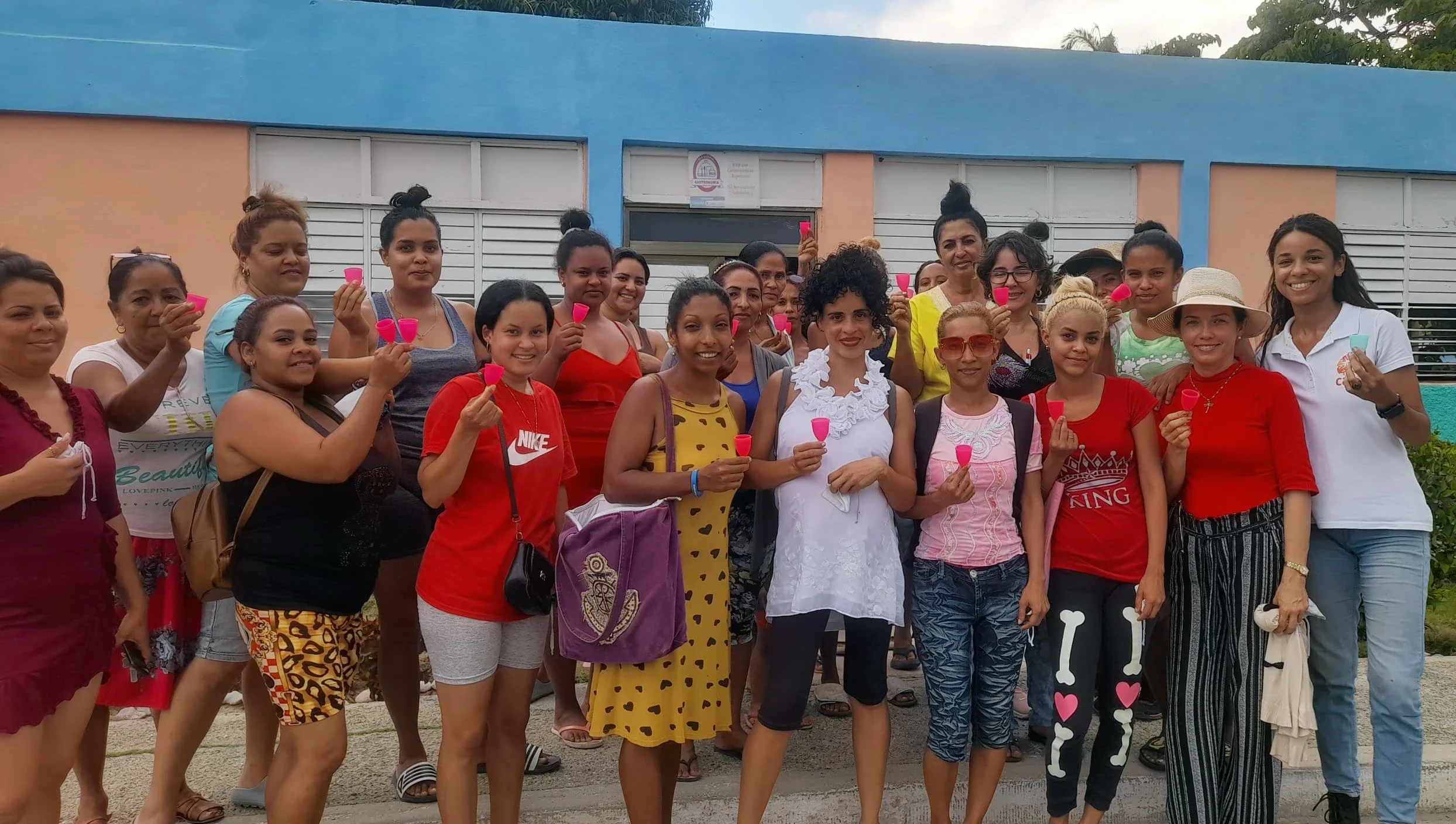
A group of women in Imías, Guantánamo, Cuba, standing together outdoors and smiling while holding up small, pink menstrual cups as part of a community health workshop.
The “Copas para Cuba” project promotes the use of menstrual cups as a healthy, affordable, and sustainable menstrual solution in Cuba. Photo: CARE

CARE’s collaboration with the “Copas para Cuba” project offers a more durable alternative: medical-grade, reusable menstrual cups. These products are durable, more affordable over time than traditional menstrual products, and are less dependent on fragile supply chains. According to one survey, a single menstrual cup can last up to ten years — making it one of the most cost-effective and sustainable options for communities with limited resources.

From taboo to transformation: Ethiopia’s school-by-school revolution

A smiling young Ethiopian woman named Sara sitting outdoors on the grass, holding two pink reusable sanitary pads towards the camera.
“I’ve witnessed a transformation in my friends who used to be shy and ashamed to talk about their periods. Today, thanks to our discussions, they’re more open and outspoken about it,” says Sara, a student from Adama, Ethiopia’s third-largest city. Photo: Maheder Haileselassie Tadese / AFD

In Ethiopia, 70% of women cannot manage their periods in safe and dignified conditions — one of the highest rates of period poverty on the continent. Menstruation is still rarely discussed openly, and that silence has real consequences: girls can miss out on school, families delay buying necessary supplies, and a basic health need is treated as a source of shame.

CARE’s response in Ethiopia works on two fronts: putting menstrual products directly into women’s hands and bringing honest conversations about menstruation into schools, clinics, and communities. In Adama, CARE distributed over 30,000 reusable menstrual kits, with more than half going directly to local schools.

For students, the impact was immediate. “At first, I was unsure, but after trying the reusable pad, I found it healthier and more comfortable. This product should be available to everyone,” says Beza, a high school student.

For Misgana, another student, the difference is even more direct. “I can’t afford disposable pads. The reusable ones let me keep going to school.”

That matters far beyond a single school day. Every additional year of education can increase a girl’s lifetime earnings by up to 10%.

But distributing products without changing attitudes only goes so far. To ensure lasting change, CARE engages entire communities — including men and boys — in practical conversations about menstruation, health, and access.

At a local clinic in Adama, deputy director Ashibir Kita describes a quiet but important act: “We take time to offer 20-minute talks on menstruation, covering topics like premenstrual syndrome, pain relief, the different types of menstrual products, and how to dispose of them. We also challenge taboos.”

In many Ethiopian households, menstruation is still treated as a private shame rather than a health matter, and purchasing menstrual products is seen as women’s business alone. But in communities where many women have little or no independent income, that assumption can leave them without what they need.

“Involving men is essential,” says Rahel, a nurse working with CARE. “Many women have no income of their own, so men must understand and step up to help them access safe menstrual products.”

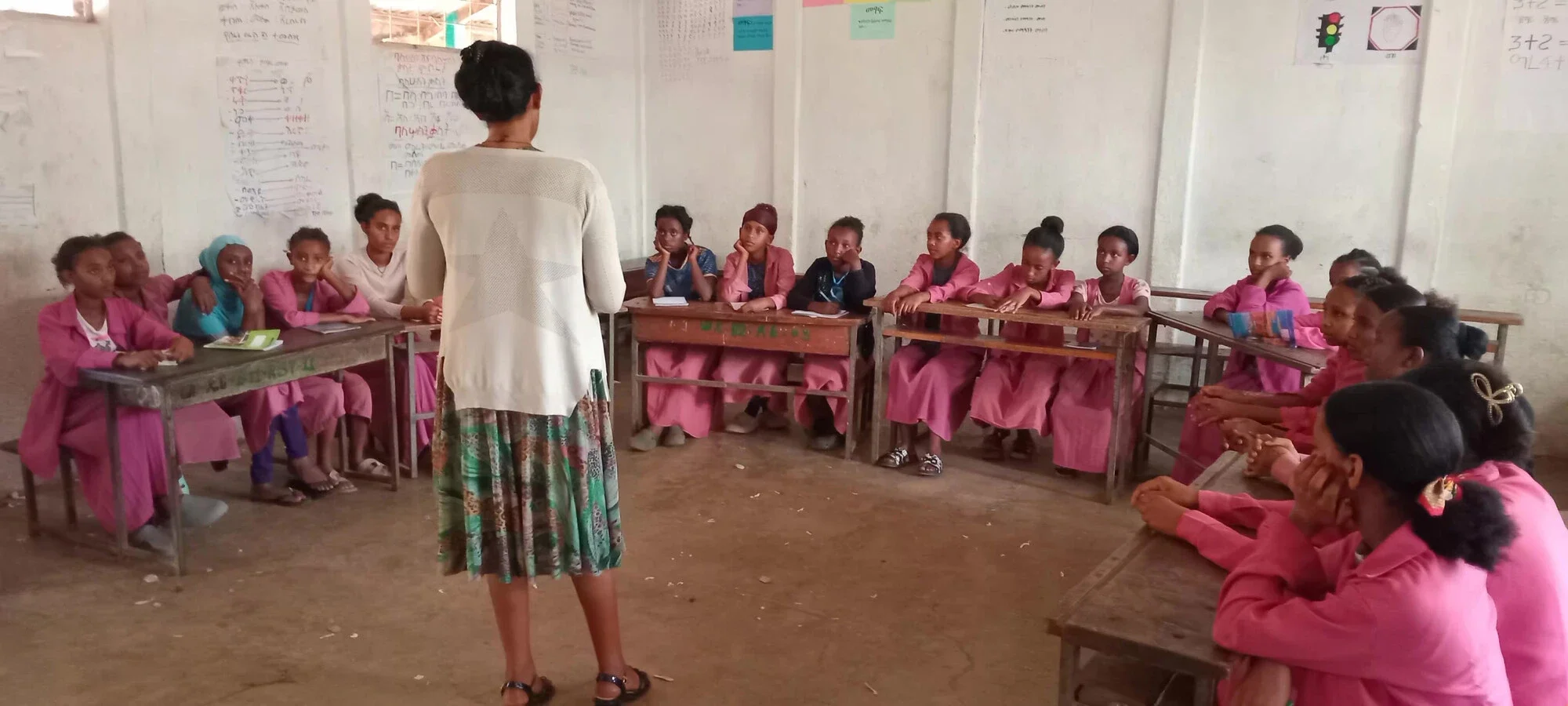
A health officer leads a session on menstrual hygiene and health for a group of schoolgirls in pink uniforms at Atse Sertse Dingle primary school in Ethiopia.
In Ethiopia, awareness is the first step toward breaking the silence. At a local primary school, a health officer leads an open discussion on menstrual hygiene — turning a once-taboo topic into a conversation about health, dignity, and academic success. Photo: CARE

Further north, in the city of Bahir Dar, CARE is addressing another barrier girls face at school: the lack of a safe, private place to manage their periods during the day. Unique Mebratu, 14, remembers what school used to mean when her period arrived: “Previously, the menstrual health and hygiene room was highly uncomfortable, filled with dust and termites. As a result, I used to miss an average of five classes each month.”

Unique is not alone. Across Bahir Dar’s public schools, missing class during menstruation was common.

CARE’s Abrehot project, funded by Lyreco for Education, has helped change that reality across ten public schools by installing clean, private facilities where girls can wash, rest, and manage their periods safely. For Unique, the difference is practical and profound: “Today, when my period unexpectedly started, I asked my teacher for permission and stepped out of class. In the room, with guidance from my teacher, I was able to use sanitary pads, take a shower, and rest on a bed. After some time, I safely returned to class.”

To help this menstrual health initiative continue independently, CARE equipped each school with electric sewing machines so students can produce their own underwear and reusable pads directly on campus. It may be a small machine in a school room, but it is also much more. It gives girls a tool to build skills and helps create a local, resilient supply chain for menstrual products in times of crisis.

Measuring what matters: How science is backing menstrual health

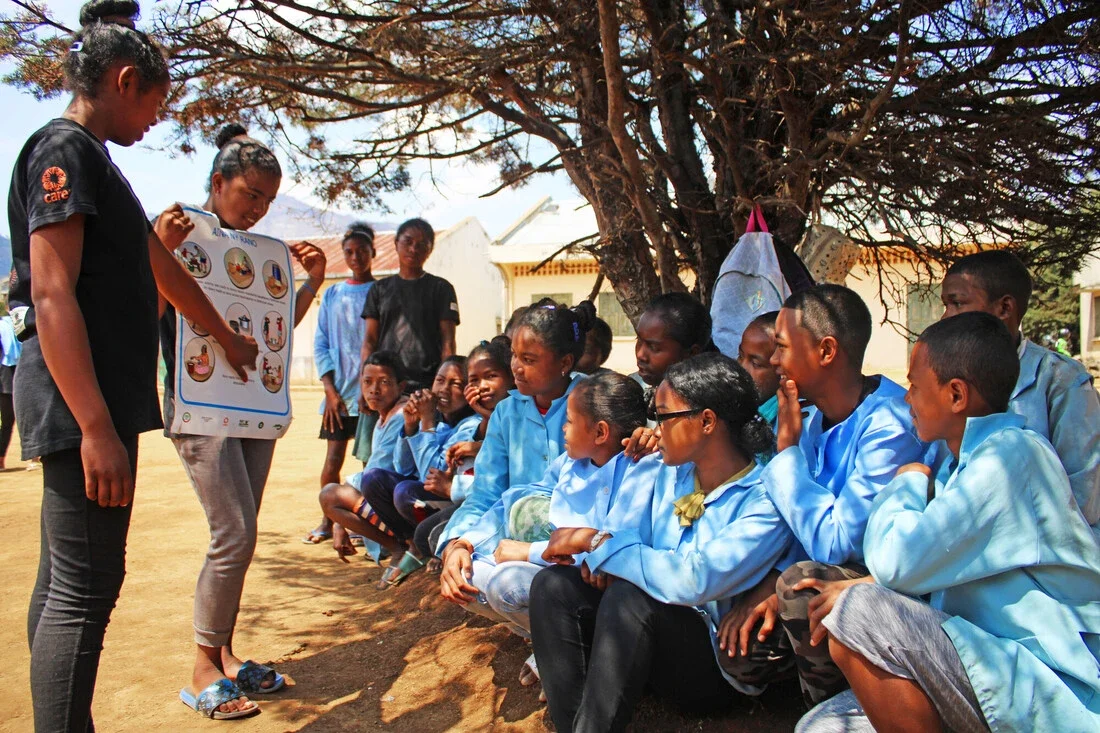
Under the shade of a tree, two young women — one wearing a 'CARE' logo T-shirt — lead a menstrual health discussion using an illustrated chart for a group of attentive schoolgirls and boys in blue uniforms seated on the ground.
Beyond better facilities, the KILONGA project in Madagascar is fostering a supportive environment where students — both girls and boys — openly discuss menstrual health to break down long-standing taboos. Photo: CARE

Ethiopia is not alone in using schools as a setting for change. In Madagascar, the KILONGA project worked with 250 schools to improve menstrual health through clean restrooms, locally produced reusable pads, and training for  “Young Girl Leaders” who can help break down stigma among their peers.

CARE and its local Malagasy partners, SAGE and ATDR, launched the project in 2021. The results caught the attention of the Abdul Latif Jameel Poverty Action Lab (J-PAL), a world-renowned research institute founded by Nobel Prize-winning economists Abhijit Banerjee and Esther Duflo.

Researchers found that the project did more than improve access to menstrual supplies. It helped reduce the daily stress girls experienced around menstruation and supported stronger school outcomes. In the region where the project operates, menstrual stigma and shame push one in two girls out of their grade level upon reaching puberty. But in schools supported by CARE, reported chronic daily stress dropped significantly, and participating girls’ probability of passing their critical end-of-year exams rose from 50% to 60%.

To measure a topic as personal as menstrual stigma, researchers used innovative tools, including heart-rate tracking during peer discussions. The findings helped show what girls already know: when schools provide safe facilities, reliable products, and open conversations, menstruation becomes less of a barrier to learning.

Césaire, a SAGE program coordinator, sees a shift happening not only among girls, but across the school community. “As a man, supporting this change is a responsibility and a source of pride,” he says. “Boys are getting more involved. They understand, respect, and take action.”

From emergency to equality: The work that remains

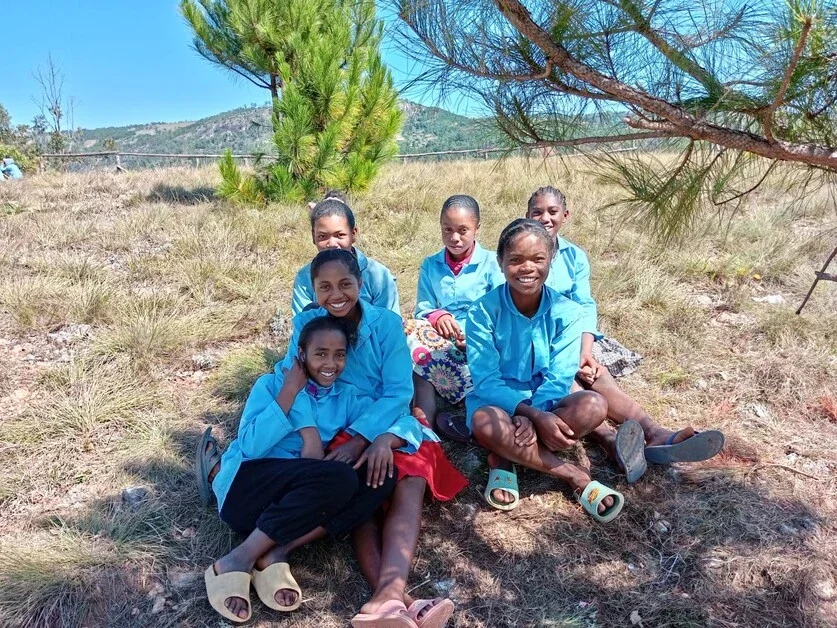
Five Ethiopian schoolgirls in blue uniforms sitting together outdoors under a tree, smiling.
CARE is working toward a world where every woman and girl manages her period with dignity — in classrooms, in communities, and everywhere in between. Photo: CARE

True change demands more than a single day of awareness. It requires sustained funding for school sanitation, female-led social enterprises, and the removal of economic barriers. One of the most visible is the so-called “pink tax” — in some countries, women pay up to 20% more for menstrual products simply because they are taxed as luxury items, not necessities.

No woman or girl should face these barriers. This is what CARE is working toward — in camps, classrooms, and communities across the world, not just on World Menstrual Hygiene Day, May 28, but every day of every month — because dignity, in any crisis, is never optional.

And when menstrual health is prioritized, something larger unlocks. Girls stay in school. Women stay safe. Families stay intact. And a natural, universal process stops being treated as a source of shame.

Back to Top