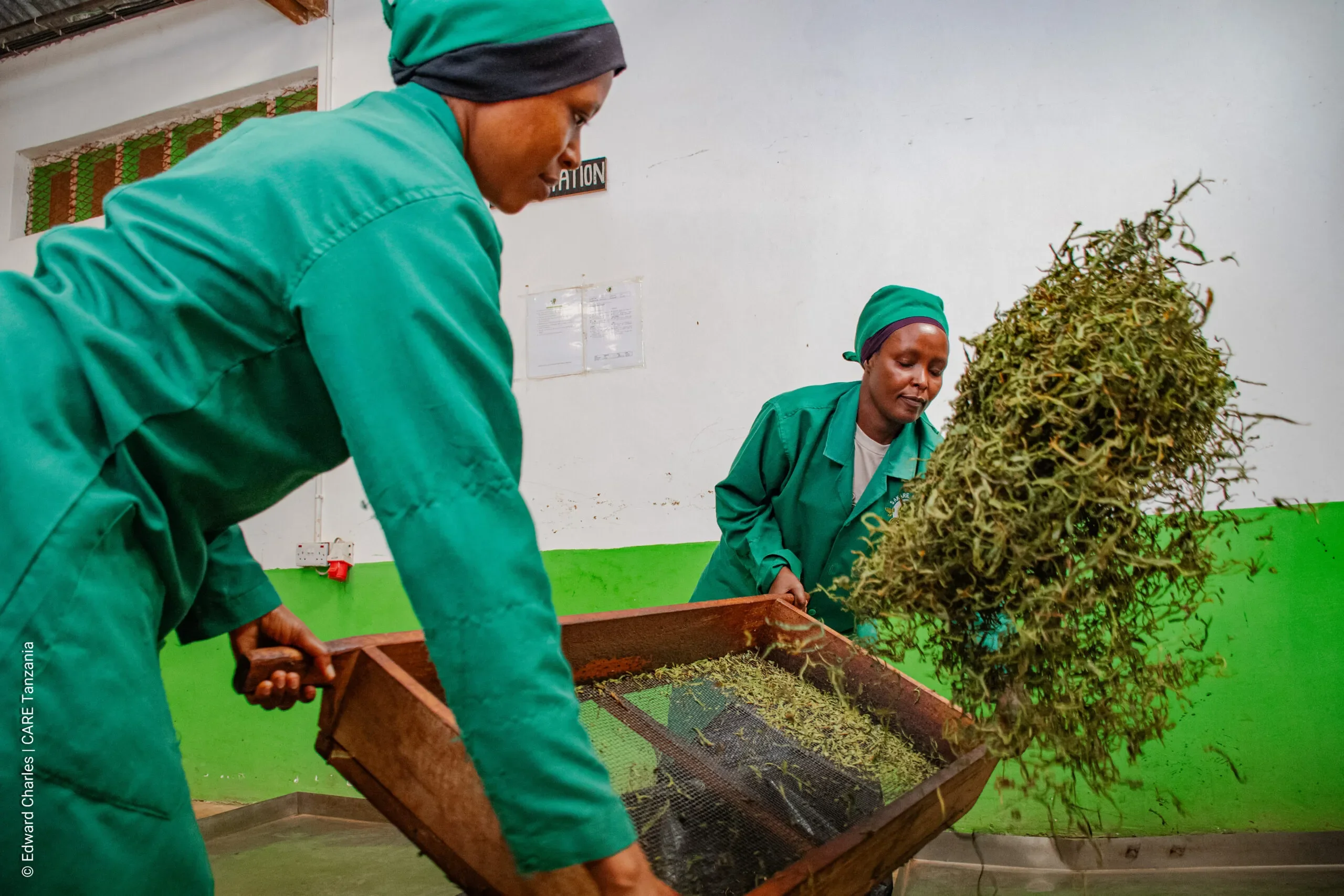

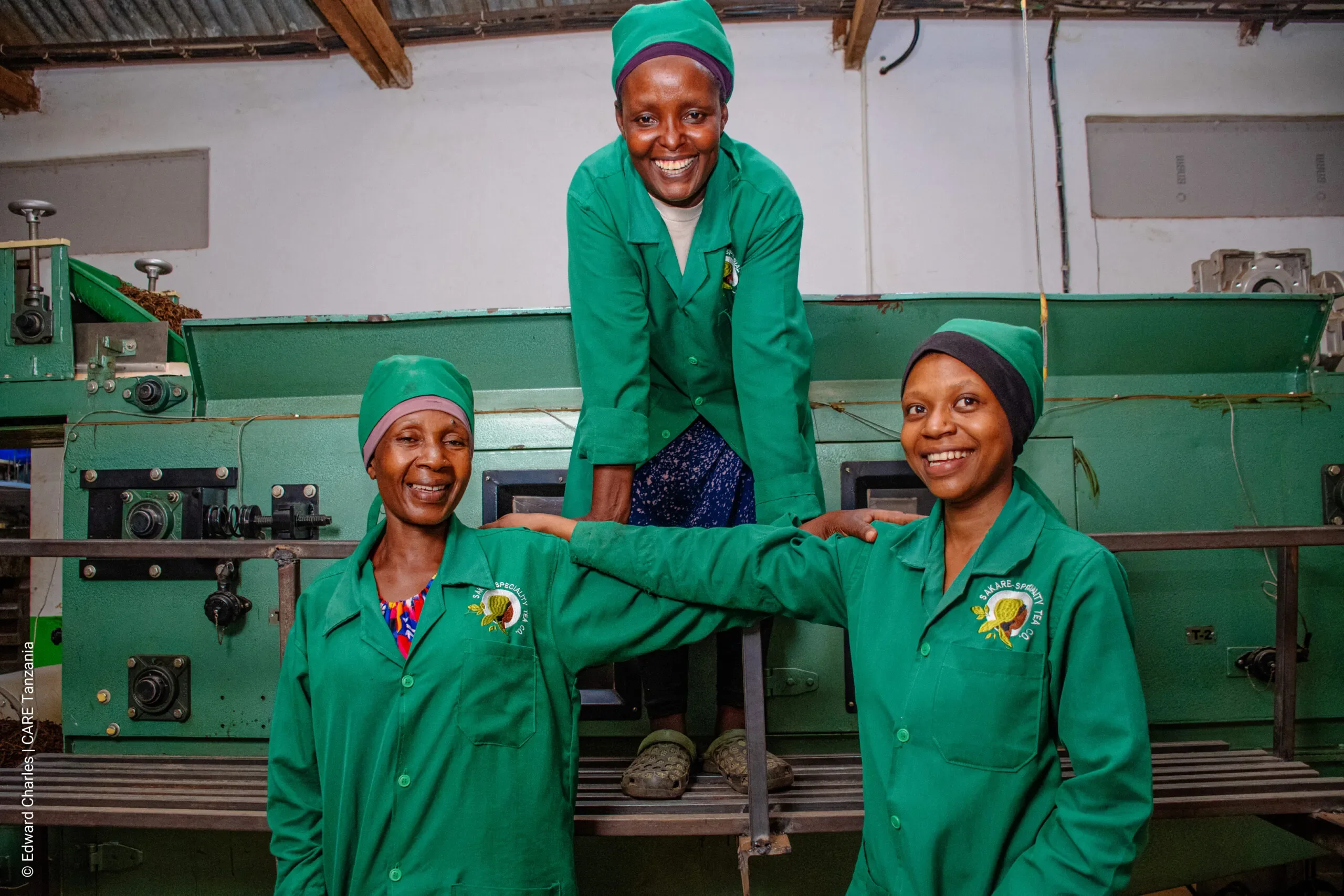
Monica Timotheo is a mother and tea processor in the Usambara Mountains in Bungu, Tanga, in Northeastern Tanzania. This beautiful mountain landscape has a unique microclimate that is ideal for tea growth. Characterized by high altitudes (over 1,000 meters), heavy rainfall, and misty, temperate conditions, the area near the Amani Nature Reserve is known for its biodiversity, home to thousands of different plant species and varieties of wildlife. These conditions favor the year-round growth of Camellia sinensis var assamica, a tea plant primarily used for black tea and known for its bold and earthy flavors.
Monica, who grew up in nearby Lutindi, has spent her life surrounded by tea. Her family grew and harvested tea leaves, but until a couple of years ago, that was the extent of her knowledge.
“We did not know at all how those tea leaves were processed,” she said.
While living with her family, Monica depended heavily on relatives to meet basic needs, including food and school expenses for her children. With growing family responsibilities and limited income, each day felt uncertain and difficult to navigate.
“I didn’t have any job at all,” she recalls.
But in 2023, CARE Tanzania and KAZI Yetu, with the support of Bloomberg Philanthropies, established the Sakare Specialty Tea Company (SSTC), the first smallholder farmer-owned specialty tea factory in Tanzania to process its own orthodox (wholeleaf) black, green, and specialty teas on-site. Despite being unfamiliar with tea processing, Monica took a chance and applied for a job. And in October 2024, she was hired to become a processor.