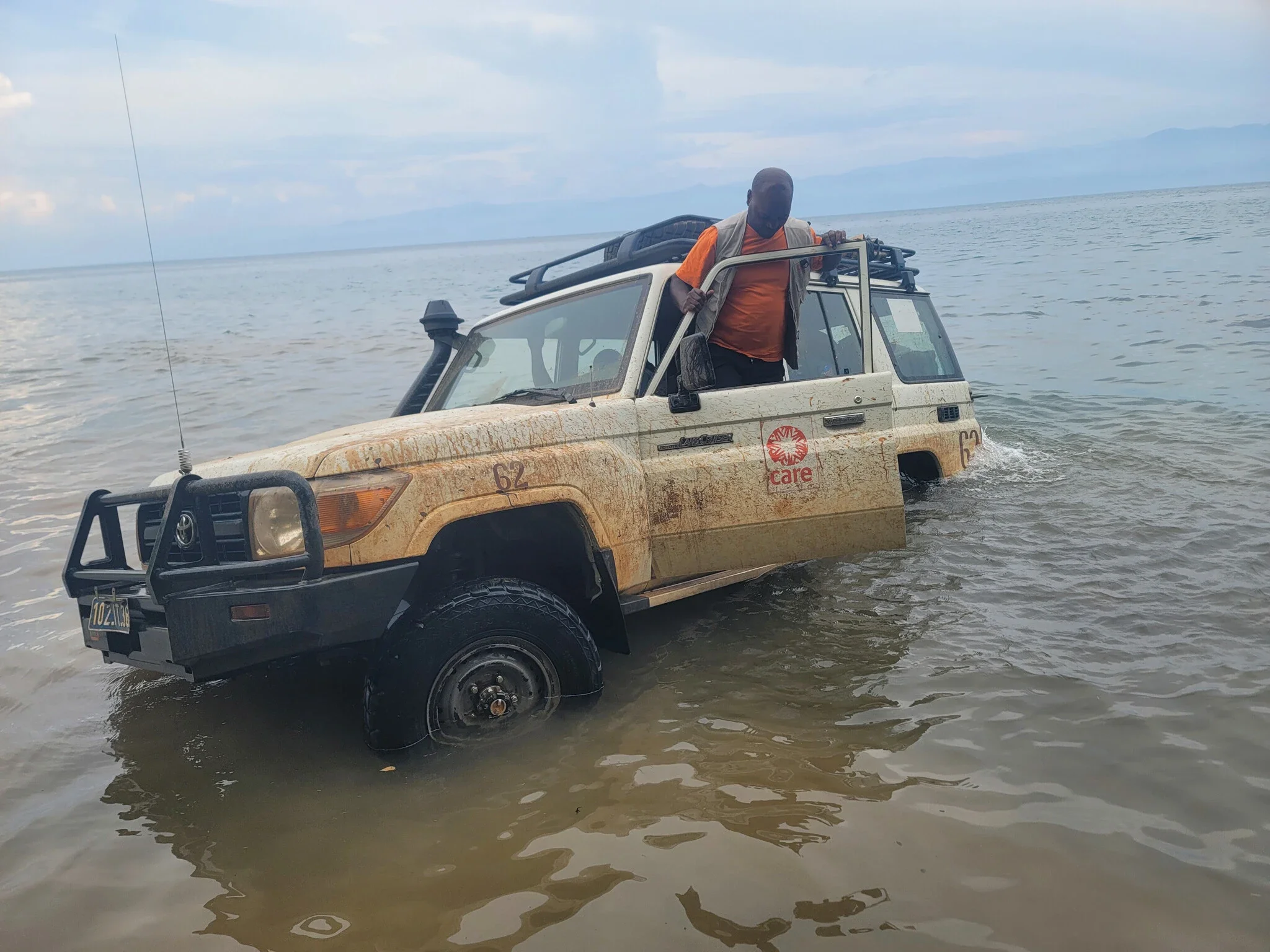
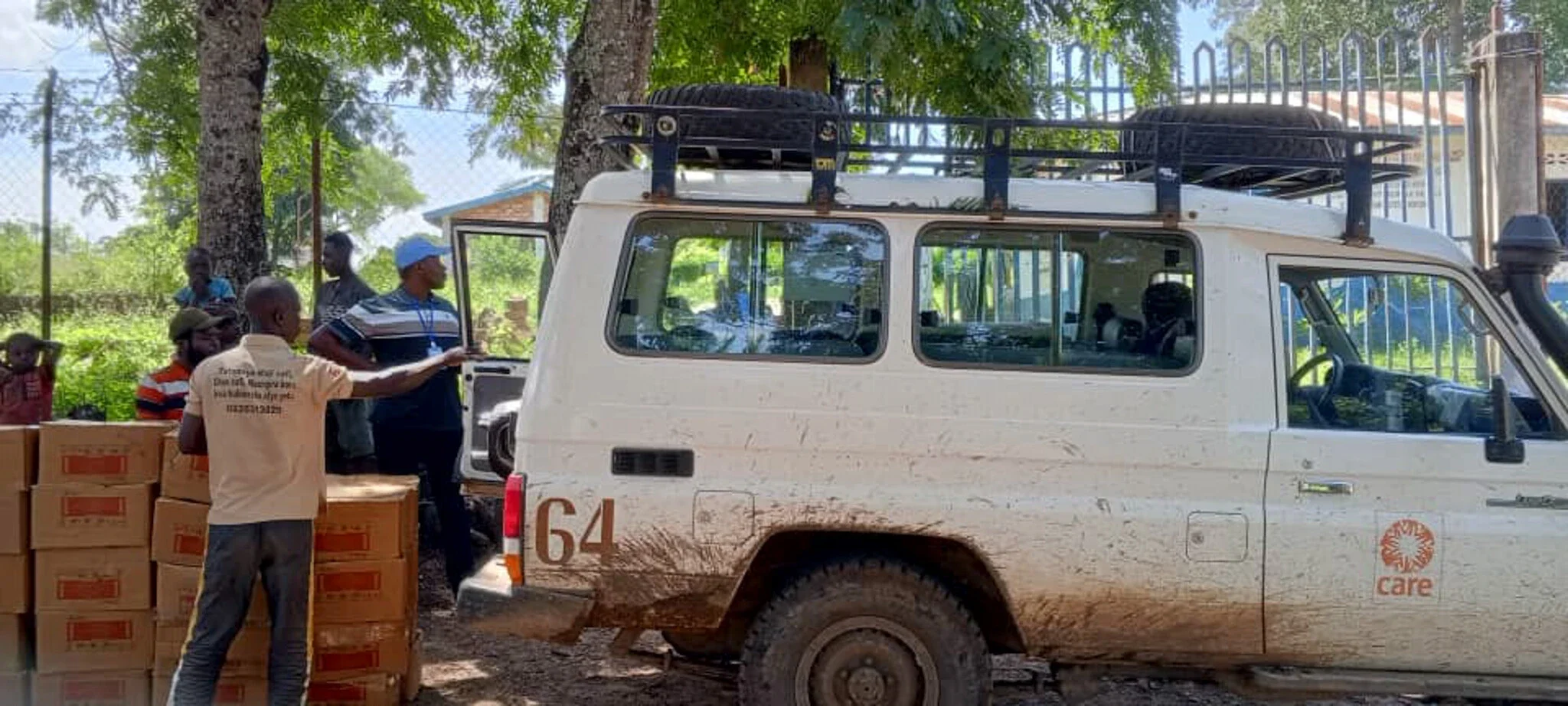
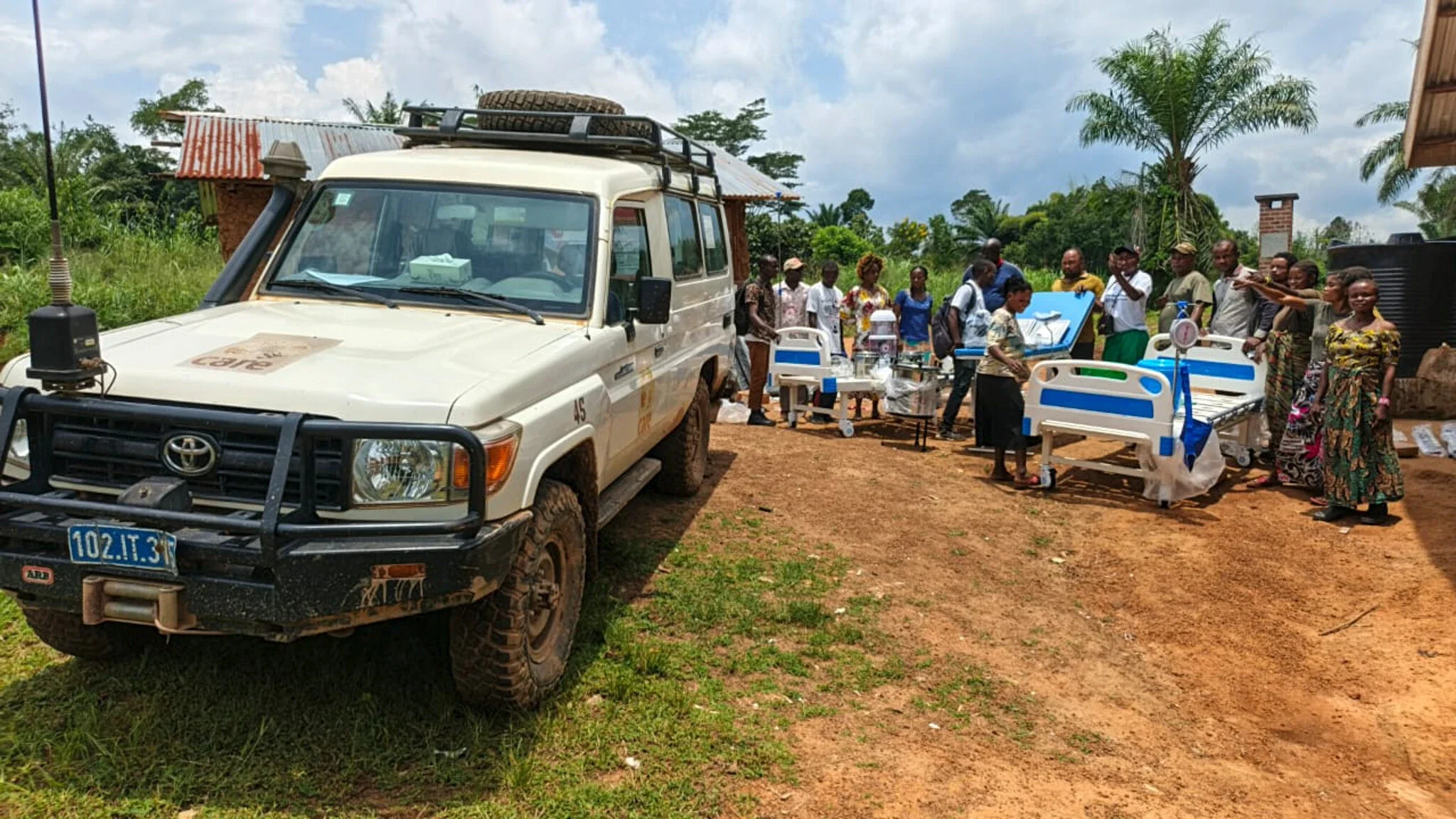
CARE driver Egide Kasereka nearly had to abandon an outreach trip when his vehicle became partially submerged along the shores of Lake Tanganyika in Fizi, South Kivu. Scenes like this illustrate the physical challenges CARE’s logistics teams regularly face to keep humanitarian deliveries moving across difficult and often unpredictable terrain.
As he tried to move the truck out of the water, it struck a large rock, forcing him to think quickly and maneuver the vehicle out without significant damage.
“Since the vehicle was operating in four-wheel drive (traction mode), I carefully applied controlled engine power while keeping the engine at idle speed. This allowed the vehicle to generate enough force to push the water away while preventing water from entering the exhaust system, as the exhaust pipe was already submerged. Maintaining the engine at idle was essential because it prevented water from flowing back into the exhaust. I continued these careful maneuvers to steer the vehicle away from the large rock and safely free it from the water,” Egide explained.
Egide was able to continue, but the longer communities wait for support, the harder the outbreak becomes to contain. CARE is calling for a significant and immediate increase in financial and technical support to the broader aid response in DRC. People urgently need protective equipment and potentially lifesaving information about the disease to help stop the spread.
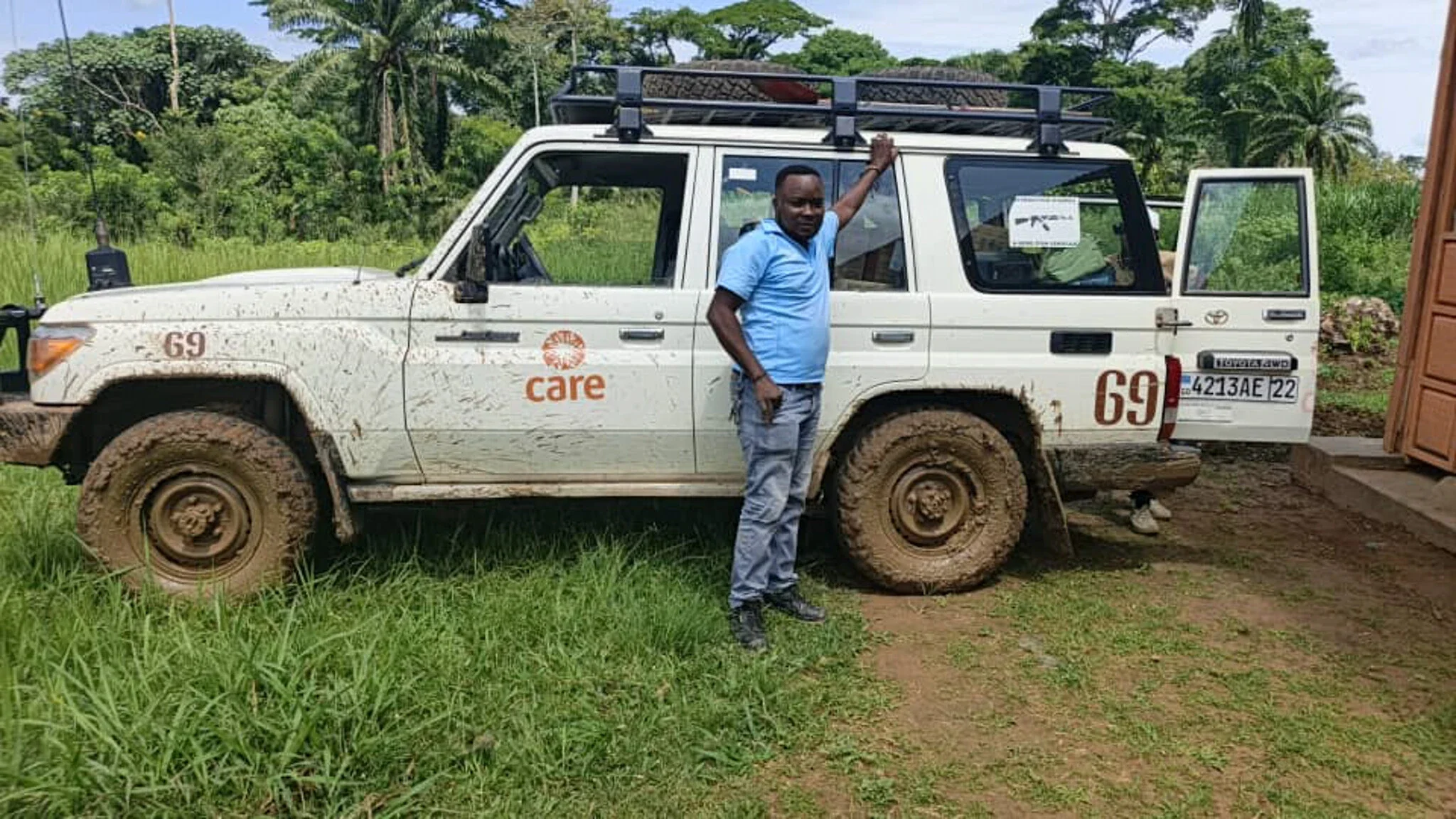
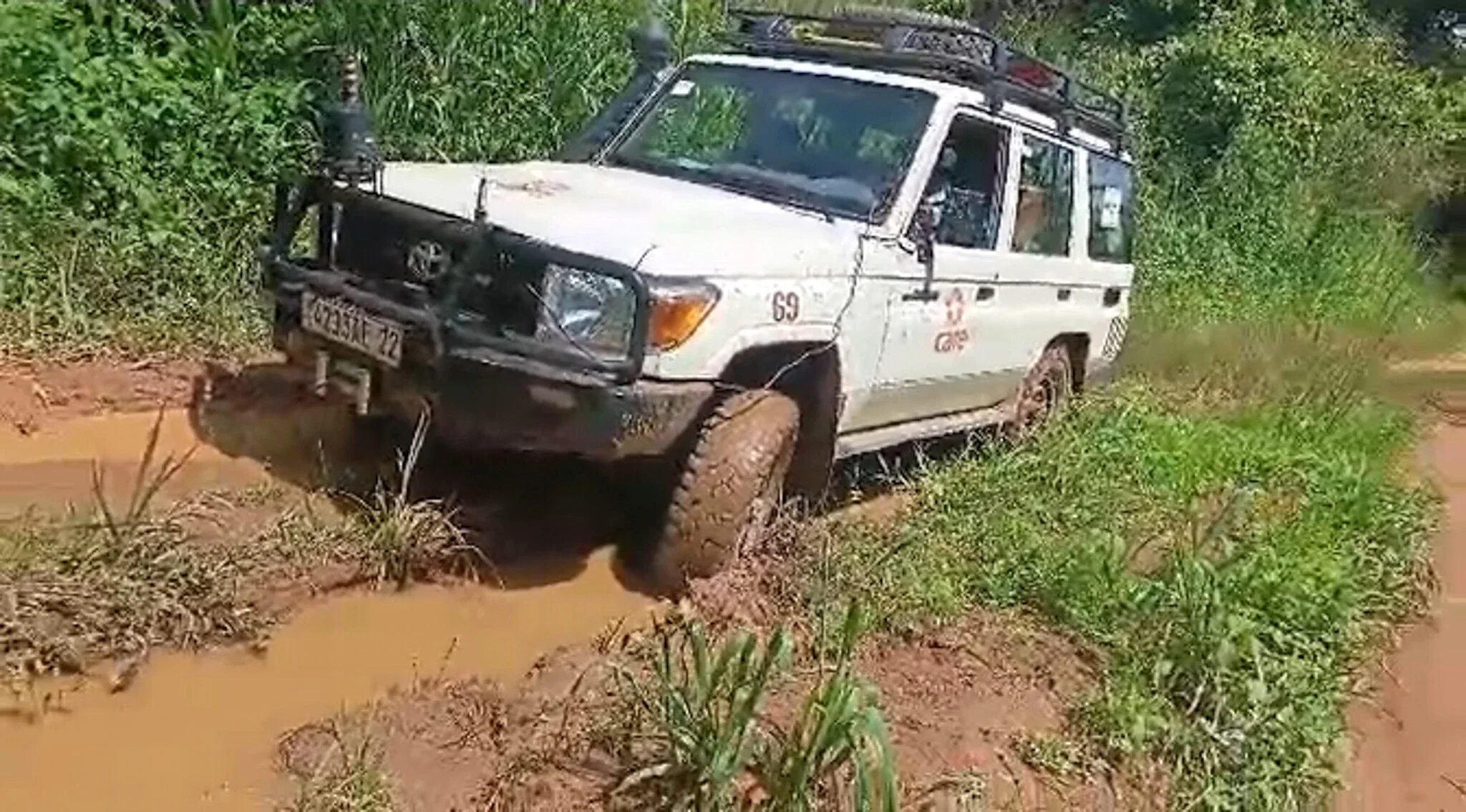
Jeannot and Egide have helped CARE re-establish and maintain its presence in communities at risk from Ebola. They must stay alert, creative, and determined as they navigate muddy, flooded, and obstacle-filled roads to deliver critical supplies. Once they arrive, their relationships with residents help rebuild trust and promote prevention practices, including handwashing and sharing accurate health information.
Jeannot shares how some communities react when CARE teams arrive and what is giving him hope.
Q&A with Jeannot Muhindo continues below