The CARE PACKAGE®: How a box became an American icon

By CARE Staff June 4, 2026

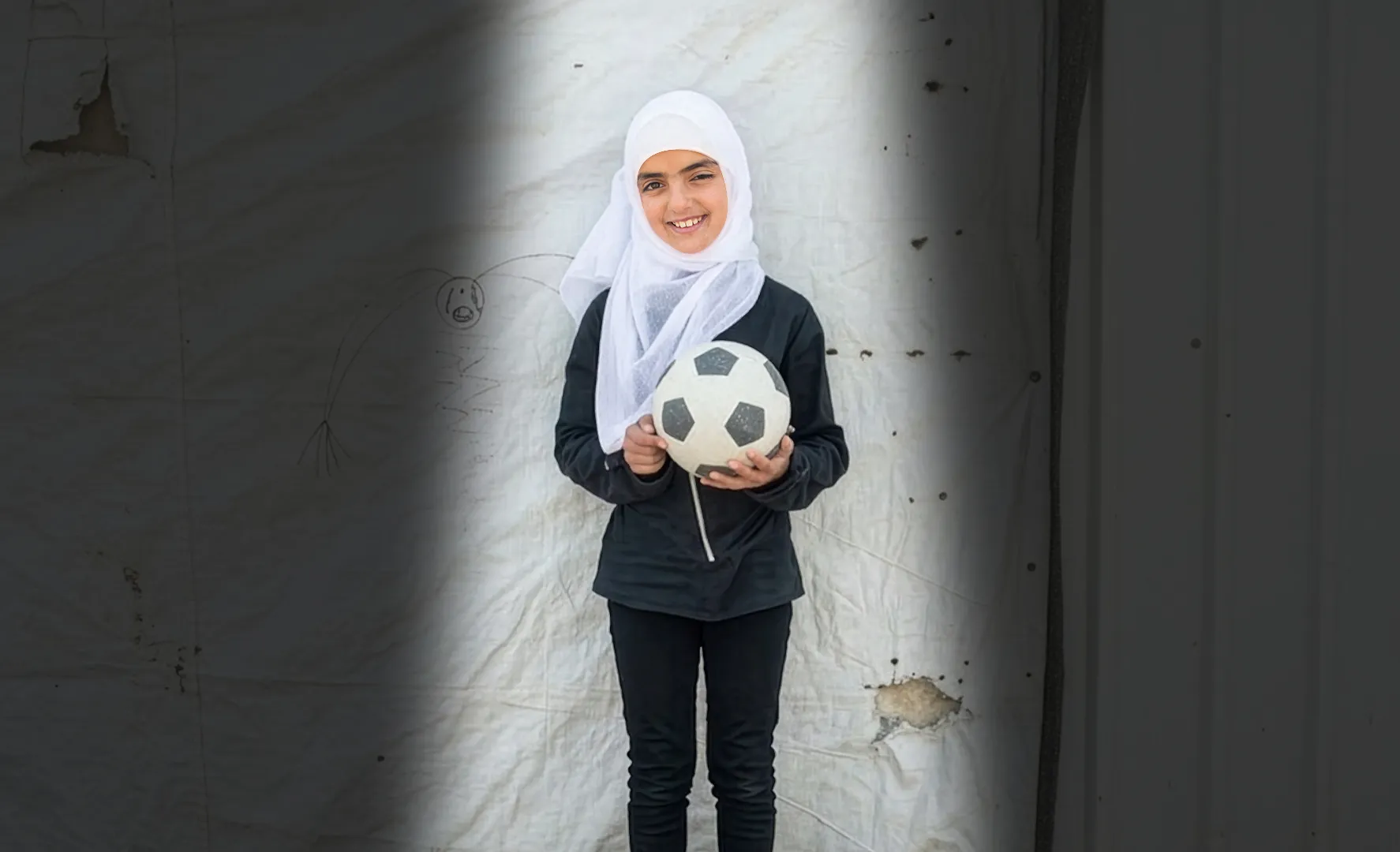
A woman smiles as she is given a CARE PACKAGE from a CARE worker.

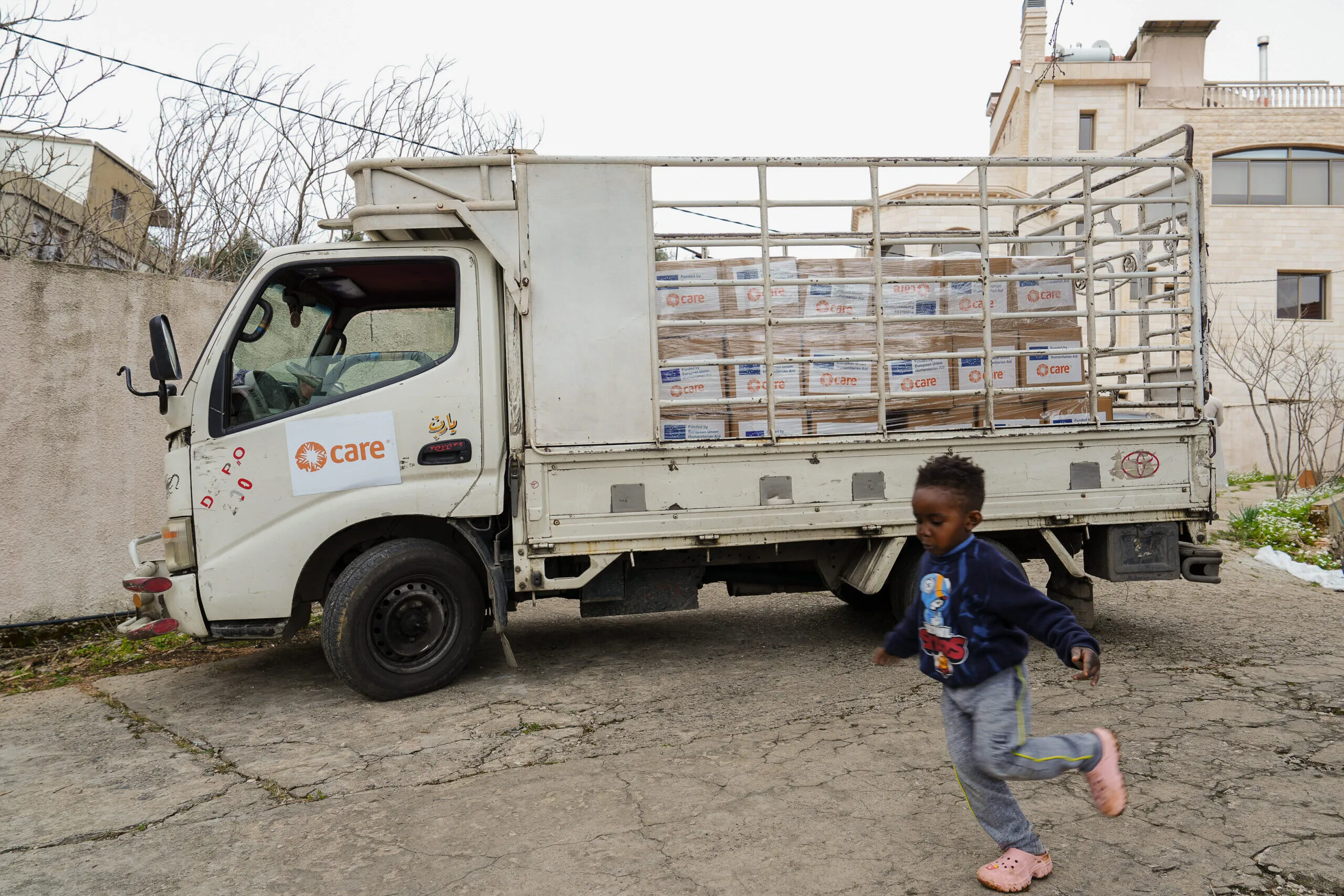
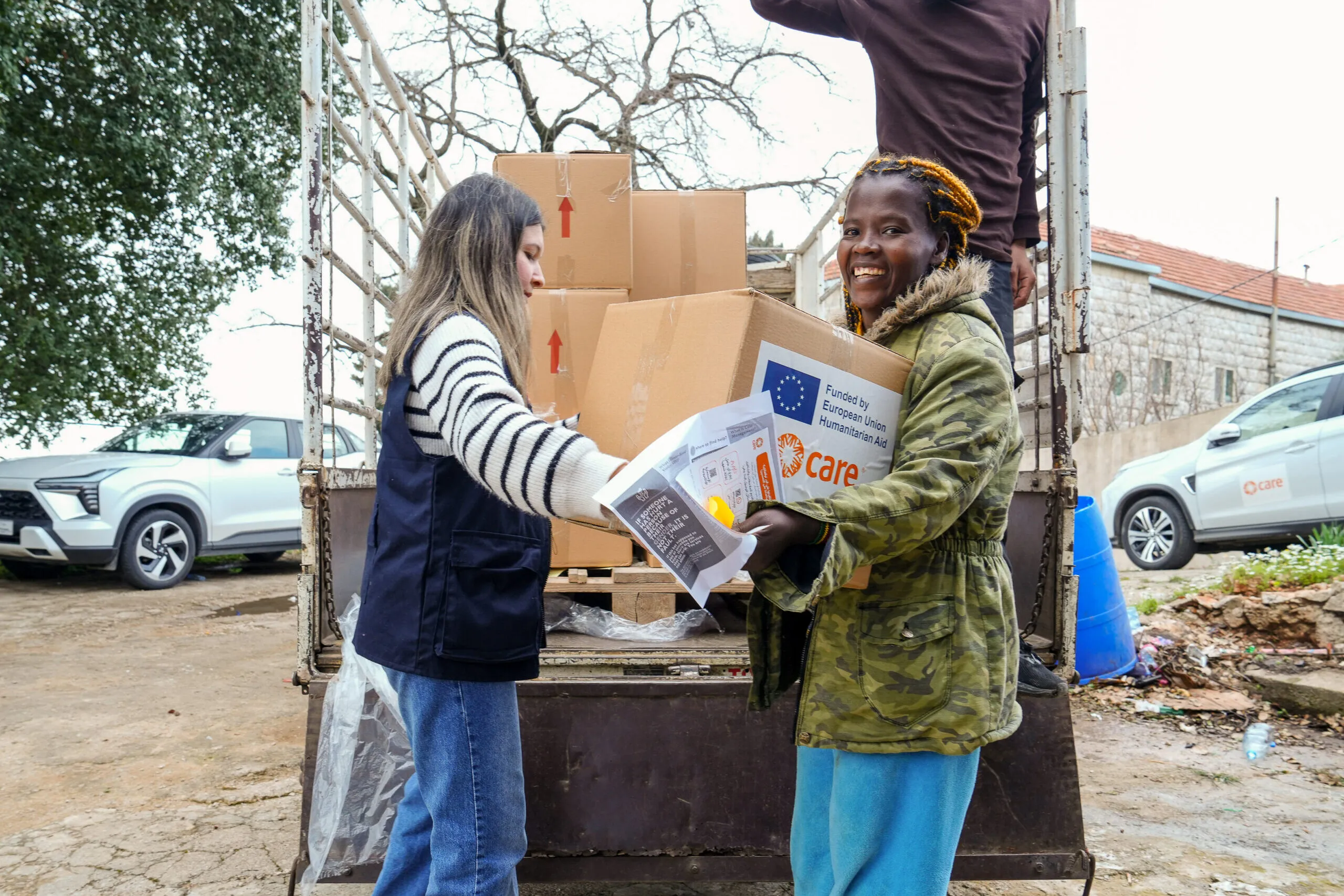
CARE staff member helping someone at a shelter hosting displaced families in Ghosta, Lebanon, in March 2026. Photo: CARE

For nearly 80 years, the CARE PACKAGE has shaped how Americans understand compassion, solidarity, and humanitarian action. From presidents and popes to Hollywood stars and families rebuilding after disaster, the CARE PACKAGE became more than aid — it became a global symbol of hope.

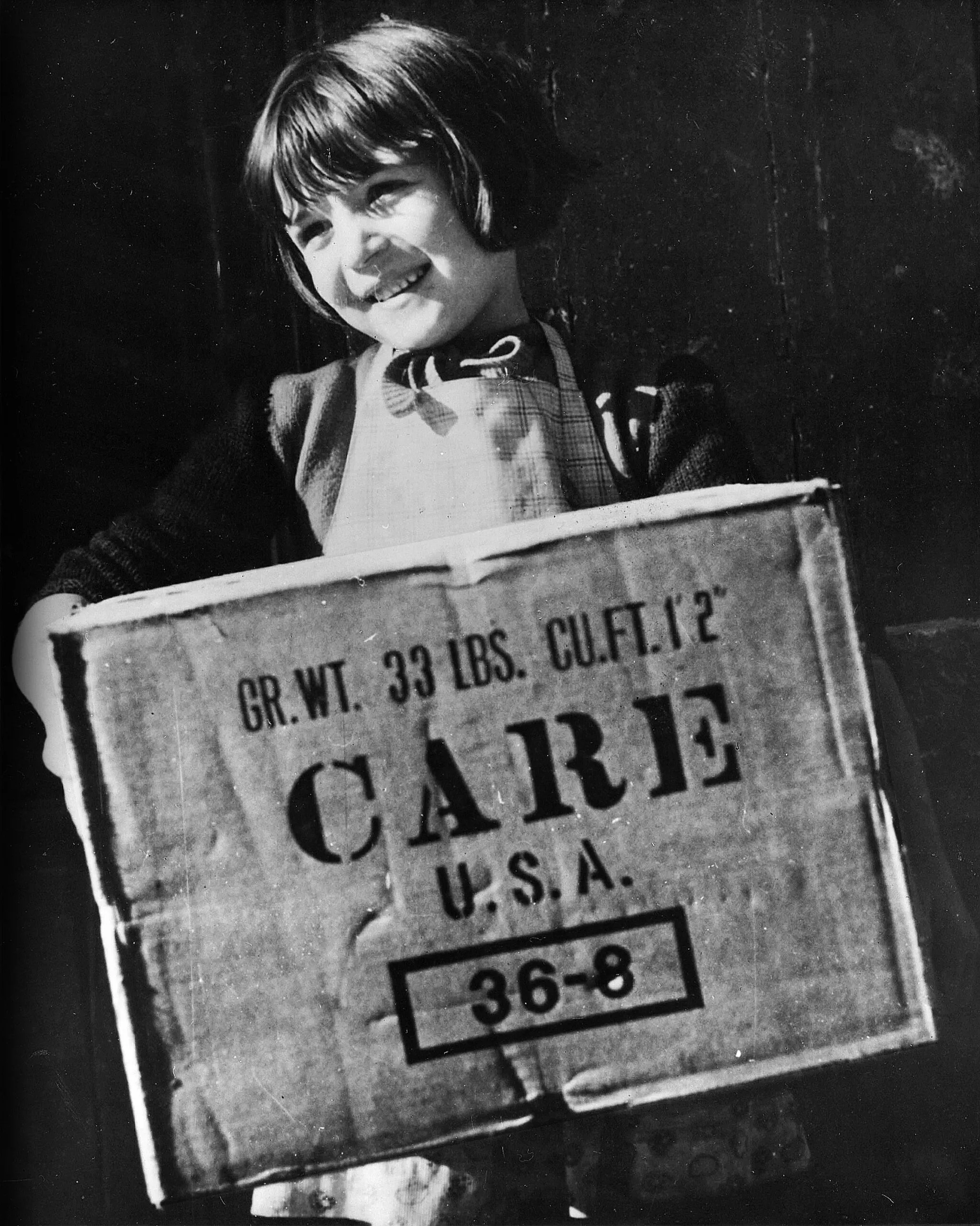
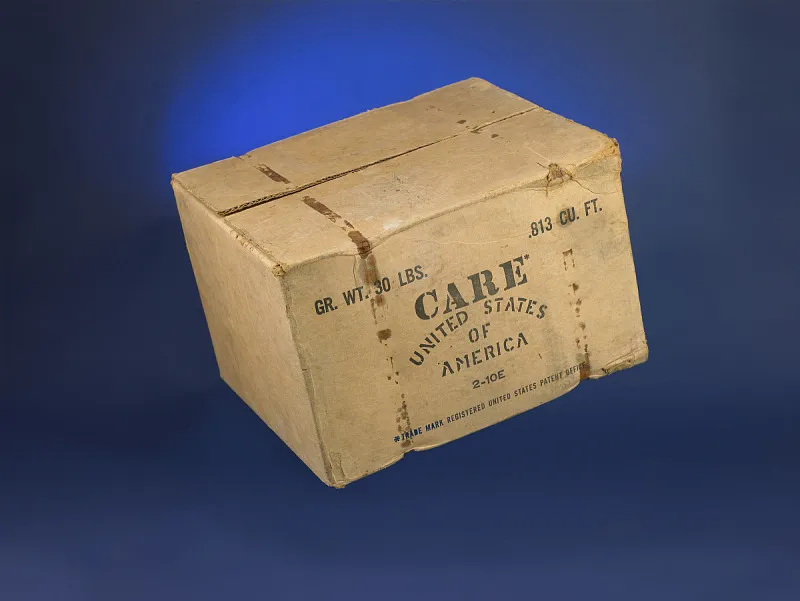
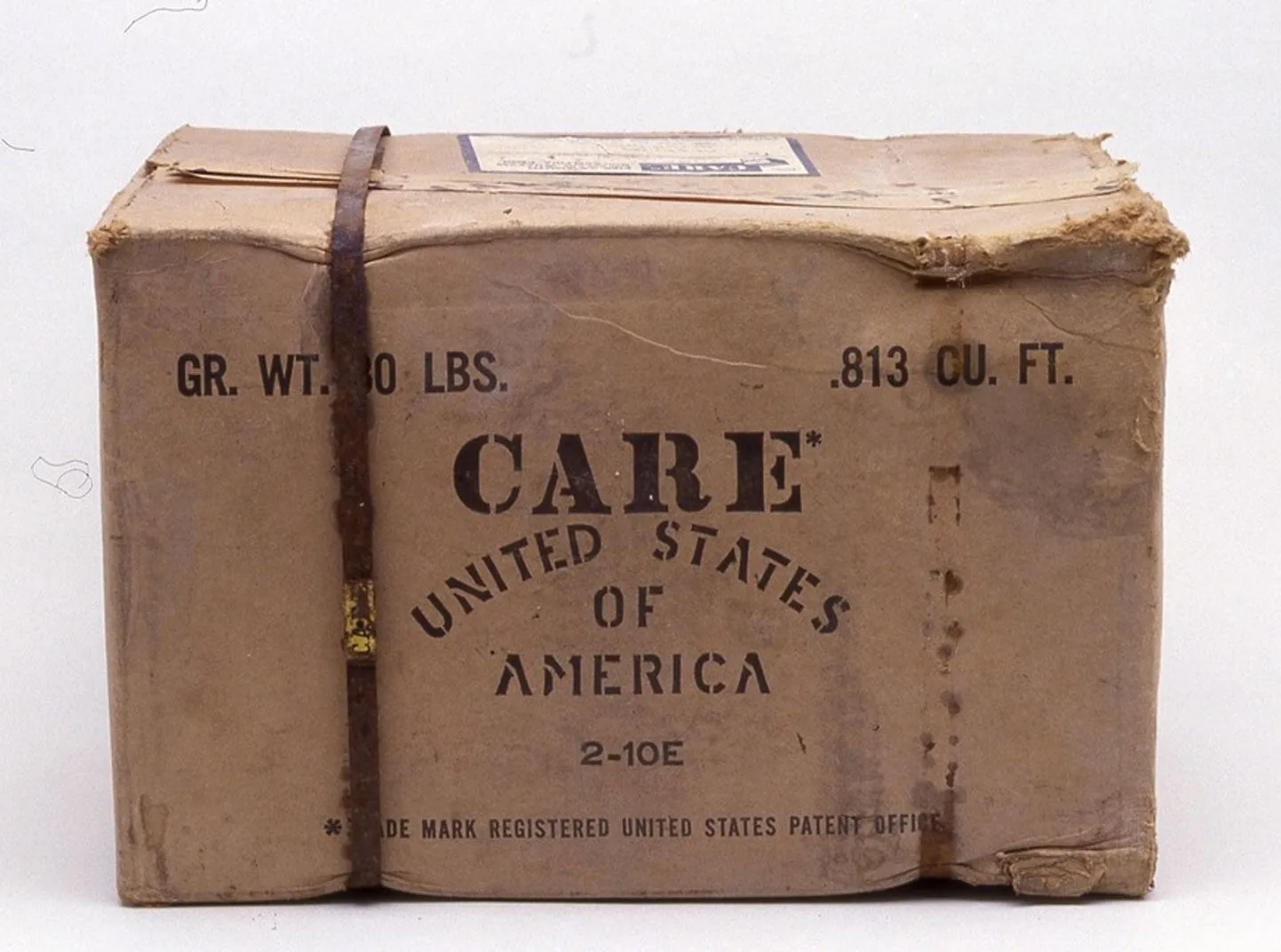
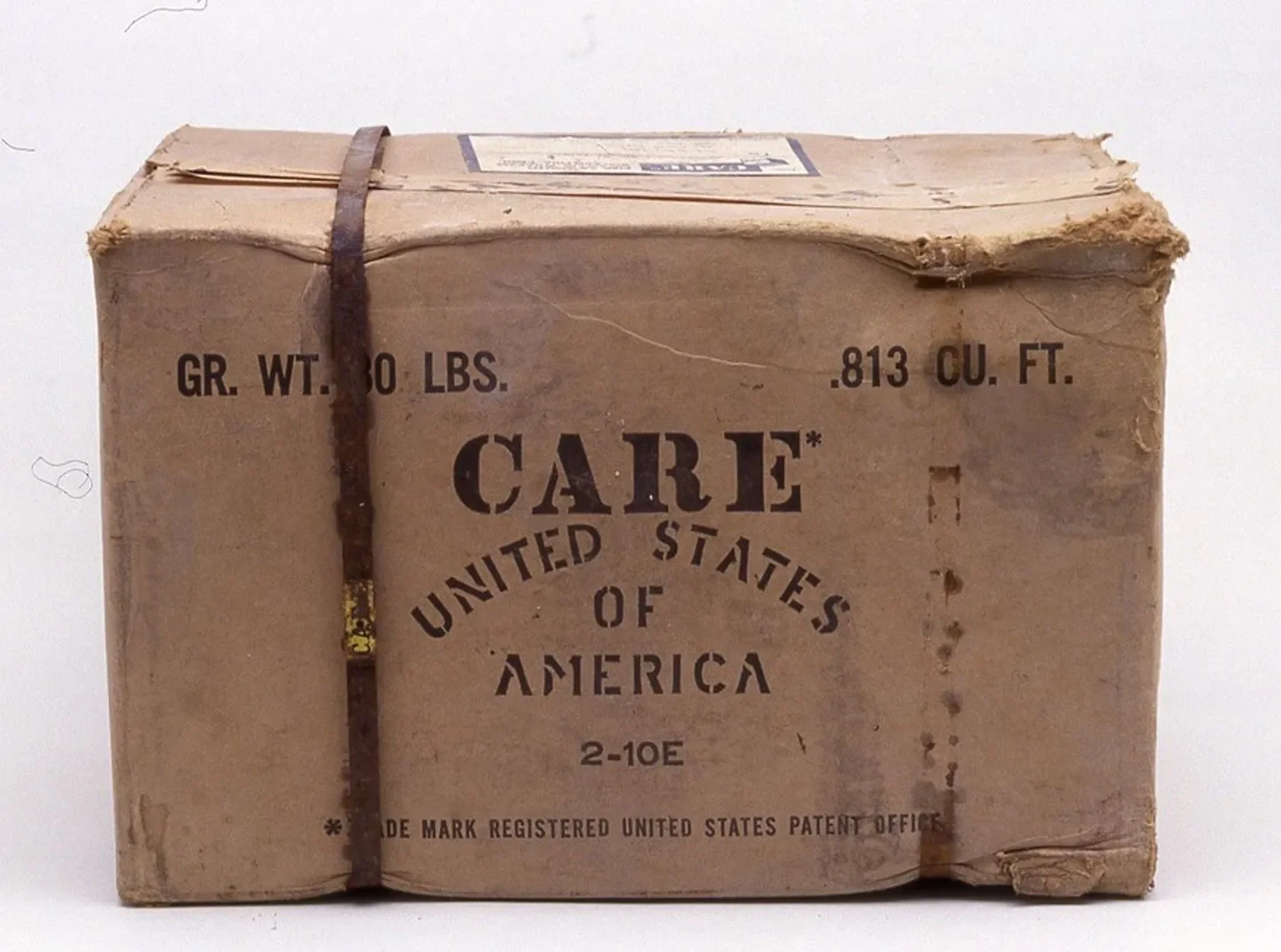
A cardboard box stamped,
A picture of the side of the original post-World War II CARE PACKAGE. Photo: CARE
In this article

    From a box to an American ambassador

    Few humanitarian ideas become part of everyday language. Fewer still become part of a nation’s identity. But for nearly 80 years, the CARE PACKAGE has represented something millions of people around the world instantly recognized: a simple, personal act of American compassion.

    Long before many families ever met an American, they encountered a CARE PACKAGE — a box filled with food, supplies, and proof that someone far away cared about their survival. In the aftermath of war, hunger, disaster, and displacement, the CARE PACKAGE became one of the most powerful humanitarian symbols in modern history. For generations, it shaped how people around the world understood America: not through politics or power, but through kindness, generosity, and action.

    What began in 1946 as emergency food relief for families recovering from World War II evolved into a global cultural icon, woven into diplomacy, popular culture, public memory, and everyday language itself. The photos, artifacts, advertisements, and stories in this essay trace how a cardboard box became both a lifeline and a lasting symbol of hope — one that continues to connect Americans with people facing crisis around the world today.
    In this article

      1946: The first CARE PACKAGE arrives

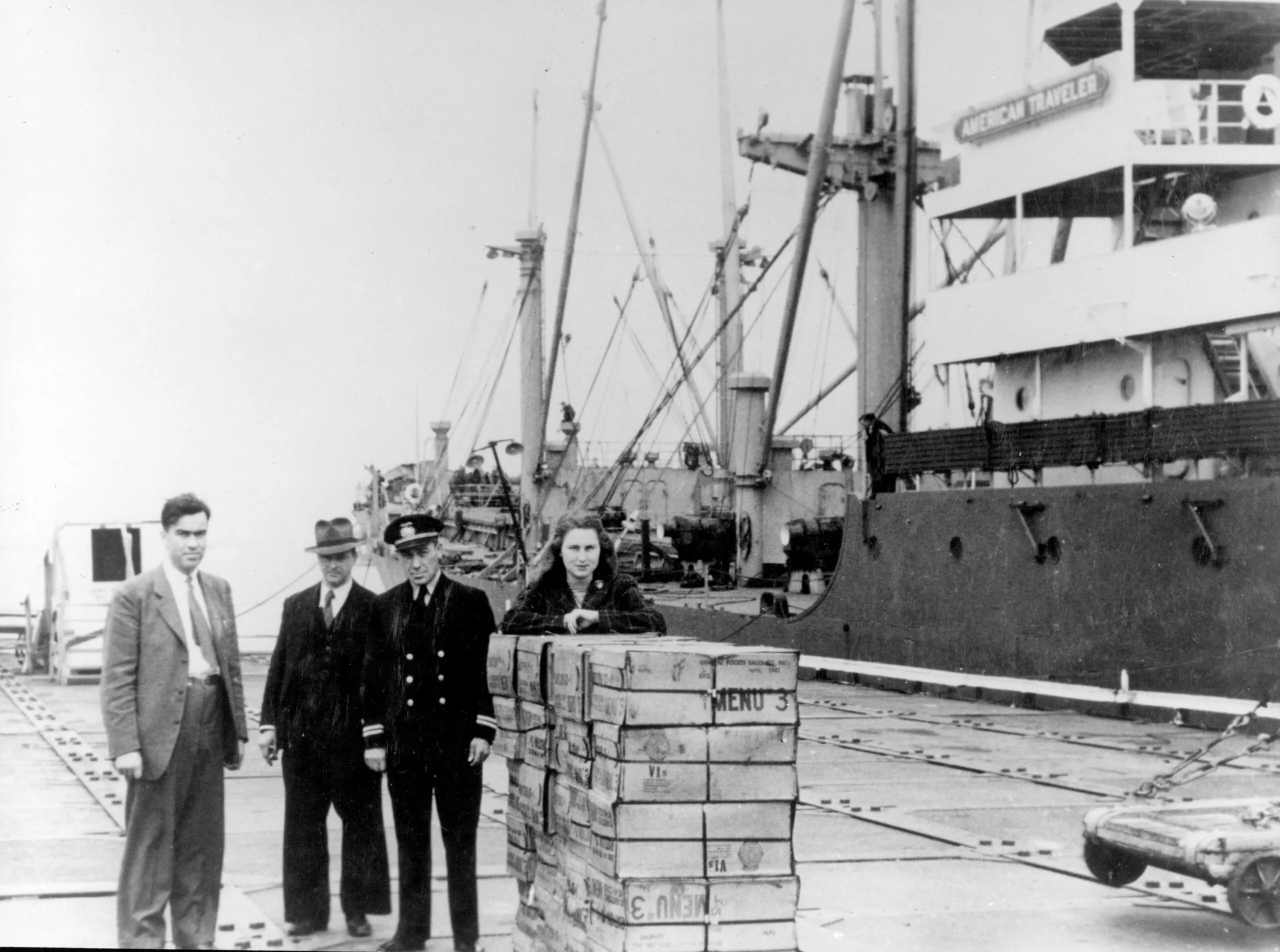
      In 1945, the idea for CARE was born when 22 American charities came together to help people in post-World War II Europe. They called the organization the Cooperative for American Remittances to Europe, or CARE. The idea was simple: send surplus military food rations to war-torn families.

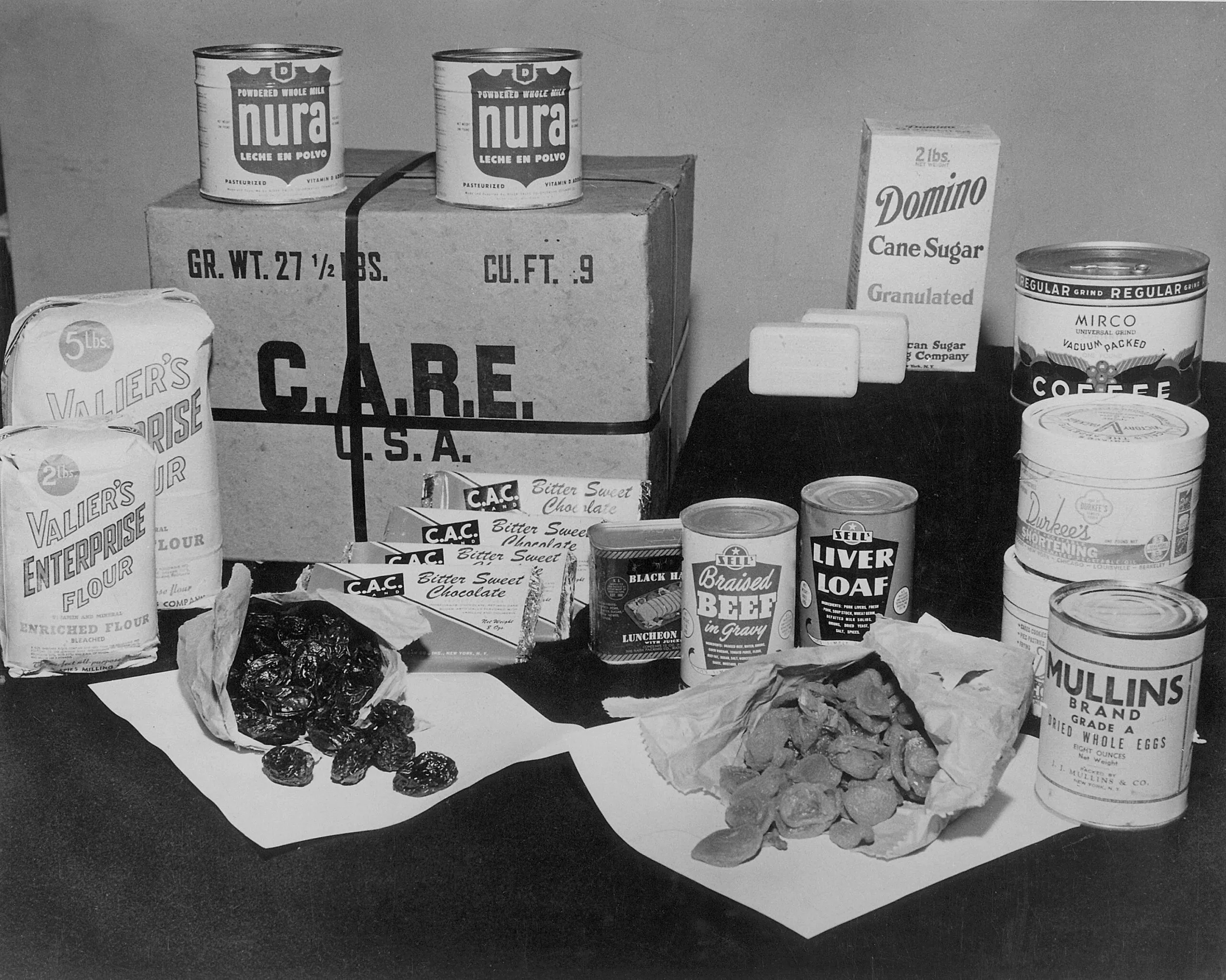
      The first CARE PACKAGE boxes were delivered in Le Havre, France, in May 1946. Each package contained enough provisions to feed a meal for 10 people and included:

      • One pound of beef in broth
      • One pound of steak and kidneys
      • Eight ounces of liver loaf
      • 12 ounces of luncheon loaf (like Spam)
      • Eight ounces of bacon
      • Two pounds of margarine
      • One pound of lard
      • One pound of fruit preserves
      • One pound of honey
      • One pound of raisins
      • One pound of chocolate
      • Two pounds of sugar
      • Eight ounces of egg powder
      • Two pounds of whole-milk powder
      • Two pounds of coffee

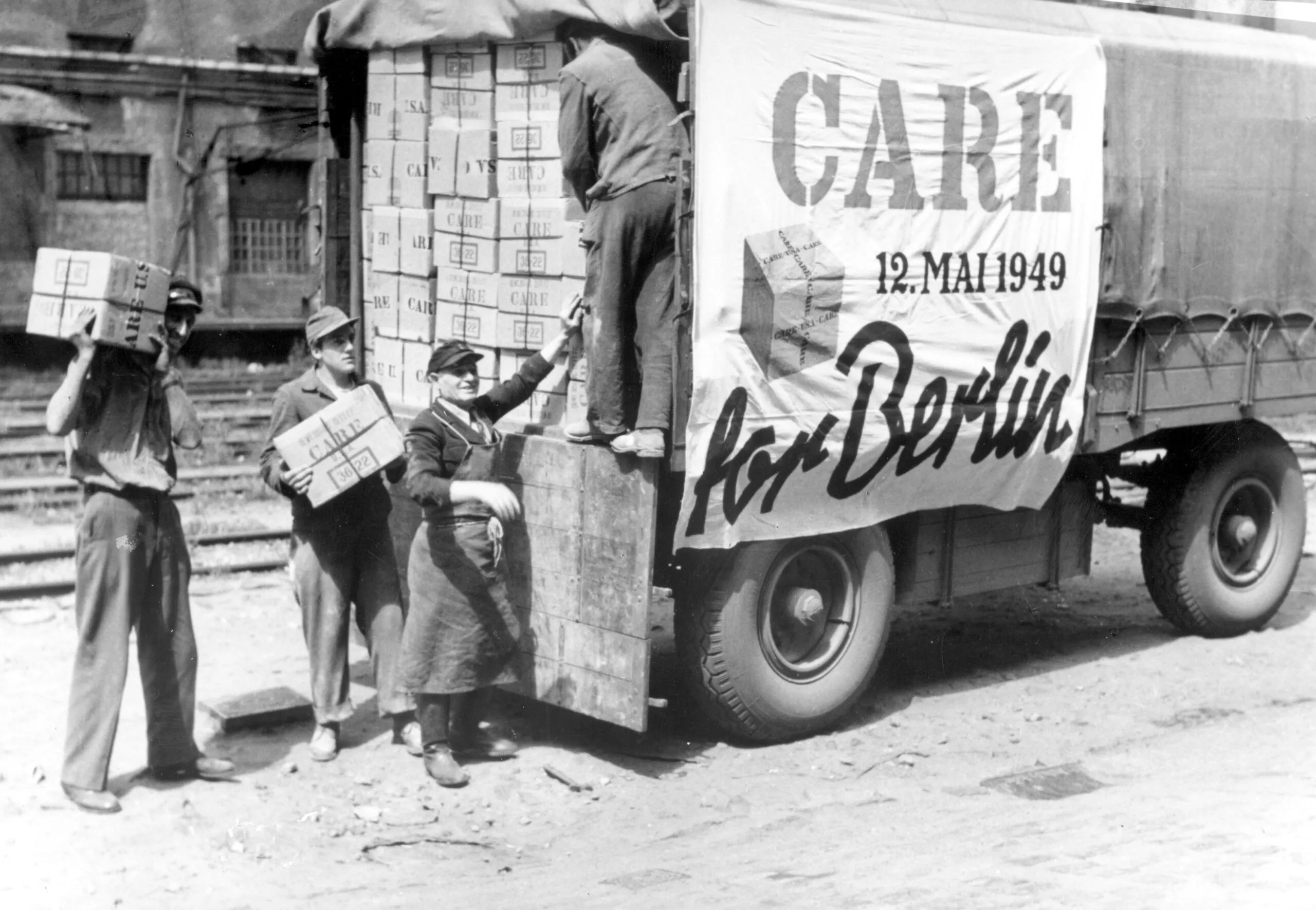
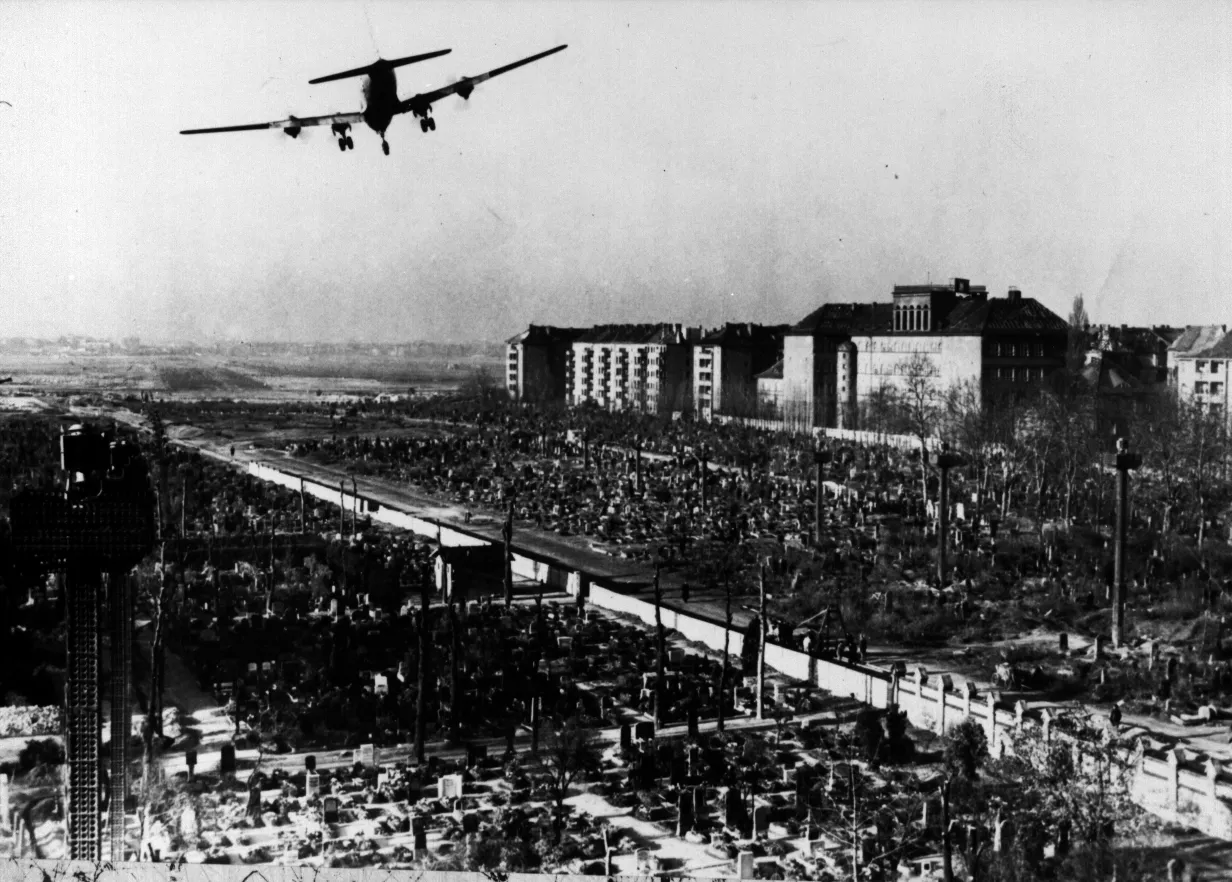
      Americans rallied to support the war recovery in the years that followed, allowing CARE to continue to deliver aid directly to those in need. When the Soviet Union blocked off parts of Berlin in 1948, citizens eagerly awaited the “raisin bombers,” U.S. planes filled with CARE PACKAGE boxes. It was a sign the CARE PACKAGE was becoming a symbol of America’s goodwill.

      As postwar rebuilding in Europe evolved, so did CARE. Missions expanded to Asia, Israel, and eventually, wherever humanitarian aid was needed. Within just a few years, the CARE PACKAGE was on its way to becoming a global icon for generosity.

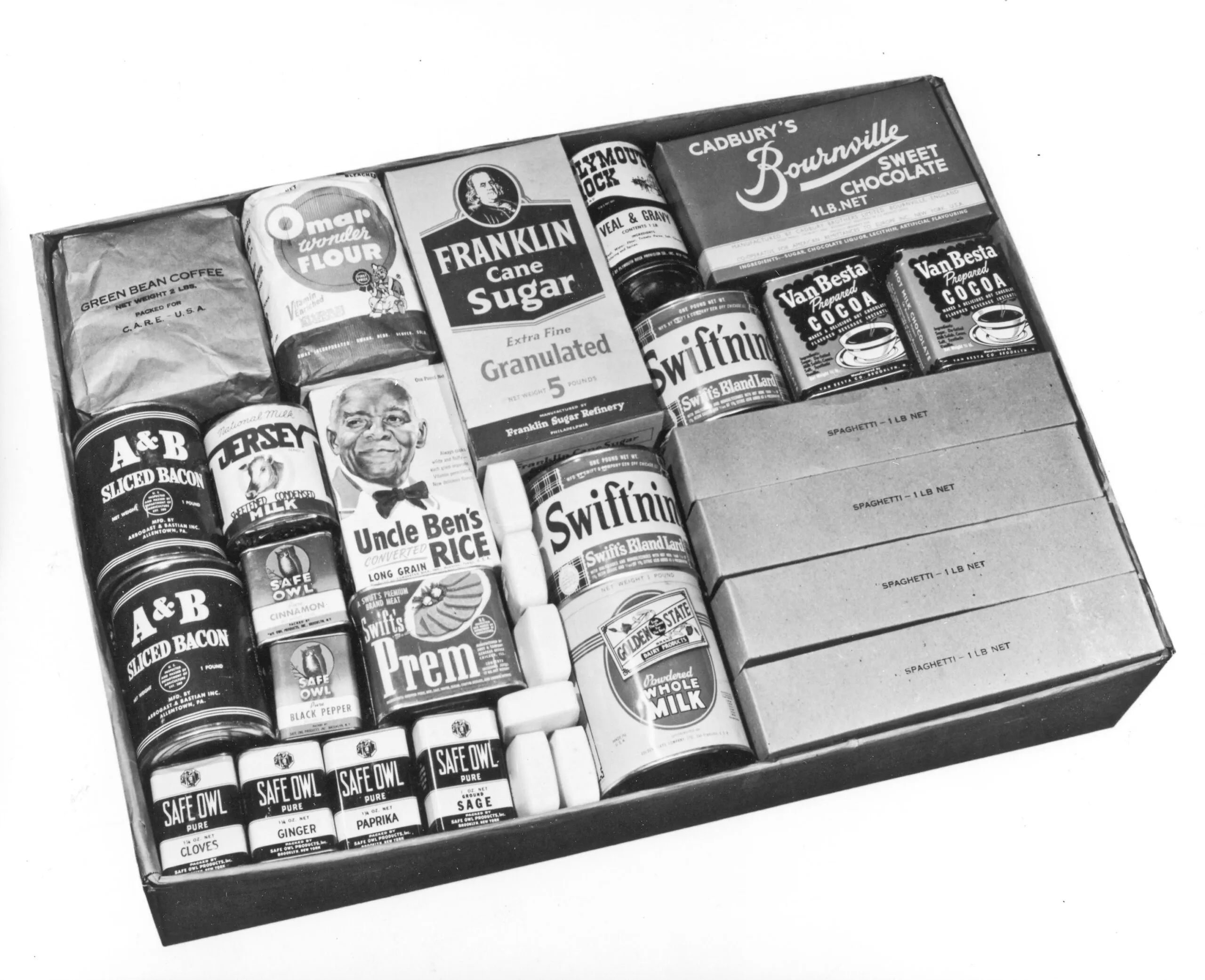
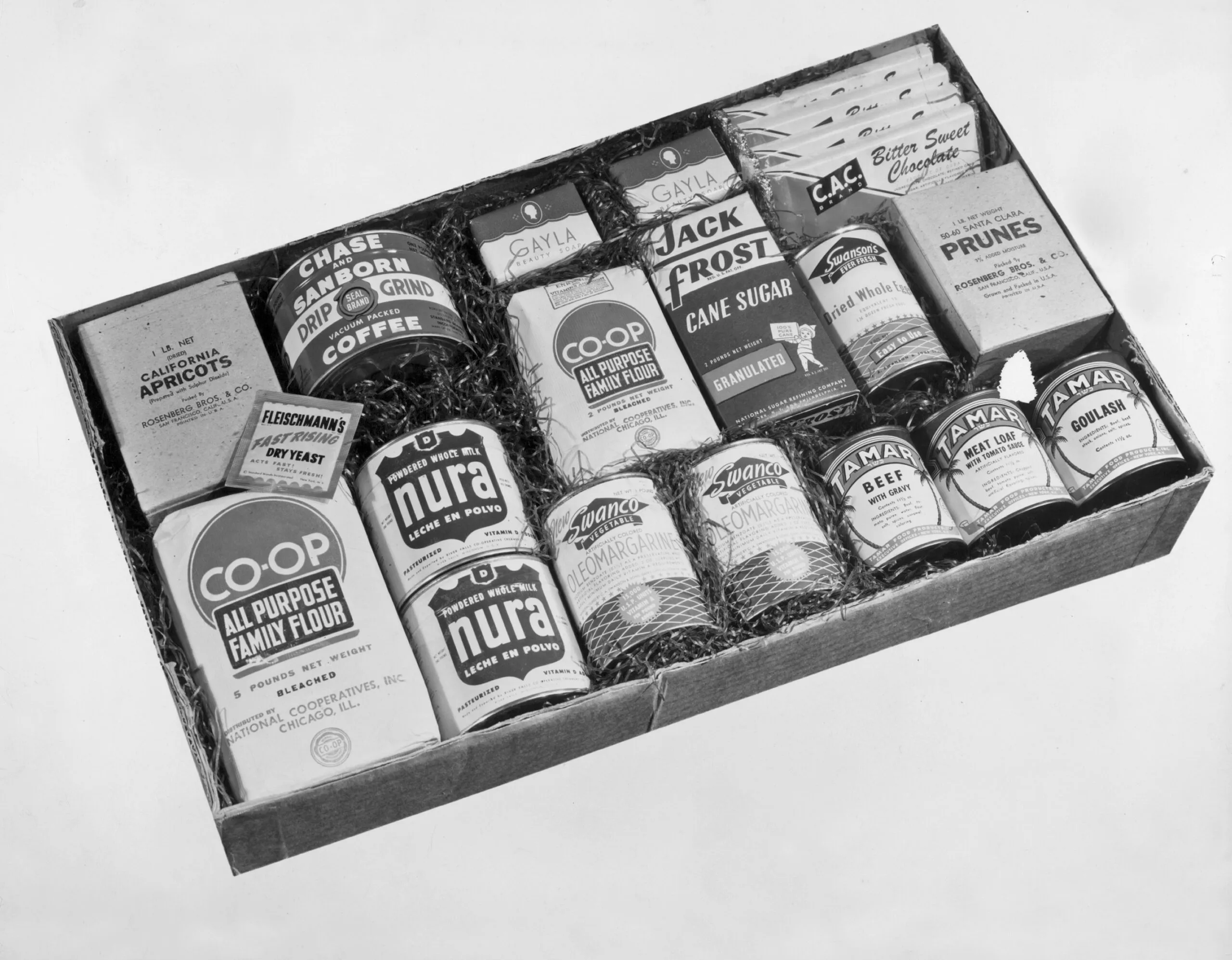
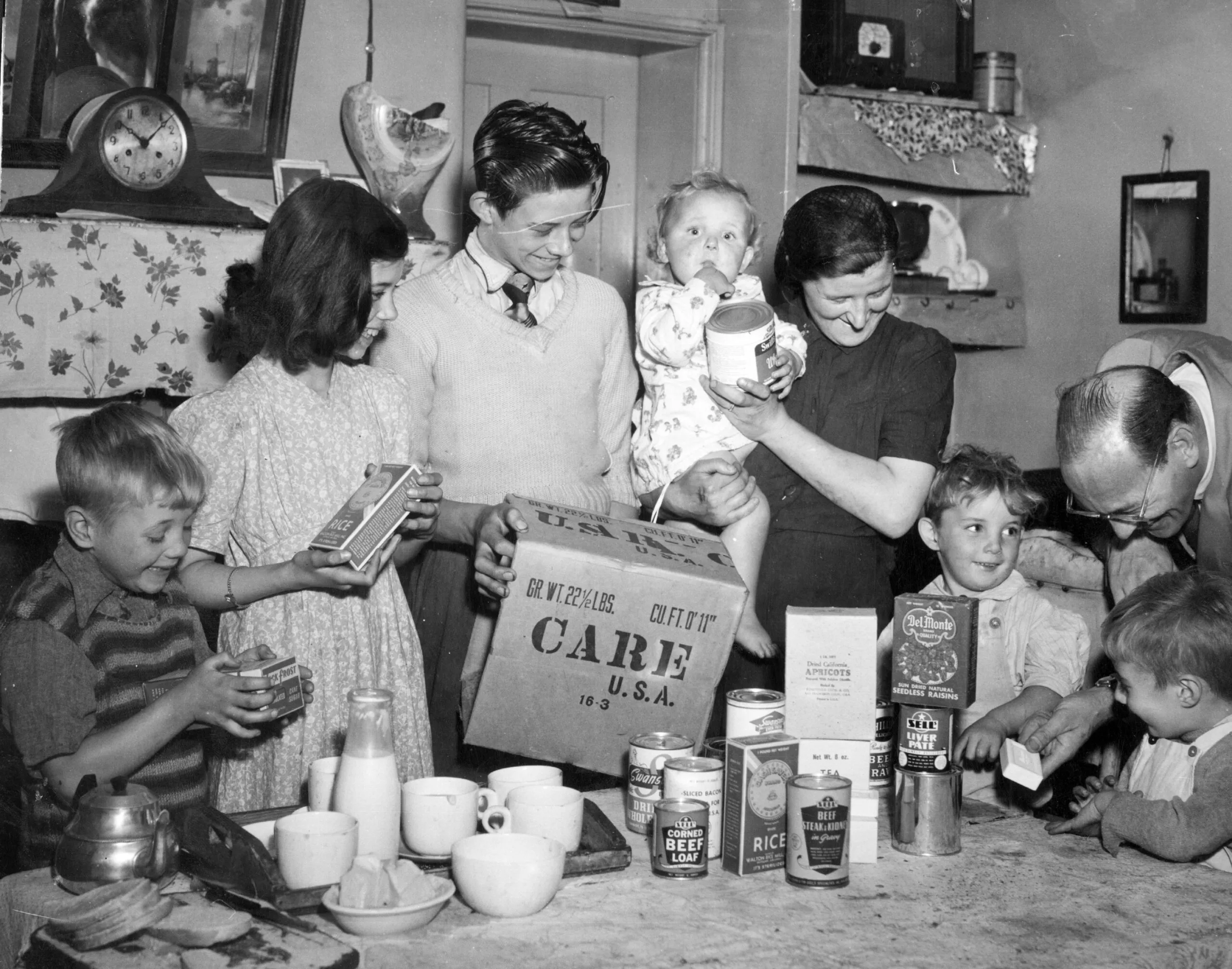
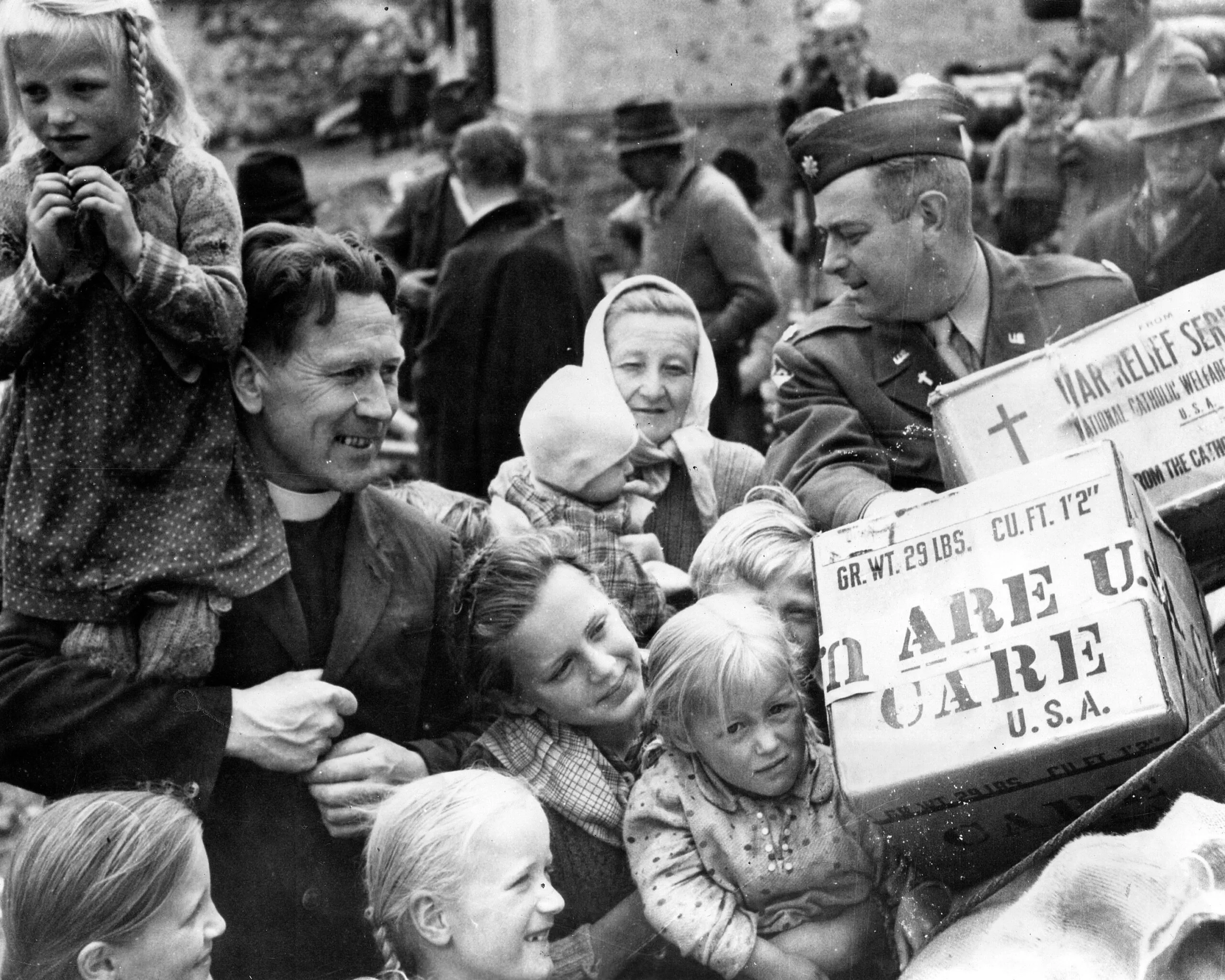
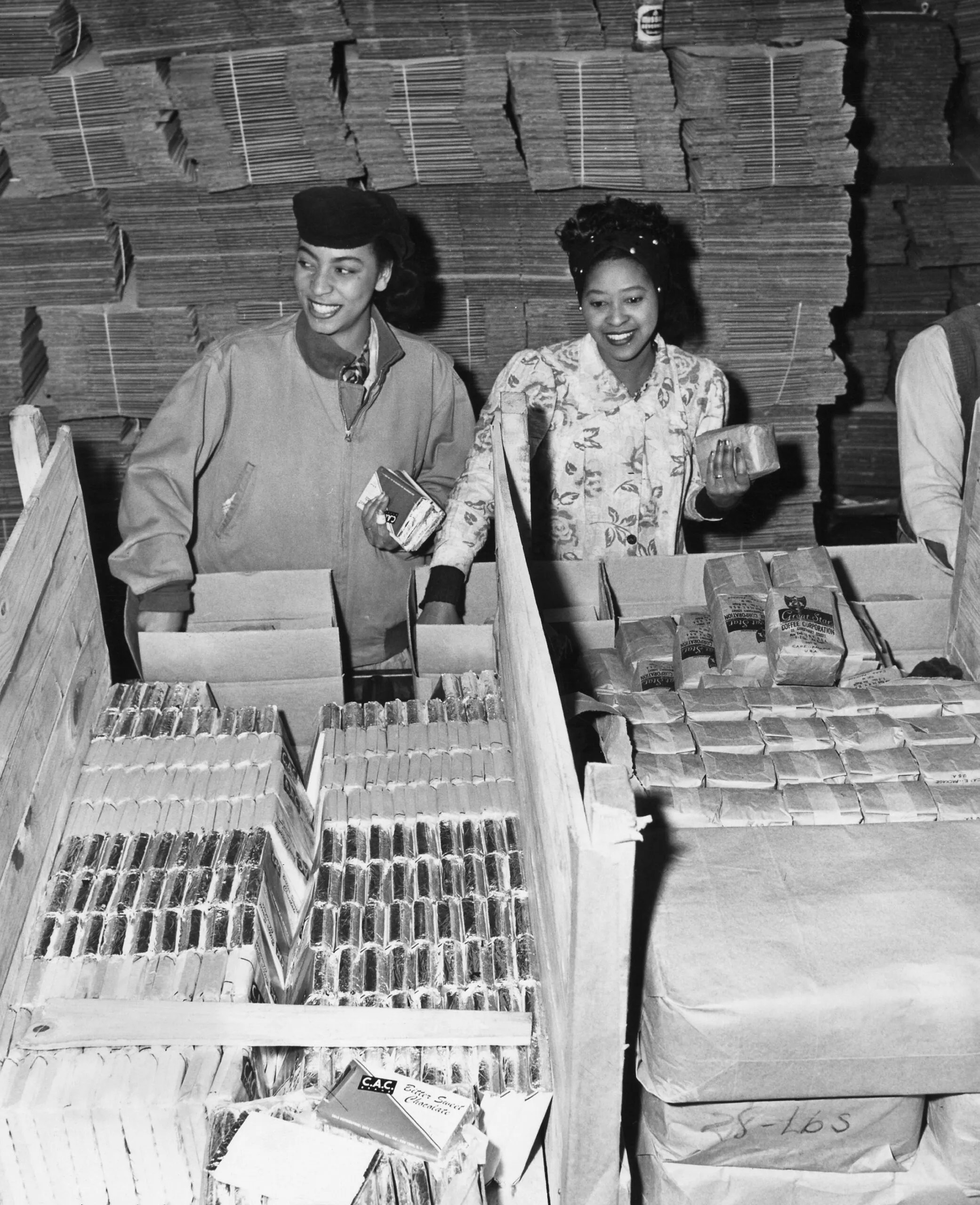
      A black and white photo of three men and a woman standing on a dock next to a large pallet of CARE PACKAGE parcels with a ship in the background. A historical image of items found in a CARE PACKAGE from the 1940s. The items are positioned on a table and include: cans of meat, bags of sugar, bars of chocolate, a can of coffee and dried fruit. A black and white photo of an open CARE PACKAGE. The items inside the box include: cans of meat, a box of rice, seasonings, cocoa, chocolate, and more. A historical image of an open kosher food CARE PACKAGE. The items inside the box include: luncheon meat, coffee, sugar, chocolate, soup and more. A black and white photo of a mother and her six children in their kitchen looking at the items from a CARE PACKAGE that a CARE worker has given them. A black and white photo of a Reverend with a group of children and women being handed a CARE PACKAGE by a man in a military uniform. A black and white photo of two women in a warehouse putting items inside CARE PACKAGE boxes.
      1 of 8
      The first CARE PACKAGE arrives

      In May 1946, the first CARE PACKAGE deliveries arrived in Le Havre, France, bringing food and other essentials to families recovering from the devastation of WWII. Photo: CARE

      “Receiving a CARE PACKAGE at that time ensured survival. And ensured that they could lay a foundation for the future.”

      Mitchell Wirth

      In this article

        A symbol recognized around the world

        In the years after World War II, the CARE PACKAGE crossed oceans carrying food, tools, woolens, and other essentials. In Italy, some packages even included pasta and other familiar foods as a reminder that care could be practical, personal, and close to home. 

        But the CARE PACKAGE did not remain a private exchange between sender and recipient. It was recognized in ports, train stations, warehouses, churches, schools, and family homes. Its name was emblazoned on shipping labels, translated materials, photographs, and public appeals for support. As CARE expanded its reach, the package became something people recognized before they even knew the story behind it: a plain box with a powerful promise. 

        By 1946, that recognition reached the Holy See. After an official Vatican audience with CARE staff, Pope Pius XII gave CARE’s work a formal blessing, later stating that “the American people have a genius for splendid and unselfish action.” He compared CARE’s work to “the noble flame of brotherly love,” and prayed for CARE to “keep alive this flame, increase it, carry it wherever there be a groan of suffering, a lament of mystery, a cry of pain, and nourish it evermore.” 

        That moment and recognition reflected how quickly CARE’s work had entered a wider moral and public imagination. The simple boxes were no longer just shipments of supplies. It was a symbol that people across countries and faiths could understand together.  

        Over time, the package helped define a new language of humanitarian action. It made distant crises feel human without reducing people simply to their hardships. It invited Americans to understand their deeper connections to families rebuilding lived far away. And for communities receiving CARE PACKAGE shipments, it offered something both practical and deeply necessary: evidence that they had not been forgotten. 
        What began as a parcel quickly became a global emblem of compassion, solidarity, and action — an unmistakable sign that someone, somewhere, cared enough to act. 

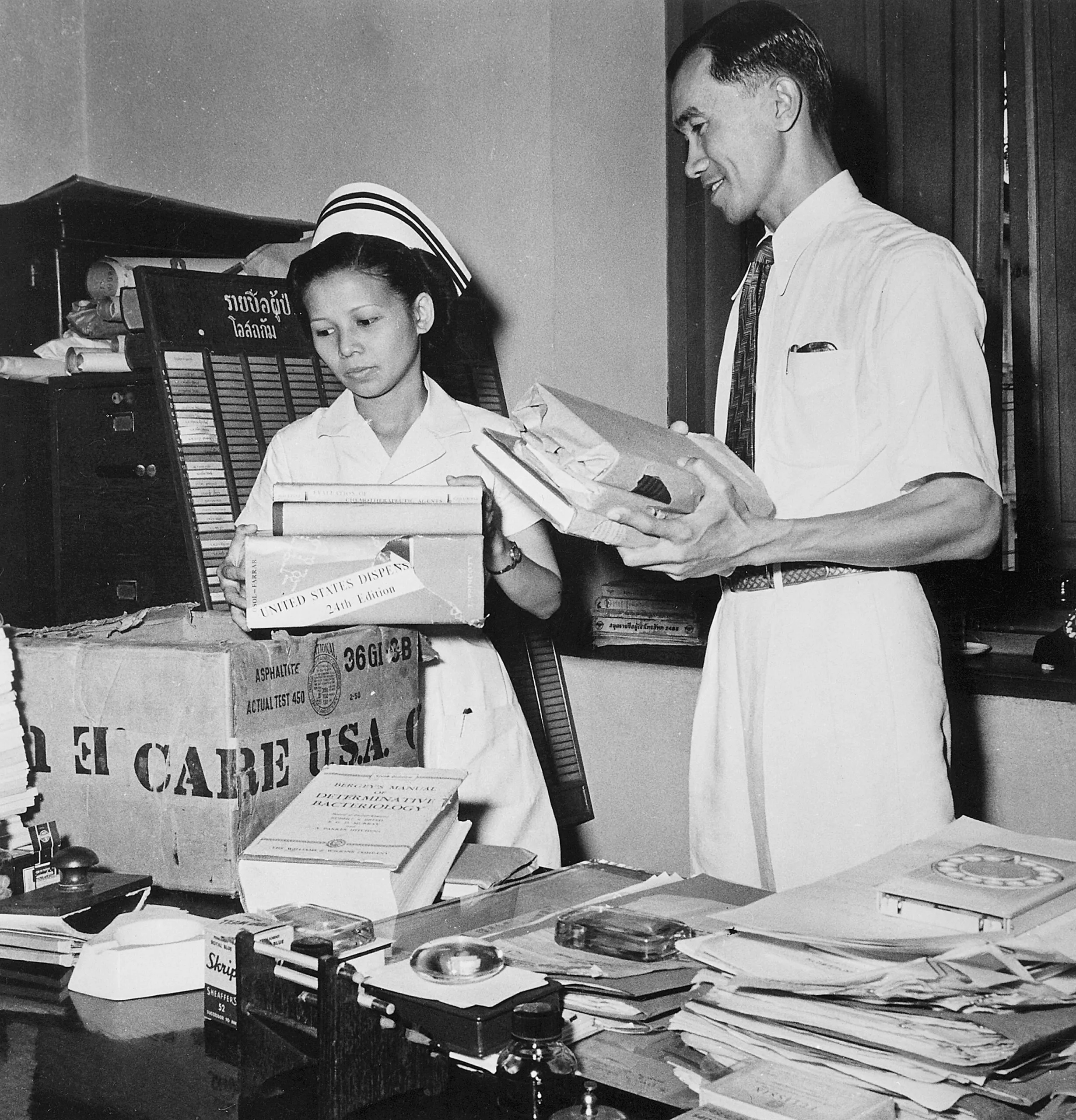
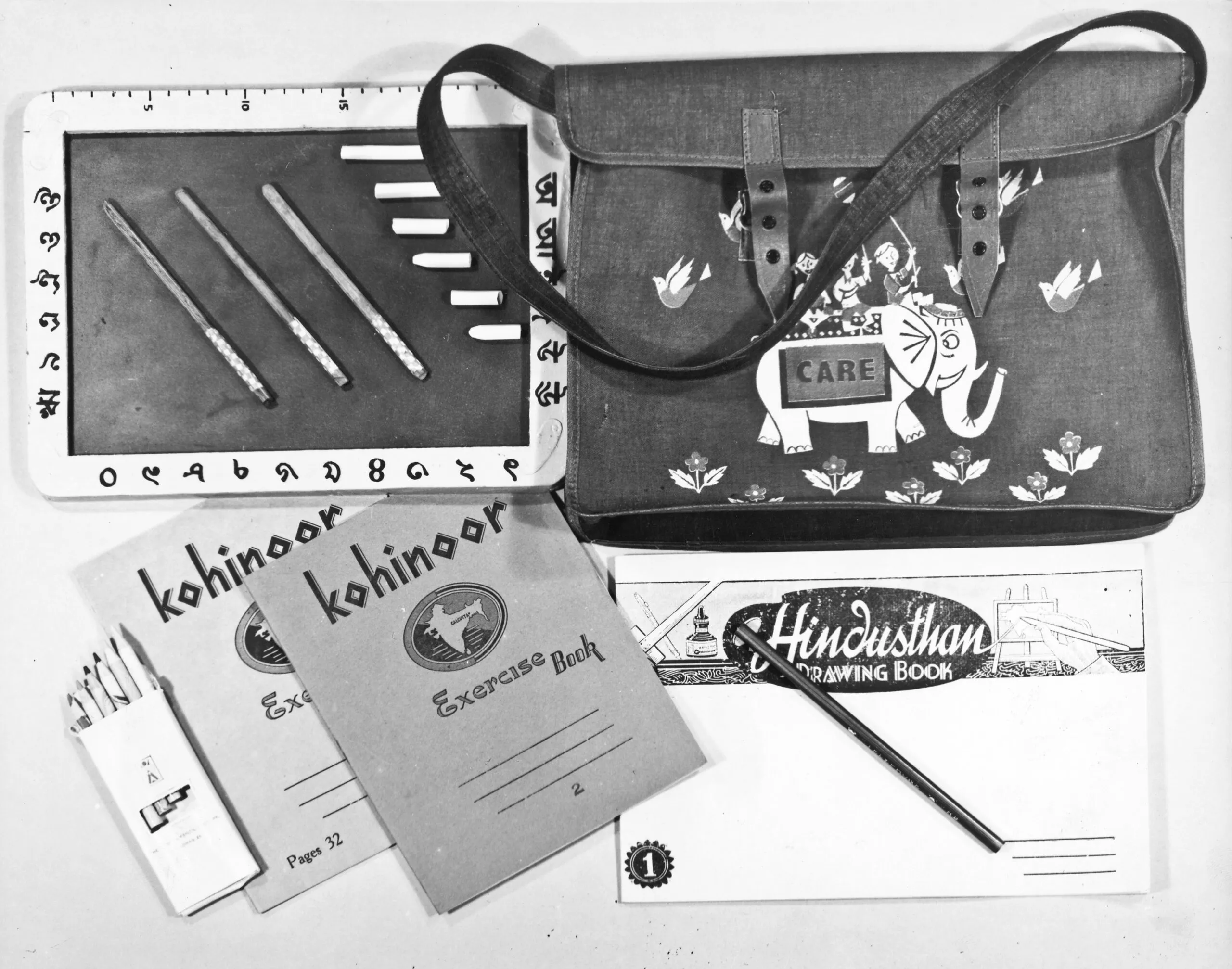
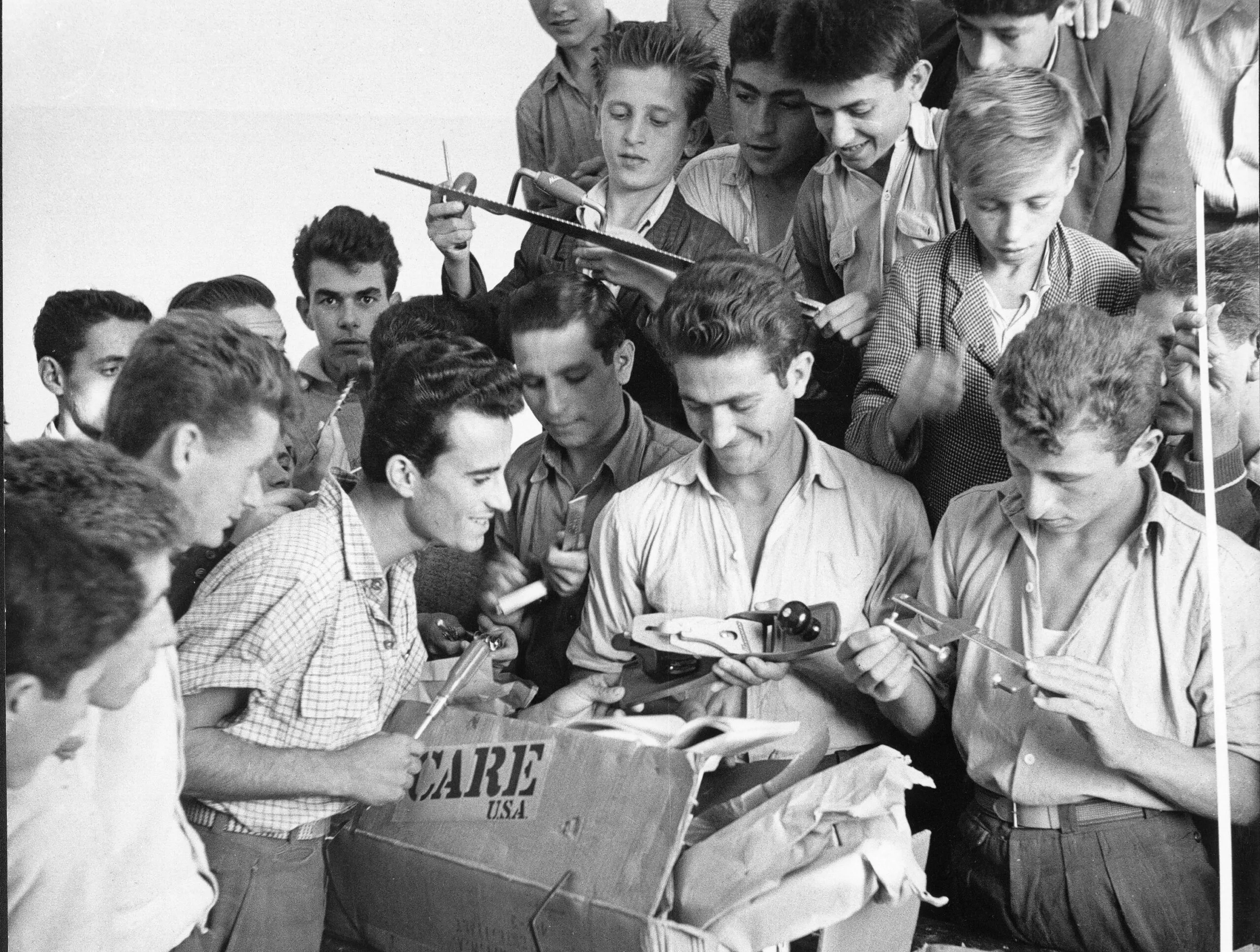
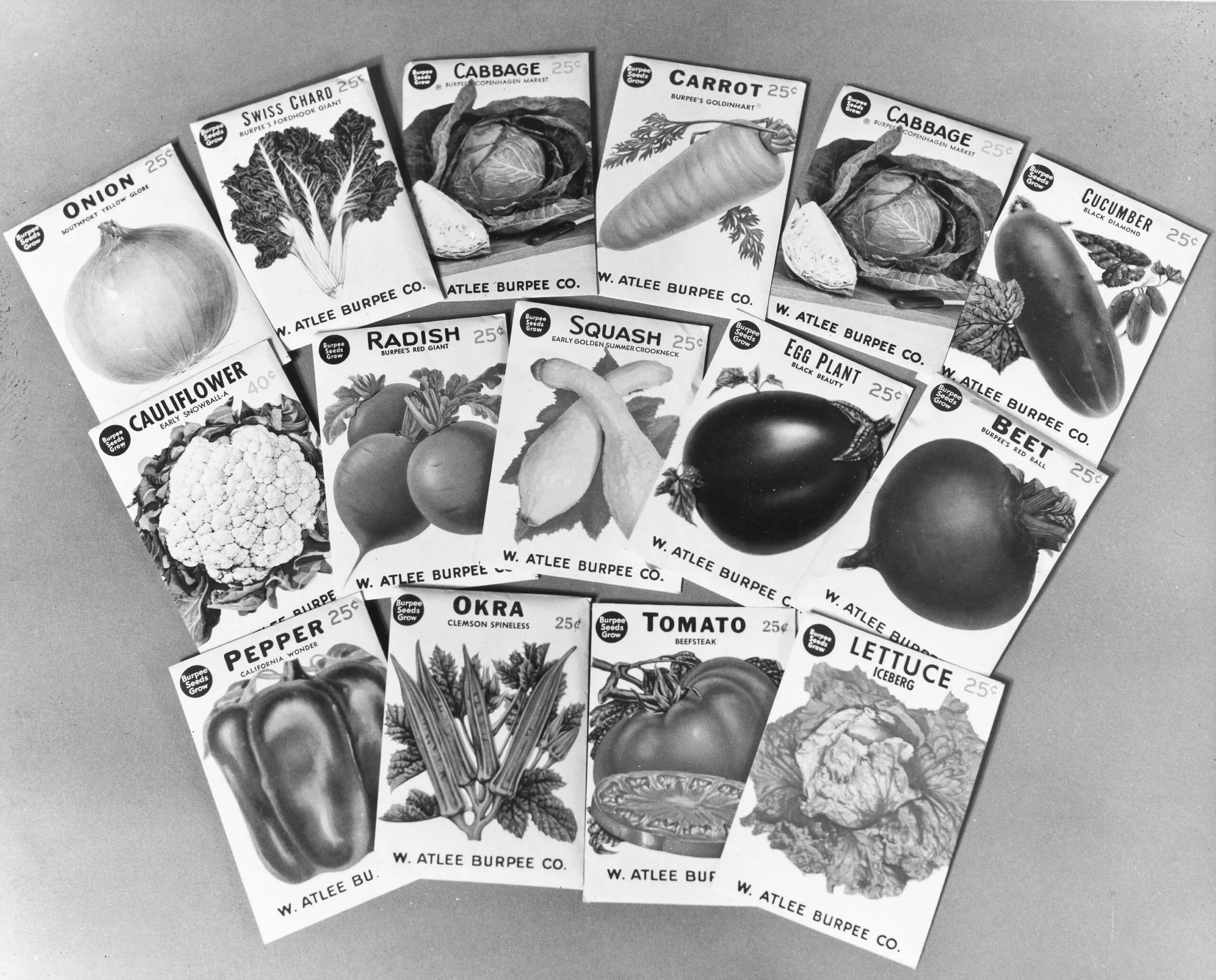
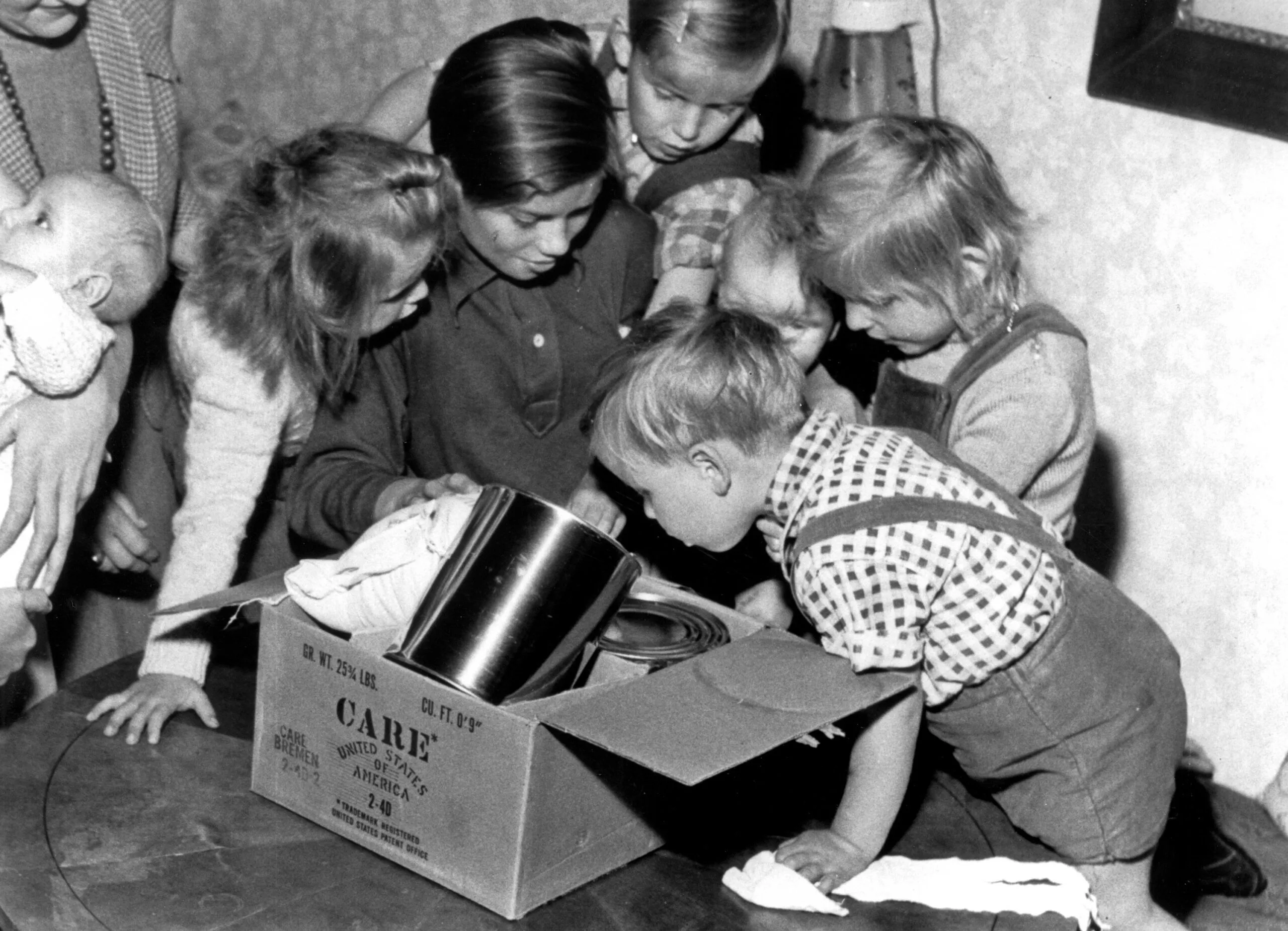
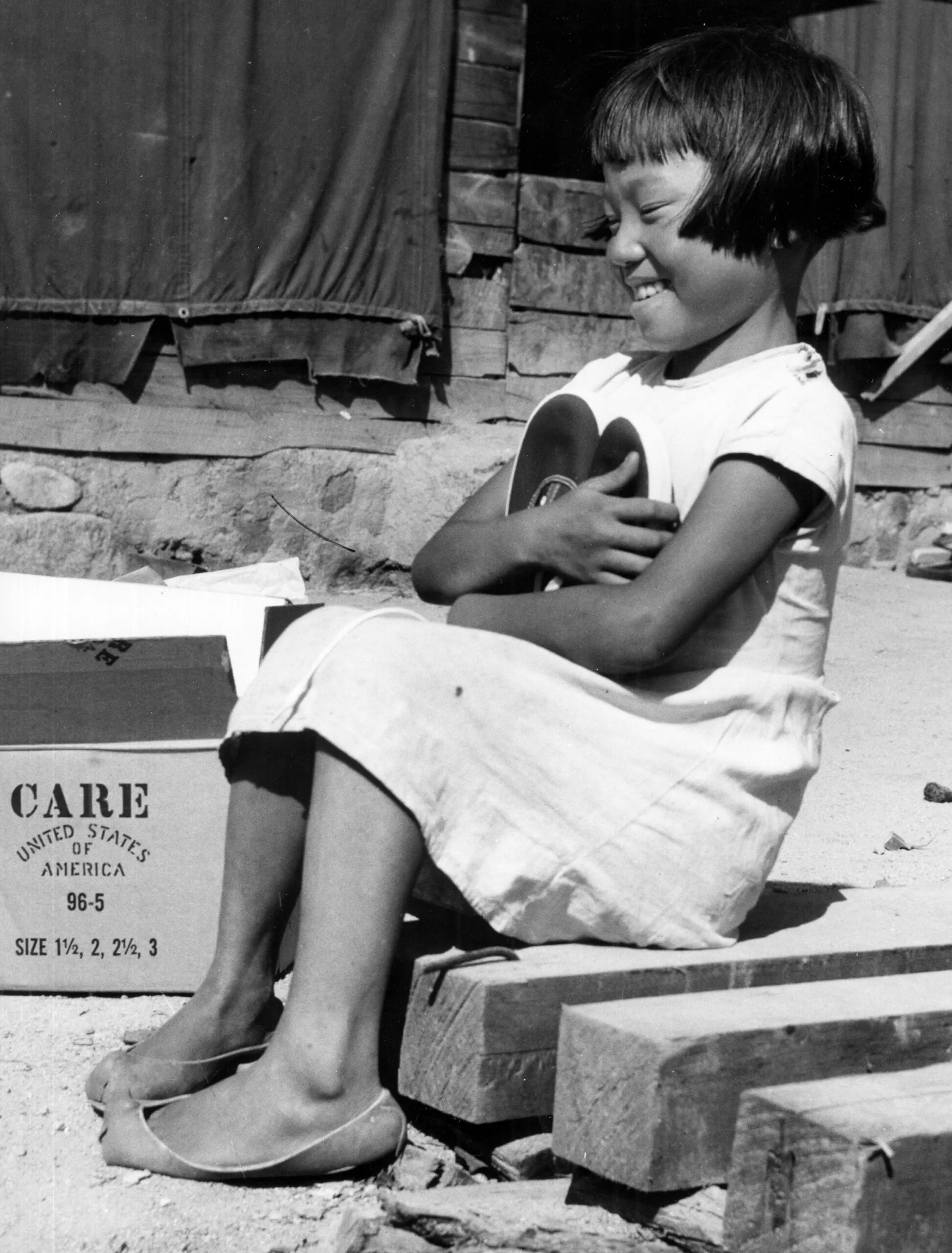
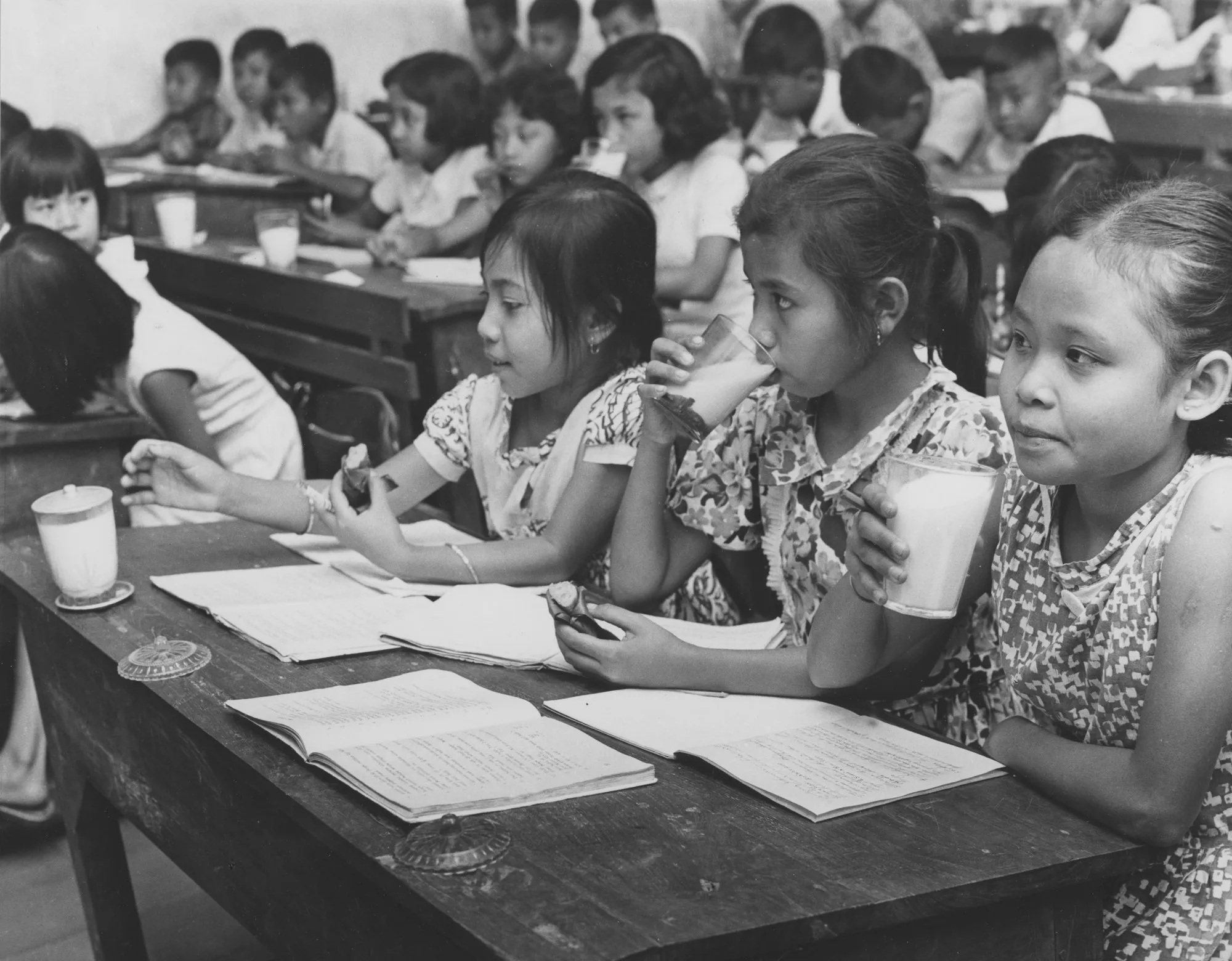
        A black and white photo of a doctor and nurse opening a CARE PACKAGE filled with medical books. A black and white photo of items from a CARE PACKAGE school kit. It contains pencils, a school bag, a drawing book and writing books. A black and white photo of a group of young men opening a CARE PACKAGE and looking at the new tools. A historical image of several different vegetable seed packages. The packages are from a CARE PACKAGE to help start a garden. A black and white photo of a group of children looking inside a CARE PACKAGE box. A black and white photo of a young girl sitting on a wooden block, smiling and hugging a pair of new shoes from a CARE PACKAGE. A historical image of young girls in school, sitting at tables and drinking milk.
        1 of 7
        A symbol recognized around the world

        Doctors review medical textbooks donated through the CARE Book Fund in Bangkok, Thailand. By the 1960s, CARE’s work had expanded beyond emergency food aid to include long-term investments in education and professional training. Photo: CARE

        “I am so grateful to CARE for that wonderful package which I will never forget for as long as I live.”

        Renate Senter

        In this article

          The CARE PACKAGE enters American culture

          As CARE expanded across the world, the CARE PACKAGE also found a permanent place in American culture. The New York Times reported on CARE’s early appeal for Americans “to assist corresponding groups in European countries by sending food parcels abroad through the Cooperate for American Remittances to Europe (CARE).” The phrase “CARE PACKAGE” quickly entered everyday language as shorthand for sending comfort, essentials, and love to someone far away. Parents mailed “CARE PACKAGEs” to children at college. Families sent them to loved ones serving overseas. Friends assembled them during moments of illness, grief, or transition. Over time, the CARE PACKAGE became more than a humanitarian parcel — it became part of a shared American vocabulary of compassion. In 1962, it entered the Merriam-Webster dictionary 
          Few humanitarian organizations have so deeply shaped not only global relief efforts, but also the language Americans use to express care itself.

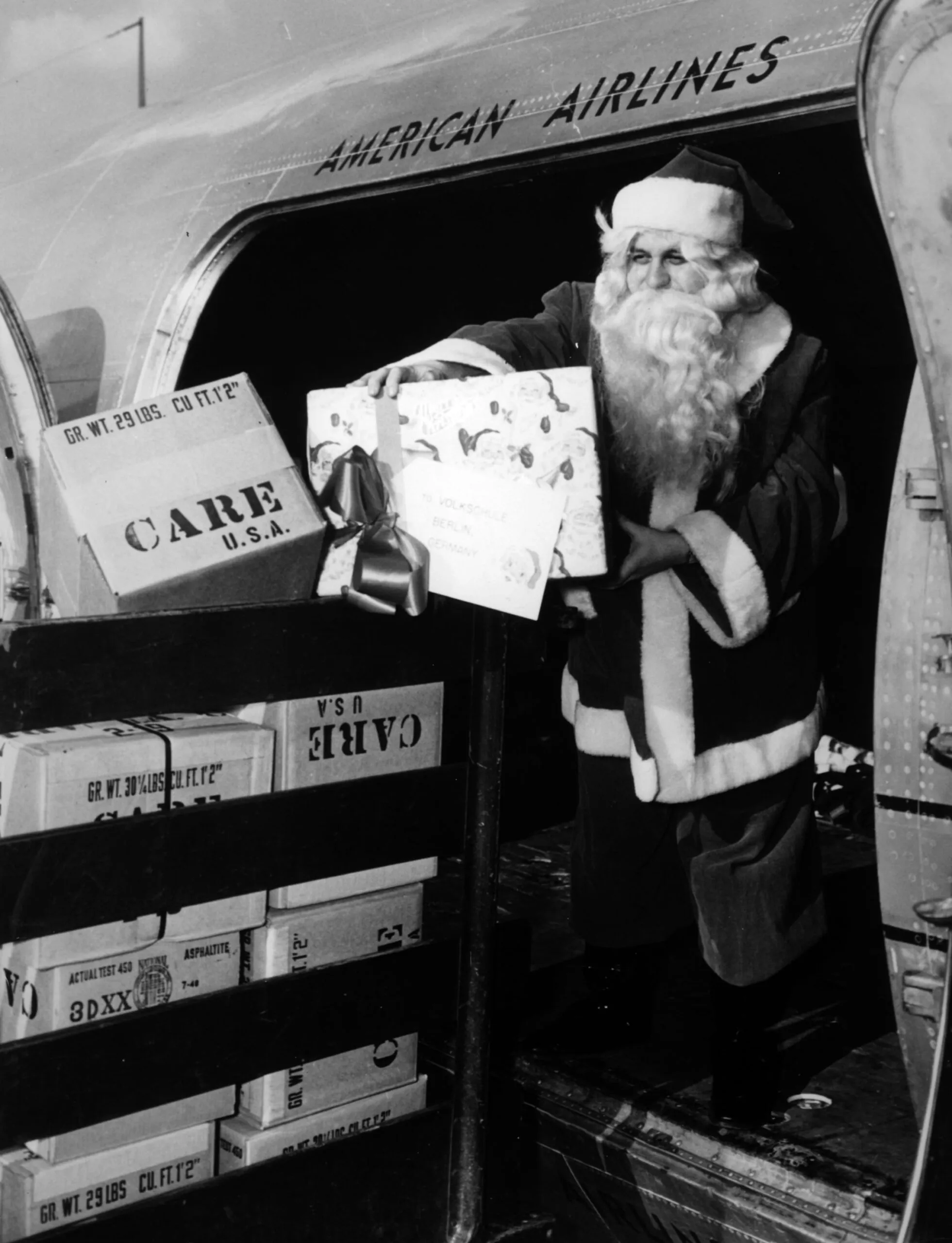
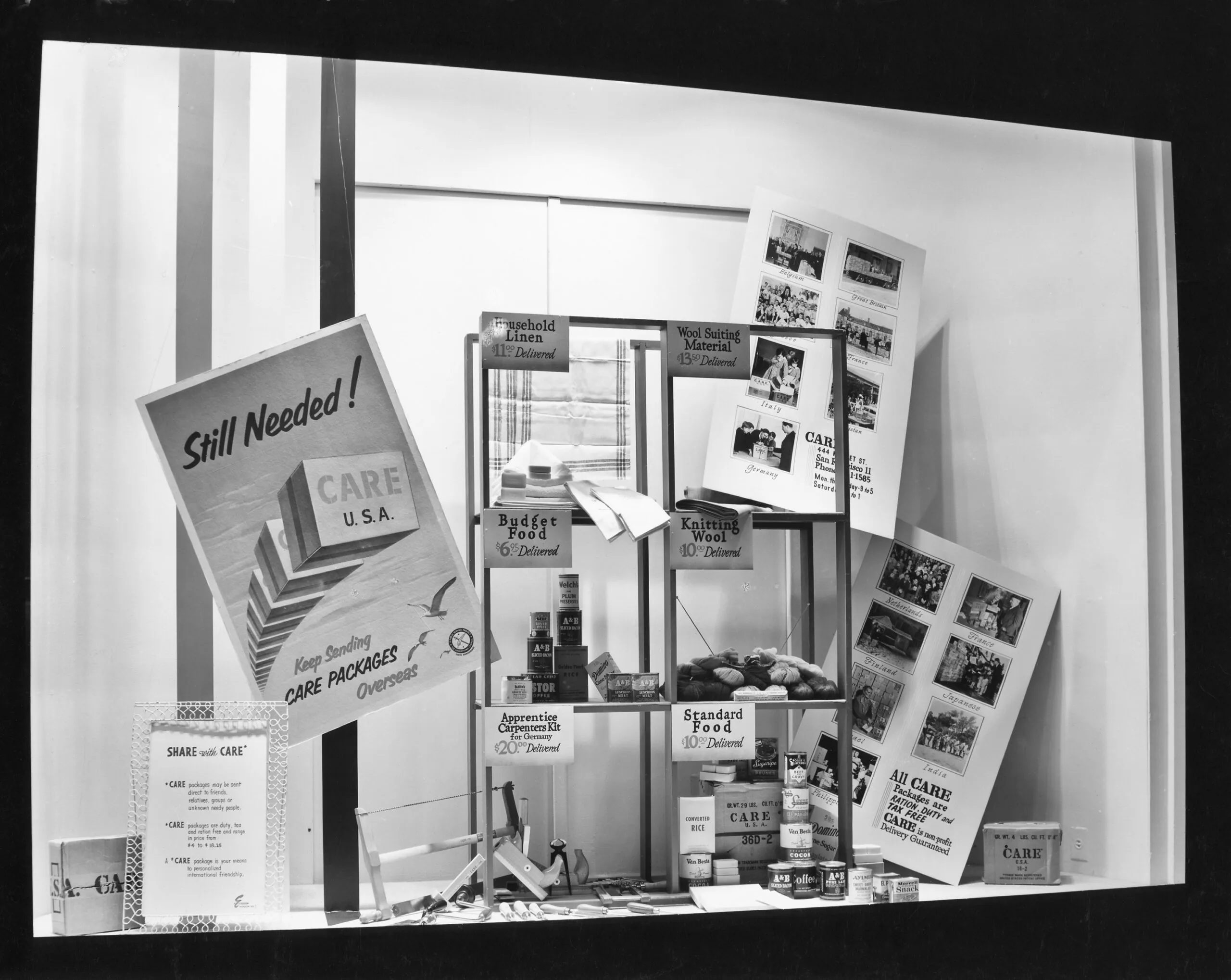
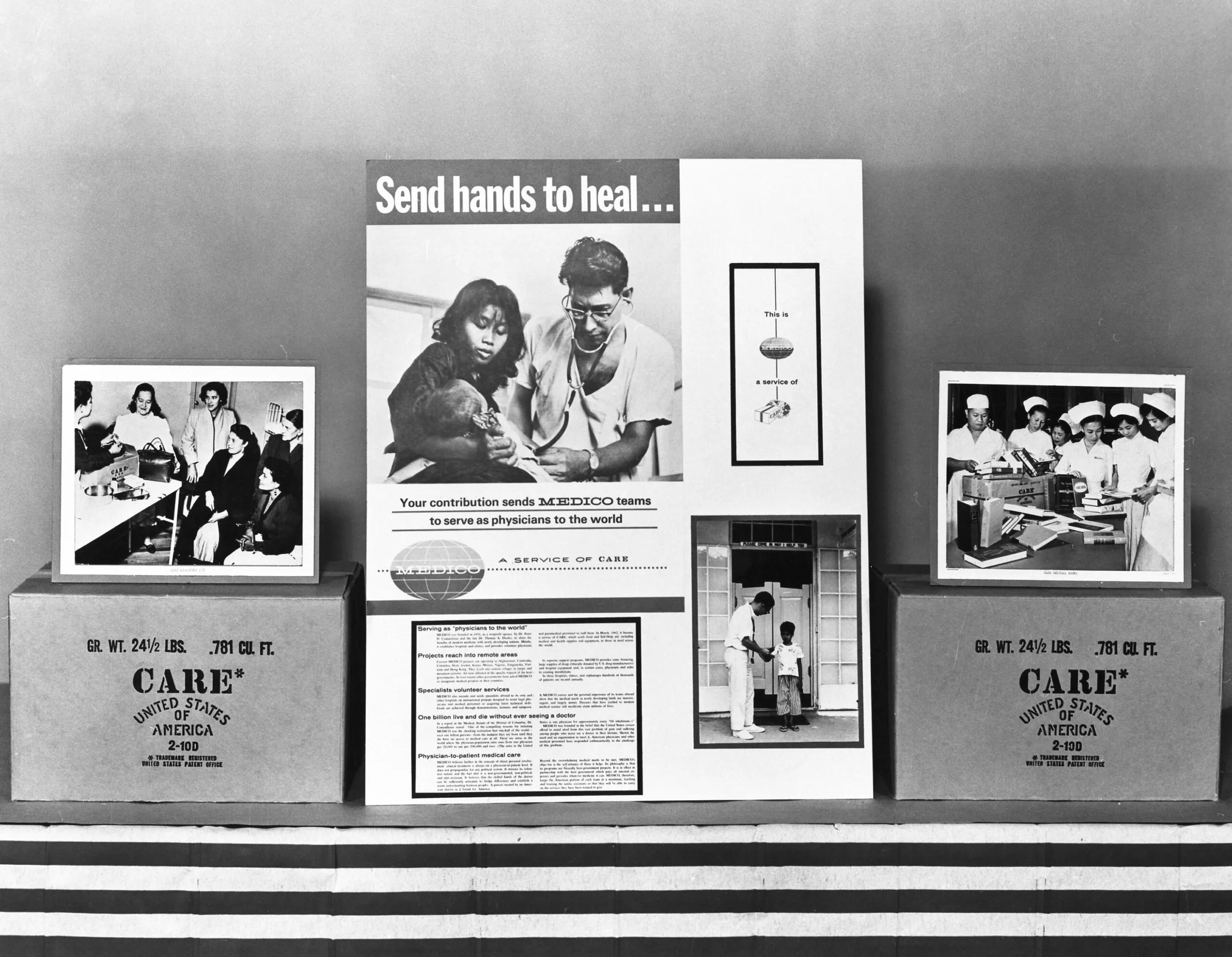
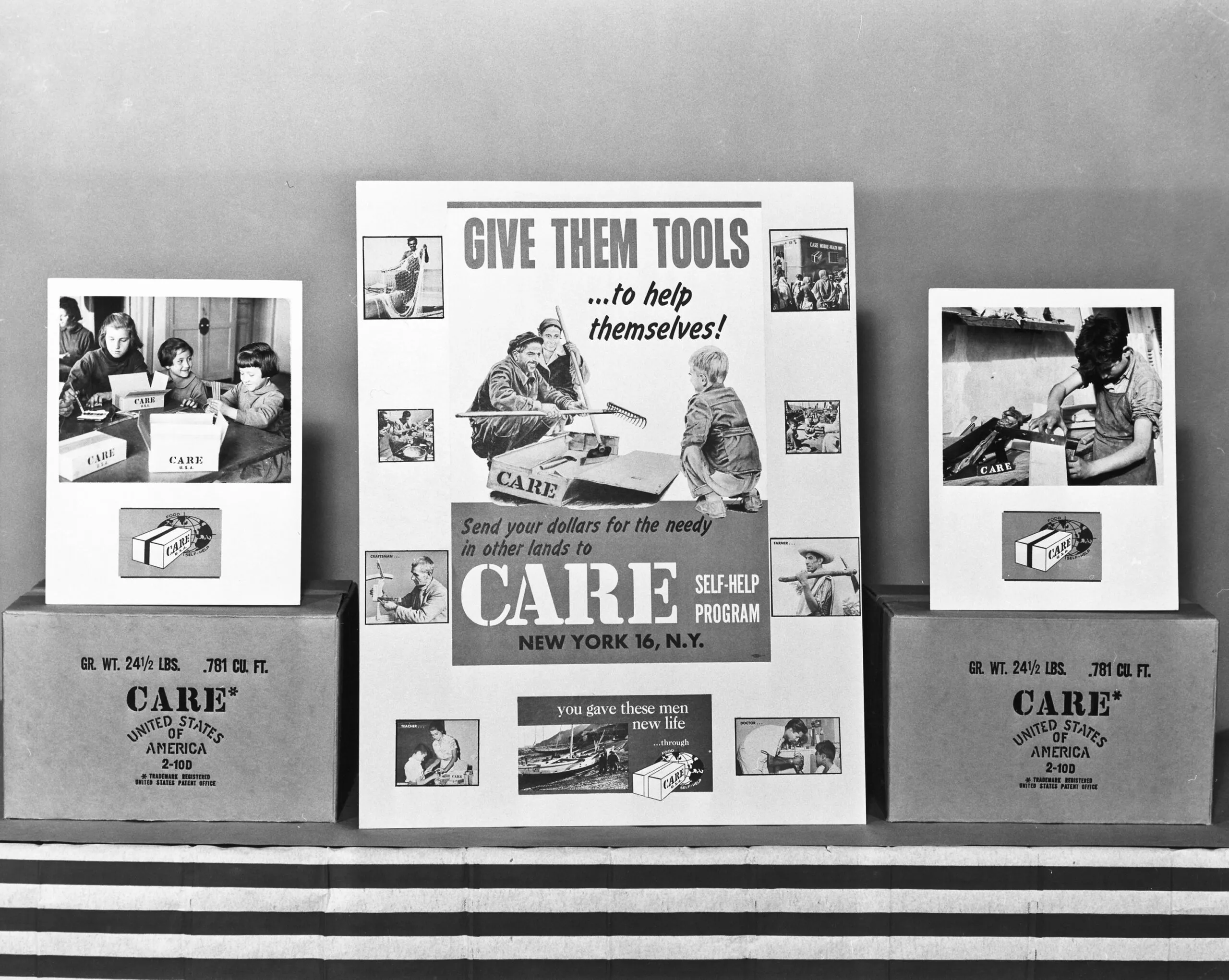
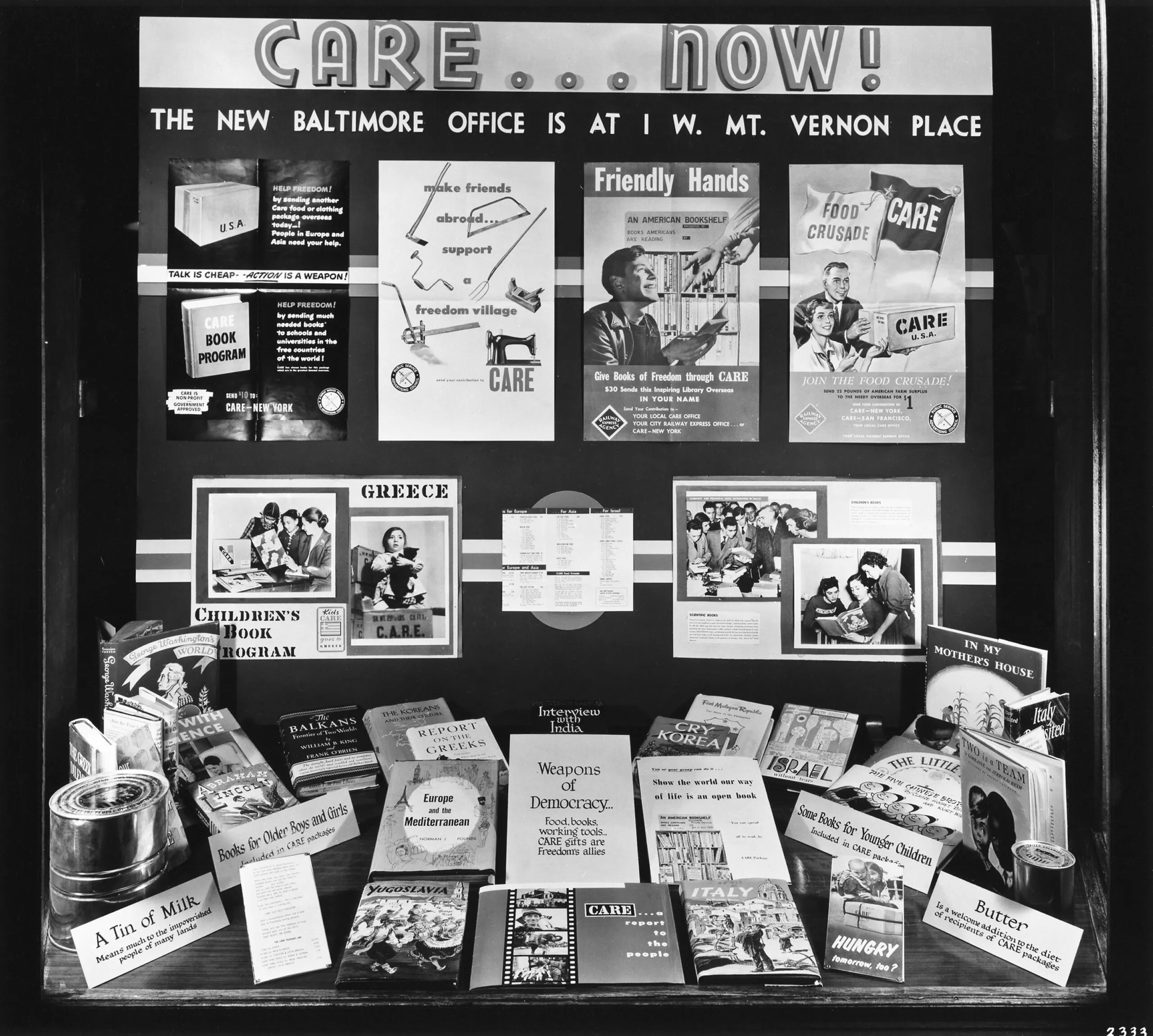
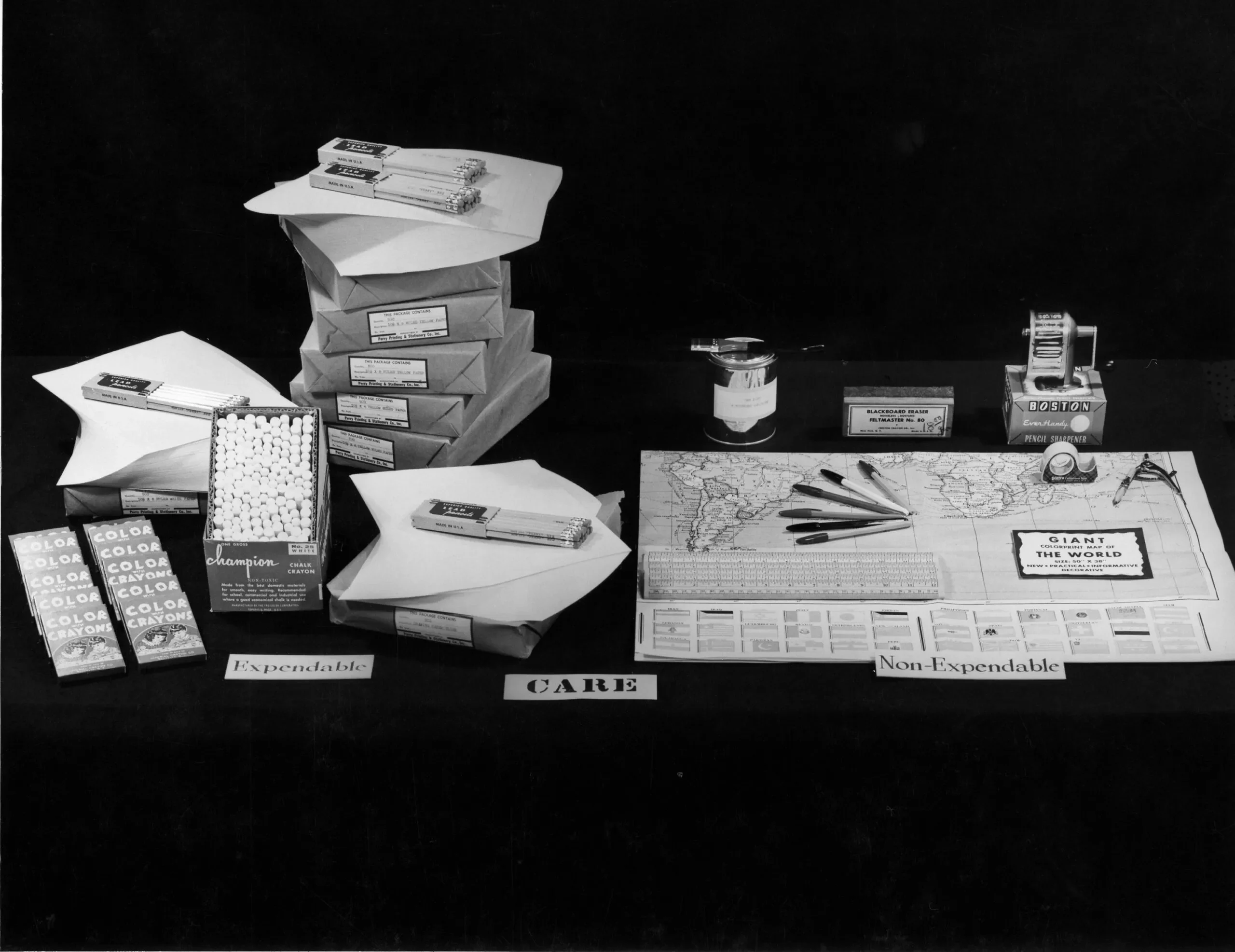
          A black and white photo of a man dressed like Santa Claus unloading CARE PACKAGE boxes from an airplane. A newspaper clipping from a copy of the New York Times in July 1946. An original CARE PACKAGE, cardboard box, sitting inside the Smithsonian Museum of American History. A historical image of a window display with CARE posters and items from a CARE PACKAGE. A black and white photo of a CARE ad display for medical aid and CARE PACKAGE boxes. A historical image of a CARE ad display for self-help programs and CARE PACKAGE boxes. A black and white photo of a CARE ad display that has posters and items from various CARE programs. A historical image of items laid out from a CARE PACKAGE Self-Help Schoolroom Kit. The kit includes a map, pencils, chalk, erasers, pens, rulers and more.
          1 of 8
          The CARE PACKAGE Enters American Culture

          Santa Claus unloads CARE PACKAGE boxes from an airplane in Germany during Christmas 1950. Holiday campaigns helped personalize CARE’s humanitarian mission for American audiences after World War II. Photo: CARE

          In this article

            Presidents and world leaders embrace the CARE PACKAGE

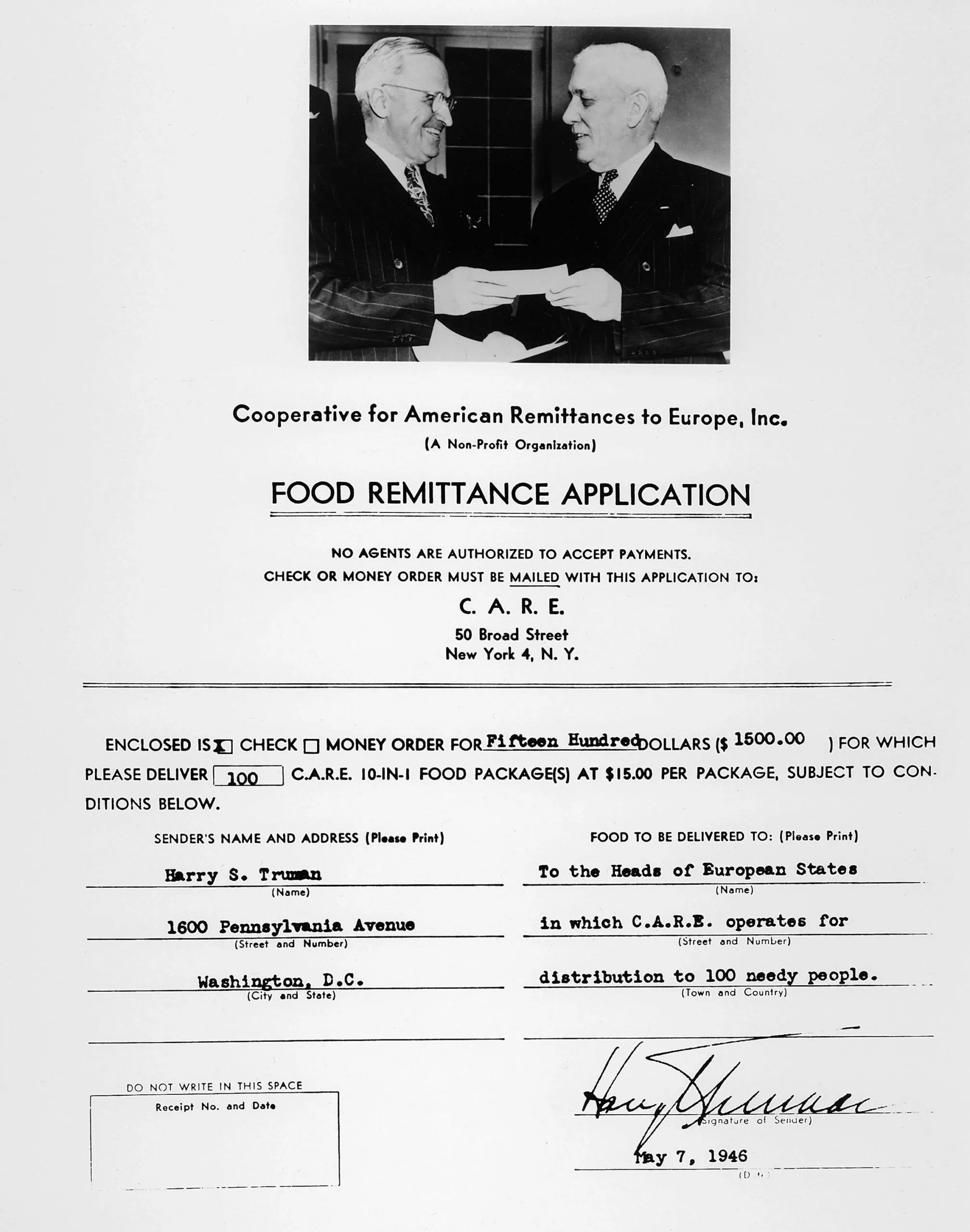
            President Harry S. Truman was in office when the first CARE PACKAGE was delivered in 1946. Five years later, he said his hope was that “CARE will continue to symbolize the American’s concern for his fellow man wherever need exists.” 

            CARE’s work has continued and nearly every U.S. President since Truman has commended its work. Republican and Democrat, across administrations and across the aisle, U.S. leaders throughout the decades have recognized CARE as a humanitarian leader. 

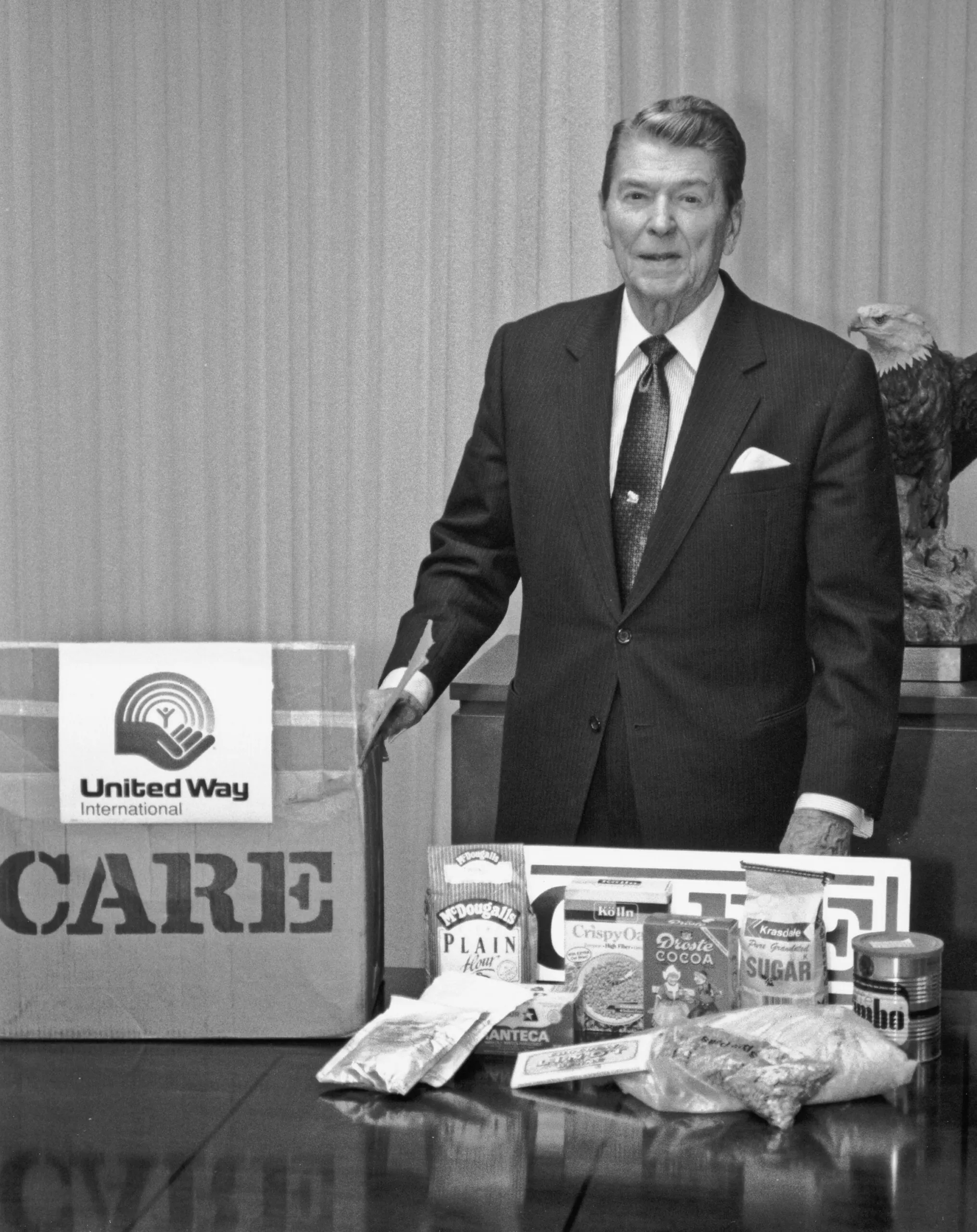
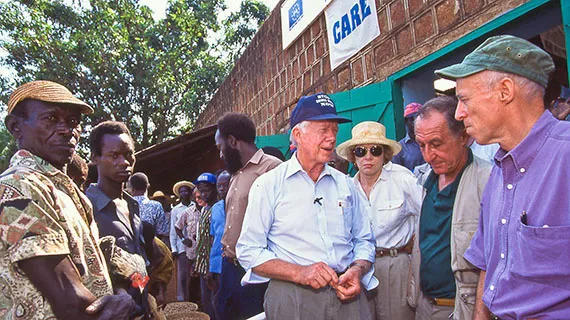
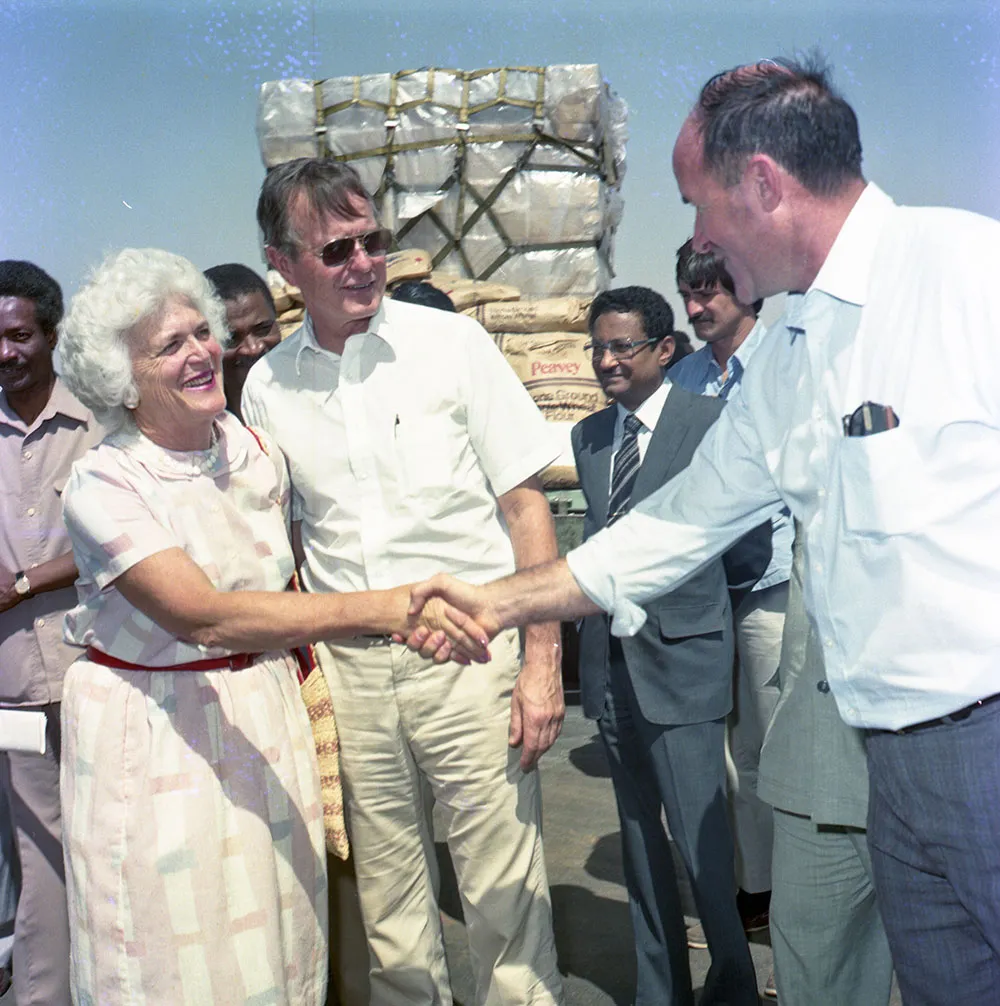
            Over the past 80 years, CARE has responded to every major world crisis and received bipartisan support for its work. Presidents Ronald Reagan, George H.W. Bush, and Jimmy Carter were among those who visited CARE programs firsthand. From Truman to Obama, Presidents throughout the years have encouraged Americans to become part of the country’s philanthropic identity by sending a CARE PACKAGE. 

            Responding to emergencies and helping others has historically been part of America’s diplomacy. As former President George W. Bush said, he believed “the best foreign policy showcases America’s generous heart and CARE serves as a wonderful ambassador for that spirit throughout the world.” 

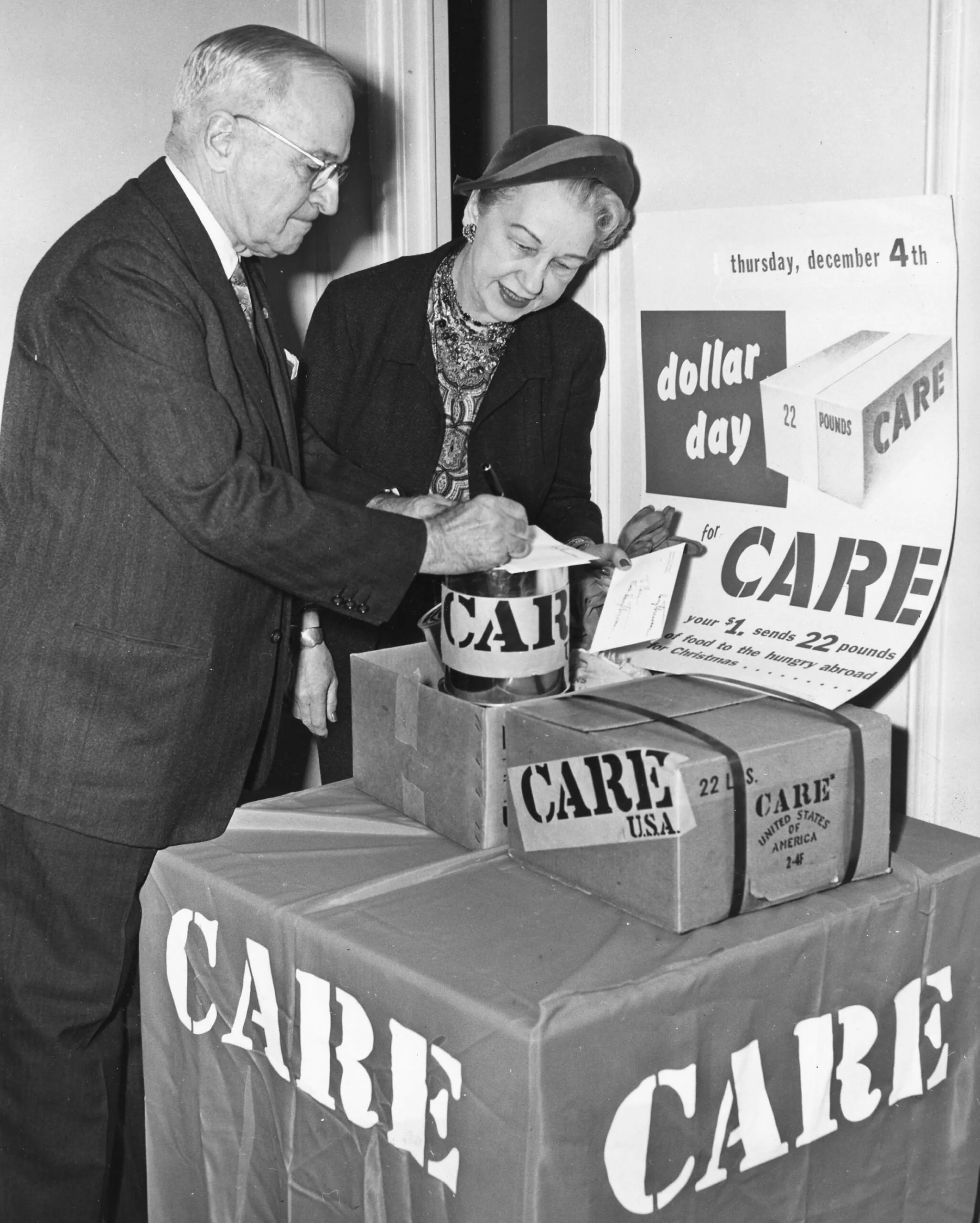
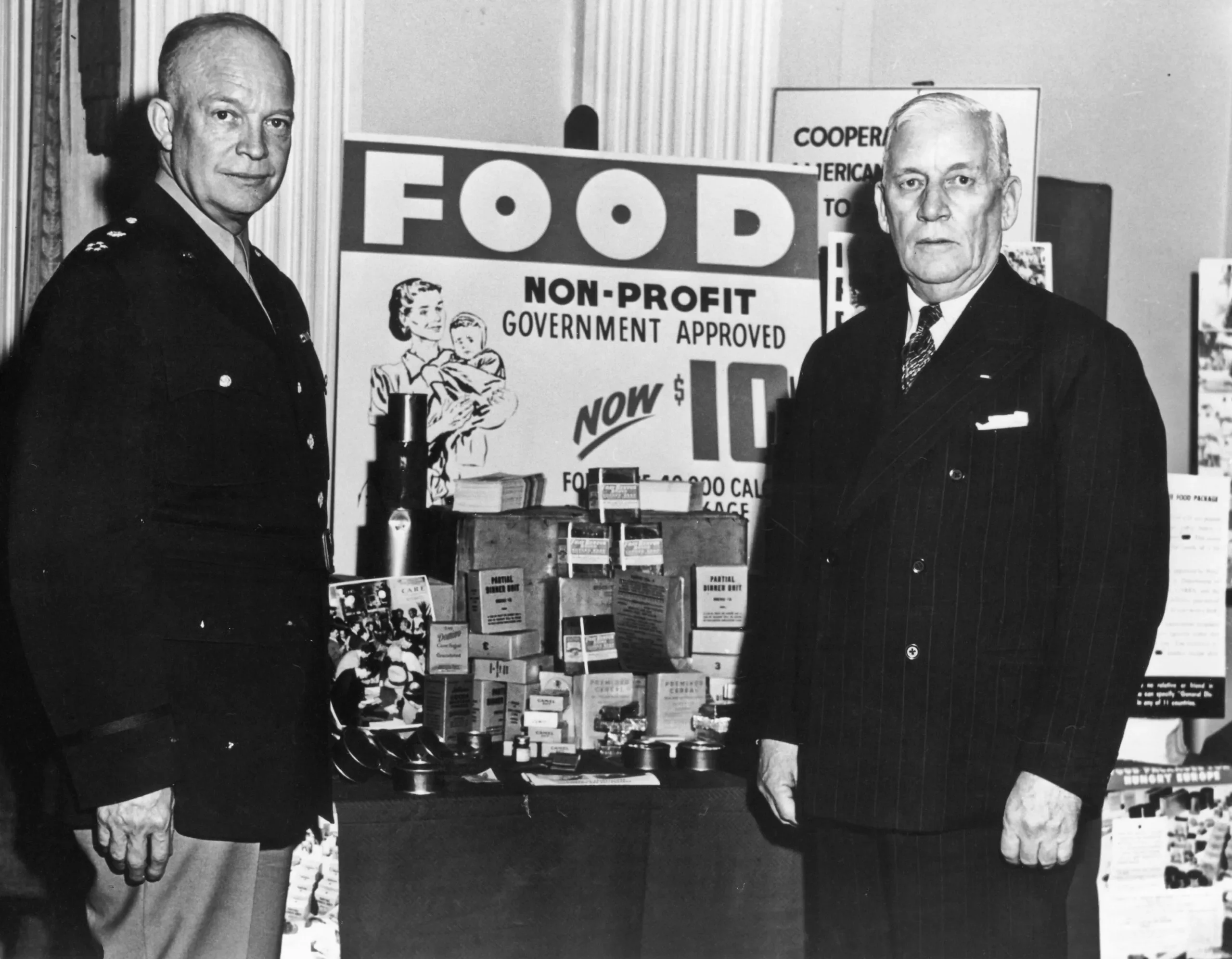
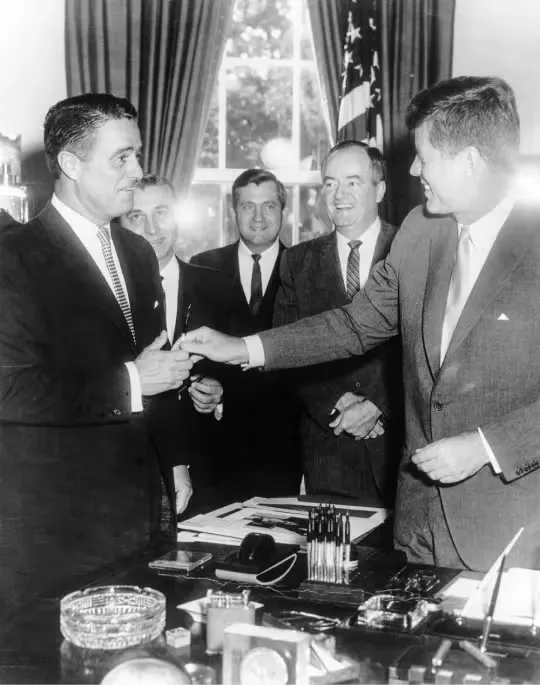
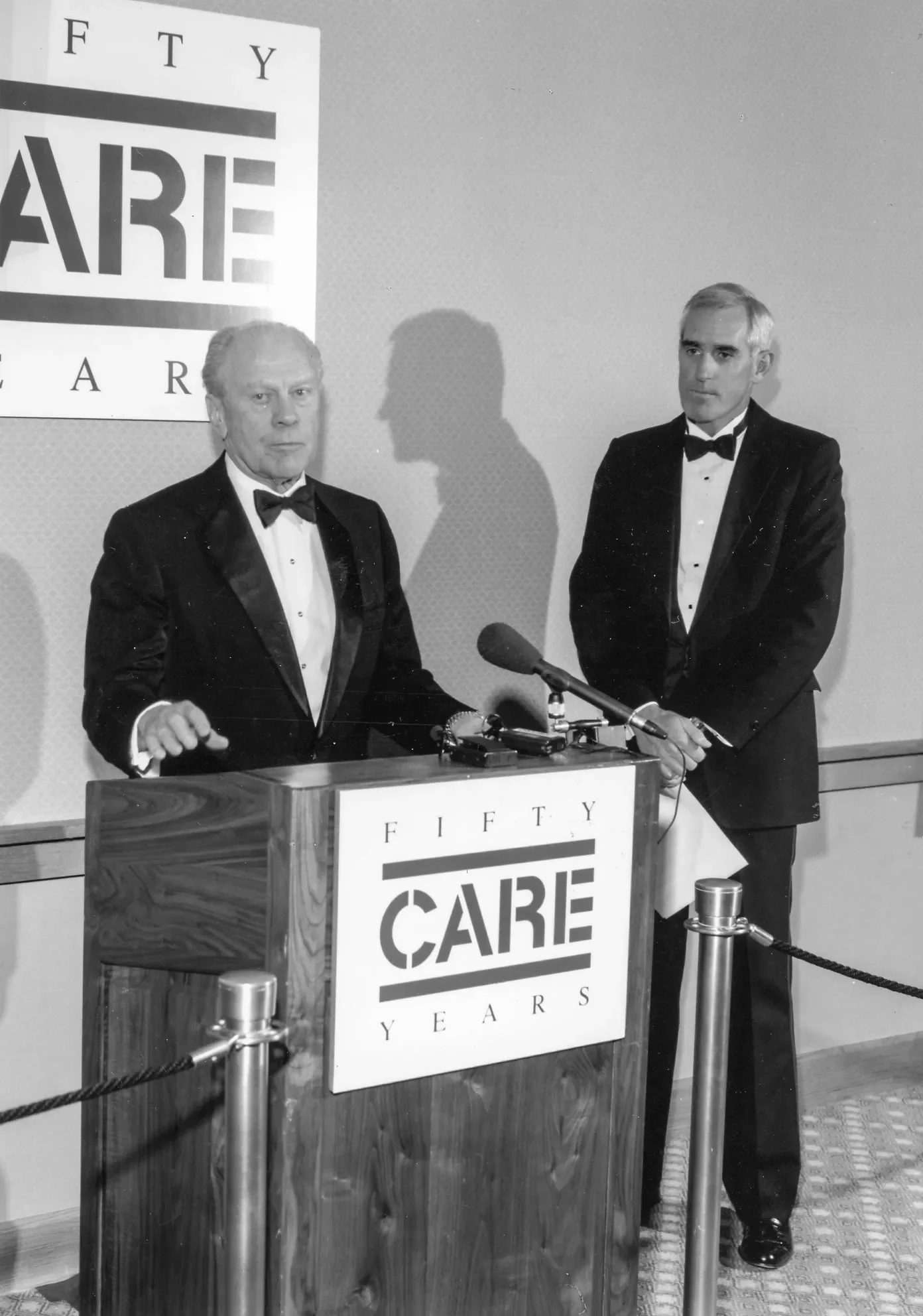
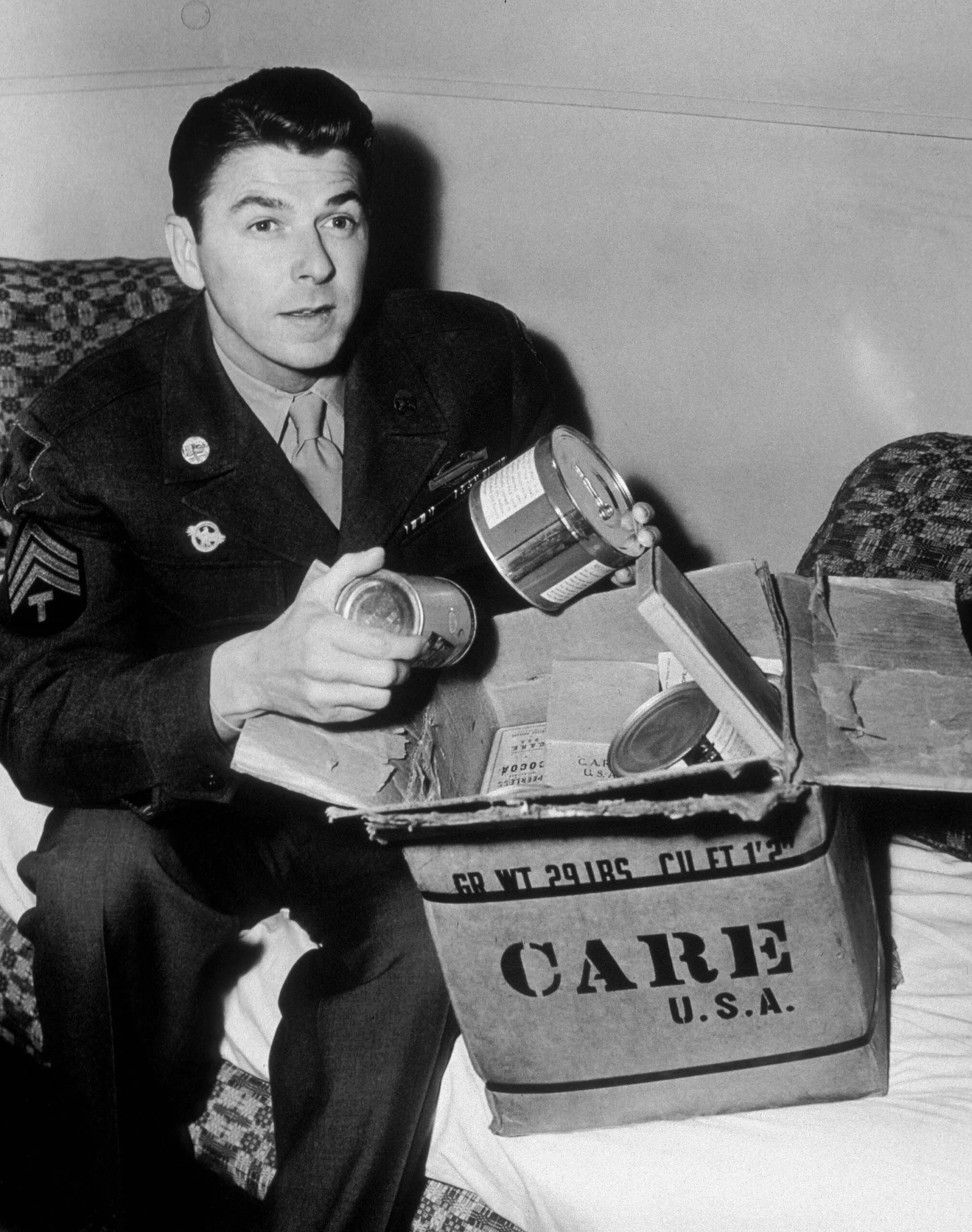
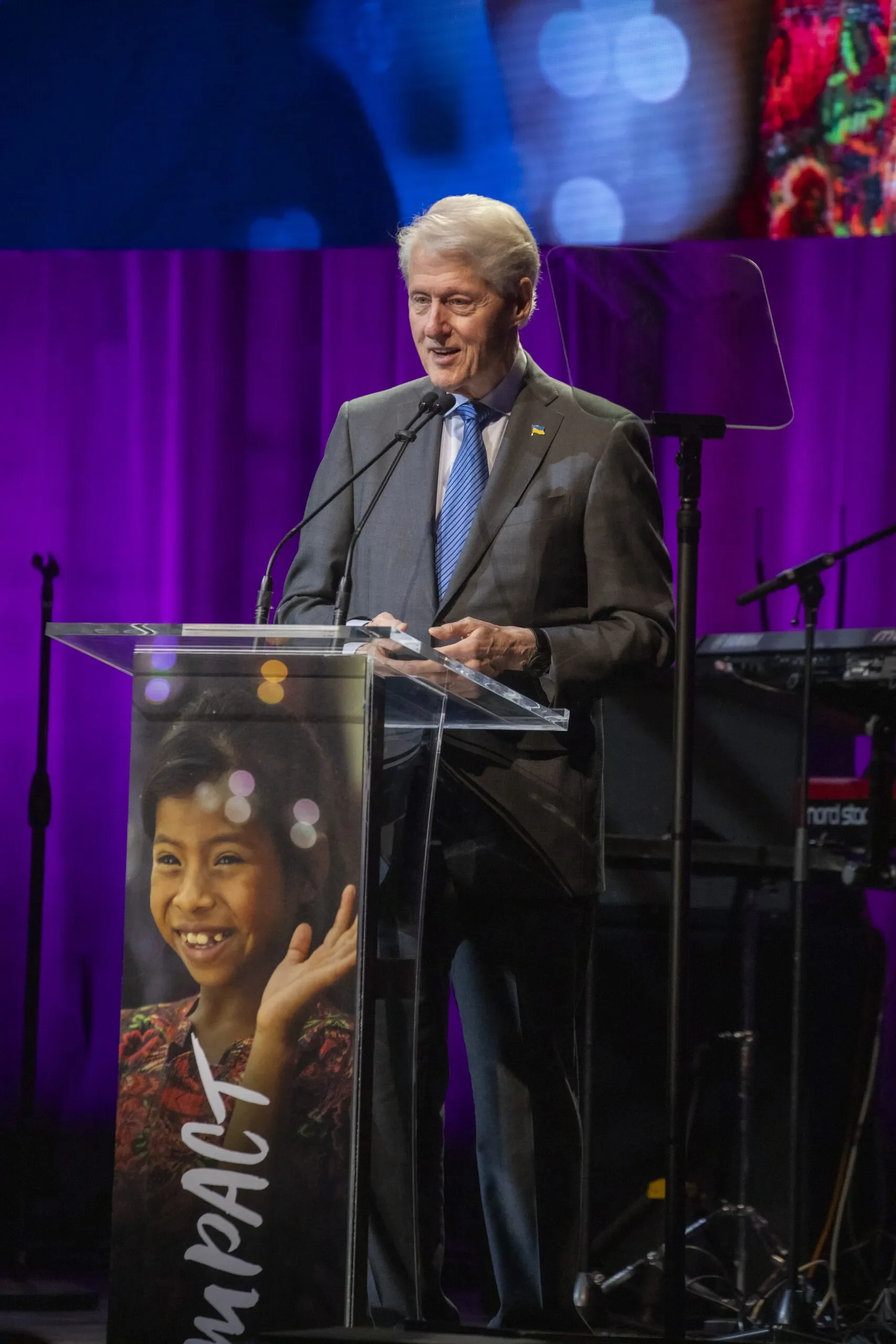
            A historical image of President Harry S. Truman signing a donation on top of a CARE box. A historical document of a Food Remittance Application authorizing a $1,500 White House contribution to CARE, the General Dwight D. Eisenhower and the Executive Director of CARE in the 1940s stand by a poster about donating food to a non-profit. President John F. Kennedy stands with other men in suits in the Oval Office. President Gerald Ford stands at a podium speaking at CARE’s 50 anniversary celebration. President Ronal Reagan sitting next to a CARE PACKAGE dressed in a military uniform. President Ronald Reagan standing in front of a CARE PACKAGE box with food items laid out on a table. President Jimmy Carter standing with a group of people outside a CARE program building. A middle-aged man and woman shake the hands of another middle-aged man. Behind them is a large shipment of packaged foods. President Bill Clinton standing at a podium, speaking at CARE’s Impact Awards show.
            1 of 10
            Presidents and World Leaders Embrace the CARE PACKAGE 

            President Harry S. Truman donates to the CARE “Food Crusade” with Olive Clapper, head of CARE’s Washington Office. As president when the first CARE PACKAGE was delivered, Truman’s trust helped support postwar Europe and reflected CARE’s early ties to America’s humanitarian identity after World War II. Photo: CARE

            “In four short decades, your organization has developed a worldwide reputation for timely and effective assistance to the victims of calamity and conflict.”

            President Ronald Reagan

            In this article

              From Hollywood to Main Street

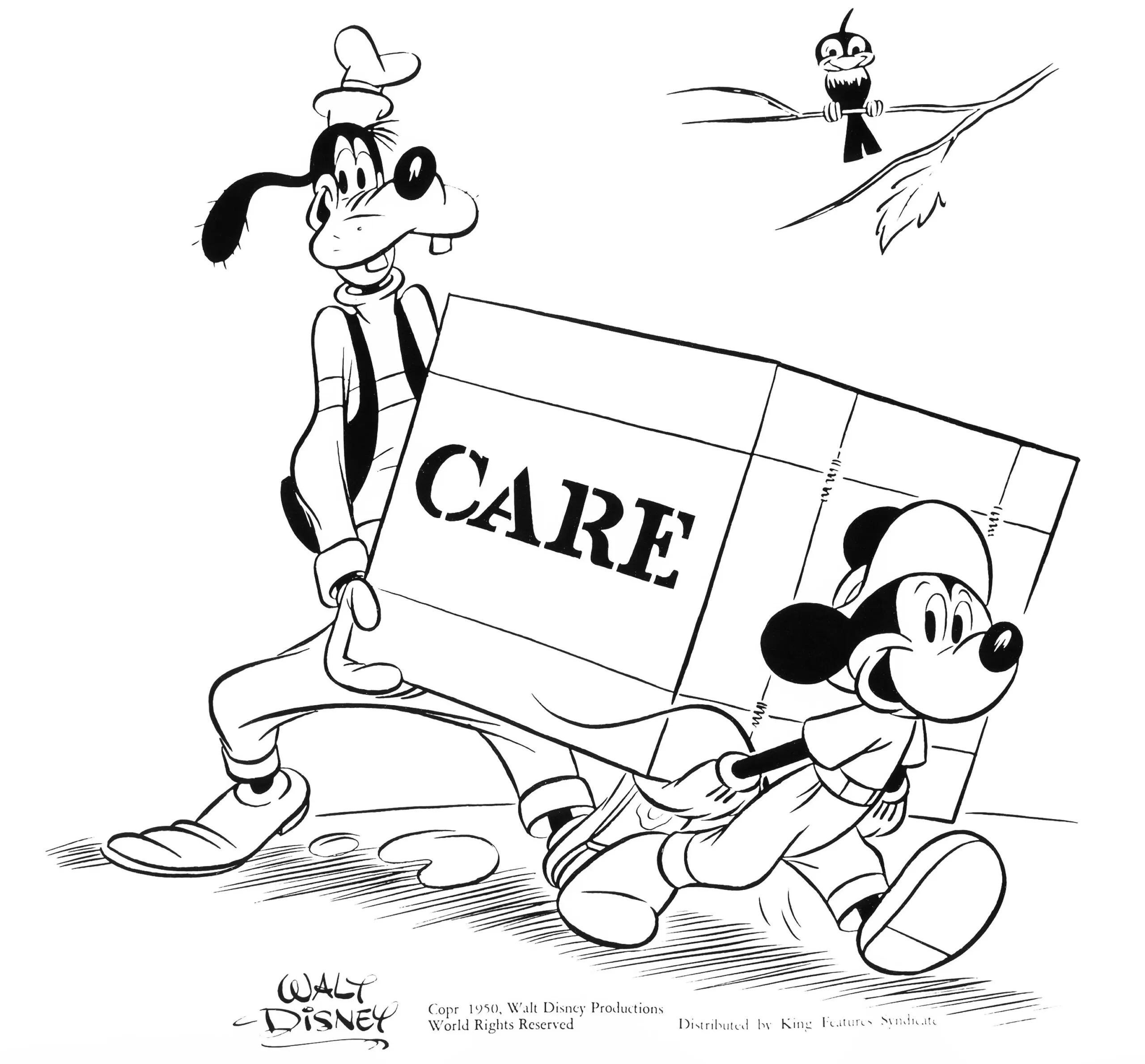
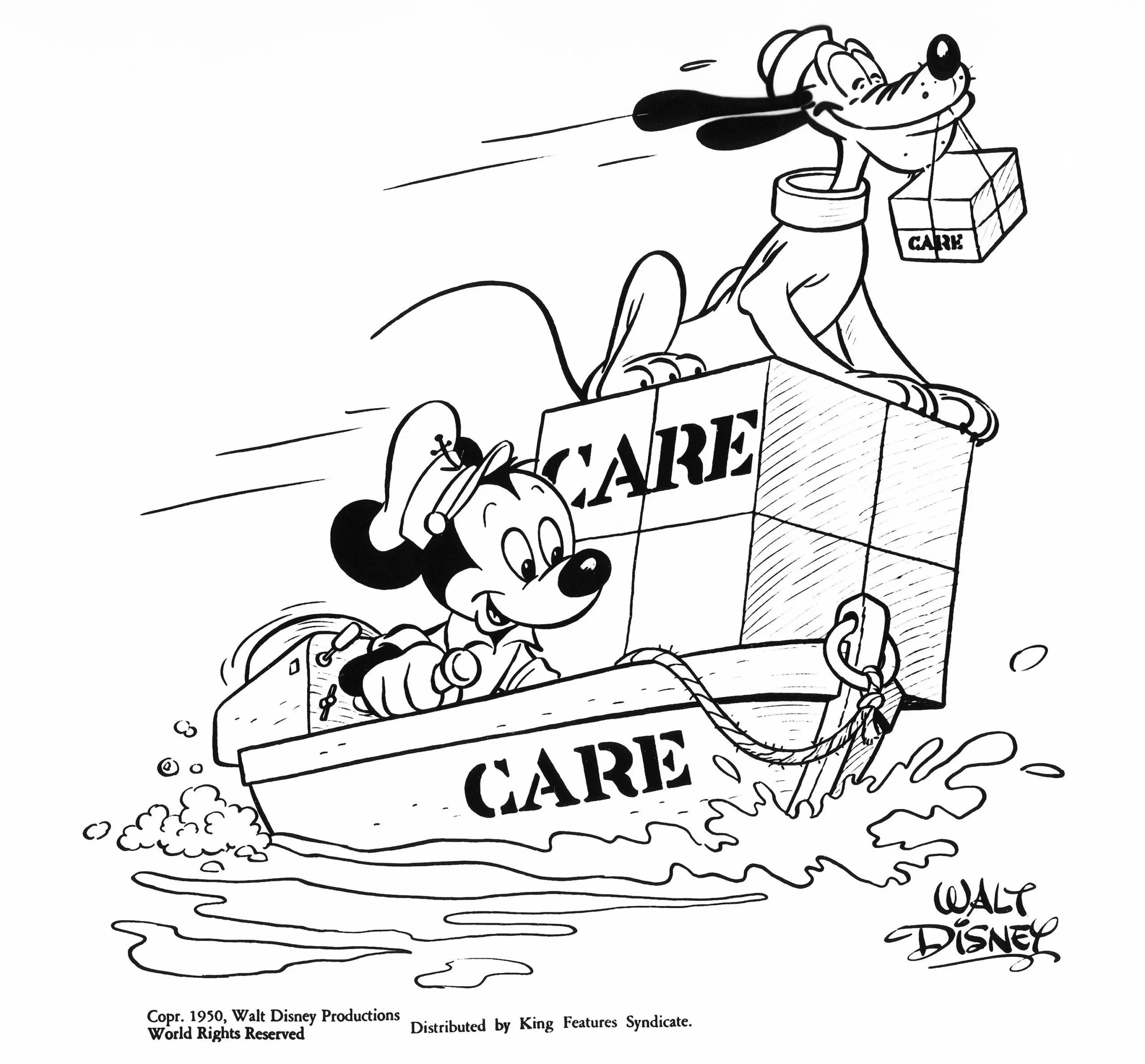
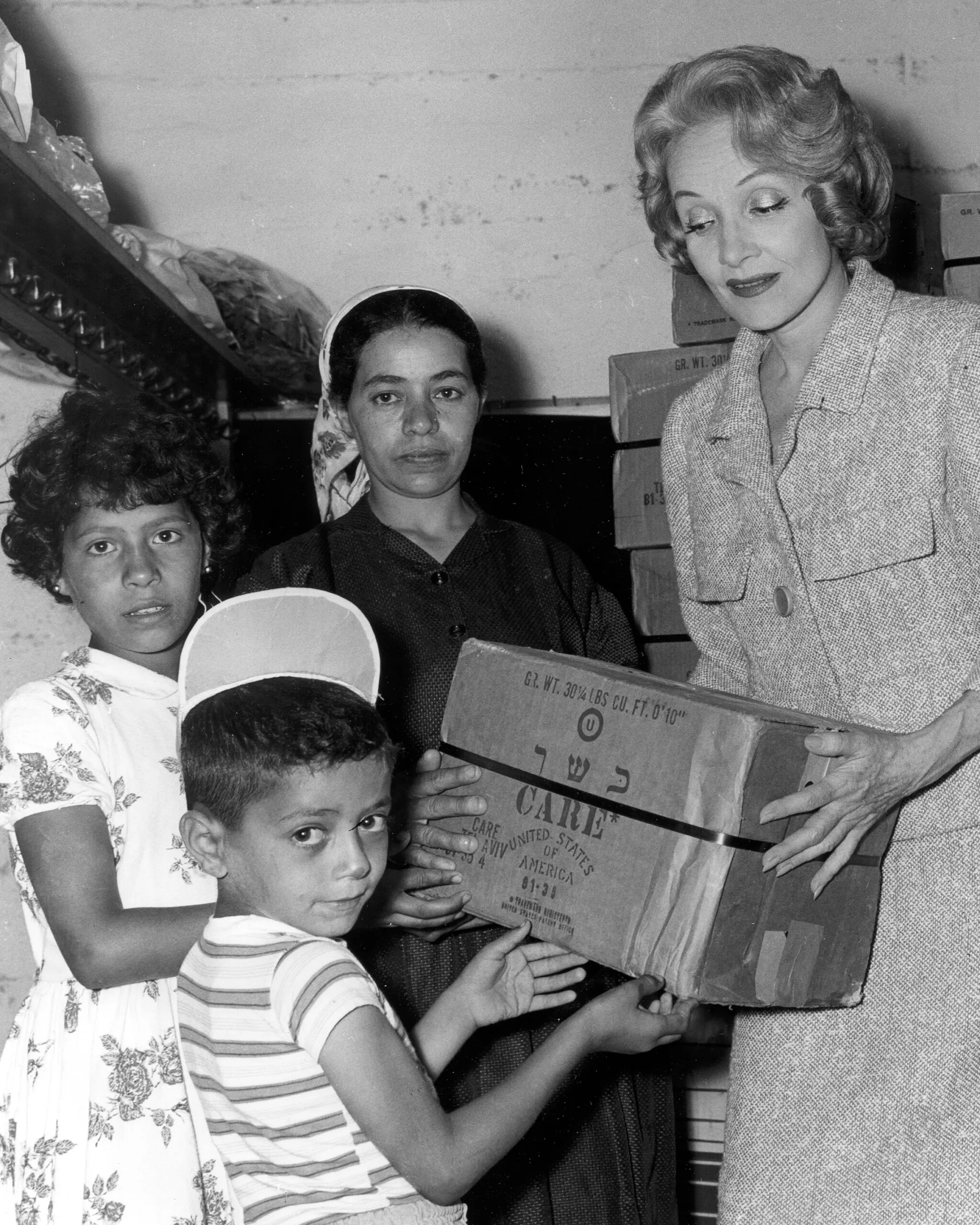
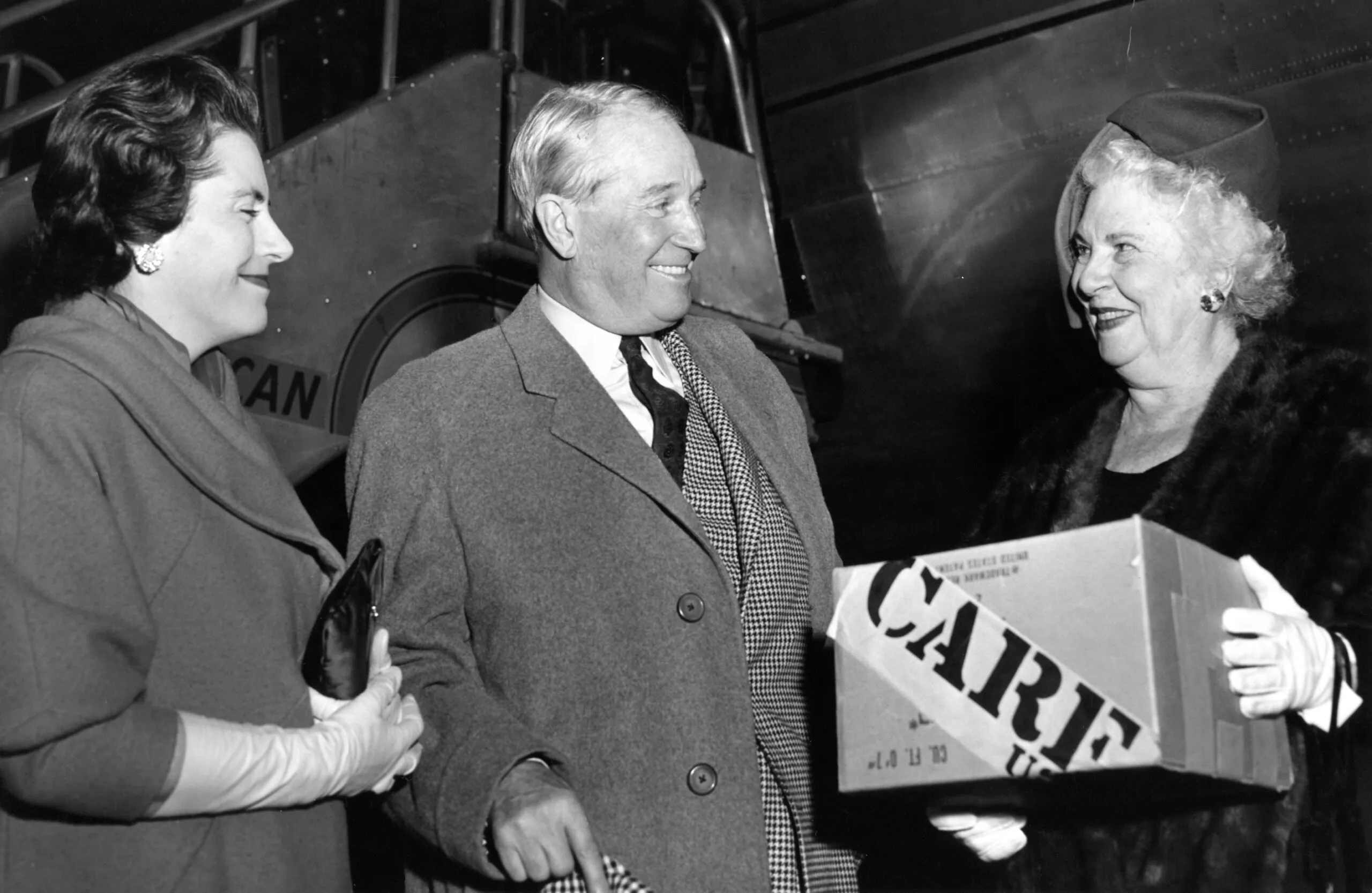
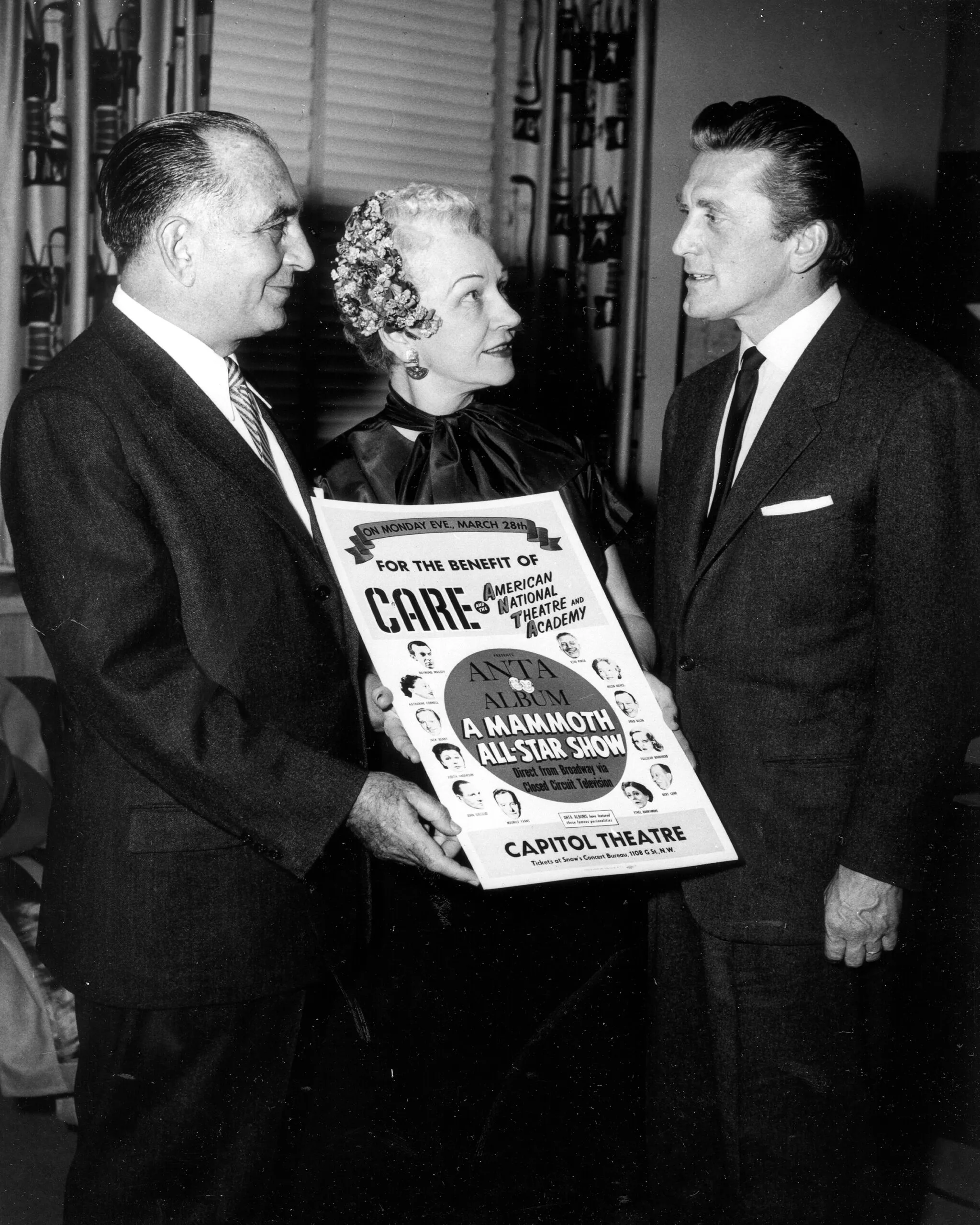
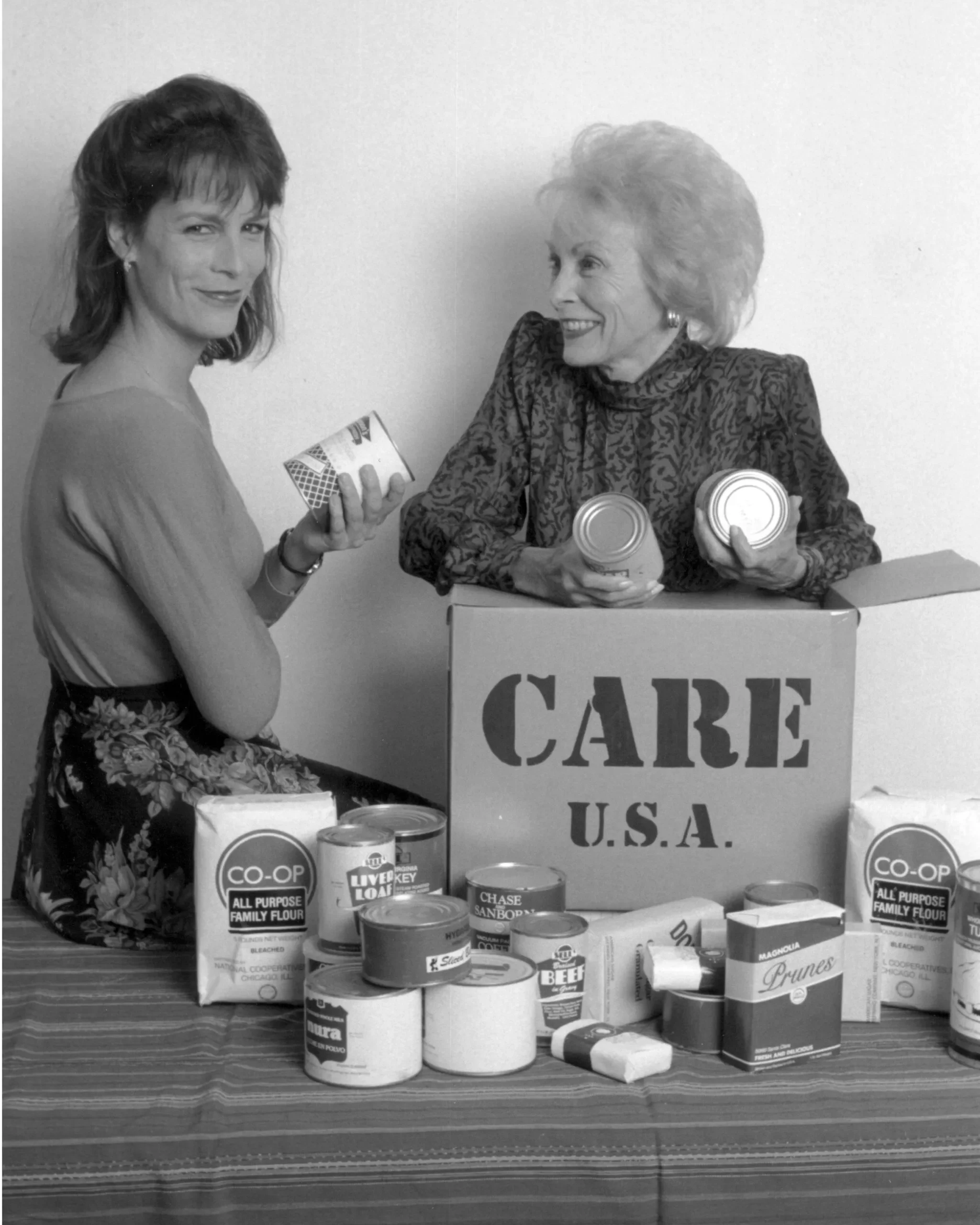
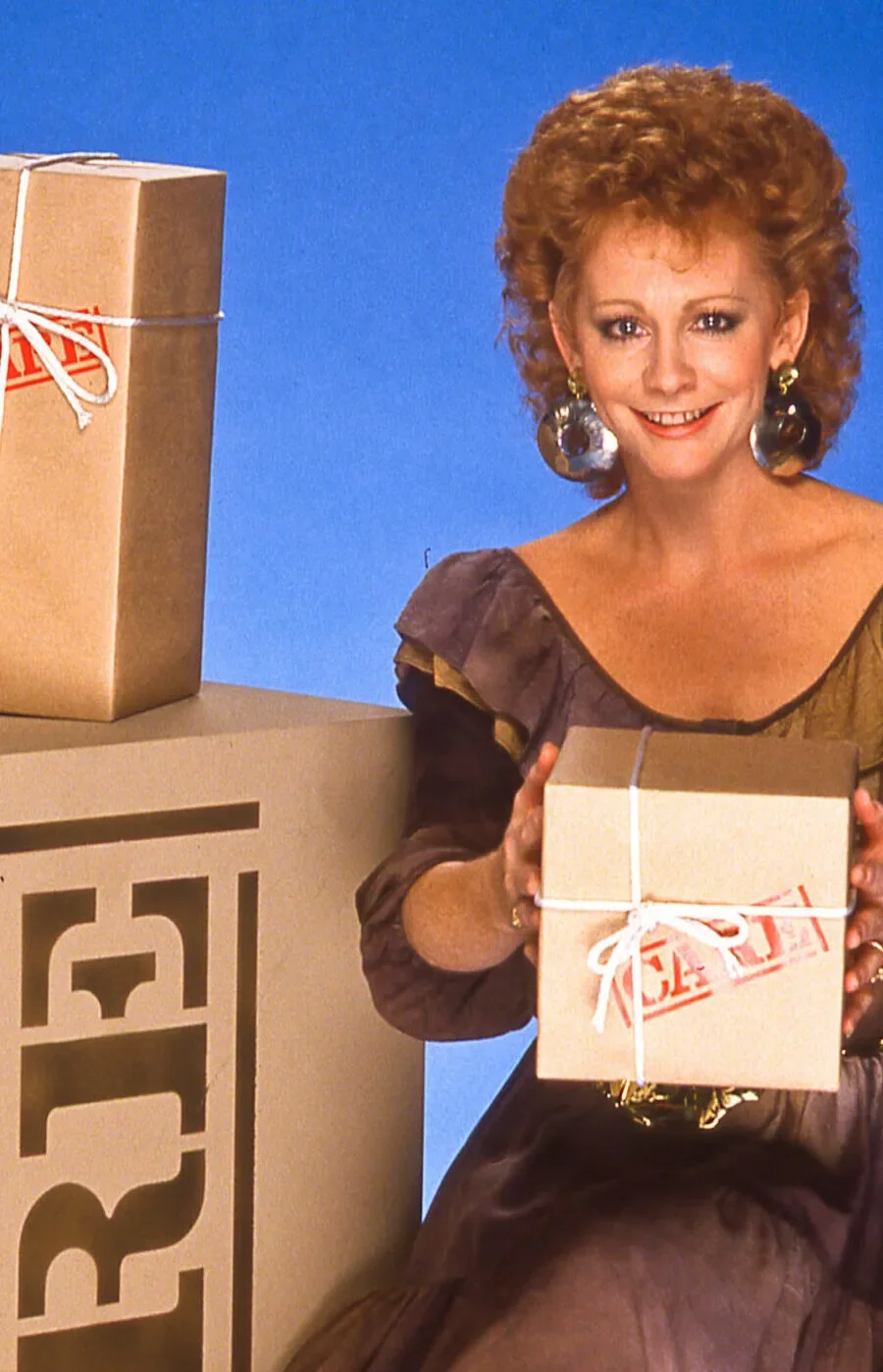
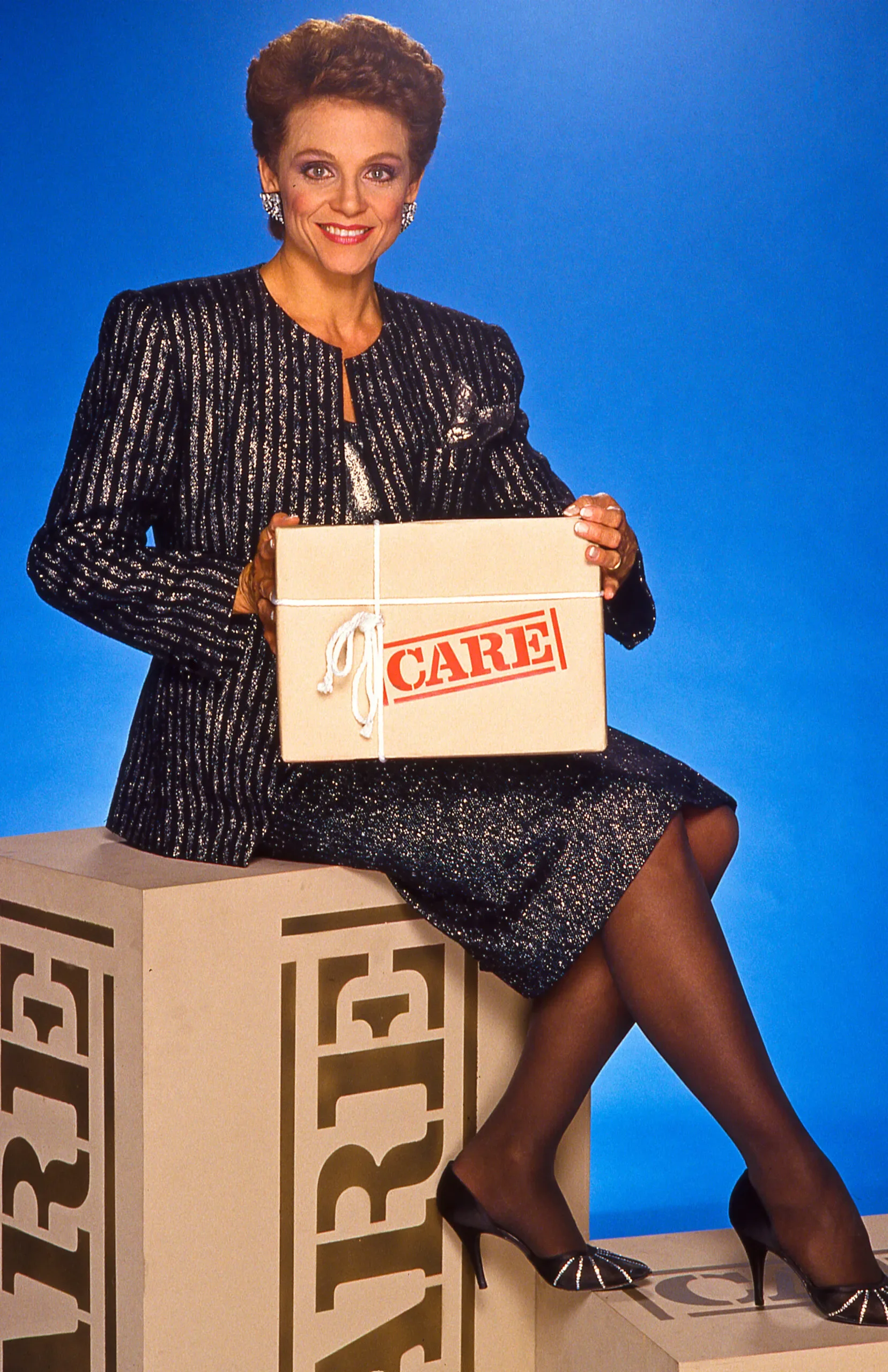
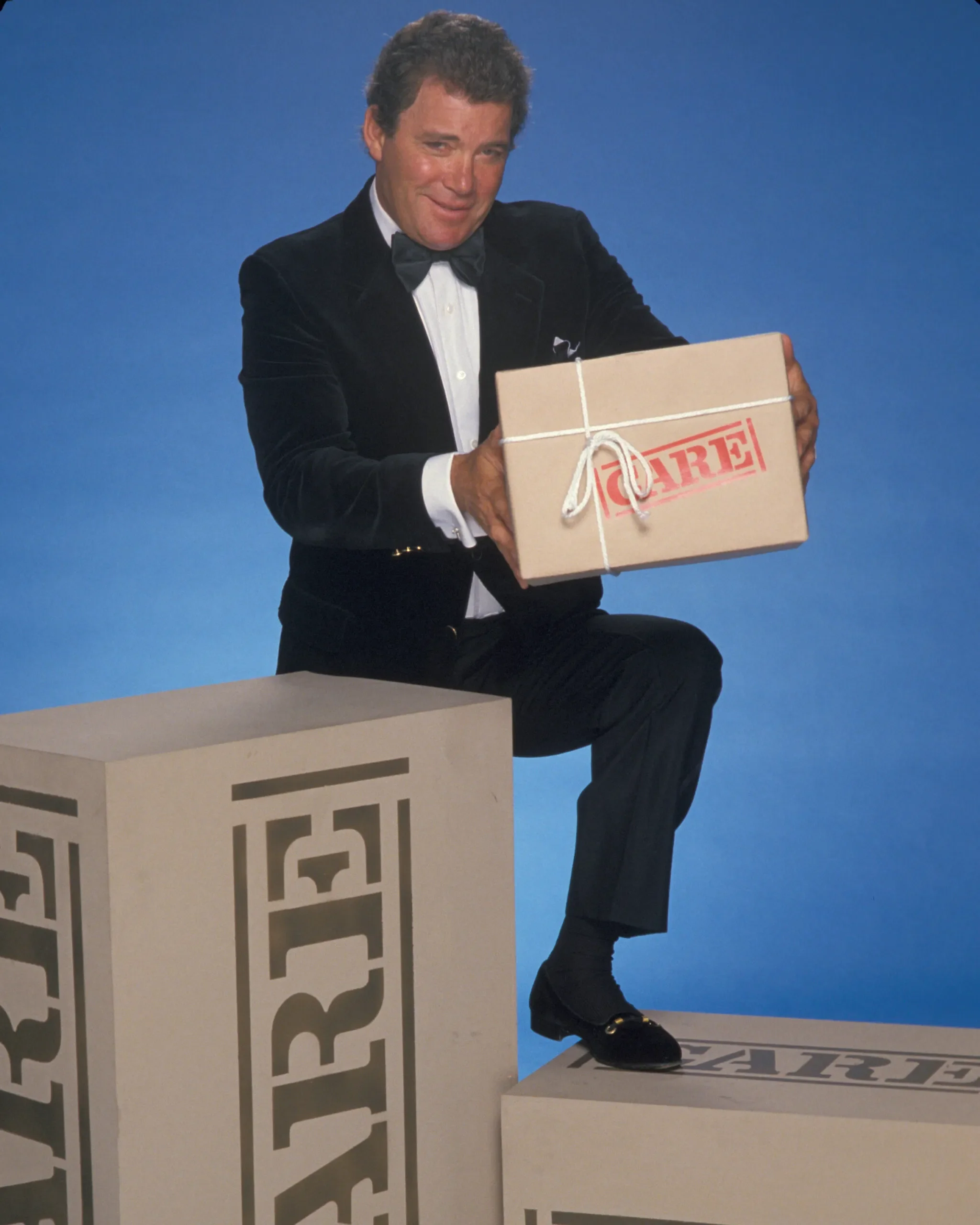
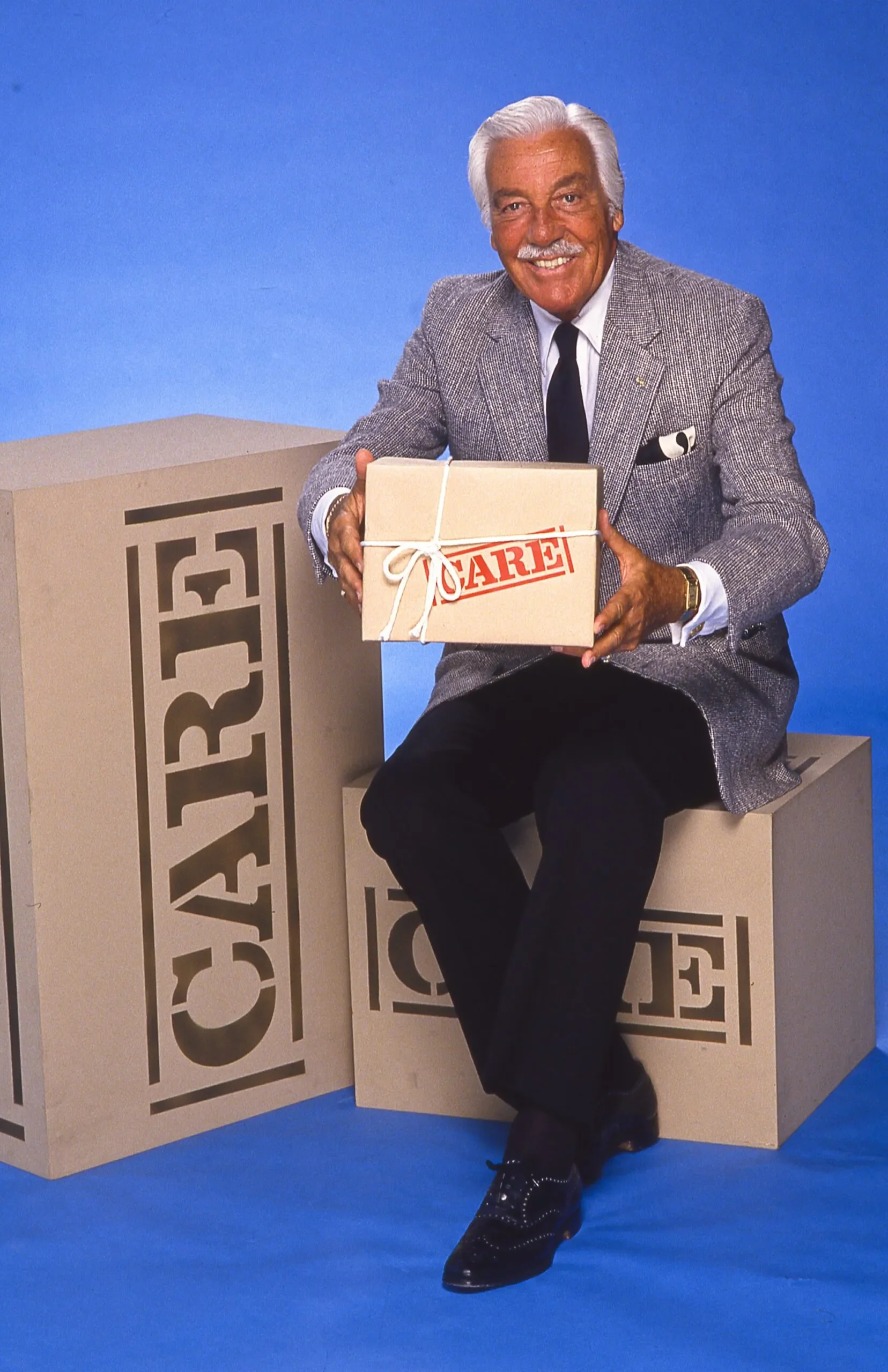
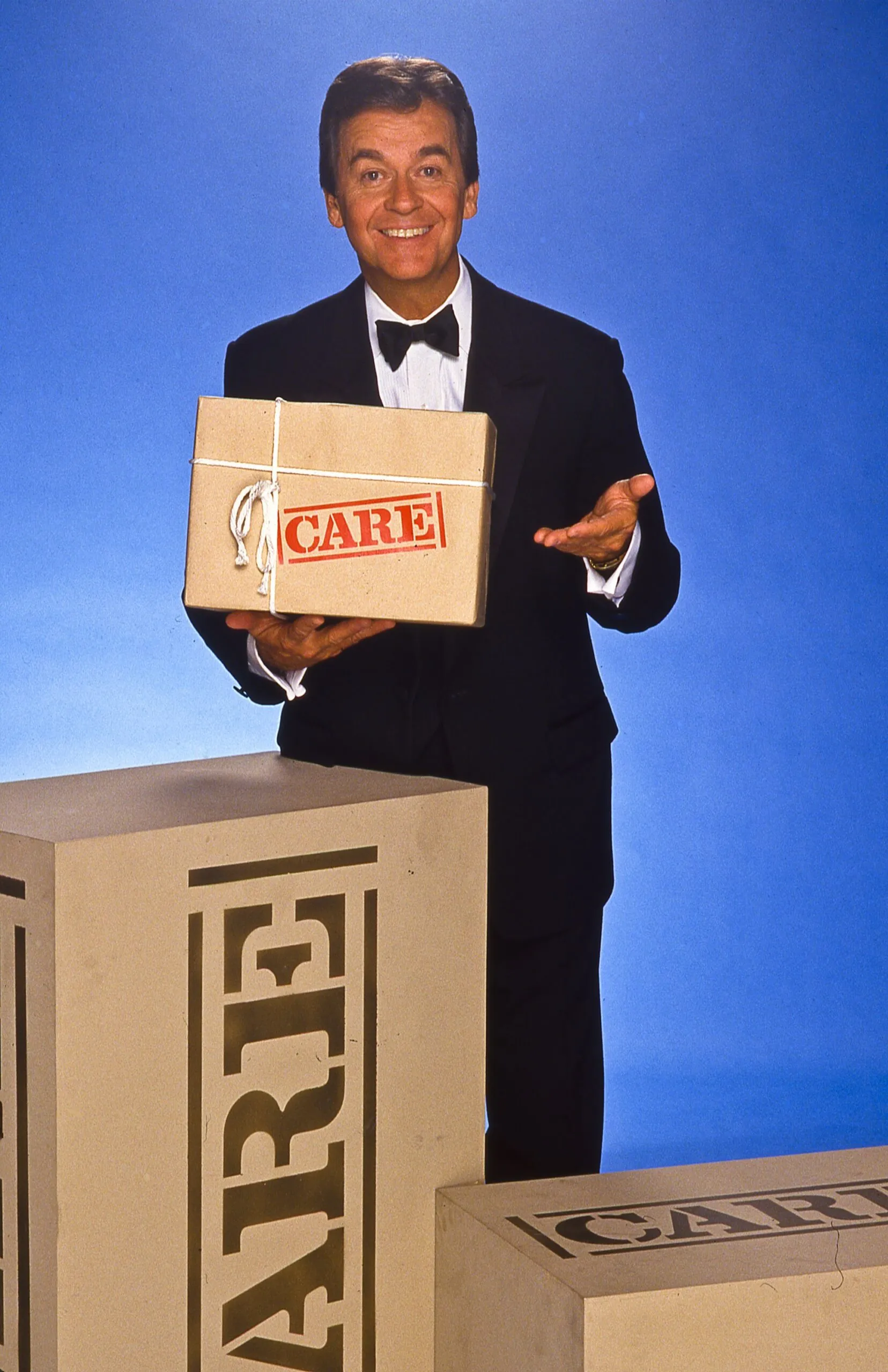
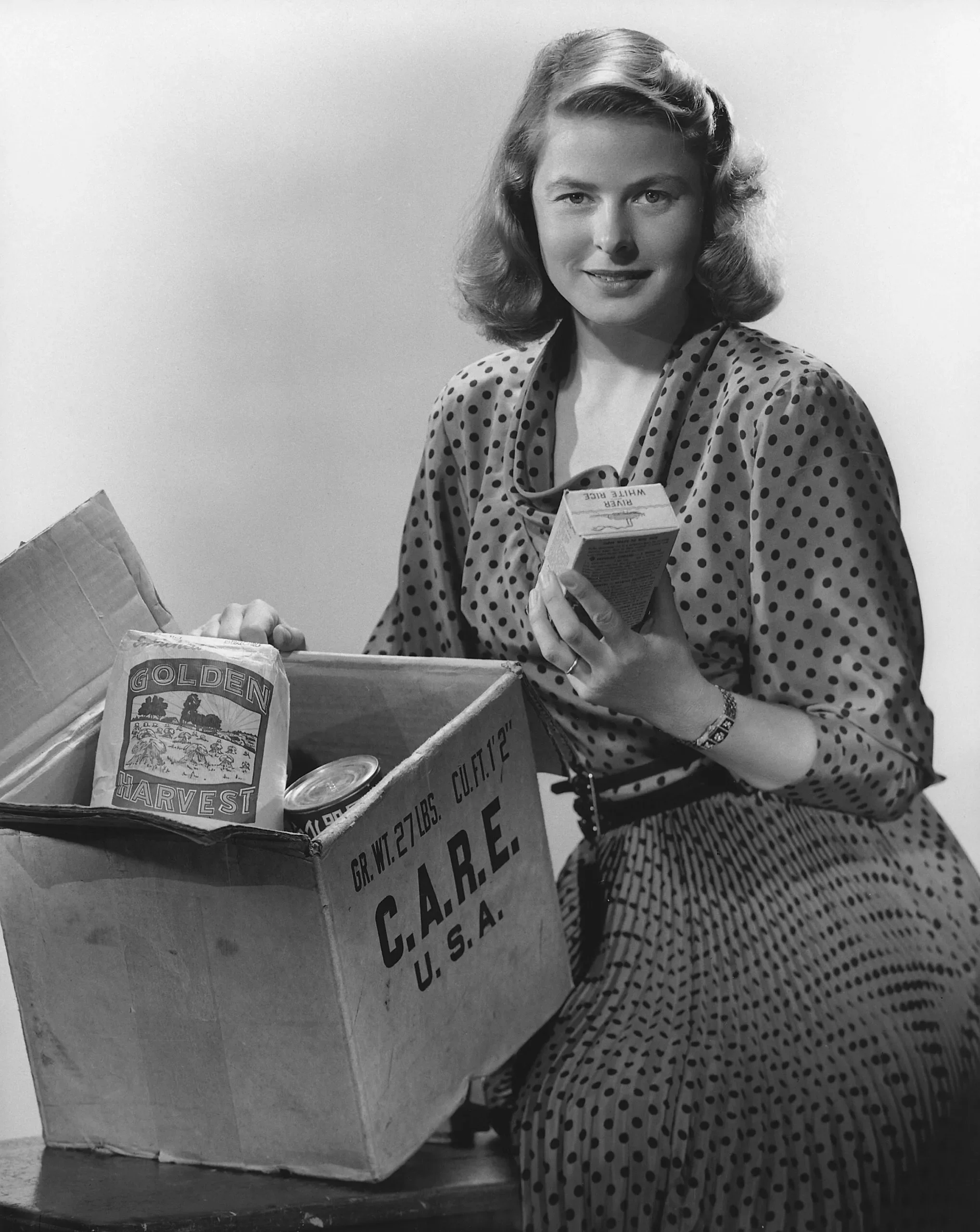
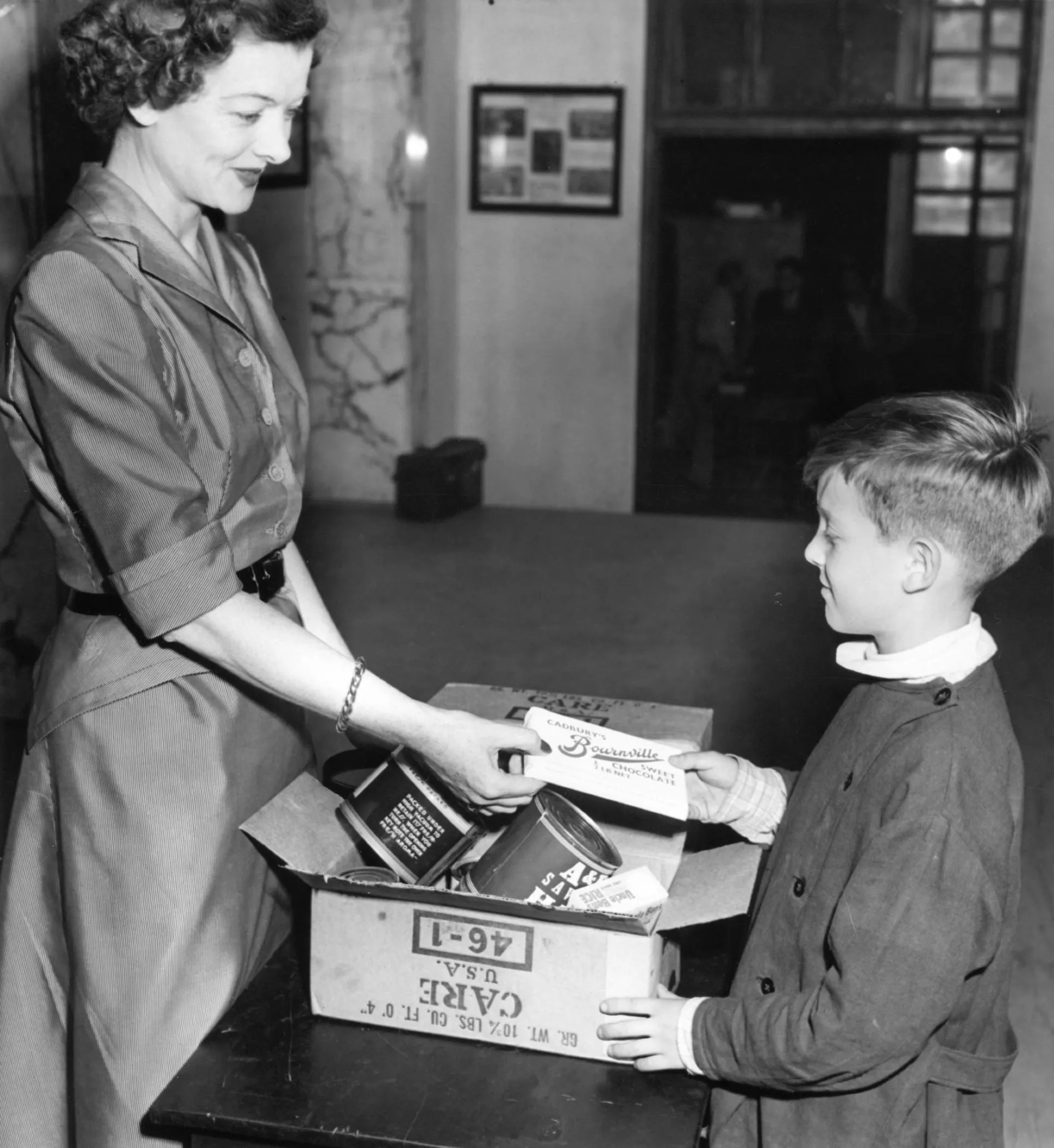
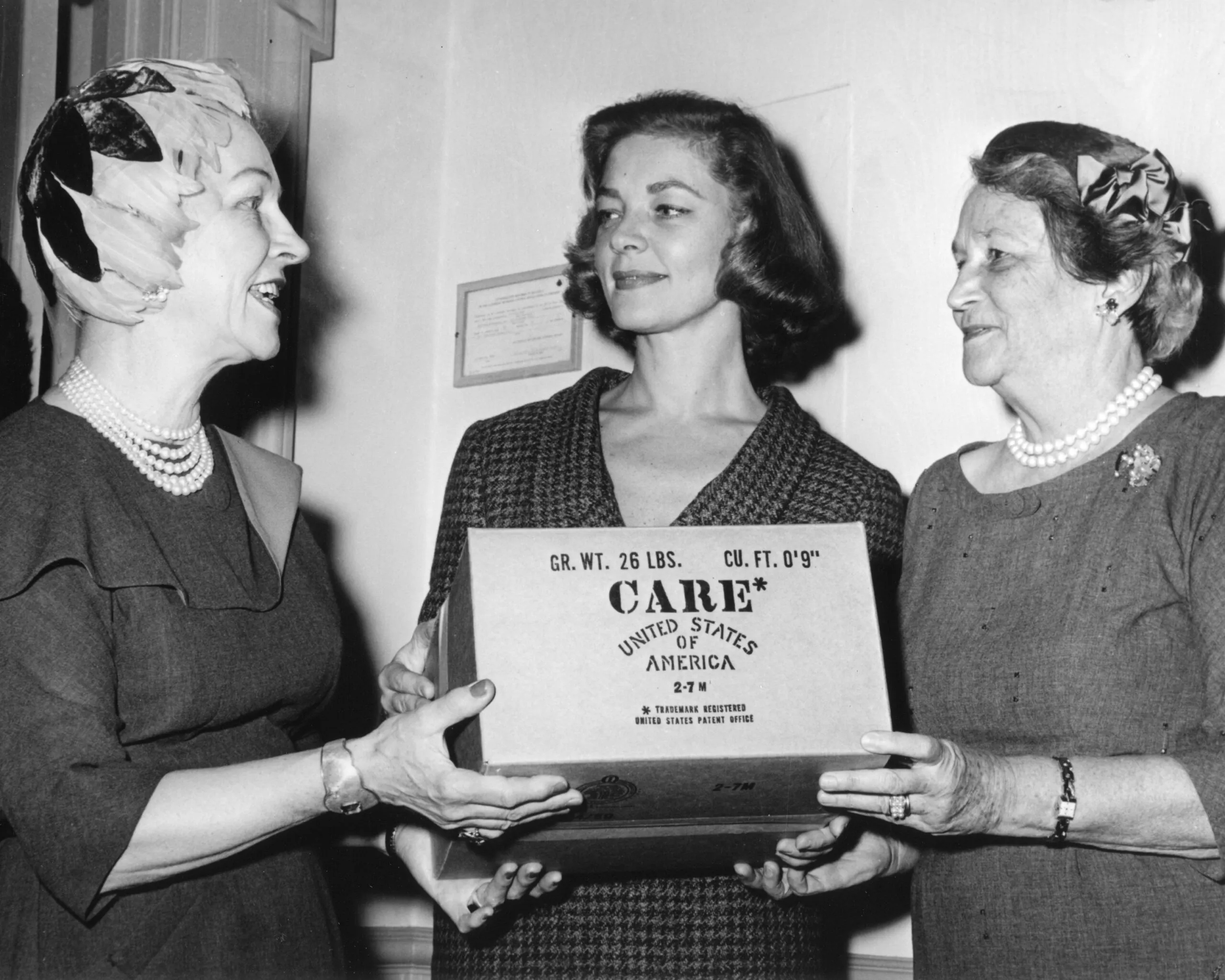
              As the CARE PACKAGE became a symbol recognized around the world, it also became woven into American popular culture. Hollywood actors, television personalities, cartoon characters, and public figures helped introduce new generations to CARE’s mission through posters, public service announcements, fundraising campaigns, and televised appeals. Celebrities like Ingrid Bergman, Whoopi Goldberg, and Jamie Lee Curtis used their platforms to turn distant humanitarian crises into deeply personal stories audiences could understand and respond to. These campaigns helped transform humanitarian action from something abstract into something ordinary people could participate in directly — one package, one donation, and one act of compassion at a time. 

              Iman: ‘I am a Refugee.’

              CARE’s Global Advocate shares her personal story of becoming a refugee at 16.

              Watch Video
              Whoopi Goldberg for CARE

              Whoopi Goldberg in a PSA for CARE in 1996.

              Watch Video
              Cartoon of Mickey Mouse and Goofy carrying a CARE PACKAGE. Cartoon of Mickey Mouse and Pluto delivering a CARE PACKAGE by boat. Actress Ingrid Bergman poses next to a CARE PACKAGE. Actress Myrna Loy showing a young child a CARE PACKAGE. Actress Lauren Bacall and two women stand with a CARE PACKAGE. Actress Marlene Dietrich hands a CARE PACKAGE box to children. French actor Maurice Chevalier stands next to two women. The woman on the right is holding a CARE PACKAGE. Actor Kirk Douglas standing next to a man and woman who are holding a sign for a CARE benefit show. Actress Janet Leigh and her daughter Jamie Lee Curtis pose by a CARE PACKAGE with food items in their hands. Country music star Reba McEntire poses next to a stack of CARE PACKAGE boxes for a television special promo. Actress Valerie Harper poses with a CARE PACKAGE for a television special promo. Actor William Shatner poses with a CARE PACKAGE for a television special promo. Actor Cesar Romero poses with a CARE PACKAGE for a television special promo. Dick Clark poses with a CARE PACKAGE for a television special promo.
              1 of 14
              From Hollywood to Main Street 

              A 1950 Walt Disney illustration shows Mickey Mouse and Goofy carrying a CARE PACKAGE box, reflecting CARE’s use of popular culture to introduce families to humanitarian action. Photo: Walt Disney Productions

              “If it was not for NGOs like CARE, I don’t know what my trajectory would have been.”

              Iman

              In this article

                World recognition and global impact

                The CARE PACKAGE did not remain frozen in history. It continued evolving alongside the world’s crises. As CARE expanded beyond postwar Europe into Asia, Latin America, Africa, and the Middle East, the organization became recognized globally for its long-term humanitarian leadership. In 1949 and again in 1951, CARE was nominated for the Nobel Peace Prize, reflecting decades of work supporting families affected by war, hunger, poverty, and disaster. Over generations, millions of CARE PACKAGE boxes reached communities rebuilding after crisis. The package itself became more than emergency aid. It became a lasting symbol of resilience, international solidarity, and practical compassion in action. 

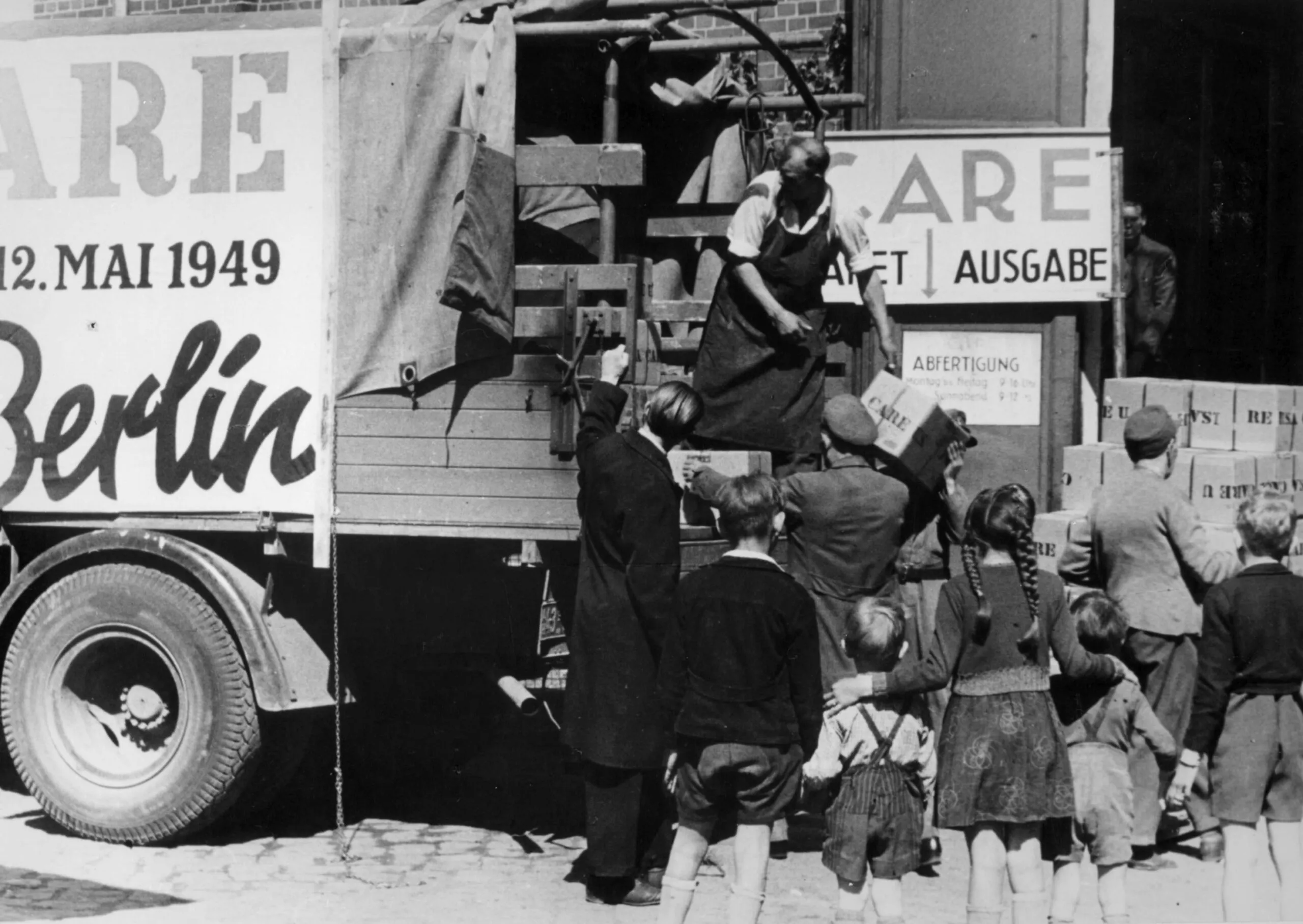
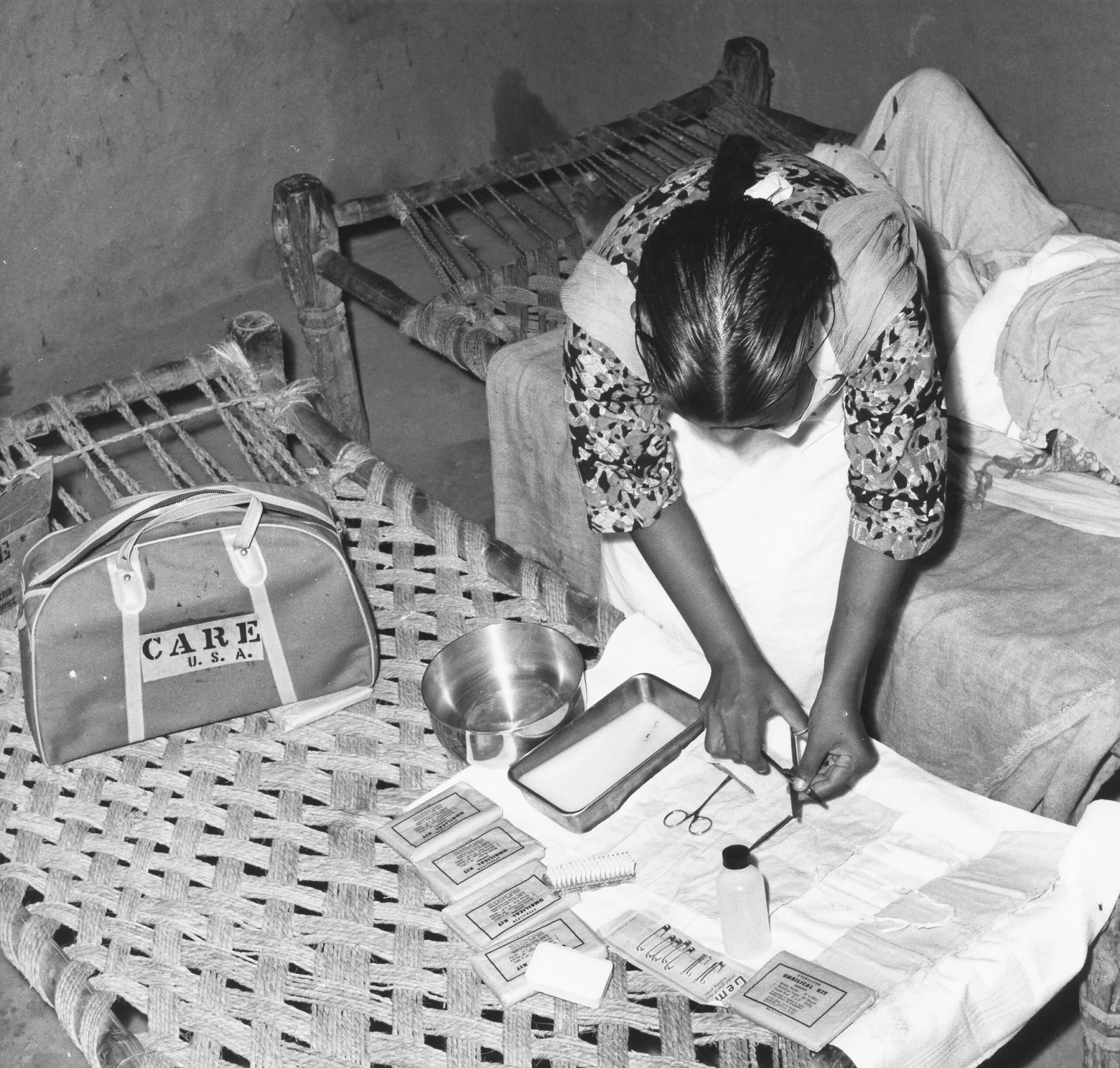
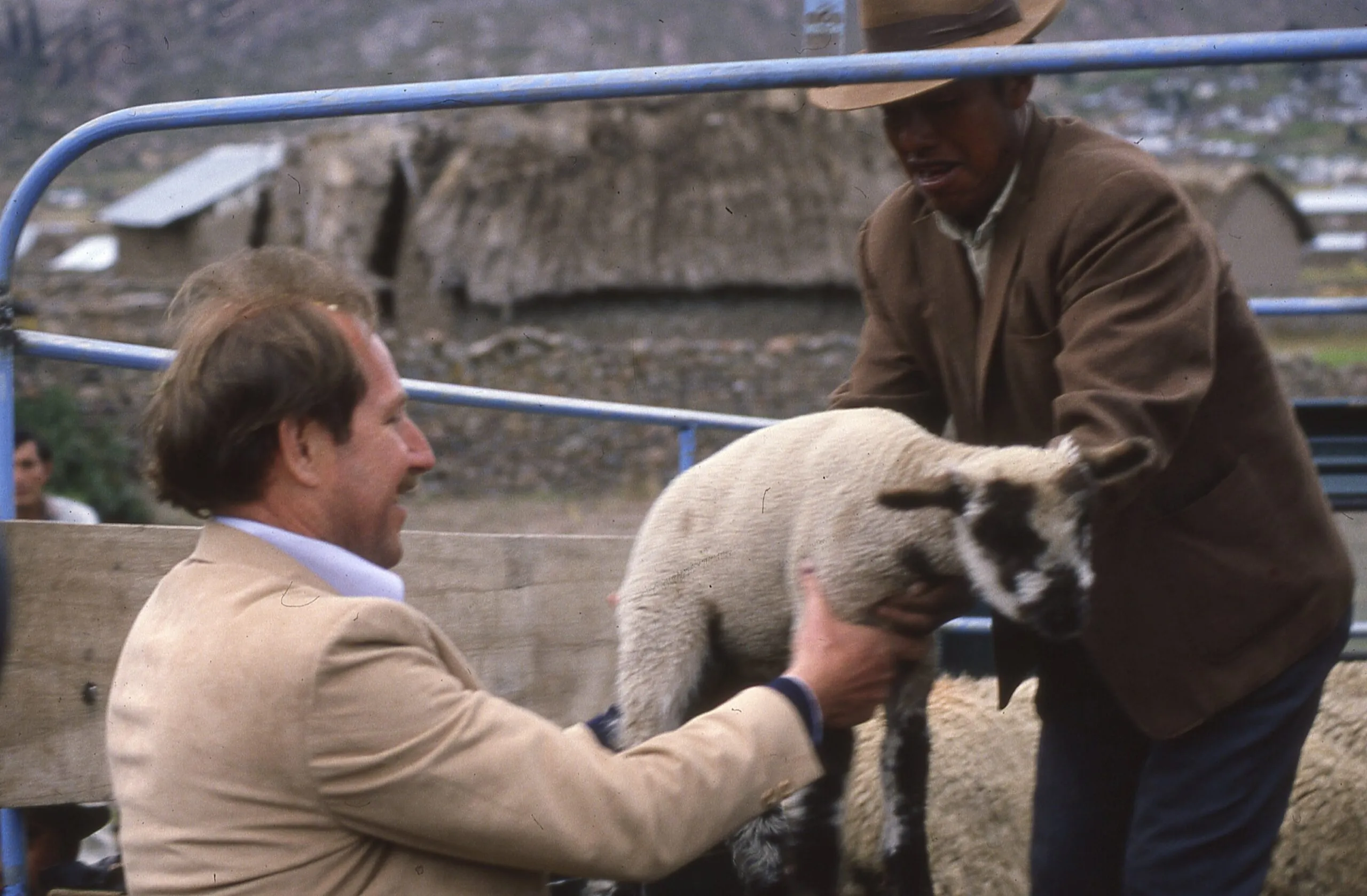
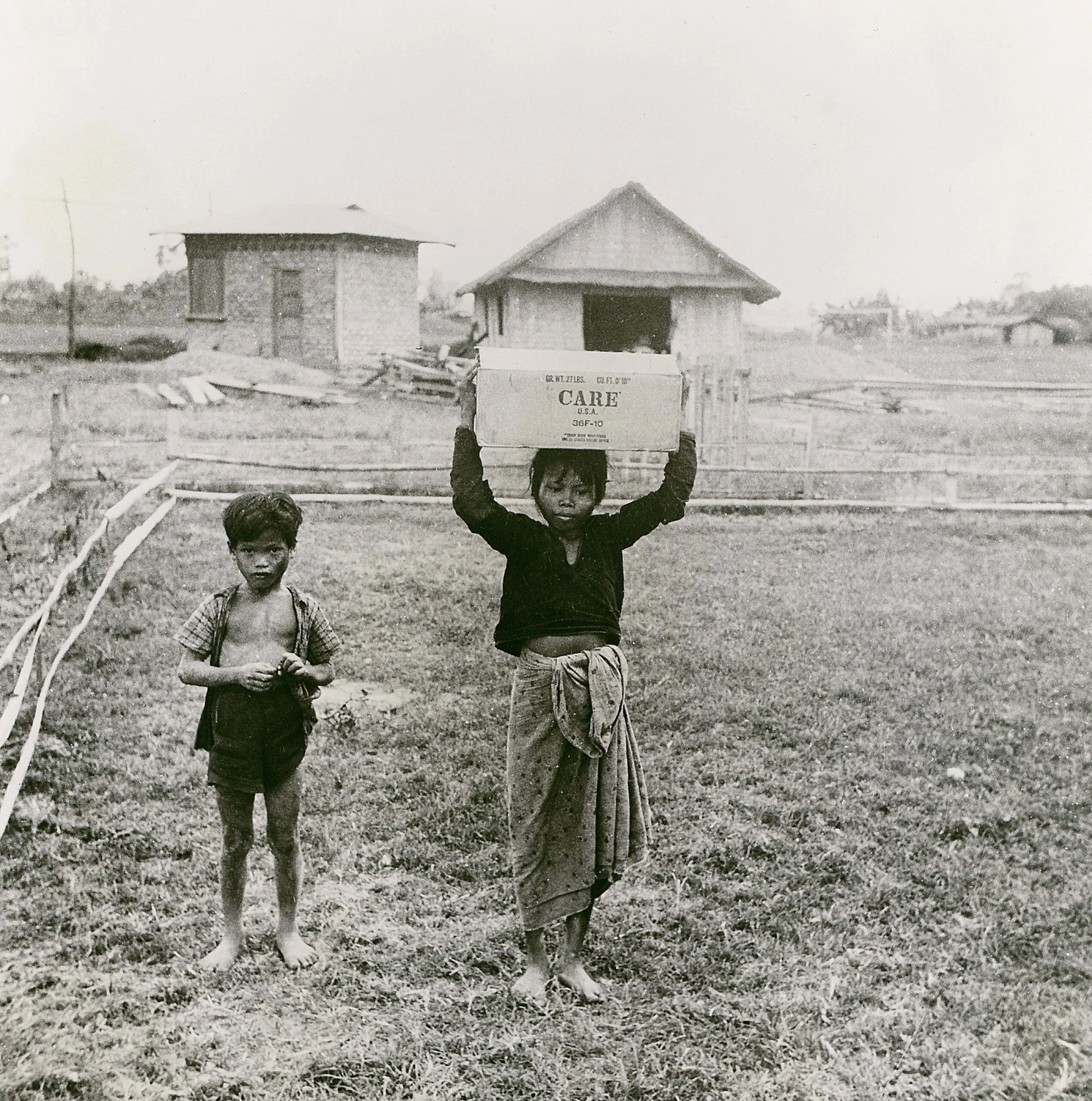
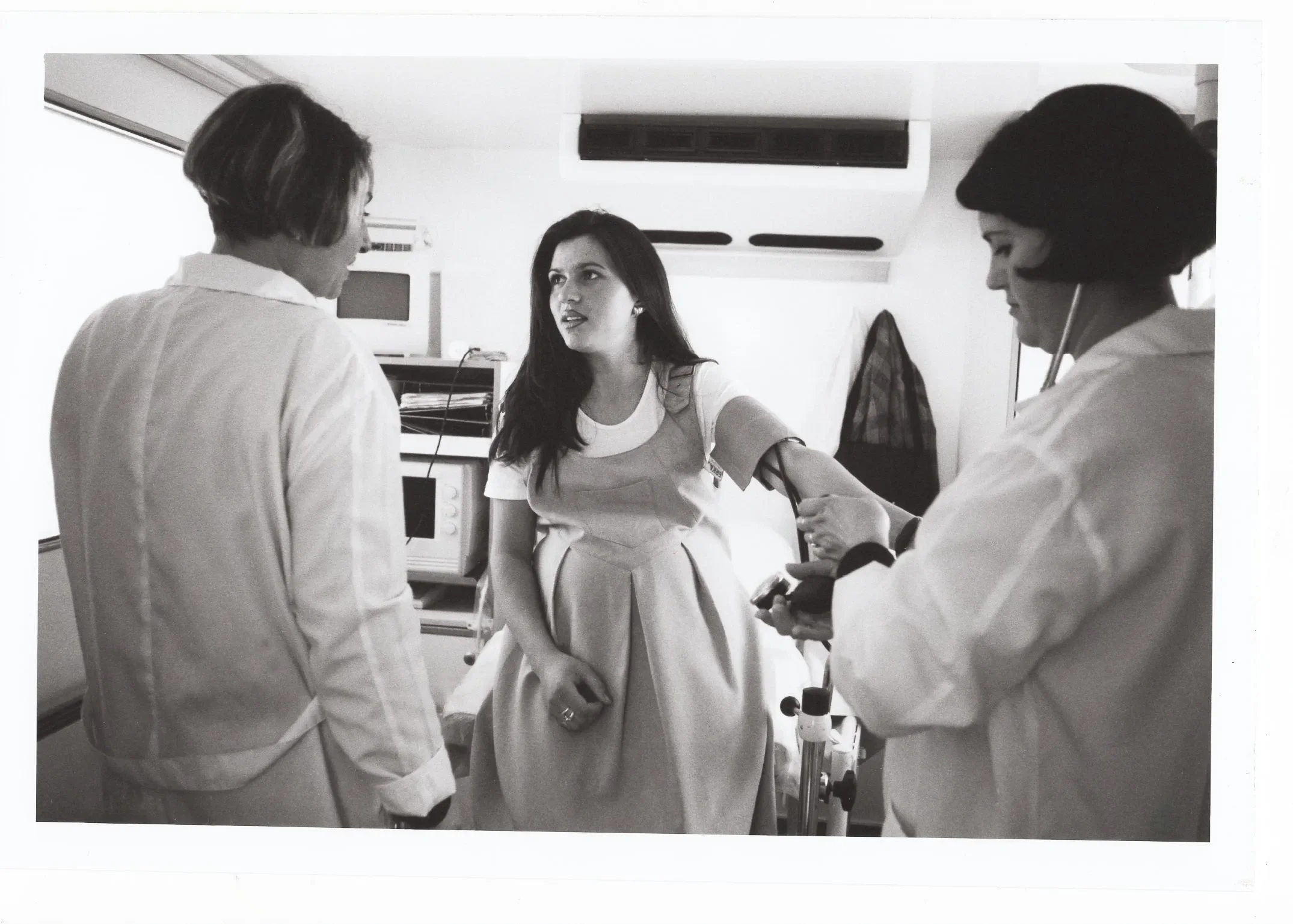
                Men unloading boxes from a truck with a CARE sign on it. A U.S. cargo plane flying over the city of Berlin. A group of people gather around a truck as a man unloads CARE PACKAGE parcels from the back. A woman opening-up a medical CARE PACKAGE and putting the medical instruments on a towel. A man handing a sheep to a young man. A young boy and girl walking through a rural area in the Philippines. The girl is carrying a CARE PACKAGE on top of her head. A pregnant woman is being seen by two women of the medical staff at a clinic. A woman is loading containers of water on camels in a desert.
                1 of 8
                World Recognition and Global Impact

                CARE trucks enter Berlin on May 12, 1949, after the Soviet blockade was lifted. During the Berlin Airlift, 250,000 CARE PACKAGE parcels made up 60 percent of all relief sent to the city. Photo: CARE

                Million

                By 2030, CARE plans to distribute 1 million CARE PACKAGE boxes globally and in the U.S.

                In this article

                  The CARE PACKAGE, reimagined

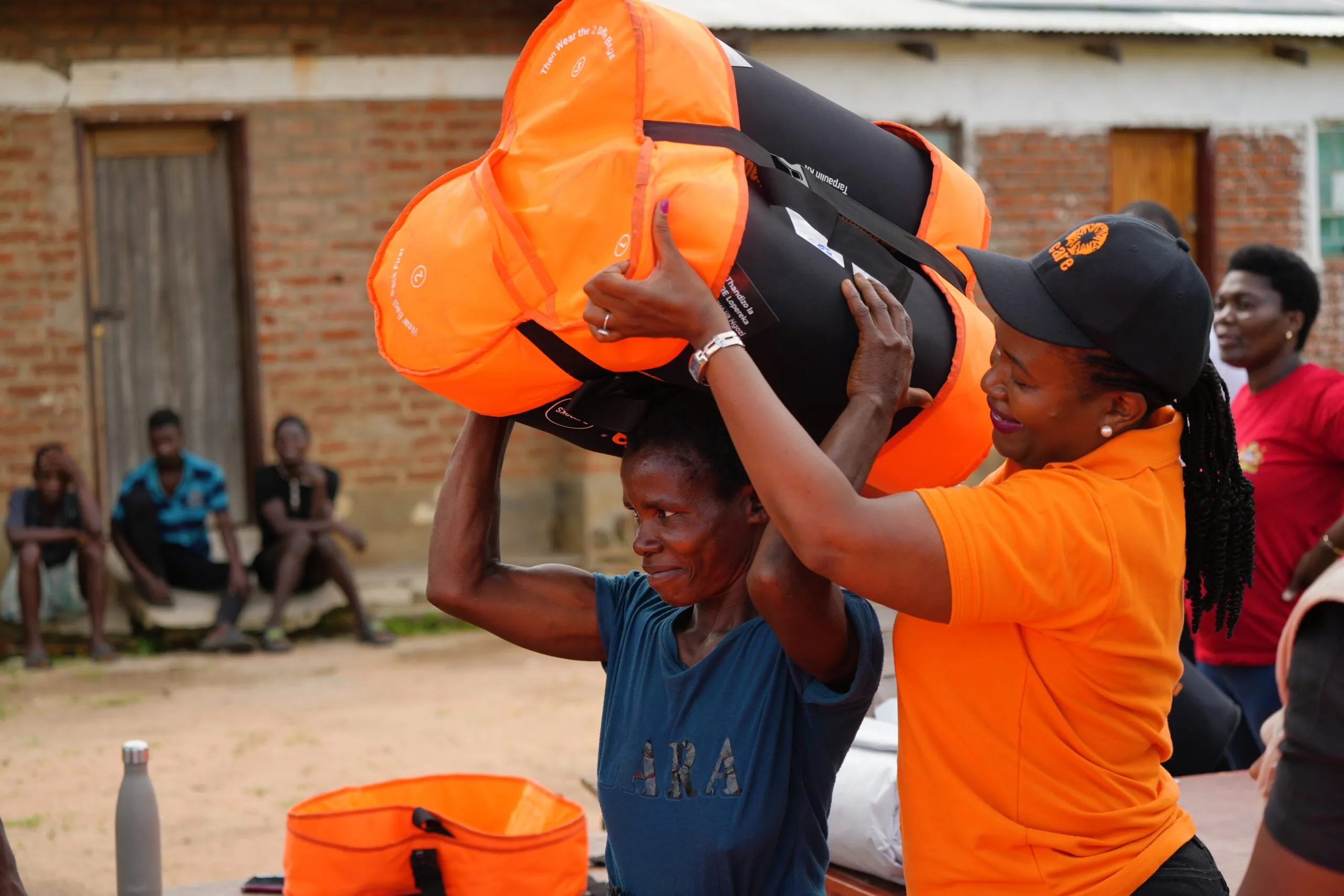
                  Nearly 80 years after the first CARE PACKAGE arrived in postwar Europe, the idea behind it is being reimagined for a world shaped by climate disasters, displacement, and conflict. Today’s CARE PACKAGE for Emergencies was designed alongside communities living through crisis, combining decades of humanitarian experience with practical tools families need to survive with dignity during the chaotic first weeks after disaster strikes. 

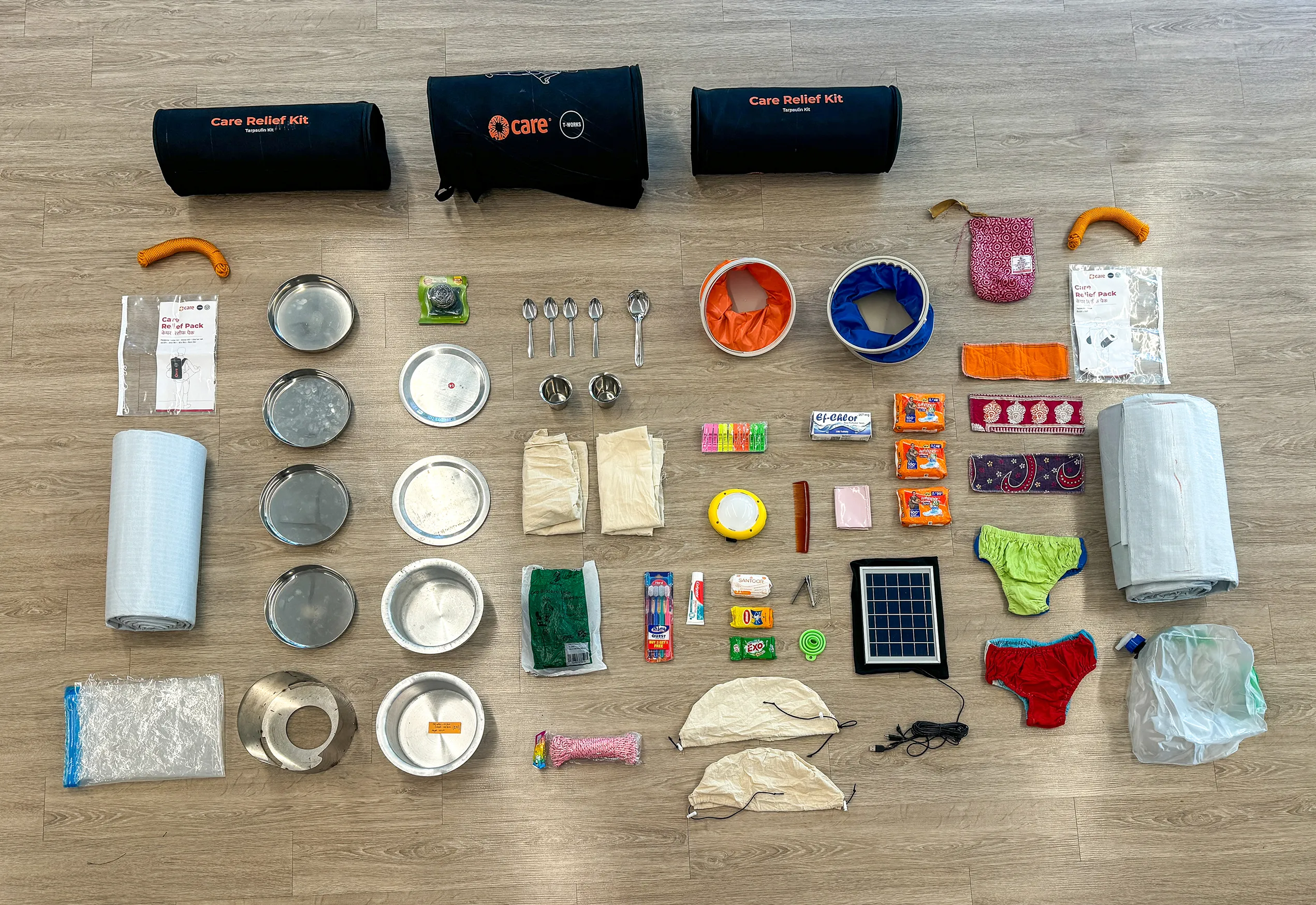
                  Inside are up to 40 carefully selected items for shelter, hygiene, cooking, clean water, lighting, and communication — ordinary objects that become lifelines when everything else has been lost. Like the original CARE PACKAGE, the modern version represents more than aid alone. It is a tangible expression of compassion in action: proof that even in moments of uncertainty, people facing crisis have not been forgotten. 

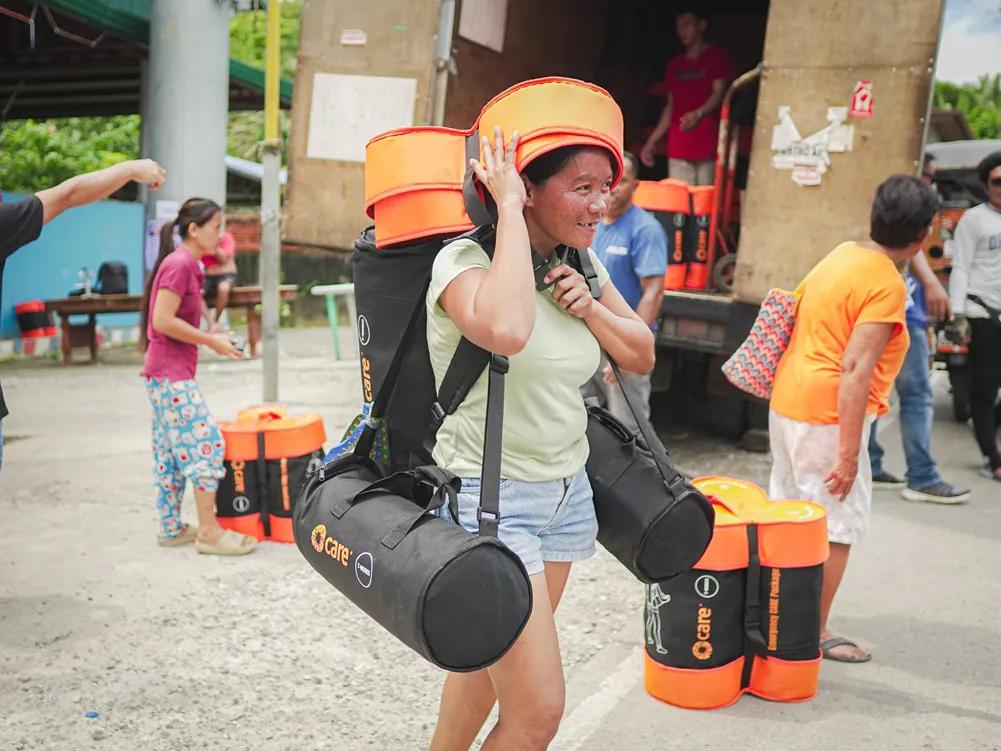
                  Samuel Zonda demonstrates a solar charger and emergency light included in a CARE PACKAGE for Emergencies in Malawi. A temporary shelter made from a CARE tarp is in the background. A top-down view of a CARE PACKAGE for Emergencies laid out on a wooden floor, displaying essential items, including cooking pots, plates, utensils, a solar lamp and panel, hygiene supplies, clothing, and a dedicated dignity kit with reusable sanitary pads and undergarments. A Filipina woman uses a CARE PACKAGE for Emergencies by carrying sections on her back and over each shoulder. A woman smiles as she is given a CARE PACKAGE from a CARE worker. A young boy running with a CARE Truck filled with CARE PACKAGE boxes in the background. A man in a CARE shirt hands food and hygiene supplies to another man. A woman picks up supplies to put inside a CARE PACKAGE for mothers and babies at a CARE event.
                  1 of 7
                  The CARE PACKAGE, reimagined 

                  In Malawi, Samuel Zonda demonstrates how the solar charger included in the CARE PACKAGE for Emergencies powers an emergency light. Behind him, a tarp from the package has been repurposed into temporary shelter. Photo: CARE

                  "My children were hungry, thirsty, and crying from the cold all at once. I had nothing to give them, no food, no clean water, no place to rest. CARE’s support reached us when we had nothing left.”

                  Karim*

                  In this article

                    “It’s What’s Inside That Counts”

                    The CARE PACKAGE endured not because of cardboard boxes or branding, but because generations of people saw in it something deeply human: proof that strangers could care for one another across borders, wars, disasters, and decades. 

                    Across decades and continents, the CARE PACKAGE has reminded people facing crisis that they are not invisible. It transformed compassion from an idea into something tangible — something that could be held, opened, shared, and remembered. 

                    Because a box is just a box — it’s what’s inside that counts. 

                    Back to Top