Inside CARE's response to earthquakes in Venezuela

By Catherine Martinez July 24, 2026

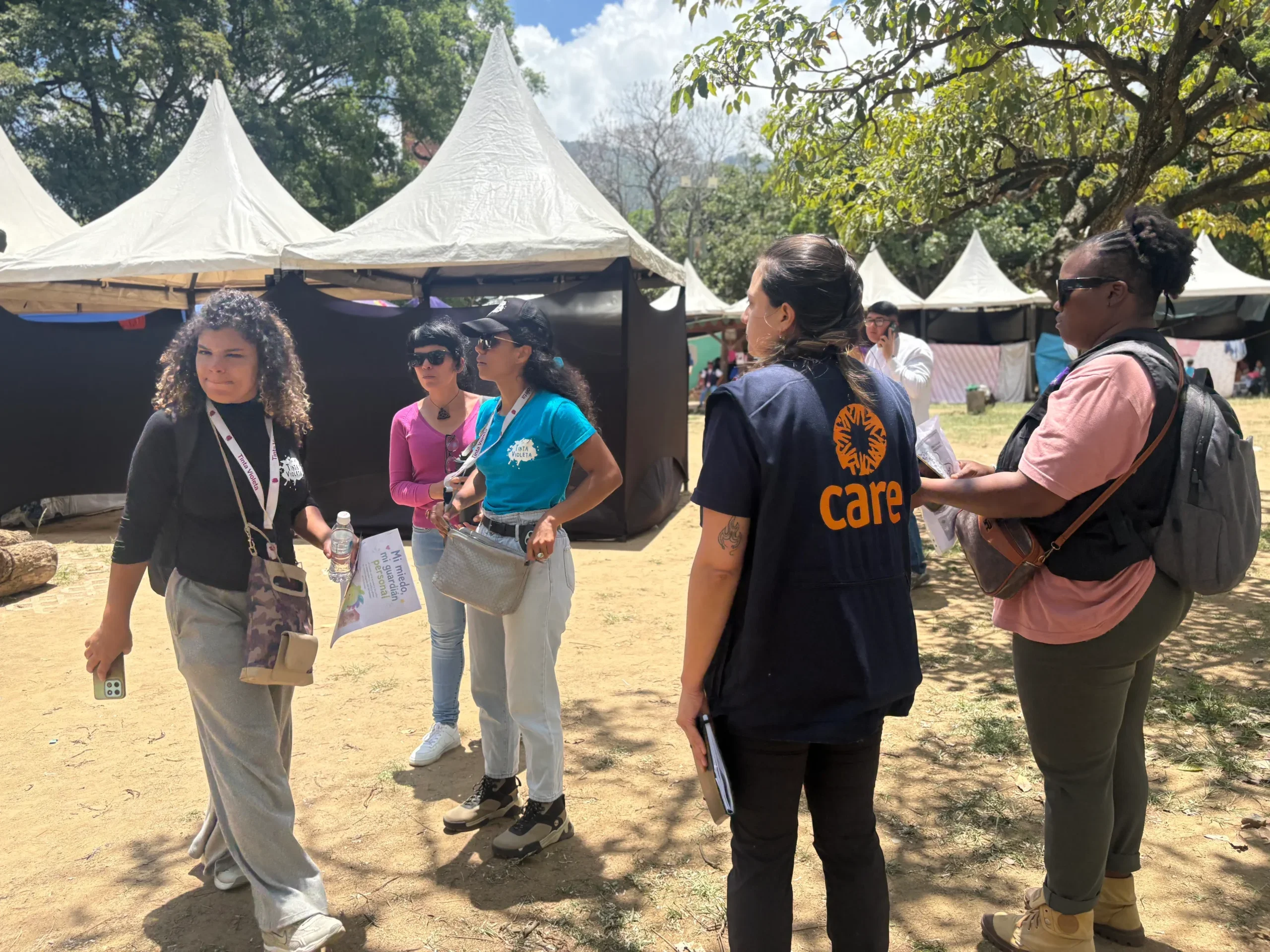
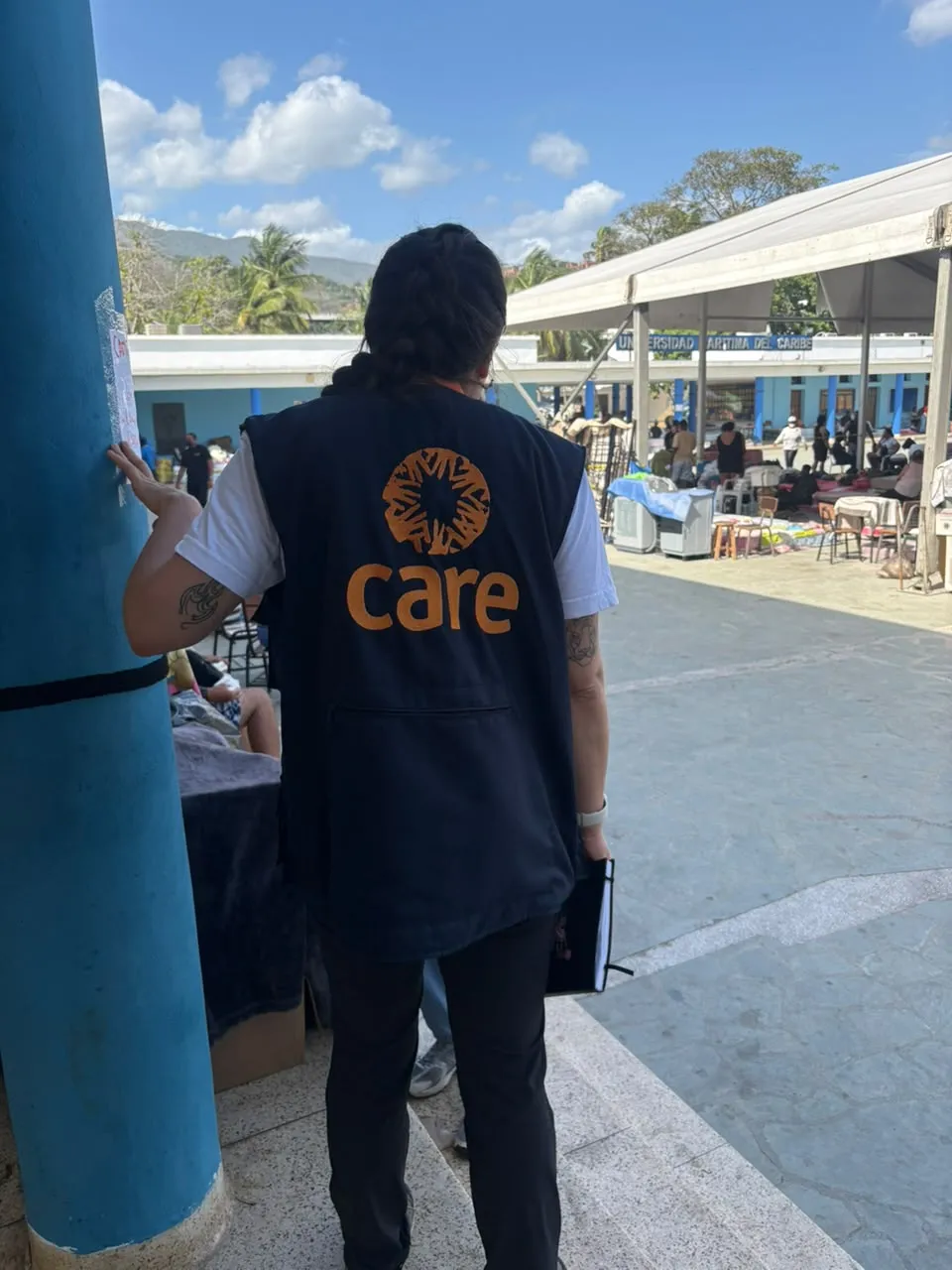
A group of women aid workers gathering in front of tent shelters.

Catalina Vargas, CARE Colombia's country director (in CARE vest), and aid workers assess the aftermath of Venezuela's double earthquake in June. Photo: CARE

"It looked like a war zone," recalls Catalina Vargas, CARE Colombia’s country director. She was among the first humanitarian workers to enter Venezuela, arriving six days after the earthquakes.

For a week, Vargas visited temporary shelters in Caracas and La Guaira. She spoke with families who had lost everything, learning about their urgent needs, especially around food, water, and shelter.

“Our objective was to talk to the partners, understand their response, visit affected communities, consult with other organizations, and design how CARE could best support them,” Vargas said.

Her visit builds on long-standing ties to the region. Vargas was last in Venezuela in 2019. Since then, she has worked closely with local Venezuelan organizations responding to the multiple crises facing the country. These ongoing challenges have forced millions of Venezuelans to flee to neighboring countries, including Colombia, where Vargas leads CARE’s operations.

Reaching Venezuela’s earthquake zone

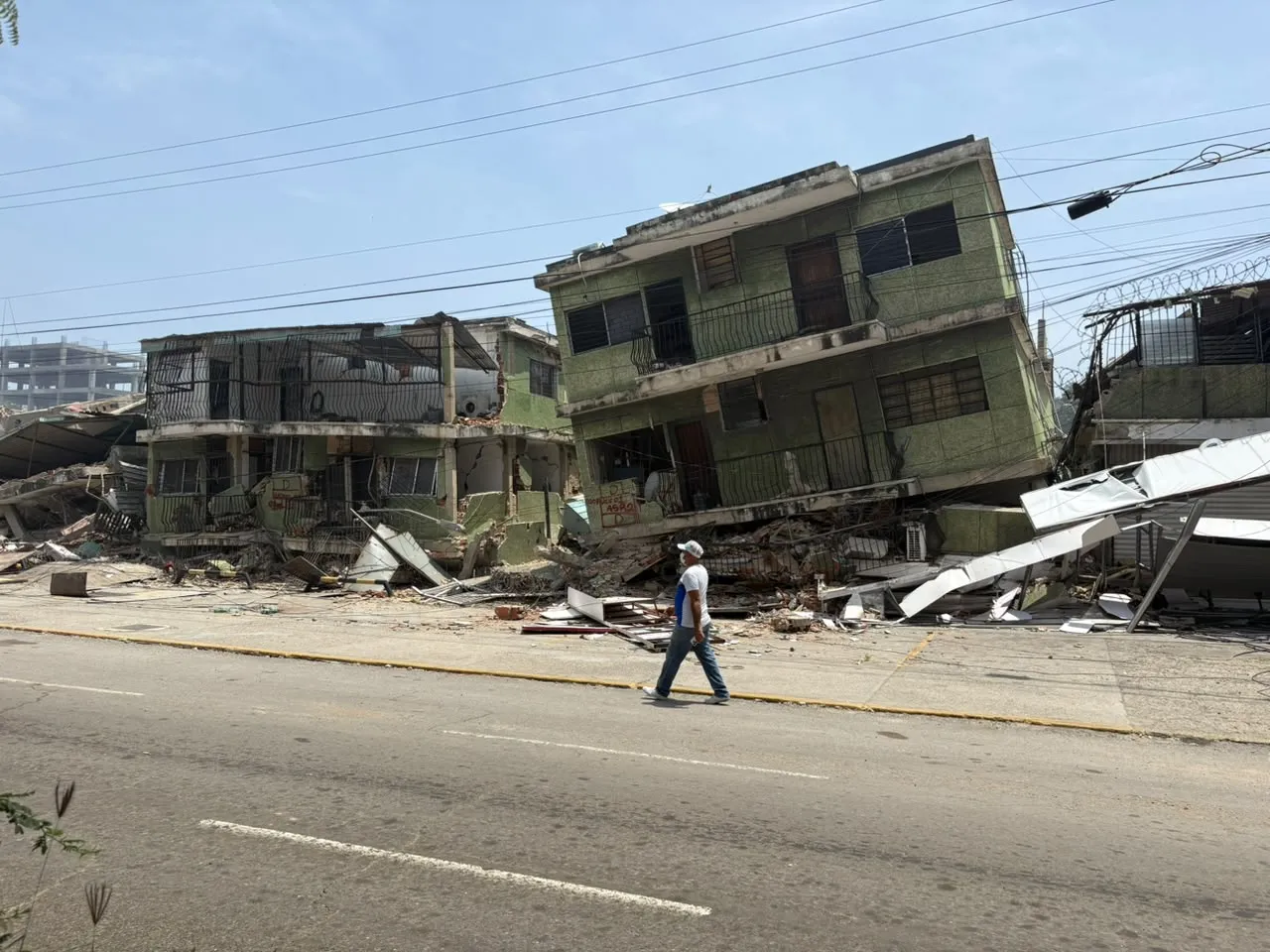
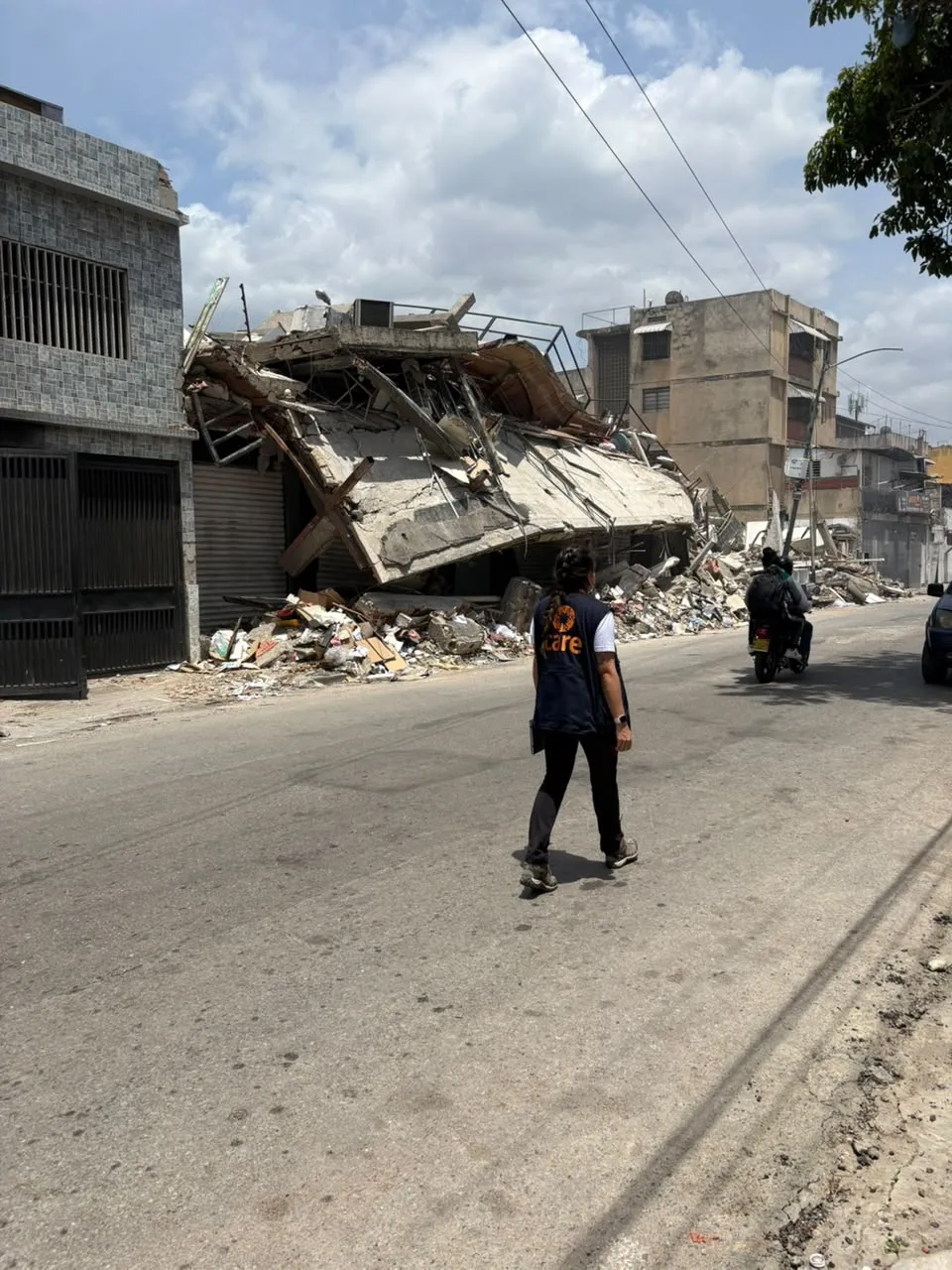
A person walking down an empty street in Venezuela with earthquake destruction in the background.
On June 24, two back-to-back powerful earthquakes (magnitude 7.2 and 7.5) hit the coastal city of La Guaira, on the outskirts of Venezuela’s capital, Caracas. Photo: CARE

Time was of the essence, and every hour saved meant getting to affected communities that much sooner. With Caracas’s airport closed, Vargas and her colleagues first looked at driving through Cúcuta, the busiest land border between Colombia and Venezuela. However, that road trip would have taken about 10 hours by car. In the end, they secured seats on a flight from Bogotá to Valencia, allowing them to bypass the long journey and reach the affected areas in a fraction of the time.

From Valencia, Vargas and her colleagues drove to Caracas, catching their first glimpses of survivors and damaged communities along the way. Damaged buildings were visible from the main roads, and displaced people were everywhere. “We began to see many tents on the street, groups of tents, a lot of traffic,” Vargas said. “There was an atmosphere of restlessness, of heaviness. It was something palpable.”

Once in Caracas, Vargas went directly to the office of Tinta Violeta, one of CARE’s local partner organizations that began responding to the earthquake shortly after it struck. After a brief emotional reunion, they began planning visits to shelters in Caracas and La Guaira, one of the nearby coastal cities most severely affected by the earthquakes.

Inside the displacement camps: Emergency shelter needs

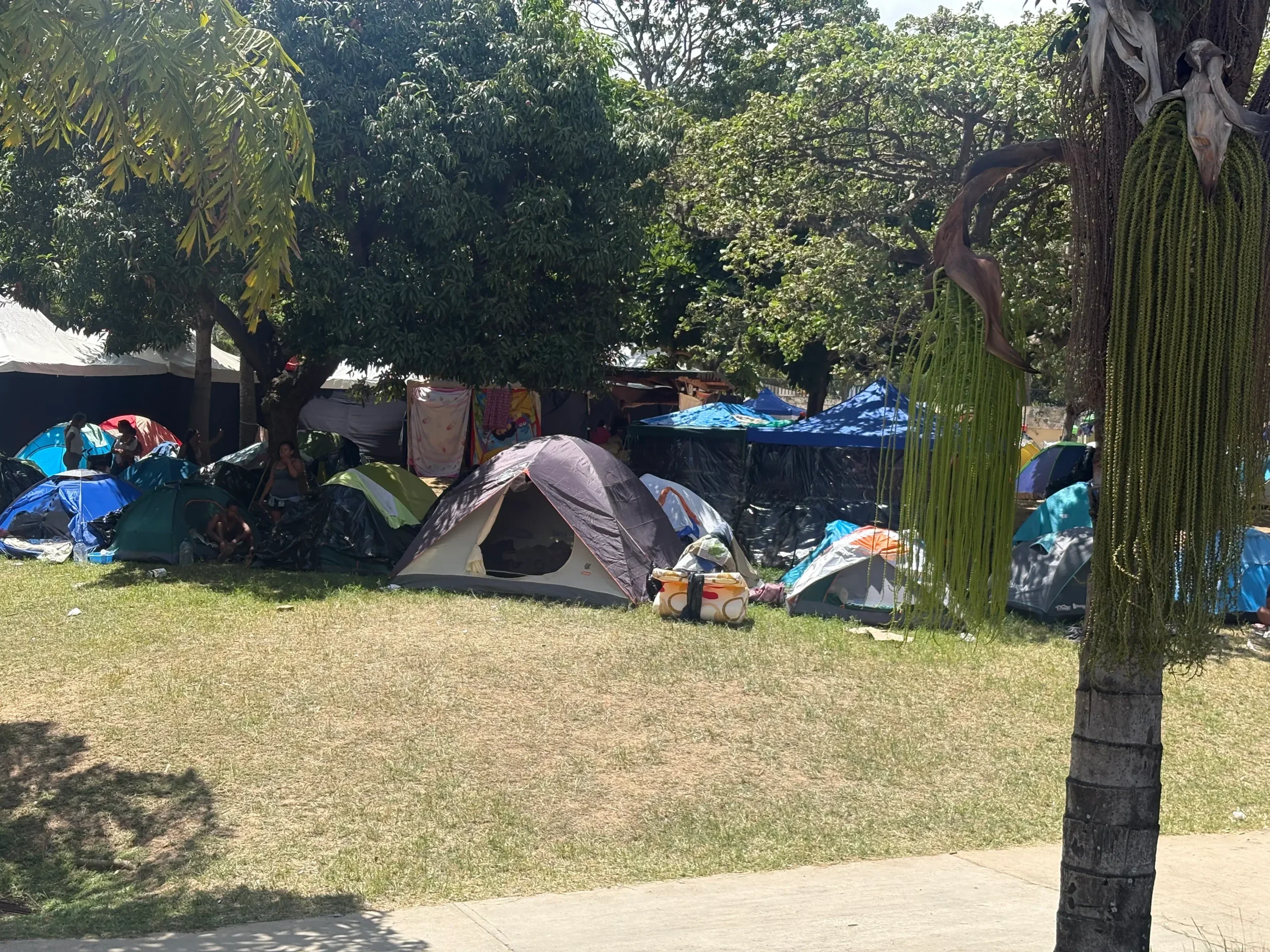
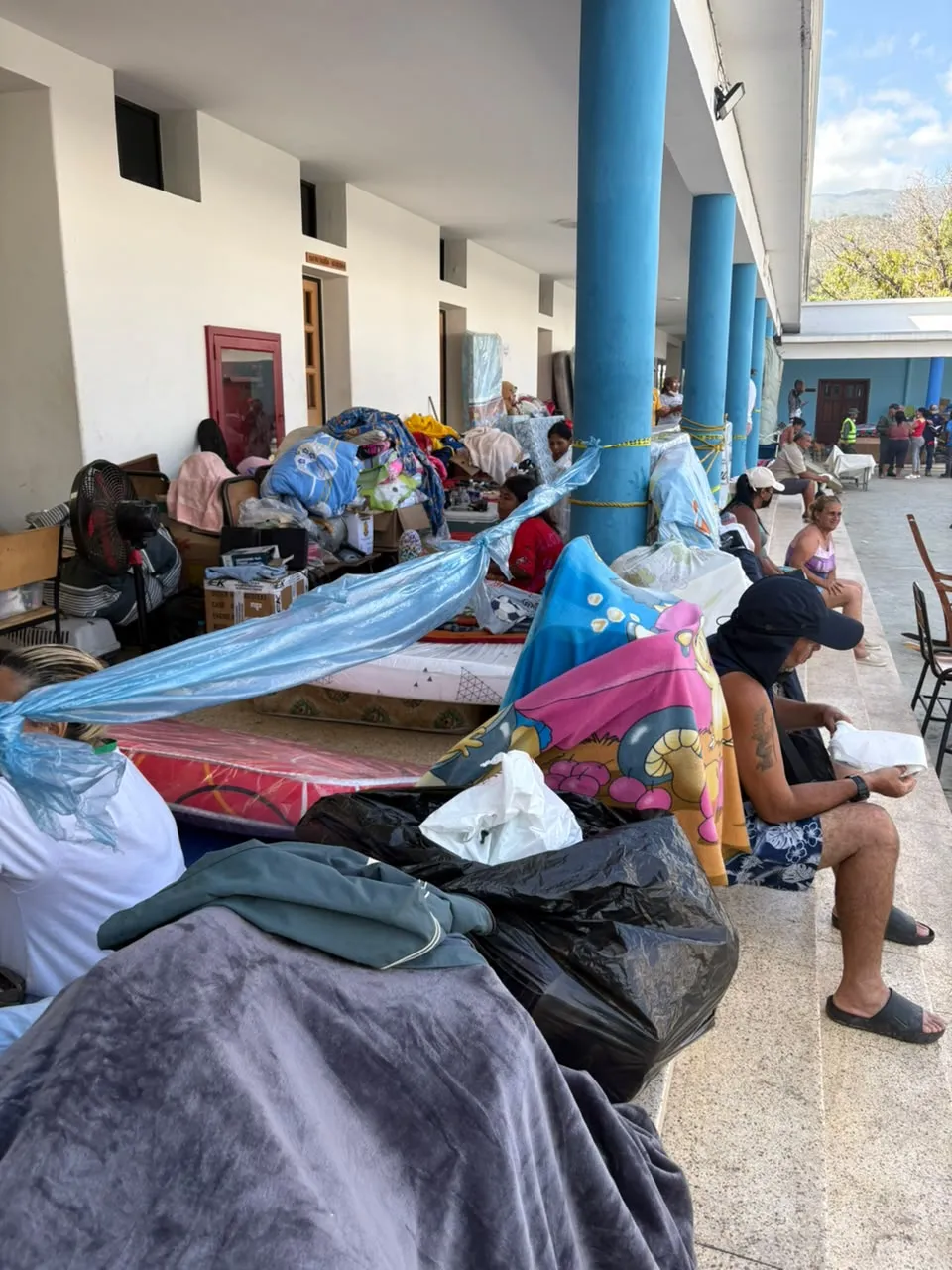
A group of tents huddled together underneath some trees.
Current estimates report that over 17,000 people have been affected by the earthquakes. Photo: CARE

The next morning, Vargas visited a makeshift shelter in a Caracas park where thousands had gathered. The site had no electricity. Toilet facilities were insufficient for the people living there. The tents offered little privacy, and there were no activities or safe spaces for children.

Wearing only the clothes on his back, a 19-year-old man approached Vargas. He asked for a toothbrush and a change of clothes — simple items she couldn’t provide at that moment. “It left me feeling completely helpless,” she said.

Walking farther through the camp, Vargas met a nine-year-old girl sitting beside her grandmother, who had been injured when the wall of their home collapsed during the earthquake. The girl had helped her grandmother out of the rubble and was now helping care for her.

Vargas sat with the young girl and learned of her worries about reuniting with her mother, who lives in another state. When asked what she needed most in that moment, the girl responded, “I would like coloring books.”

The encounter stayed with Vargas.

“At least they had a roof,” Vargas recalled, even though that roof was a tent.

Across the shelter, she saw children and parents facing impossible choices. Vargas met one mother with five children who had no safe place to leave the kids when she needed medical attention or had to stand in line for food. Parents sometimes relied on strangers in neighboring tents to watch their children.

“We identified many protection risks for the children, especially young girls,” said Vargas. Findings like these were exactly what the assessment was meant to surface to help guide CARE’s shelter strategy across the city.

Three days after her visit, the large informal site for displaced people closed because it had outgrown what it could safely hold. Across Caracas, people began moving into smaller shelters set up in local schools and community buildings. While having a hard roof offered greater protection from rain and the elements, Vargas said the fundamental challenge remained: how to make temporary shelters safe for people who had already lost so much.

Disaster results in La Guaira: Loss, damage, and migration

I haven’t been in a war zone, but if I imagined one, I would think of La Guaira because the place is destroyed.

Catalina Vargas

Twice in the days that followed, Vargas made the short drive to La Guaira, near the earthquakes’ epicenter, each time with a different local partner organization. Those visits let her begin to grasp the scale of the damage and assess how CARE and its local partners could respond.

“We wanted to see the capacities of each organization and that’s why we went two days in a row to the epicenter,” Vargas said.

Countless families were sleeping outside collapsed buildings, waiting for news of missing relatives.

“It is an immeasurable crisis,” Vargas said. “I haven’t been in a war zone, but if I imagined one, I would think of La Guaira because the place is destroyed.”

Vargas met a young woman whose mother was trapped inside the second floor of a collapsed 18-story building. “I’m not going to leave here until they give me my mother’s body,” the woman told her. “The only thing I want is to be able to bury my mother.”

When Vargas first arrived in La Guaira, more than a week had passed since the earthquakes. Each day, the odds of finding anyone alive beneath the rubble grew slimmer.

Still, many held out hope. With rescue teams and heavy equipment stretched beyond capacity, some residents attempted to clear debris themselves, despite the danger of further collapse.

Across Venezuela, years of economic and humanitarian strain had already left communities highly susceptible before the earthquakes struck. In La Guaira, they also destroyed livelihoods in communities that had depended heavily on tourism and informal work.

“When a crisis hits, existing struggles only get worse,” Vargas said. “There is a lot of uncertainty about where to go, what to do, and how to meet their basic needs.”

One young woman she met had already made her decision. “I’m going to Colombia,” she told Vargas. “My family died, my house fell. I don’t have anything anymore to be here.”

Vargas expects that others may make similar decisions, joining relatives elsewhere in the country, in Colombia, or across the wider Venezuelan diaspora.

Prioritizing protection needs in crisis response
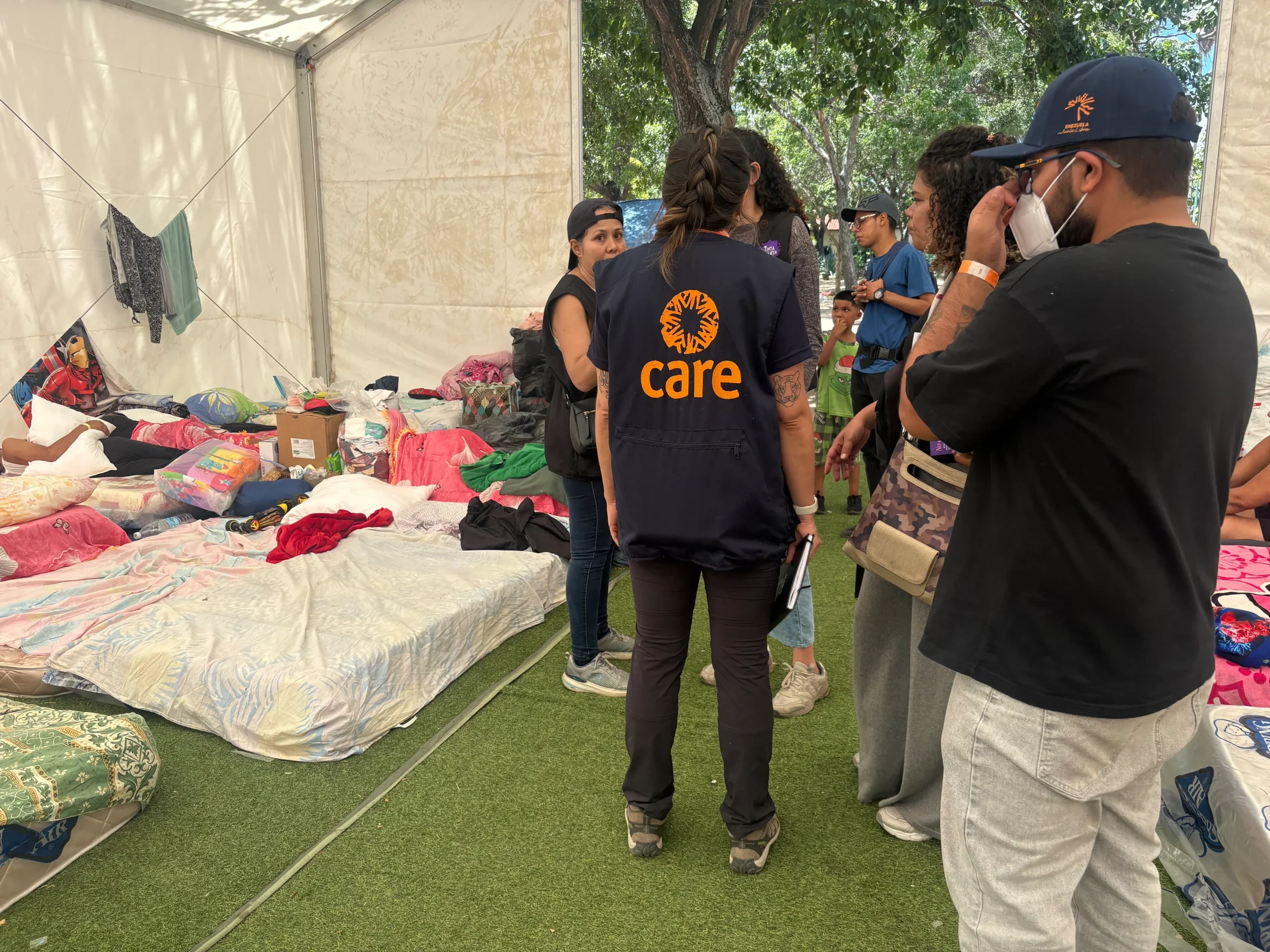
A group of aid workers gathered together inside a tent shelter with beds on the ground beside them.
CARE's Catalina Vargas and others walk-through a shelter and assess the needs of survivors. Photo: CARE

For Vargas, the people she met made one priority especially clear: recovery begins with safety and security.

“For me, the entry point is protection,” she said.

That means more than providing a roof. Shelters need adequate lighting, safe spaces for children, sufficient sanitation facilities, and clear ways for people to report violence, abuse, or harassment.

Vargas also stressed the importance of recognizing the unique needs of at-risk populations. Pregnant women and new mothers need access to appropriate health care. Children need protected spaces and activities. Women and girls at risk of targeted violence need services staffed specifically by women.

“If my team doesn’t have women to listen to other women, it will create a risk of conflict or revictimization,” Vargas said.

Older adults and people with disabilities, she added, face barriers of their own.

“In a crisis, pre-existing risks only get magnified,” Vargas explained. “Needs are different. That is why services must be tailored for each group. If, for example, we want to respond to violence against women and girls, an expert team must be there.”

This response is grounded in what she saw, and Vargas stressed the vital need for accurate data. Without clear information, a crisis is easily underreported and underestimated. “We have to provide rigorous data that shows where the gaps are, in order to secure government and private funding,” she explained.

CARE works with local organizations to identify these needs and shape a response rooted in community experiences. Vargas emphasized that this requires listening to people not as a single group, but as individuals with distinct risks and needs.

Hope and community resilience: CARE’s long-term commitment

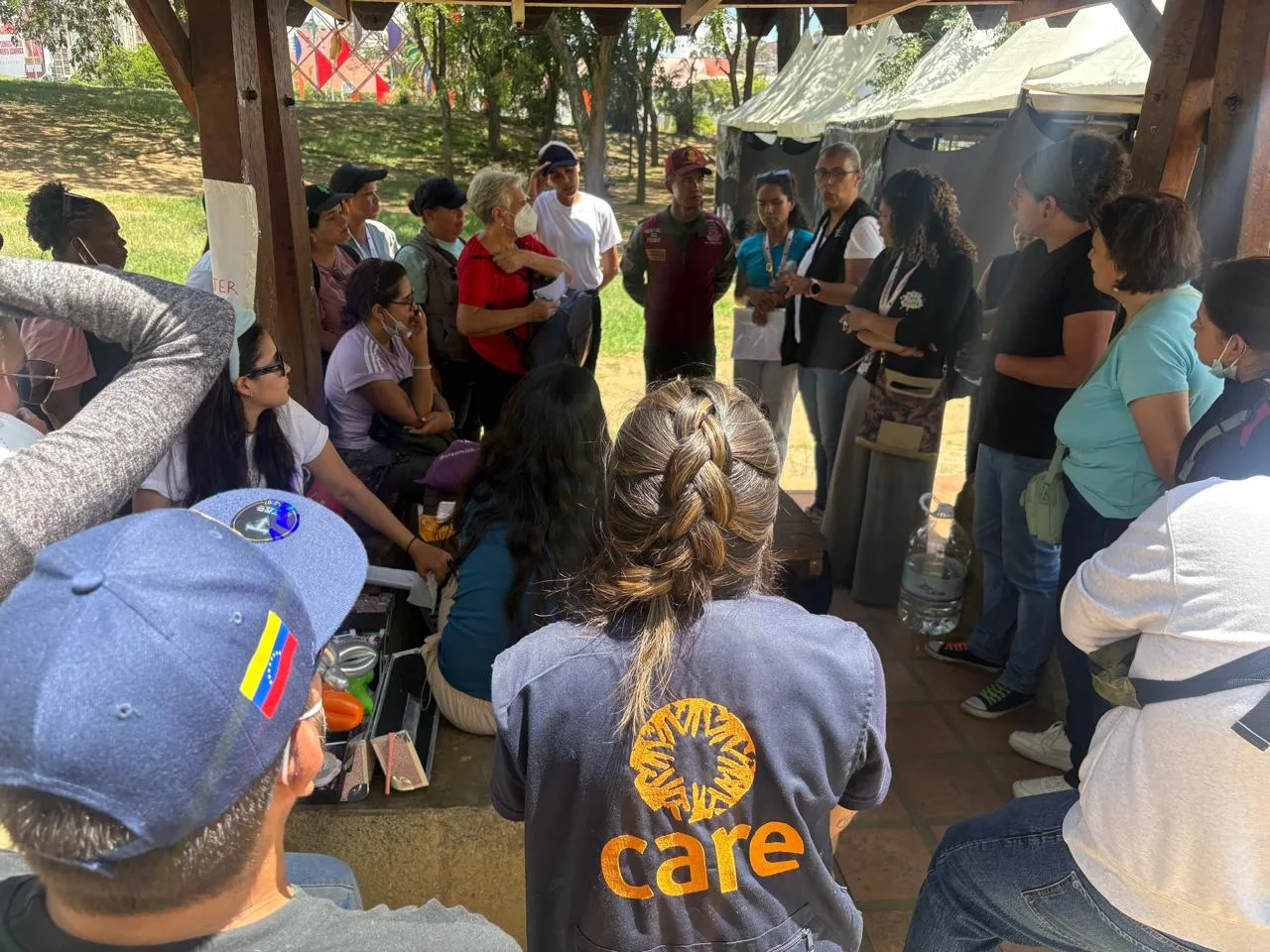
A group of aid workers gather around for a meeting.
CARE's Catalina Vargas (center) and others discuss the next steps in recovery efforts. Photos: Andrés Sarmiento / CARE

Despite the destruction, Vargas says what stays with her most is the humanity she witnessed. During one visit, she was speaking with a couple inside a tent while their young son played nearby. The five-year-old was not part of the conversation. Then he walked toward her.

“The boy stared at me and lunged at me,” Vargas recalls. “He gave me a hug that broke me.” The child did not ask her for anything. “He just wanted a hug.”

Vargas saw the same humanity in other forms: people from less-affected areas arriving with hot food, neighbors bringing phones to people who had lost theirs, and communities finding ways to help one another in the middle of profound loss. “That is what makes us human and what gives us strength,” she said.

For Vargas, returning to Venezuela years after her last visit changed her perspective about the work she had already been doing for much of her career.

“I have been working with Venezuela for about eight years,” she says. “For me, this visit connected everything I’ve seen over those eight years – from the migration crisis in Colombia to what is happening inside Venezuela.”

What she encountered during six days in the country gave that work new faces and stories. Those six days provided clear direction for Vargas and her team. Their assessment confirmed the need to prioritize immediate protection while building toward long-term health and social services. The assessment also made clear that recovery would be a long-term effort.

What CARE is doing

CARE is responding in Venezuela, working with partners Tinta Violeta and Humanity & Inclusion (HI) to distribute dignity and hygiene kits in La Guaira. CARE and partners are also continuing to provide safe spaces and psychosocial support.

Teams are assessing potential water, sanitation, and hygiene (WASH) activities with remote support from emergency WASH teams. CARE has also started a Surge Fund project with HI and is mapping and assessing new partners for the response.

As the response continues, CARE will share updates on the latest recovery activities and programs.

CARE in Venezuela: CARE has been working in Venezuela since 2018 entirely through local partners, seeking to provide life-saving services, including health services, food security, clean water and hygiene/sanitation services to the most at-risk communities affected by the country’s crisis.  Since the response began nearly eight years ago, CARE’s partners have reached approximately 40,000 people, 70% of whom are women. Around 190 local organizations have received technical and/or financial support.

 CARE has responded to the Venezuelan crisis with a regional approach that addresses the underlying causes and complexities of forced and mixed migration in all contexts. This strategy has provided an effective response to the needs of women and girls in Colombia, Ecuador, and Peru. Since 2019, the CARE Colombia office has carried out a cross-border humanitarian response for migrants and refugees, ensuring lifesaving services, especially in the areas of protection and health. At the same time, we have provided durable solutions for people aiming to stay in the country by strengthening their livelihoods and supporting social cohesion with hosting communities.

Back to Top