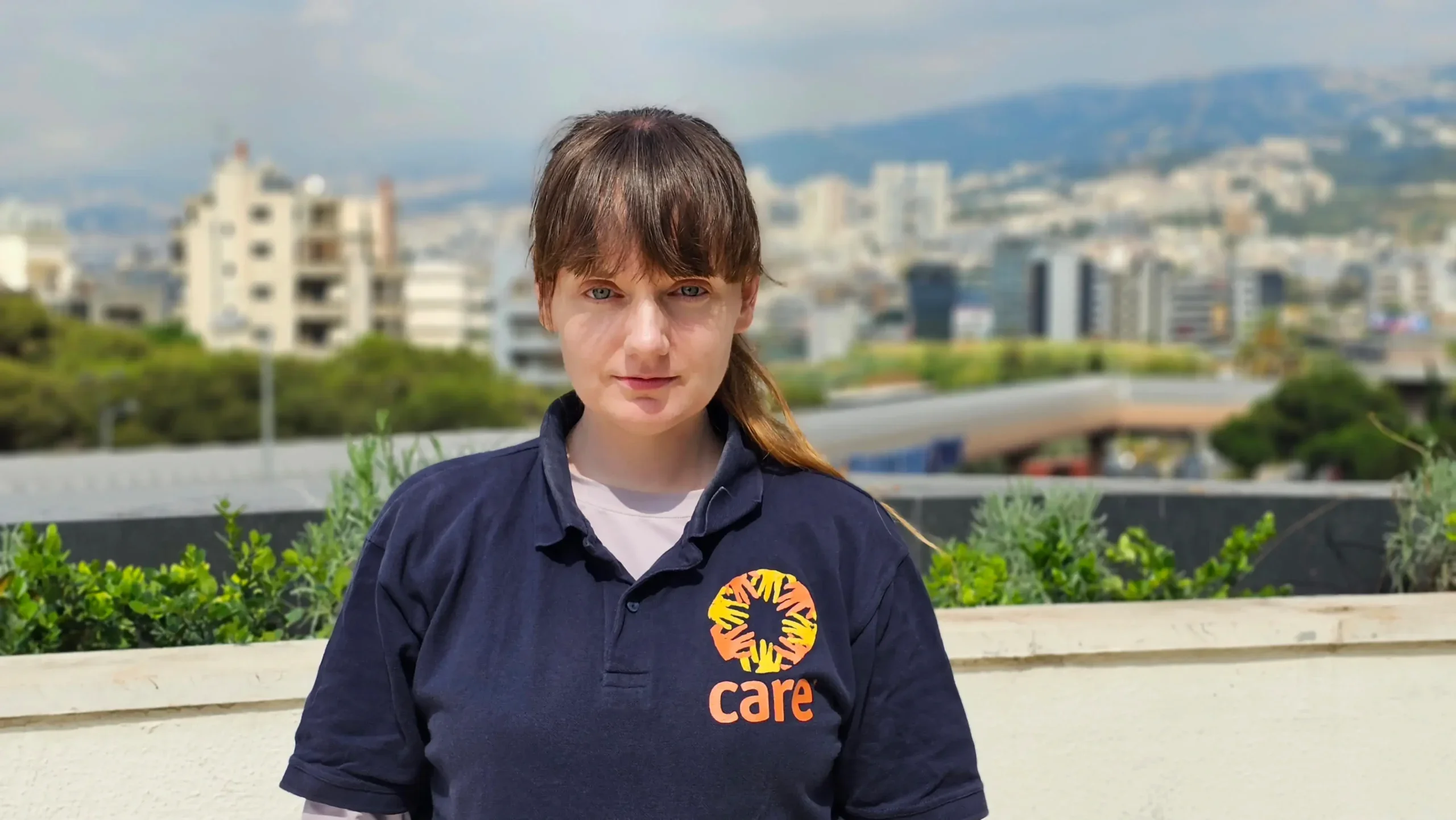
July 28, 2026: CARE staff on working and living through the crisis in Lebanon

By CARE Staff July 28, 2026

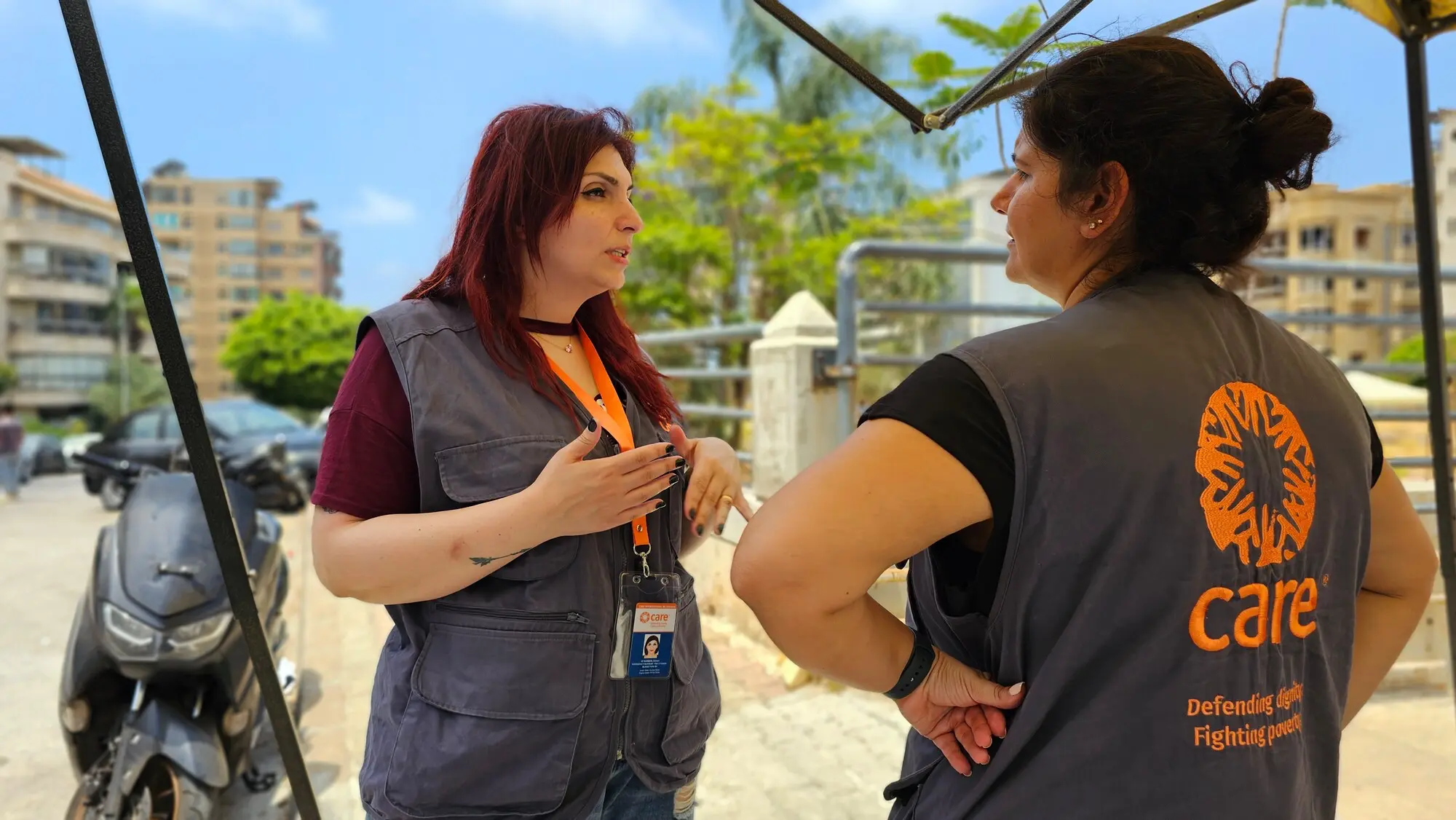
Two women aid workers in Lebanon having a conversation outside.

CARE staff members, Hiba Jaber and Eliane Abi Sleiman, during a recent distribution of dignity kits in Beirut. Photo: @2026 Sarah Easter/CARE

The humanitarian crisis in Lebanon continues to worsen. More than 1 million people have been displaced, and more than 4,300 have been killed. For those living here, war has become part of daily life.

Since the conflict began earlier this year, CARE has worked alongside local partners to provide lifesaving assistance. Teams in Lebanon are helping displaced people with essentials such as food, water, and hygiene kits. CARE is also working with local authorities to help improve water systems and sanitation infrastructure.

For CARE team members in Lebanon, this work is deeply personal. Many are responding to the crisis while facing the same dangers and worrying about their own loved ones. CARE staff share what it is like to deliver humanitarian assistance amid a crisis affecting their families and communities.

CARE staff: Life in Lebanon

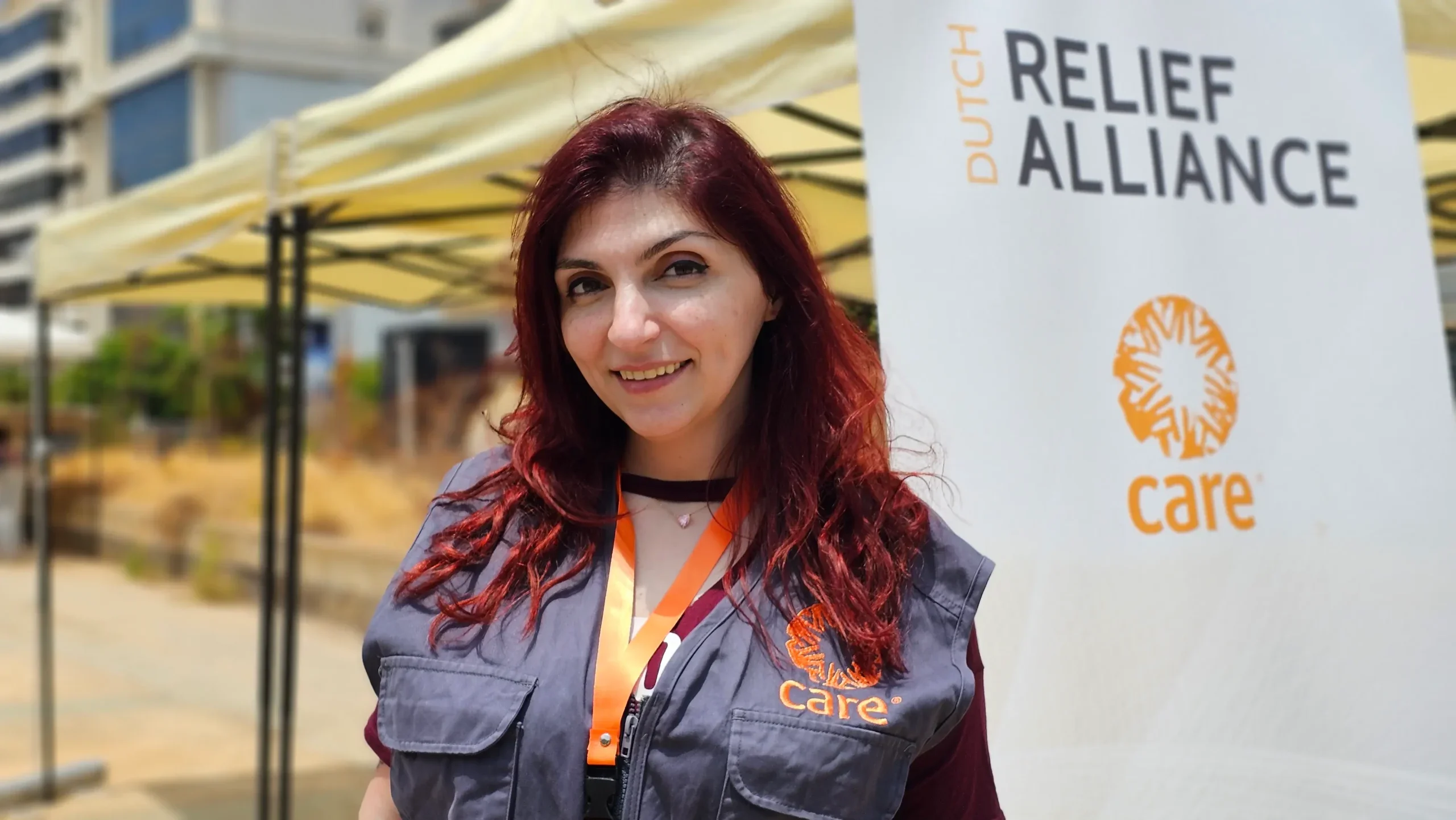
Woman aid worker in Lebanon smiling into the camera.
Hiba Jaber, CARE program manager in Lebanon. Hiba is from Nabatieh in South Lebanon and is the mother of two sons: 3 and 11 months old. Photo: @2026 Sarah Easter / CARE

“I have lived through five wars. I know what war is. I know what displacement is. I know what it means to lose everything. My earliest memory is of my father carrying me down the stairwell to a safe room. Whenever there was war, my father took out the mattresses into the corridor and laid them close next to each other. We slept together as a family. I felt safe because I did not understand war then. Today,  I am the mother and war feels heavier as a mother of small children. I find myself trying to protect my own children from the same reality. My three-year-old hears the bombs and tells me it is thunder, but asks where the rain is. He is too young to understand what war is. I hoped my sons would have an easier childhood than I had, because war leaves scars and a deep pain that I cannot describe. Instead, they are growing up hearing the same voices that I grew up with. I know the voices of war. I know the sound of the plane overhead, the missile, the hiss through the air, the impact and the silence that follows. As a humanitarian worker, I meet families every day who are carrying the same fear that my own family is carrying. Being able to help others takes the guilt away that you are safe and you are okay. I do what I can to give back to people who are not okay. But it is difficult because I am living this crisis too. My family lost our home, my loved ones are displaced and I know what it feels like to fear going back home and see this destruction. We can rebuild homes and repair roads, but war leaves scars that are much harder to heal.” – Hiba Jaber

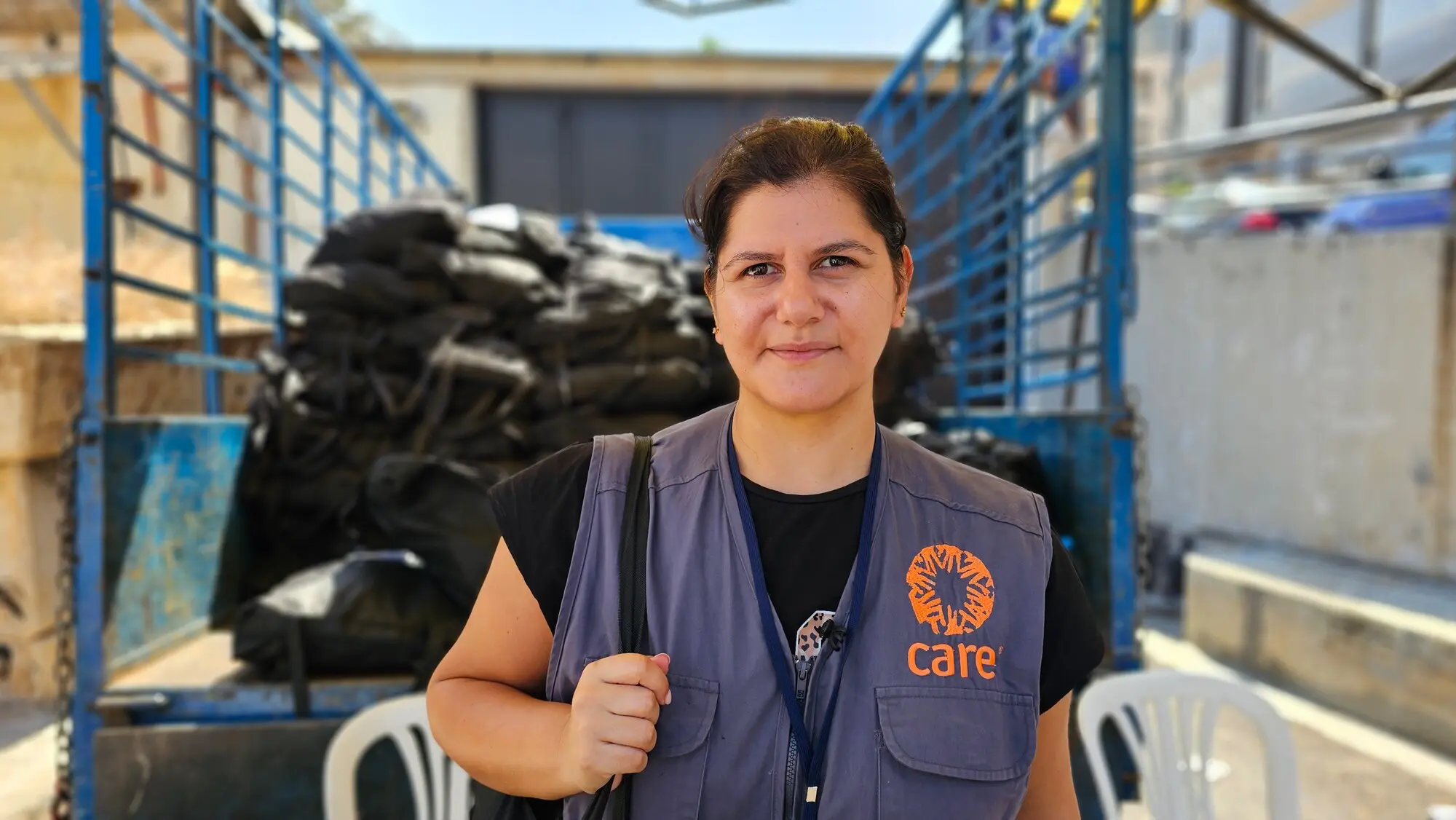
Woman aid worker in Lebanon looking into camera with truck in background.
Eliane Abi Sleiman, CARE program manager in Lebanon. Photo: @2026 Sarah Easter / CARE

“As humanitarians, we work in a field where we are affected ourselves. We have staff who have been displaced or who are worried about family members. The constant buzzing of drones, day and night, accompanies every part of my life. It punctuates everything I do, at work and outside of work. It’s a constant source of stress and a relentless reminder that the war is still here. I go to work, run errands, and carry on with daily life, yet the sound never leaves. Somehow, though I’m not sure how to describe it, I’ve learned to live alongside it. The sonic booms of fighter jets are even more triggering than the drones, especially having lived through the Beirut port explosion. Every blast brings back memories I wish I could leave behind. When the work day ends and I go home hoping to rest and process everything I’ve witnessed, I can’t, my mind fills with endless questions, worries, and memories. Even in the quiet moments, the war never truly leaves you. Even silence feels dangerous, I worry about putting in my noise-cancelling headphones to block out the sound of war, because I need to know if something happens close to me. Every day I listen to women who are trying to stay strong for their children and older people who are reliving the trauma of previous wars. I have learned to carry those conversations carefully, listening to these stories of trauma is never something you truly get used to.

But who are we without our empathy? If we become numb, we lose an essential part of our humanity. These are my people. That is why we keep showing up every day.” – Eliane Abi Sleiman
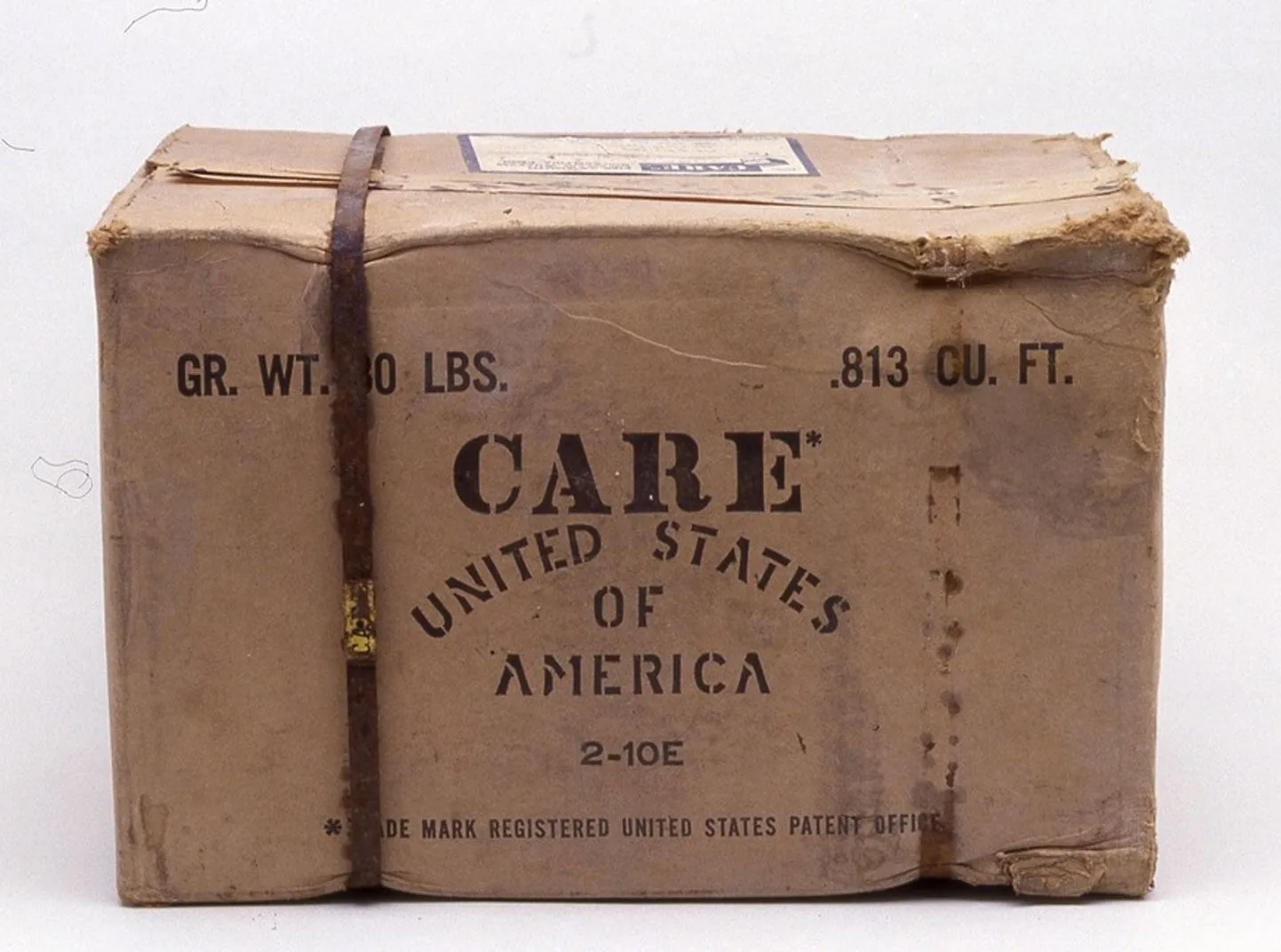
Woman aid worker in Lebanon looking into camera with city in background.
Sarah Easter, CARE Emergency Communications Officer for CARE Germany and CARE Austria. Photo: CARE

“The humanitarian crisis in Lebanon is not only measured in the number of people displaced or the homes destroyed. It is measured in the impossible decisions families are forced to make every day. I met families who had been displaced multiple times, no longer knowing where to live. I met parents returning to unsafe areas because they simply could not afford their rents any longer. But what stayed with me most were the stories people told. I met a mother who had no time for her feelings, she had too much weighing on their shoulders: Her husband was killed in an airstrike and she is pushing away her grief because her 12-year-old daughter needs her. A father of four no longer sleeps without packing a bag in case of another escalation, filled with plates, silverware, and food for ten days. Because in an emergency, he wouldn’t be able to even buy a sandwich for his children. A mother from Beirut hardly dares to leave the house because she doesn’t know if she’ll make it back alive. And a CARE staff member, who herself lived through five wars, describes the sound of bombs not as noises, but as voices she knows all too well: the airplane, the rocket, the hiss, the impact, the echo, the collapsing house. Her earliest childhood memory is of her father carrying her down the stairs to seek shelter. Today, she sees her own children growing up in the same situation.

These are not isolated stories. They are the reality for millions of people who have endured years of conflict, economic collapse and repeated displacement. Humanitarian aid provides food, shelter and essential services, but it also gives people something just as important: the chance to preserve their dignity, protect their families and hold on to hope for a future beyond survival.” – Sarah Easter

Read the June 11, 2026 in Lebanon: “We spent our days and nights in darkness”


Lebanon is facing one of the most severe impacts of the growing Middle East crisis, with more than a million people displaced and shelters stretched nearly to capacity. Through firsthand accounts from CARE staff, Dispatches from Lebanon offers an on‑the‑ground look at how fuel shortages, insecurity, and rapidly shifting conditions are shaping life for families and frontline responders.

CARE is working to support more effective and motivated health workers.

We empowers health workers and removes barriers so more people can access quality healthcare, especially during times of crisis.

Learn more.
Back to Top