Vaccine Hesitancy and Vaccine Access in Tanzania with Community Health Workers
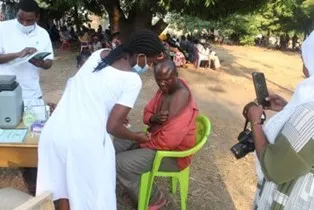
Since September 2021, CARE Tanzania has worked as a partner to the Government of Tanzania to improve vaccine access across the country. CARE’s logistical support has helped the government to cover large, underserved geographical areas. To increase vaccine uptake, CARE staff has also engaged local Community Health Workers (CHWs) to address vaccination misconceptions and developed improved health communication and data management tools. With these new resources, these health workers on the front lines have put in place two new strategies. First, COVID-19 vaccination is now integrated with other basic health services at local facilities. Second, the CHWs are now conducting targeted outreach informed by local concerns to address vaccine hesitancy in women and children. Now, not only are vaccinations being provided, CHWs have confirmed that women have increased their acceptance of vaccination shots.
Related Reports
The $1 Trillion Blind Spot: Climate Finance for Women-Led Solutions
Women-led micro and small enterprises are already delivering climate solutions across energy, food, water, waste, care, finance, and digital services. This report shows where climate finance can better reach the businesses driving practical solutions in their communities.
Fill the Nutrition Gap Impact Brief: Guatemala
In Guatemala, the Fill the Nutrition Gap (FNGAP) program has improved food security and child nutrition.
2025 Water+ Retrospective Report
This retrospective report features a selection of briefs that focus on how CARE uses research and learning to improve water, sanitation, and hygiene systems. While this report offers only a glimpse of CARE's global Water+ initiatives, it captures the significant impacts and influences of our programs in the pursuit of universal access to safe and affordable water, sanitation, and hygiene (WASH) and integrated water resource management (IWRM).