Who cares about dignity? María does — transforming care work into justice

By Becca Mountain July 10, 2026

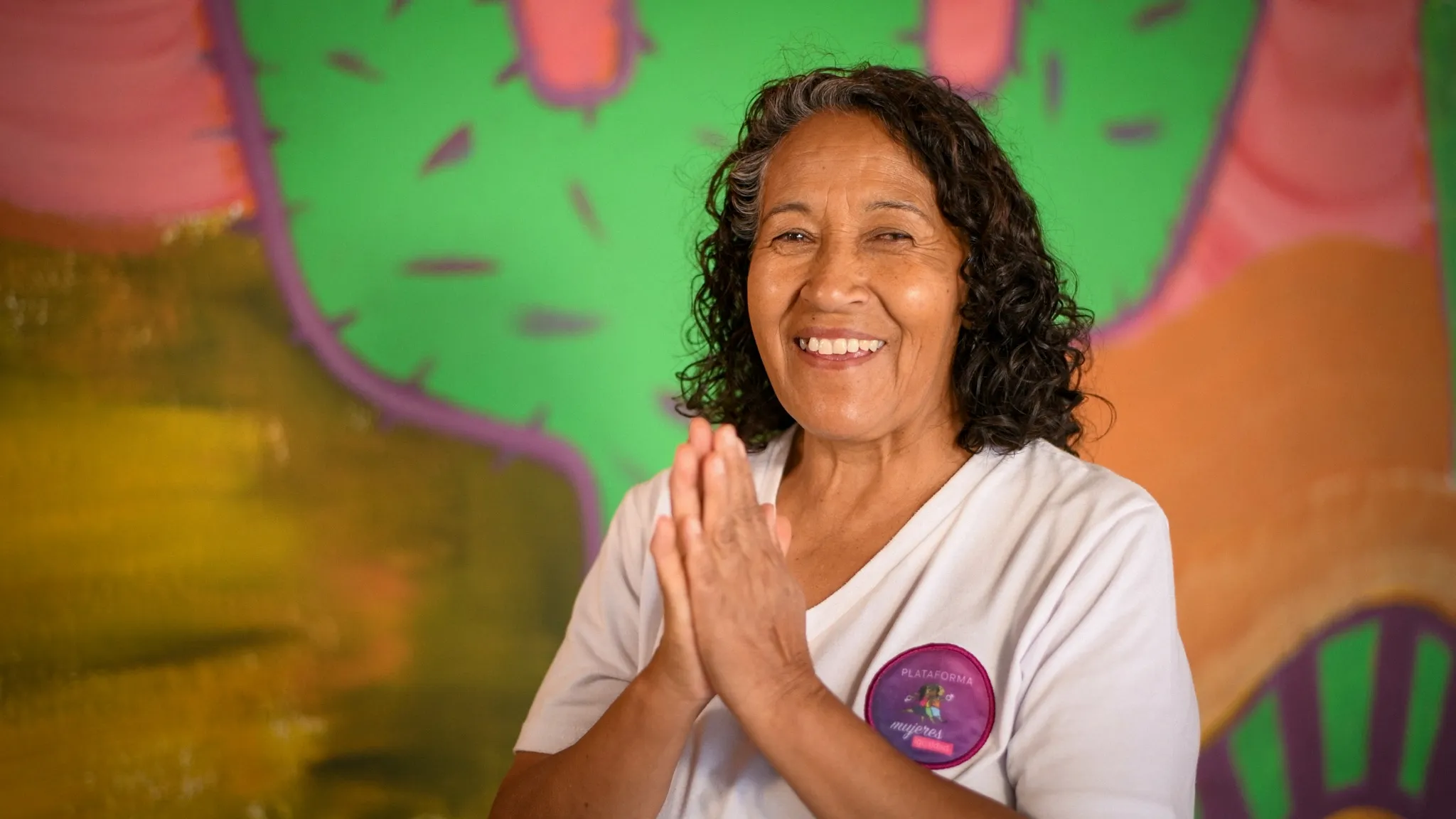
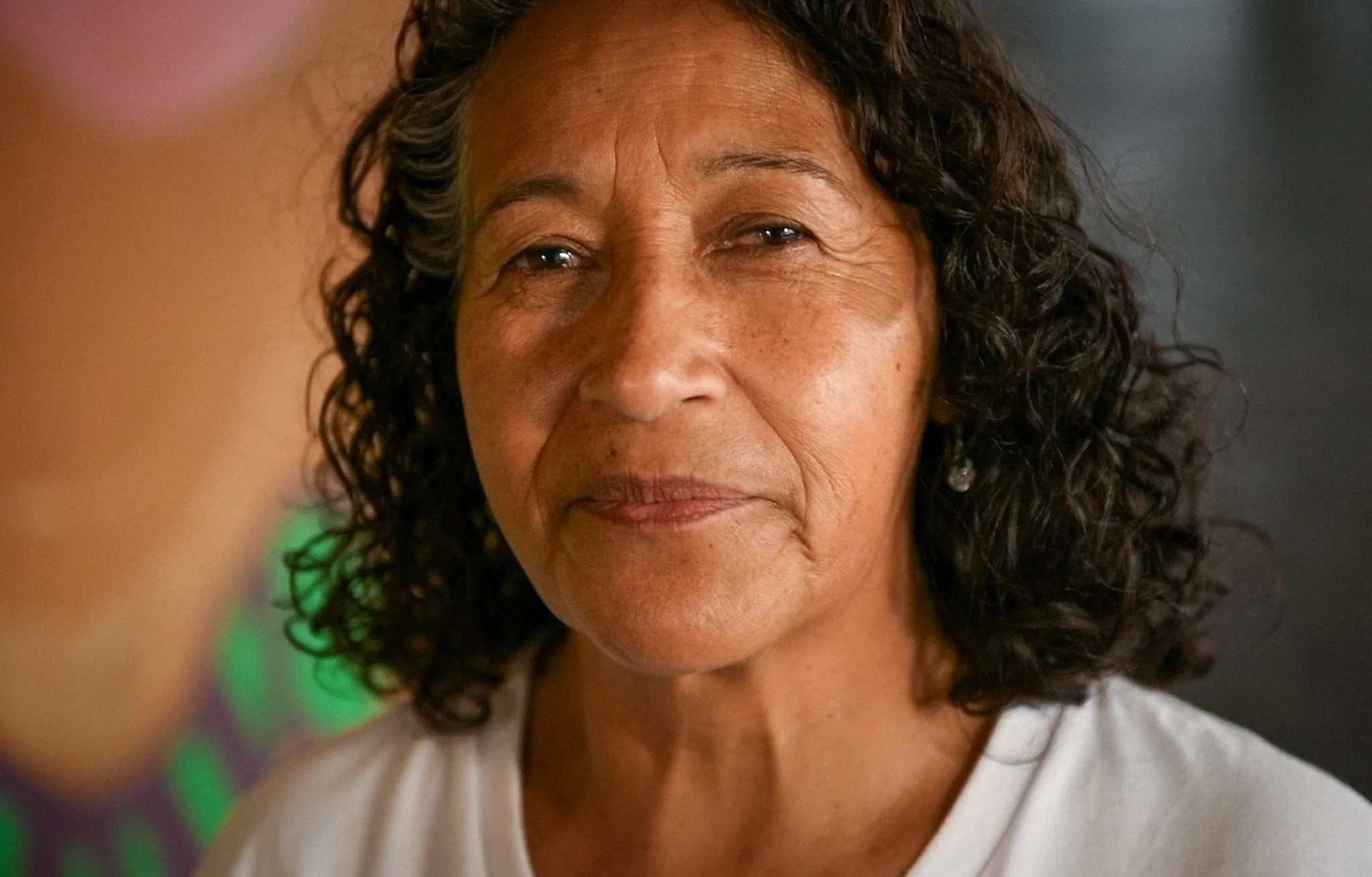
A woman with curly, dark hair smiles into the camera with her hands pressed together.

María Quishpe Pazmiño, 62, is a movement builder in Ecuador. She doesn’t ask for change. She organizes for it. Photo: Brooks Lee/CARE.

This story reveals what it truly means to care — not only to survive and rebuild, but to transform. It is about care as justice, dignity, and collective power.

Want more stories like this?

Sign up for the CARE Newsletter to find out more about what’s happening around the world through vibrant, engaging stories that put humanity at the center.

Subscribe

María Quishpe’s life has always been shaped by care. Her father died when she was very young. Her mother, a laundress, raised five children alone until her sudden death when María was just eleven years old. Still a child herself, she suddenly became the caregiver for her younger siblings.

“There was no childhood for me,” she says with a sad smile. “There was responsibility. Little María had to grow up very fast.”

She left school to work and support her family. Growing up in a disadvantaged neighborhood, she learned early that dignity had to be defended collectively.

“We had to fight for water, electricity, and sanitation,” she explains. “That is where my organizing began.”

“That little María built the woman I am today,” she says.

Making the invisible visible

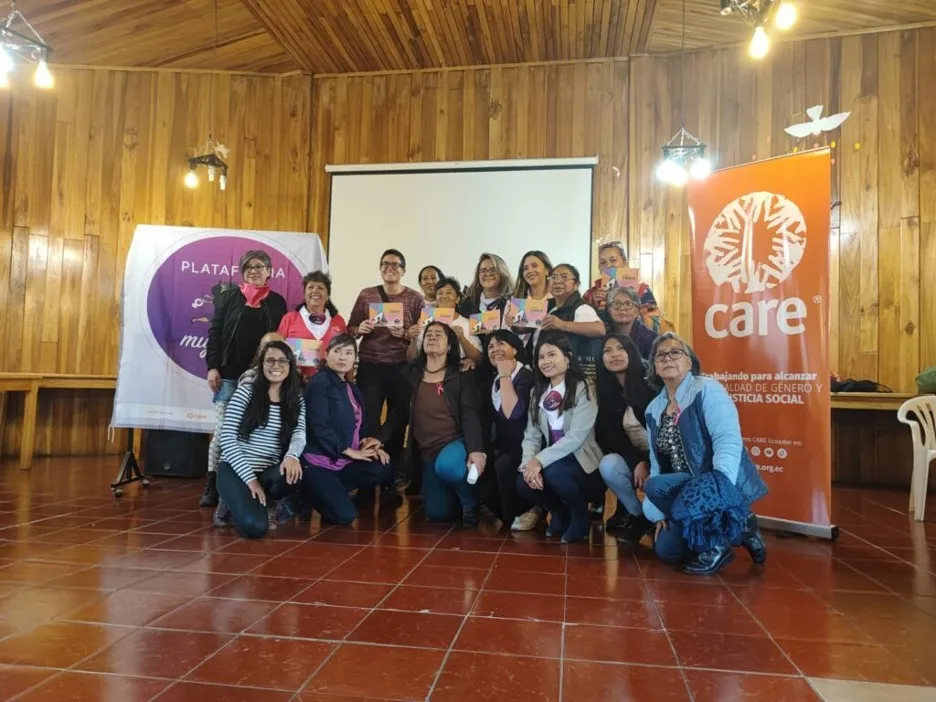
A group of people pose for a photograph in front of two banners, one bearing the CARE logo.
Members of Platforma de Mujeres Caminando hacia la Igualidad at the Quito town hall. Photo: CARE Ecuador/Platforma de Mujeres.

Today, María is a leader in the Plataforma de Mujeres Caminando hacia la Igualdad, a coalition of women’s organizations in Ecuador. The platform brings together women from rural and urban communities, Afro-descendant women, indigenous women, feminists, and women of other diverse identities. They organize without hierarchy. No presidents. No titles of power. Only shared responsibility.

“We walk together,” María says. “That is how we build change. Alone, we are small. Together, we can propose, demand, and influence change.”

The platform became a space where women could finally speak about what had always been invisible: care.

During the pandemic, the platform created a virtual space called Voices from Home. Hundreds of women gathered online to talk about education, health, survival, and work.

“Women were locked inside their homes,” María says. “They needed to talk. They needed to be heard.”

Again and again, one important truth became undeniable: care work fell almost entirely on women’s shoulders.

“But it was invisible. It was not recognized,” María tells us. “Most of the women in our platform are single mothers and heads of household, but even women with partners carried almost all the domestic work alone.”

Through her own experiences and her work alongside domestic workers, María understands what it means for essential care labor to go unseen and undervalued.

“Women would say, ‘I do nothing. I just stay at home,’” she recalls. “And we would say, ‘No. Care is work. That sustains the economy. That sustains life.’”

Care work, she explains, contributes more to the country than many industries — yet it remains unpaid, unseen, and unprotected.

So, they decided to make care political.

From care work to collective change
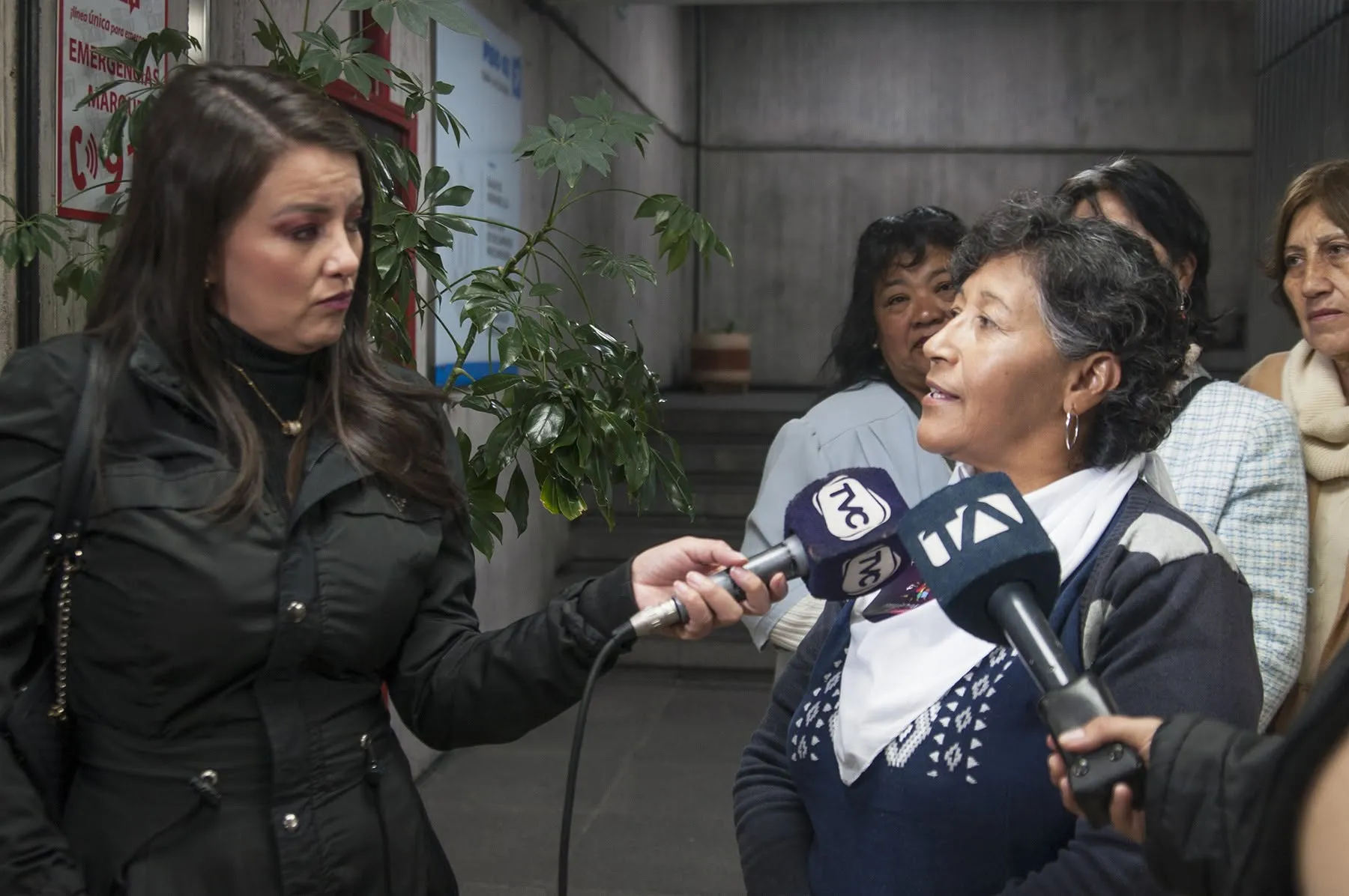
María speaks into two microphones after presenting to city officials.
María presented the Feminist Agenda of Quito to municipal leaders and lawmakers in 2024. Photo: Ximena Troya/CARE Ecuador

Together, María and her fellow activists built the Agenda for Ecuador. Centering collective equality, respect, and recognition for women in politics, society, and the economy, it became their roadmap for justice.

“We presented it to the National Assembly,” she says with pride. “We demanded that care work be recognized in public budgets. We demanded that the State invest in services for children, older adults, and people with disabilities. Because when care exists, women can work, study, and live with dignity. When care does not exist, women remain trapped.”

They also created local female-focused agendas in cities like Quito, Guayaquil, and Cuenca, pushing municipal governments to think beyond concrete and buildings and toward people, dignity, and care.

“We do not go to beg,” María says. “We go to demand. Because these are our rights, and rights are not gifts. They are obligations.”

Making those in power listen, she says, is already a victory.

The answer is clear

María looks into the camera. She is dignified and calm.
Despite the difficulties and inequalities they face, María says the women she works with are proud “because now we do not walk alone. We walk with our compañeras.” Photo: Brooks Lee/CARE

María’s vision for the future is both simple and profound.

She dreams of “a world where we walk without stepping on anyone. Where dignity is not negotiable. A world where we live with care for each other.” And even in moments of uncertainty, she finds hope — “in knowing that young people are taking up the struggle.”

That vision is rooted in the same truth María has spent her life organizing around: that care work and domestic work sustain families, communities, and entire economies — yet too often go unrecognized, unpaid, and unprotected.

It is this belief that keeps her moving forward. Step by step. Together.

So when someone asks,

So when someone asks, “Who cares about dignity?” The answer is clear.

María does.

She cares enough to turn invisible work into political action. She cares enough to organize, to demand, and to walk beside other women toward equality.

In a time when hard-won rights are under threat, María refuses to retreat.
“We may not always advance,” she says, “but we will never allow ourselves to go backward.”

And she is not alone.

For decades, CARE has worked alongside and women in informal and undervalued jobs to fight for their right to dignified work. We support women’s organizations that and advance policies that recognize care and domestic labor as real, valuable work.

In a time when hard-won rights are under threat, women like María refuse to retreat.

“We may not always advance,” she says, “but we will never allow ourselves to go backward.”

CARE does, too.
We are always there — standing with women who are not only surviving but shaping a more just future.

We are CARE. Always There.

About CARE in Ecuador: CARE began working in Ecuador in 1962, initially focusing on improving living conditions for Indigenous communities. In 2018, CARE expanded its operations across Latin America to respond to growing humanitarian needs in the region.

Today, CARE Ecuador provides humanitarian assistance to Venezuelan migrants and other at-risk communities in Huaquillas, Ibarra, Quito, Tulcán, and Lago Agrio. This work includes support for new arrivals, vouchers to access basic health services, and training on the prevention of trafficking and violence against women and girls, as well as reproductive health and psychosocial support.

CARE Ecuador’s broader work has included democracy and governance, education, health, water and sanitation, natural resource management, livelihoods, women’s empowerment and equality, economic development, climate change adaptation, and emergency response. Across its programs, CARE works with local and national partners to strengthen long-term capacity and support locally led development.

Support dignified work for women.

From domestic workers to women in global supply chains, CARE works to ensure women can access safe, fair, and dignified employment, and that their labor is recognized, protected, and valued.

Learn more about CARE’s work on dignified employment.
Back to Top