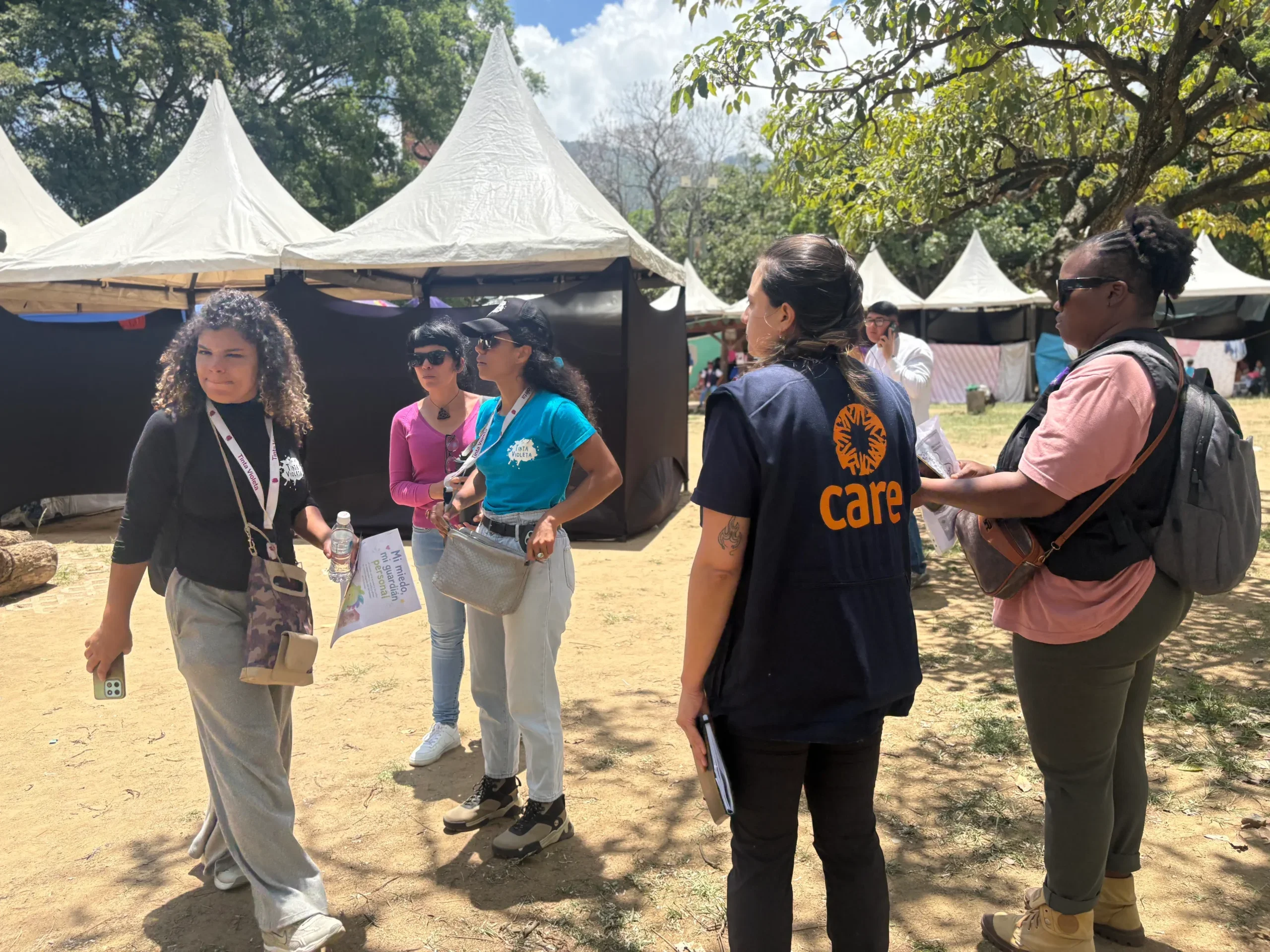
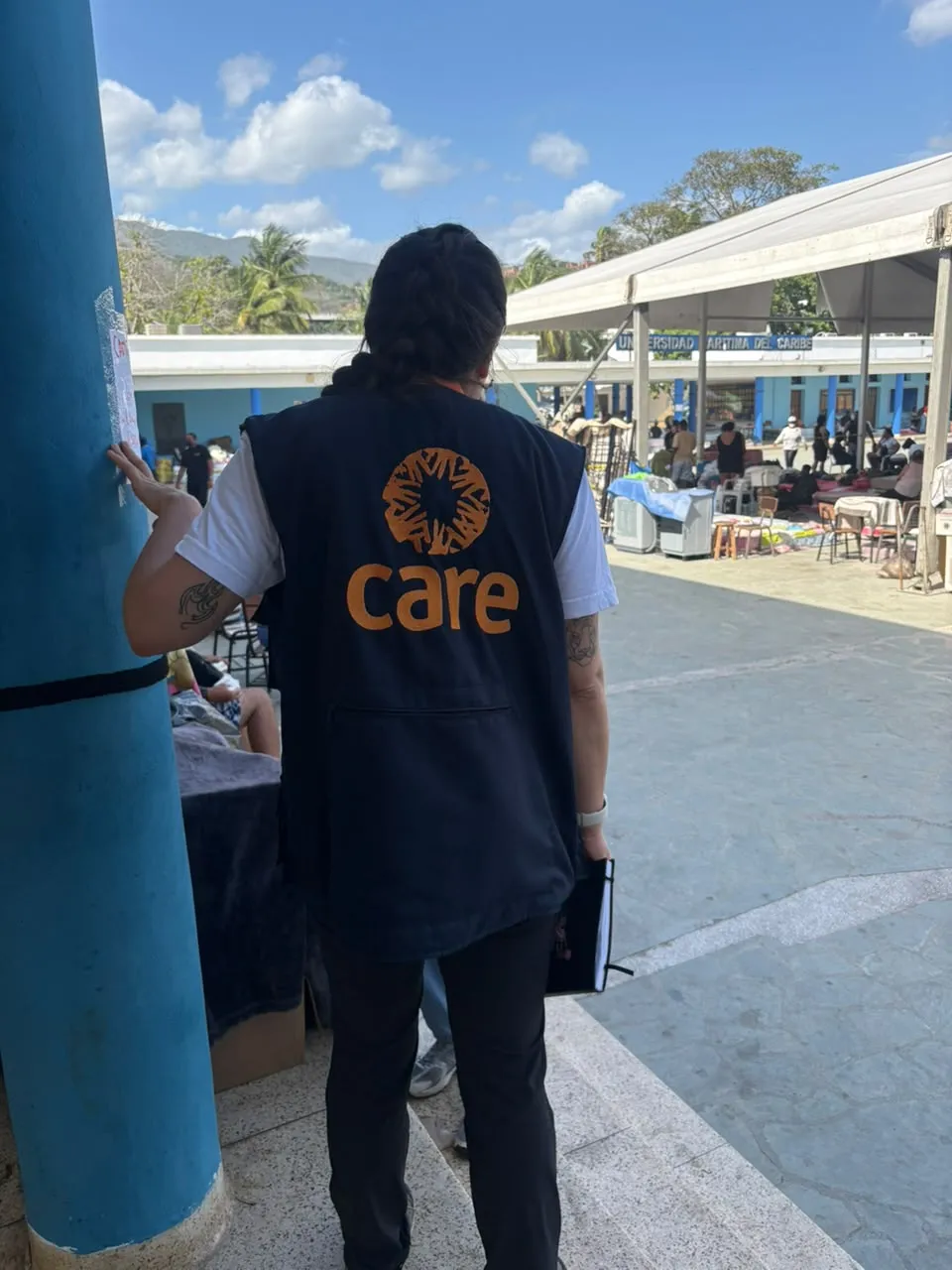
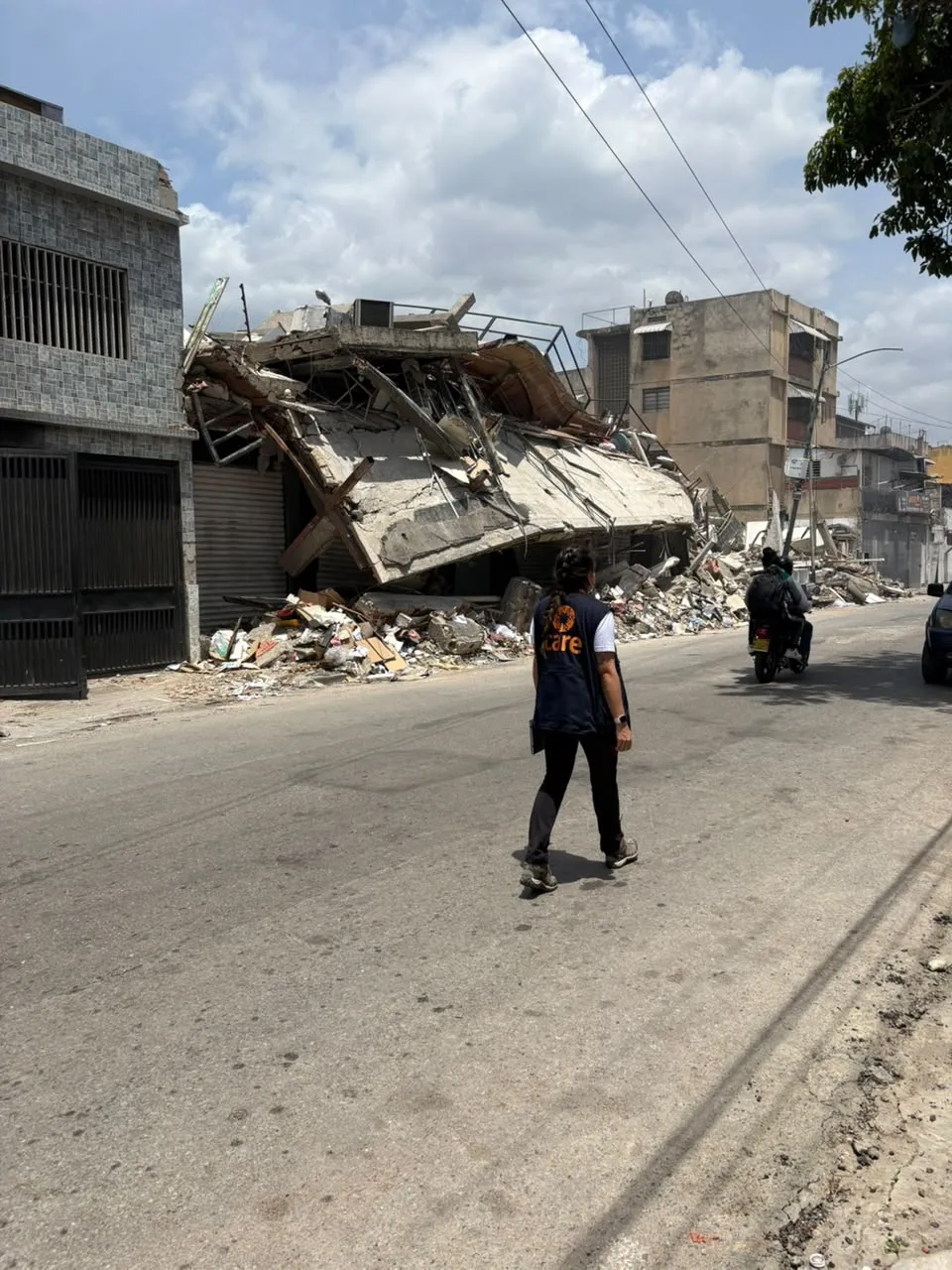
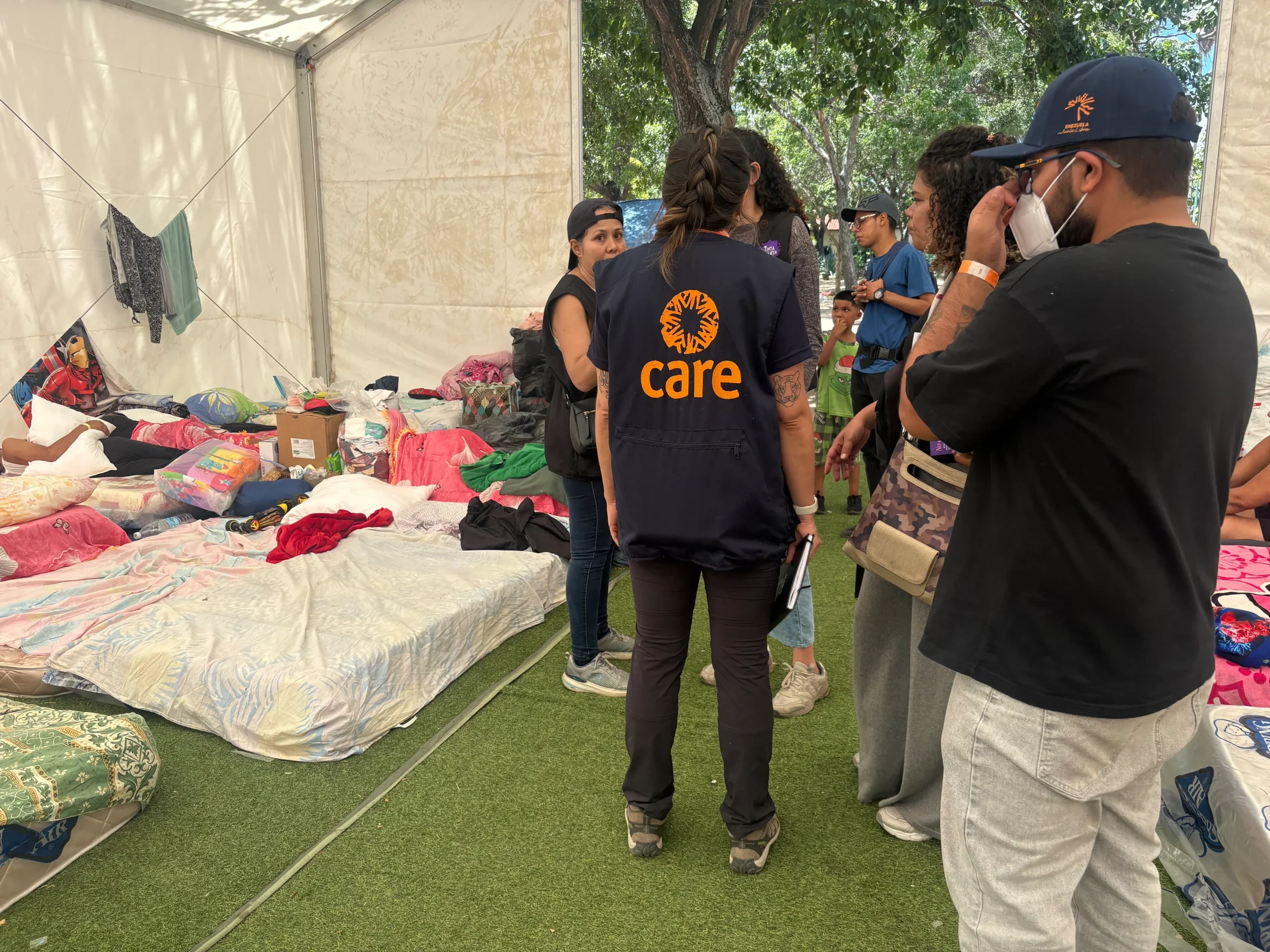
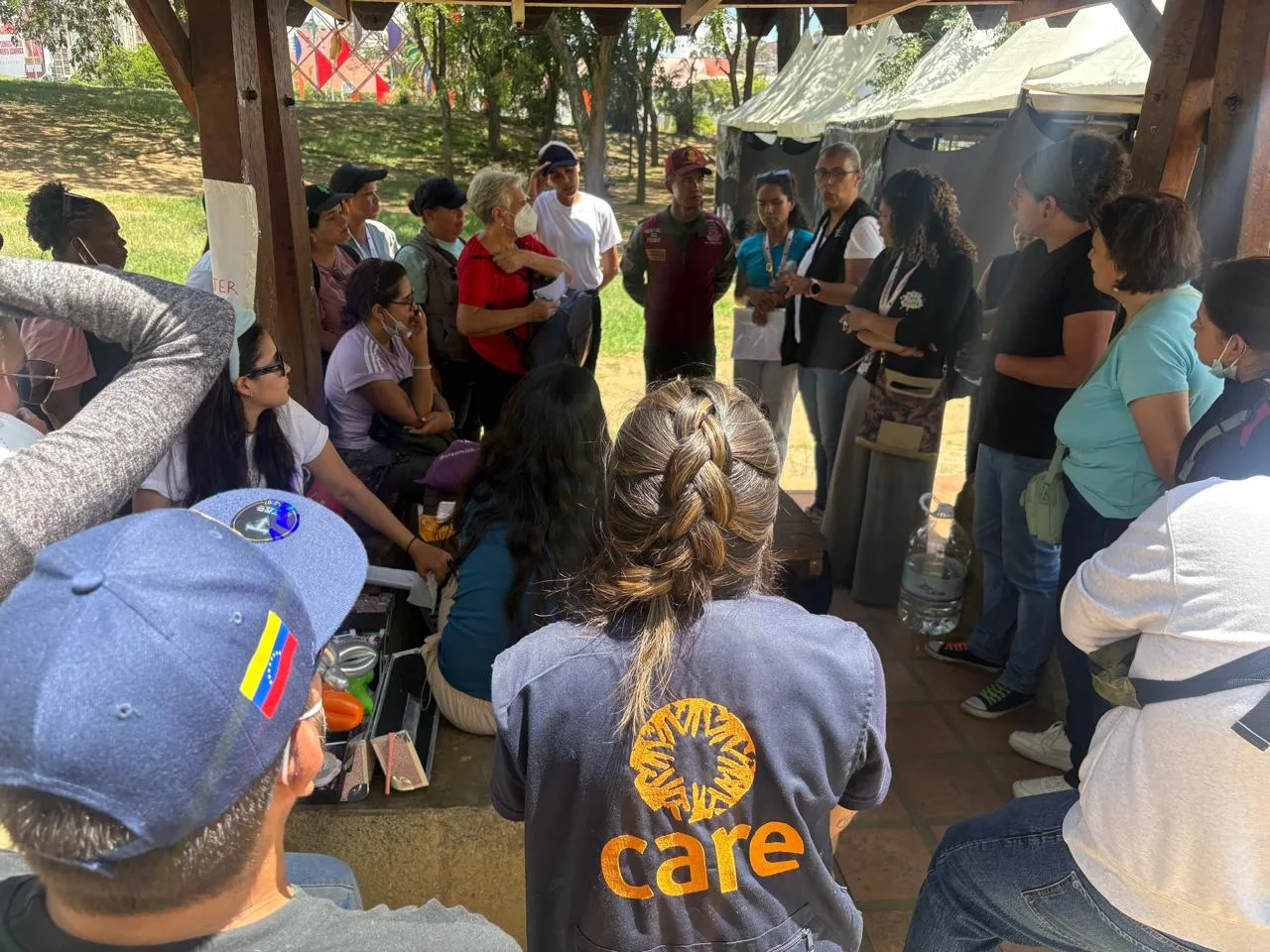
Twice in the days that followed, Vargas made the short drive to La Guaira, near the earthquakes’ epicenter, each time with a different local partner organization. Those visits let her begin to grasp the scale of the damage and assess how CARE and its local partners could respond.
“We wanted to see the capacities of each organization and that’s why we went two days in a row to the epicenter,” Vargas said.
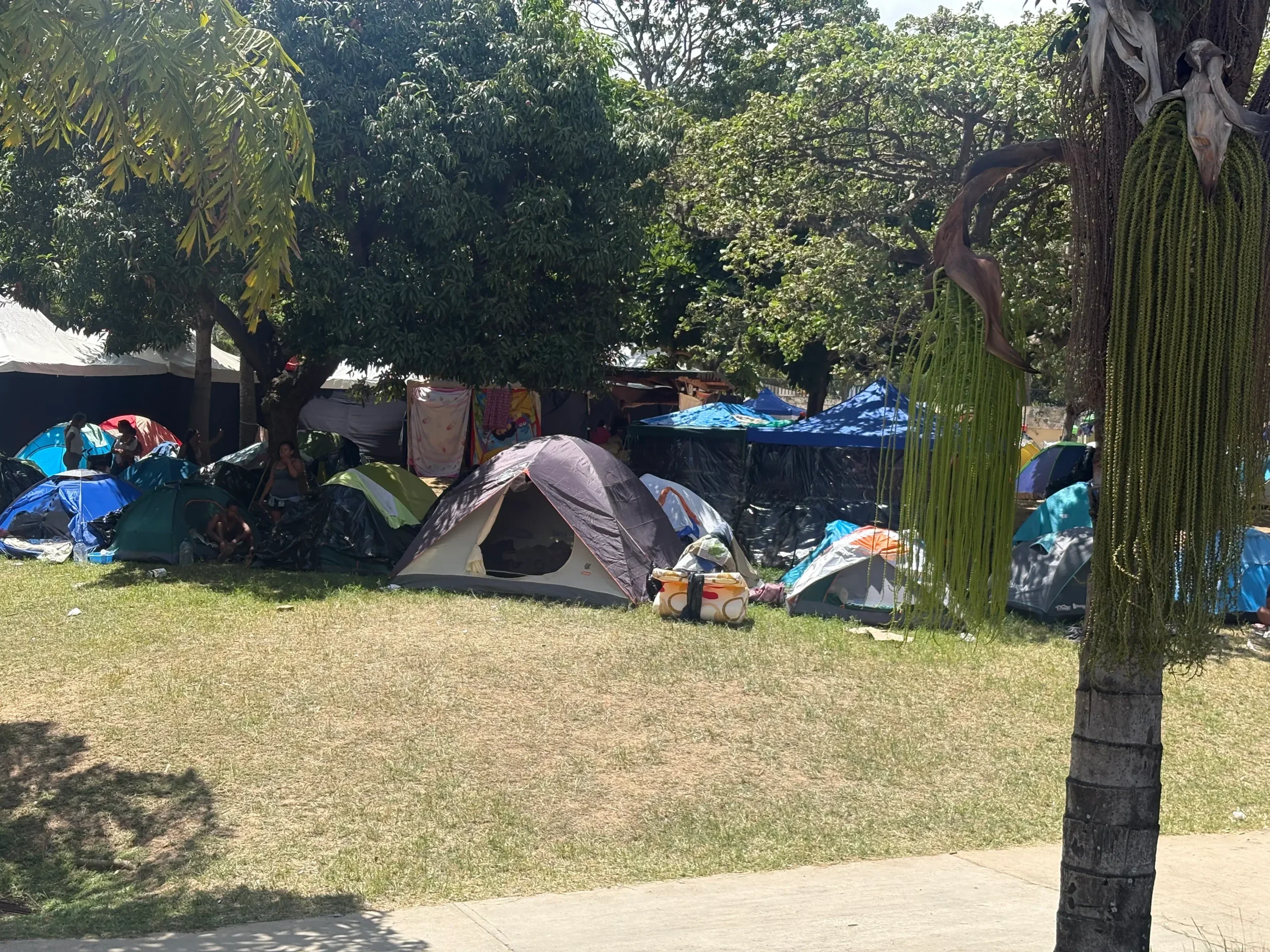
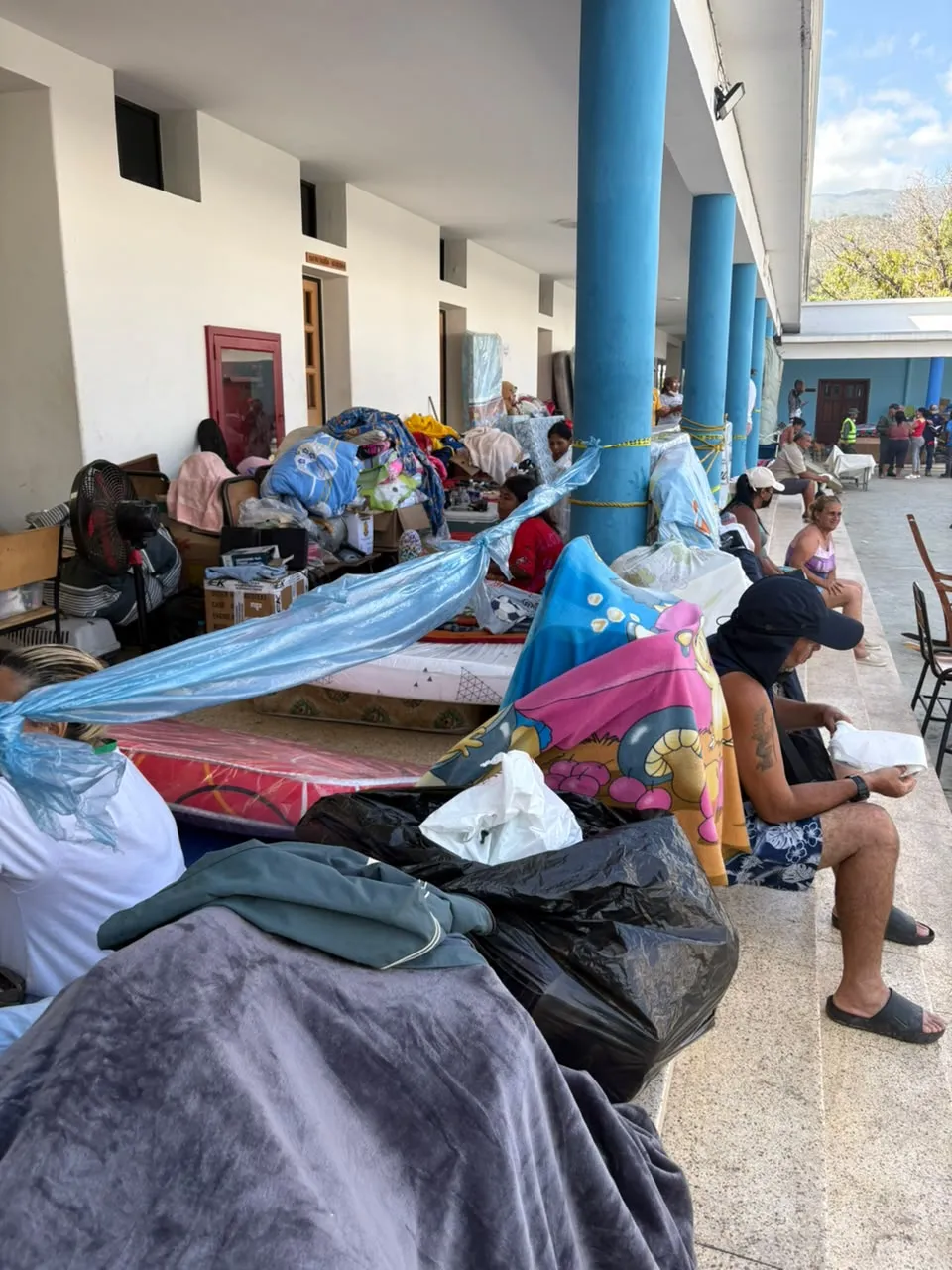
Countless families were sleeping outside collapsed buildings, waiting for news of missing relatives.
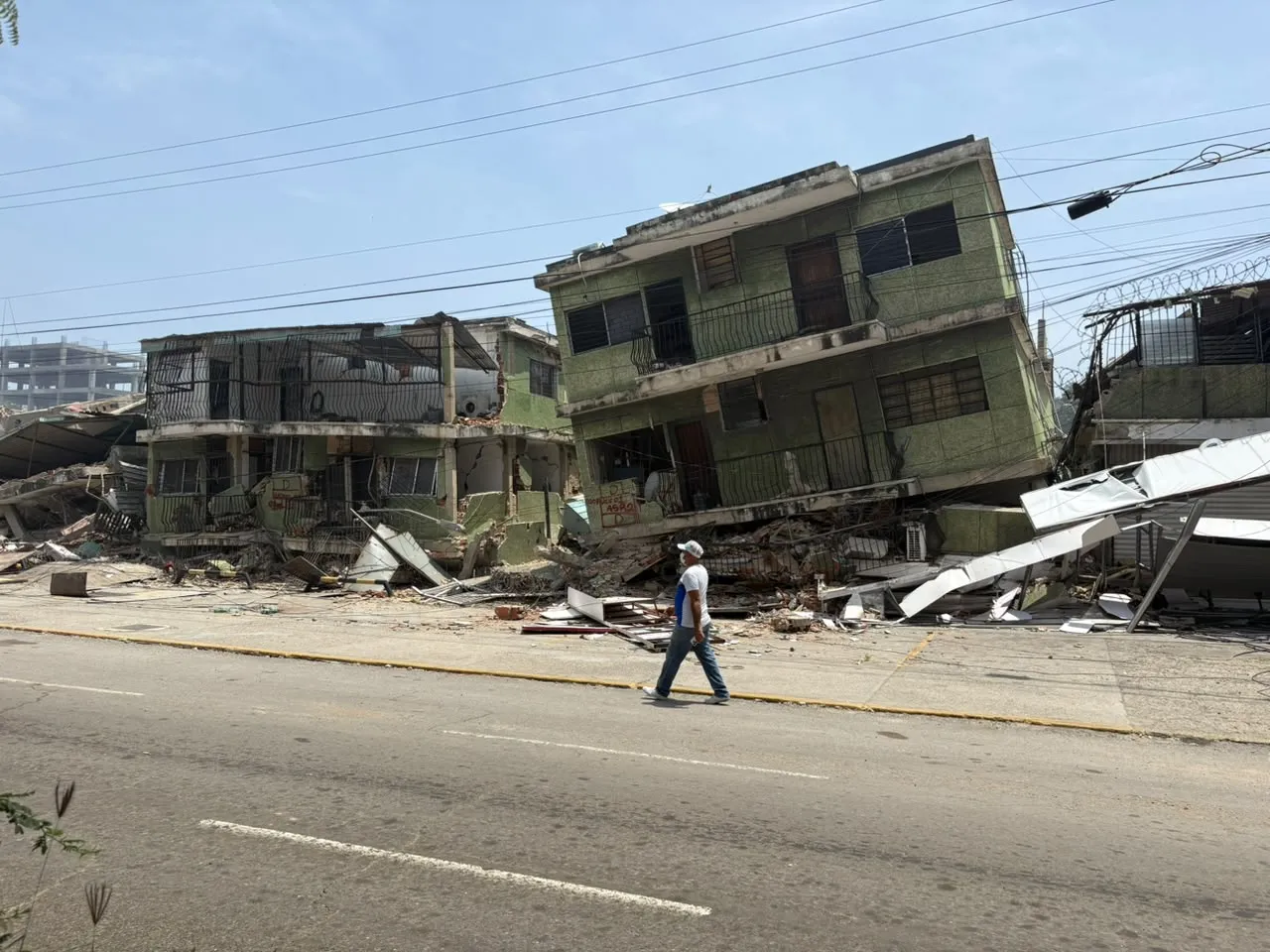
“It is an immeasurable crisis,” Vargas said. “I haven’t been in a war zone, but if I imagined one, I would think of La Guaira because the place is destroyed.”
Vargas met a young woman whose mother was trapped inside the second floor of a collapsed 18-story building. “I’m not going to leave here until they give me my mother’s body,” the woman told her. “The only thing I want is to be able to bury my mother.”
When Vargas first arrived in La Guaira, more than a week had passed since the earthquakes. Each day, the odds of finding anyone alive beneath the rubble grew slimmer.
Still, many held out hope. With rescue teams and heavy equipment stretched beyond capacity, some residents attempted to clear debris themselves, despite the danger of further collapse.
Across Venezuela, years of economic and humanitarian strain had already left communities highly susceptible before the earthquakes struck. In La Guaira, they also destroyed livelihoods in communities that had depended heavily on tourism and informal work.
“When a crisis hits, existing struggles only get worse,” Vargas said. “There is a lot of uncertainty about where to go, what to do, and how to meet their basic needs.”
One young woman she met had already made her decision. “I’m going to Colombia,” she told Vargas. “My family died, my house fell. I don’t have anything anymore to be here.”
Vargas expects that others may make similar decisions, joining relatives elsewhere in the country, in Colombia, or across the wider Venezuelan diaspora.
Prioritizing protection needs in crisis response