Gaza floods November 2026: How CARE is responding

By Hillol Sobhan

November 11, 2026
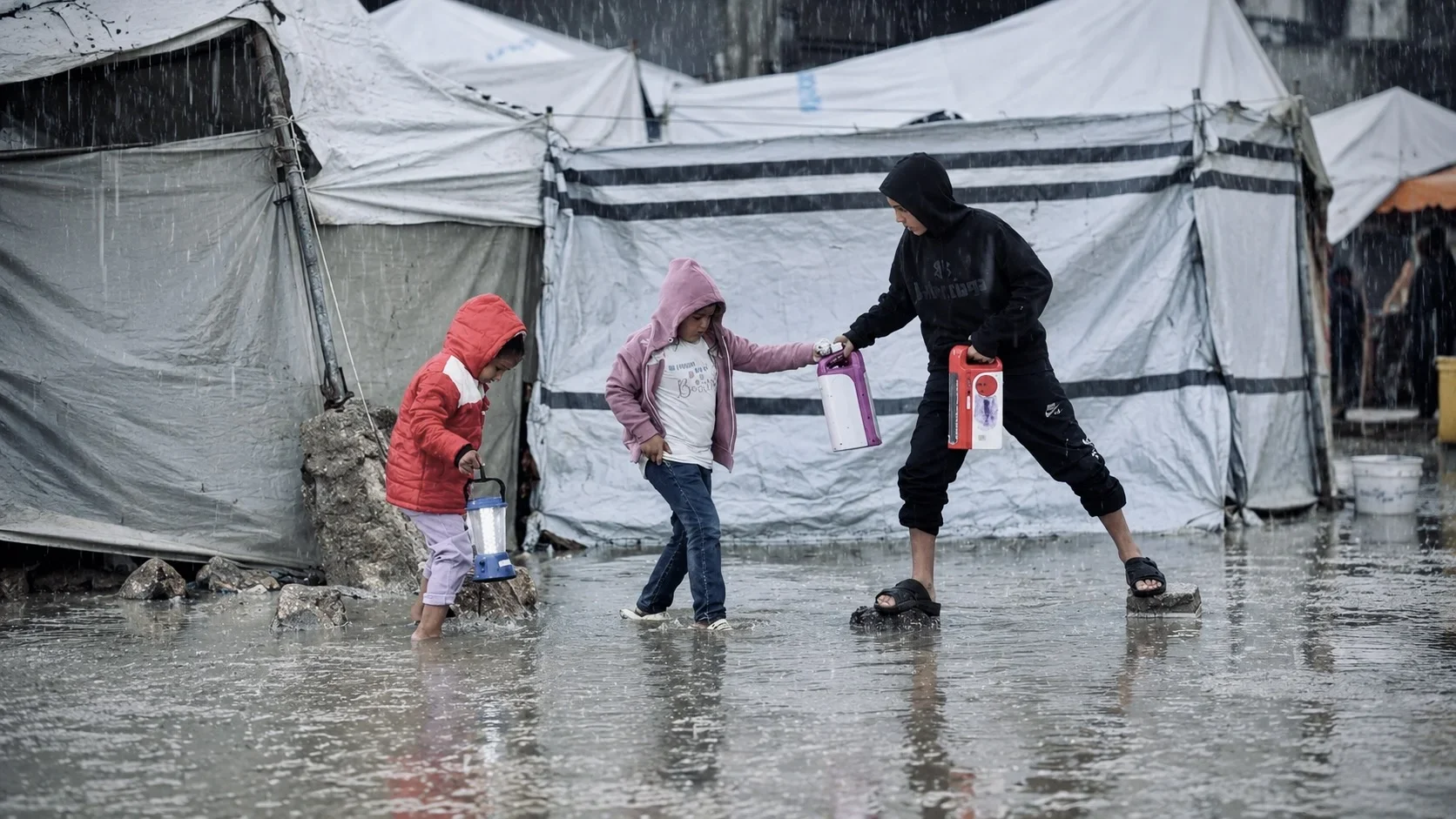
An older child in a black hoodie helps two young children carrying lanterns wade through floodwater between tents at a displacement site in Gaza.

In one night in November 2026, 70,000 tents flooded across Gaza — taking what little families had left. All photos: Abdullah Al-Nabih/CARE

Gaza’s first major winter storm on Nov. 6, 2026, flooded an estimated 70,000 tents for internally displaced people. Families had nowhere dry to go. CARE is responding, but hundreds of thousands more remain at risk as more storms approach.

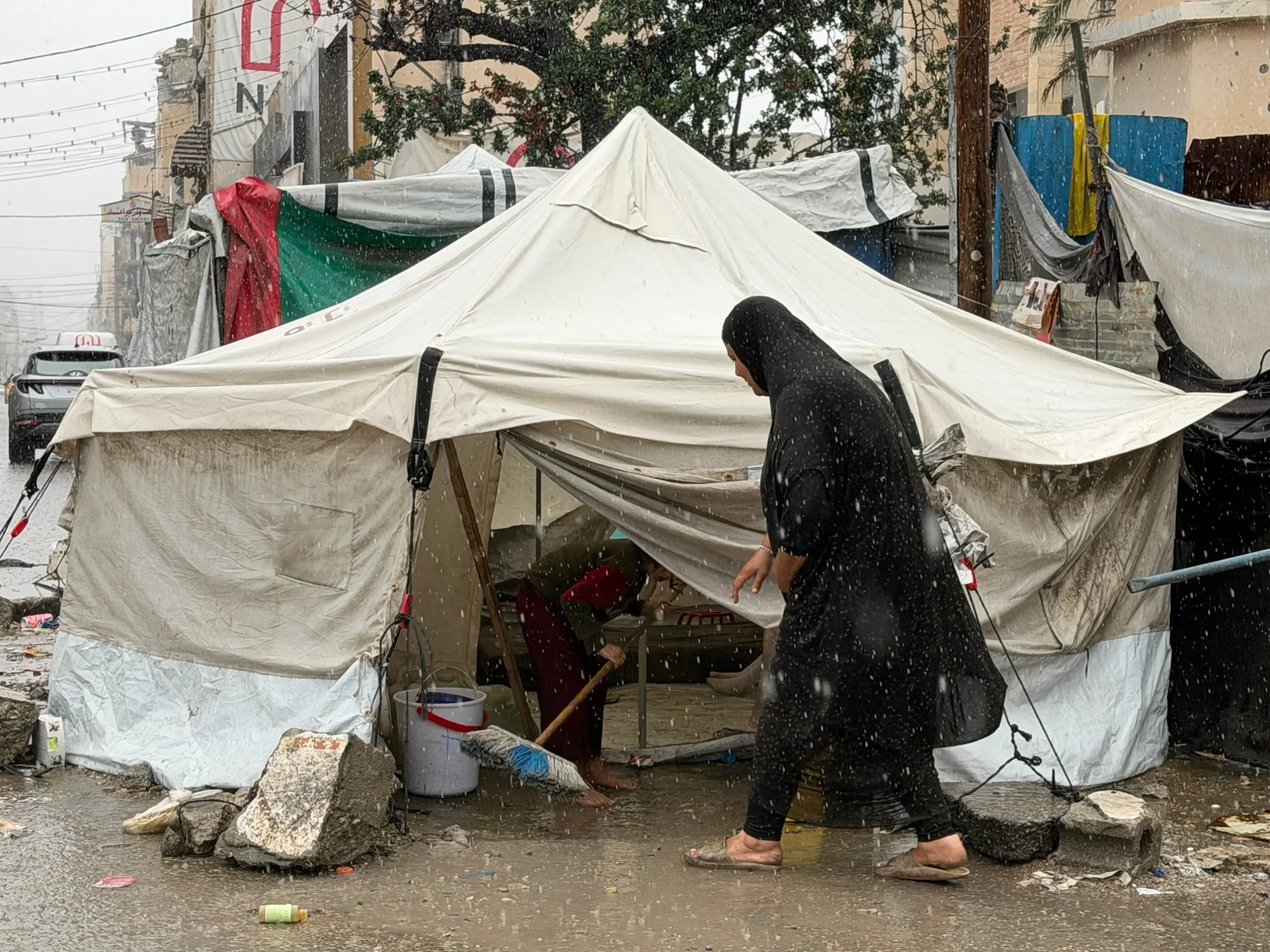
“The tents flooded, the bedding flooded, our clothes flooded. Food we depended on — all of it flooded. This is one of the most horrific nights we have seen in our lives. I am one of the people who lost a lot of things this winter,” said Khalid*, a displaced resident in Gaza.

Before the storm hit, 1.4 million Gazans — 65% of the population — were already living in tents or makeshift shelters. It triggered widespread flooding at 261 displacement sites. By Nov. 8, humanitarian partners had received appeals from more than 26,000 households whose shelters or belongings were damaged — with the true scale of impact believed to be greater.

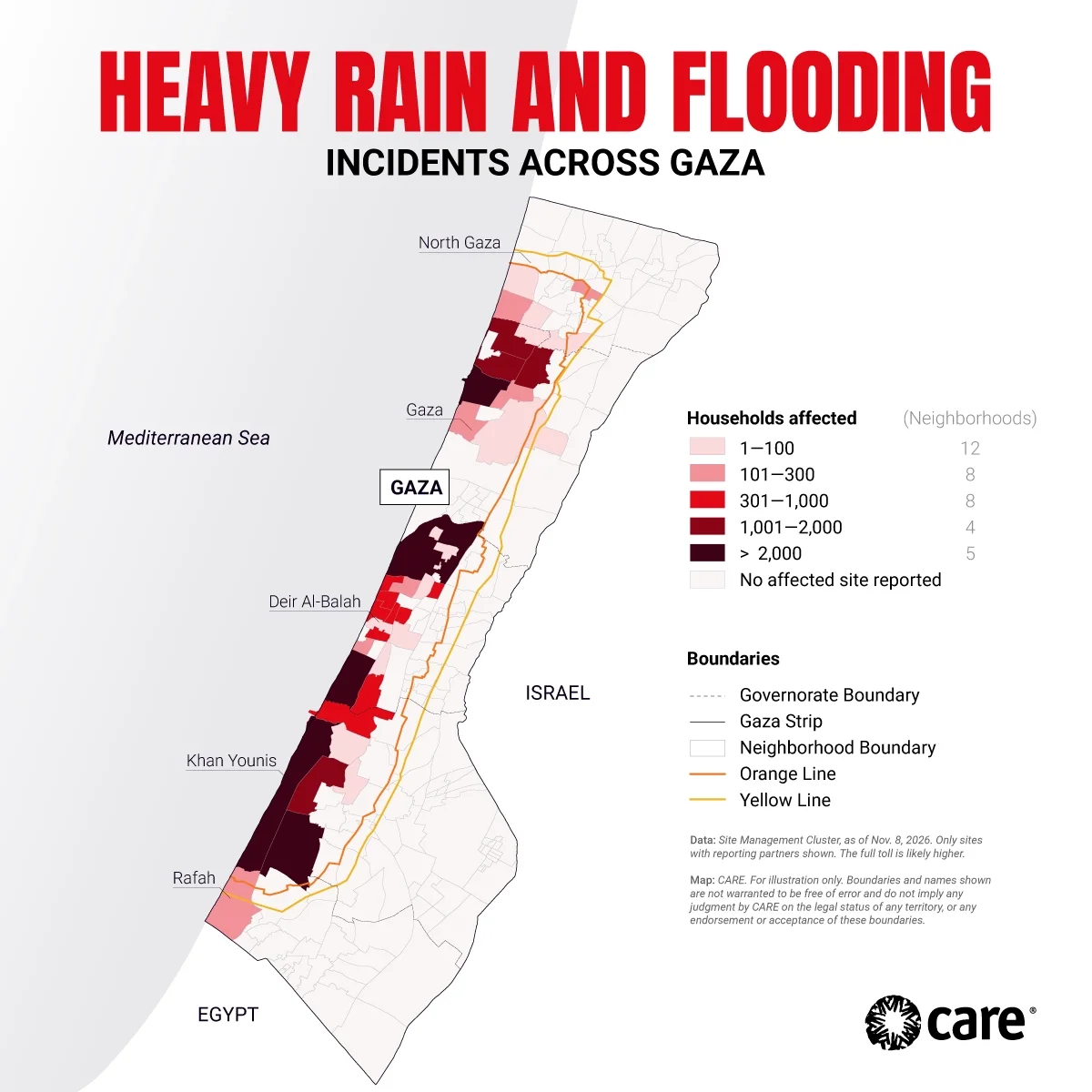
A map showing flooding incidents across Gaza, with neighborhoods color-coded by number of households affected as of Nov. 8, 2026.
Flooding hit displacement sites across all of Gaza. The darkest areas — concentrated around Gaza City, Deir Al-Balah, Khan Younis, and Rafah — show neighborhoods where more than 2,000 households were affected.

The rains destroyed more than 6,000 family shelters and damaged 17,400 more. Over 3,900 households had nothing left over their heads at all. An infant drowned at a displacement site. At Al Berka Reservoir, west of Deir Al-Balah, a sandy hill collapsed onto tents, killing five displaced people — three children and two women — and injuring one more.

Why Gaza’s families had nowhere to go when the November floods hit

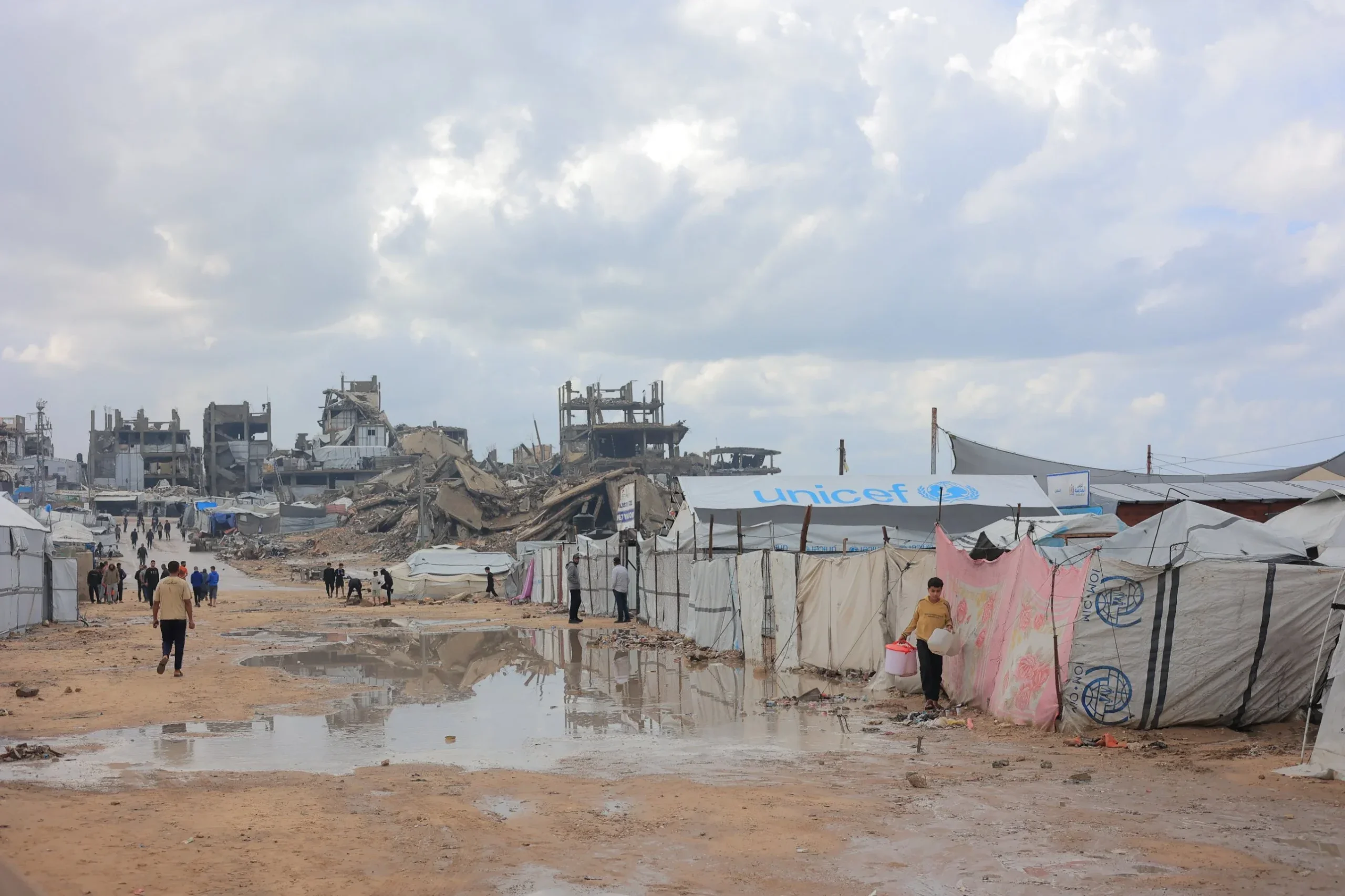
Months before the first storm hit, families in Gaza were already living in tents with no backup plan — no dry ground to move to, no spare shelter waiting.

“Heavy rains over the weekend have compounded the suffering of a population in Gaza already forced to endure extreme hunger, repeated displacement, and the destruction of essential infrastructure after more than three years of conflict,” said Beckie Ryan, CARE Palestine (West Bank and Gaza) interim country director.

Even before the storm, an estimated 121,000 additional tents were needed. United Nations Office for the Coordination of Humanitarian Affairs (OCHA) said Israeli restrictions on the entry of supplies and equipment, alongside funding shortfalls, constrained winter preparations. Stocks of tents, tarpaulins and blankets inside Gaza were virtually exhausted, while more than 150,000 tents procured by humanitarian partners and UN Member States remained outside Gaza awaiting entry.

At that point, $186.5 million in winterization funding remained unmet. For families already displaced multiple times, a flooded tent means more than a lost roof. It means losing clothing, bedding, medication, documentation, and personal belongings, in many cases the last things they still owned.

Gaza’s winter typically runs from December through March, with temperatures dropping to 8 degrees Celsius (46°F) in January. Heavy rains and cold winds make survival in tents even harder. Many displaced families are already without adequate clothing, blankets, insulation or heating — making every storm that follows a threat to life, not just shelter.

“The first winter we flooded. We need a cover over us and a tent. There is none,” said Omar*, a Gaza resident living in a displacement camp.

Who faces the greatest risks from the Gaza floods

Rain pushes through every gap. A family mops water from their shelter floor as heavy rain falls — with nothing but thin fabric between them and the storm.

Floodwater mixed with sewage. Latrines collapsed. Drainage systems — already destroyed by conflict — could not cope. Water levels reached 1.5 meters in some locations. Civil Defense received 2,166 emergency calls on Nov. 7 alone.

“Floodwater, inadequate sanitation, and exposure to cold will also raise the risk of respiratory and waterborne illness, with women, children, older people, and persons with disabilities facing the most acute risks,” Ryan said.

“Since 5 o’clock we have been bailing out water. People are drowning and screaming. No one is paying attention to us. This is just the beginning of the season, the beginning of the rains. These are not rains of blessing. These are rains of catastrophe,” said Hassan*, a man displaced by the conflict in Gaza.

The flooding hit at least 55 learning spaces (makeshift schools) serving around 55,000 children, damaging 20 and forcing the suspension of activities. It destroyed seven service points supporting survivors of violence against women and girls. Floodwater also swamped health facilities including Nasser Medical Complex in Khan Younis — one of Gaza’s largest hospitals — cutting off access to care for thousands.

CARE staff were in the affected areas as the floods hit. One staff member spent Saturday calling family members who could not answer — they were too busy scooping water from the floors of their tents and securing tarpaulins against the wind.

“People are already exhausted,” another CARE team member said. “Some of our colleagues have been busy fixing their own shelters and trying to keep their families dry during the weekend. Thankfully, everyone is okay, but being safe does not mean things are easy.”

How CARE is responding to the Gaza floods

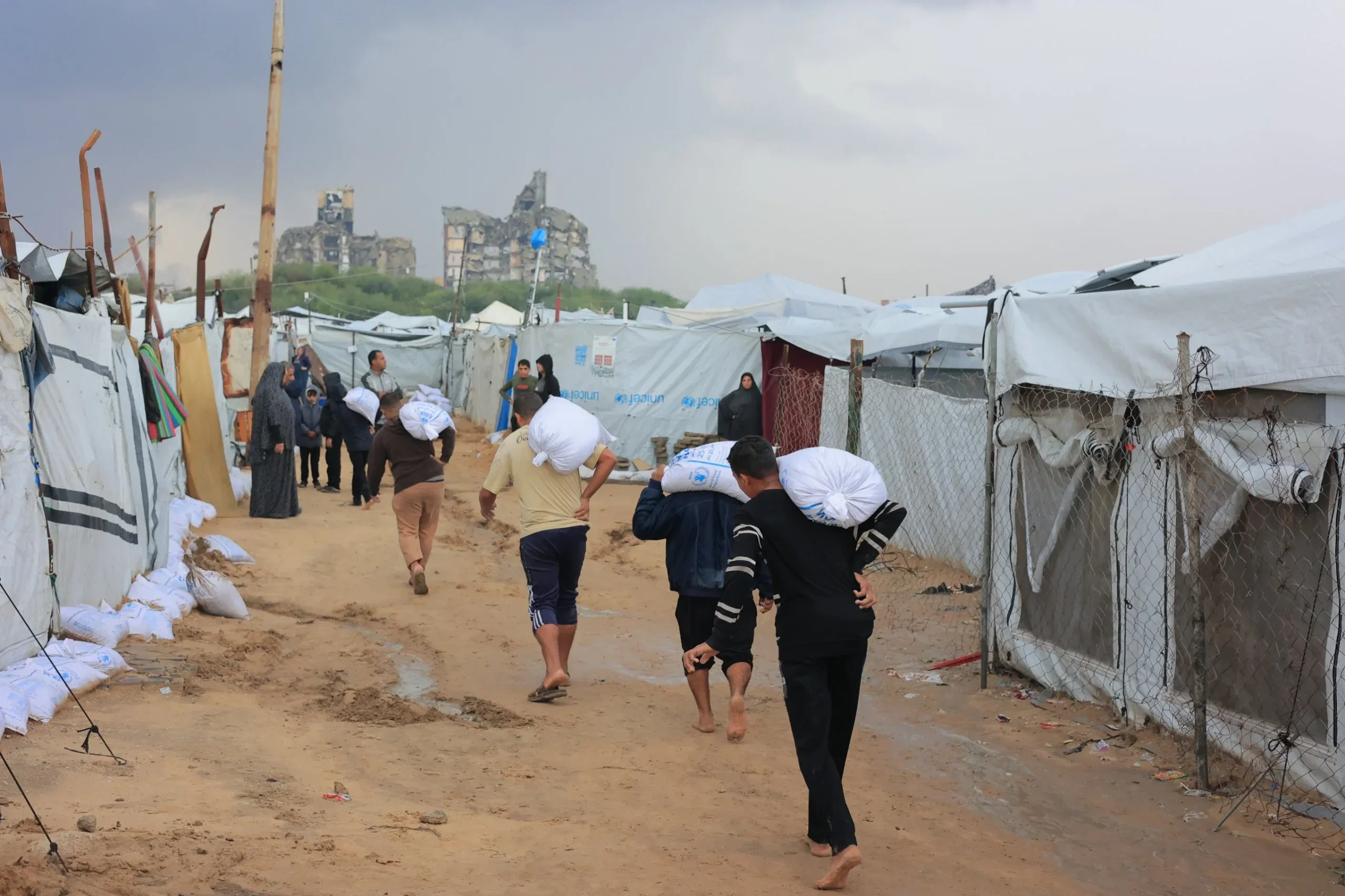
Families stack sandbags against tent walls. Every storm brings the same urgent effort to protect what little shelter they have left.

CARE is working with local partners and the UN-led Site Management Cluster to assess needs and get help to families fast.

Immediate priorities include emergency multipurpose cash assistance for 800 families (around 4,800 people), 314 emergency tents in transit for families whose shelters were destroyed or badly damaged, 500 kitchen kits, 223 women’s winter clothing kits, and hygiene supplies for 100 households. CARE aims to reach more than 1,200 households with sewage and drainage repairs, latrine repairs, and drain clearing to reduce flooding around families’ shelters.

CARE is also scaling up health services. Its primary healthcare center in Deir Al-Balah is now responding to urgent health and nutrition needs. CARE is preparing to open a second primary healthcare center in Gaza City before the end of November.

What must happen now for Gaza flood survivors

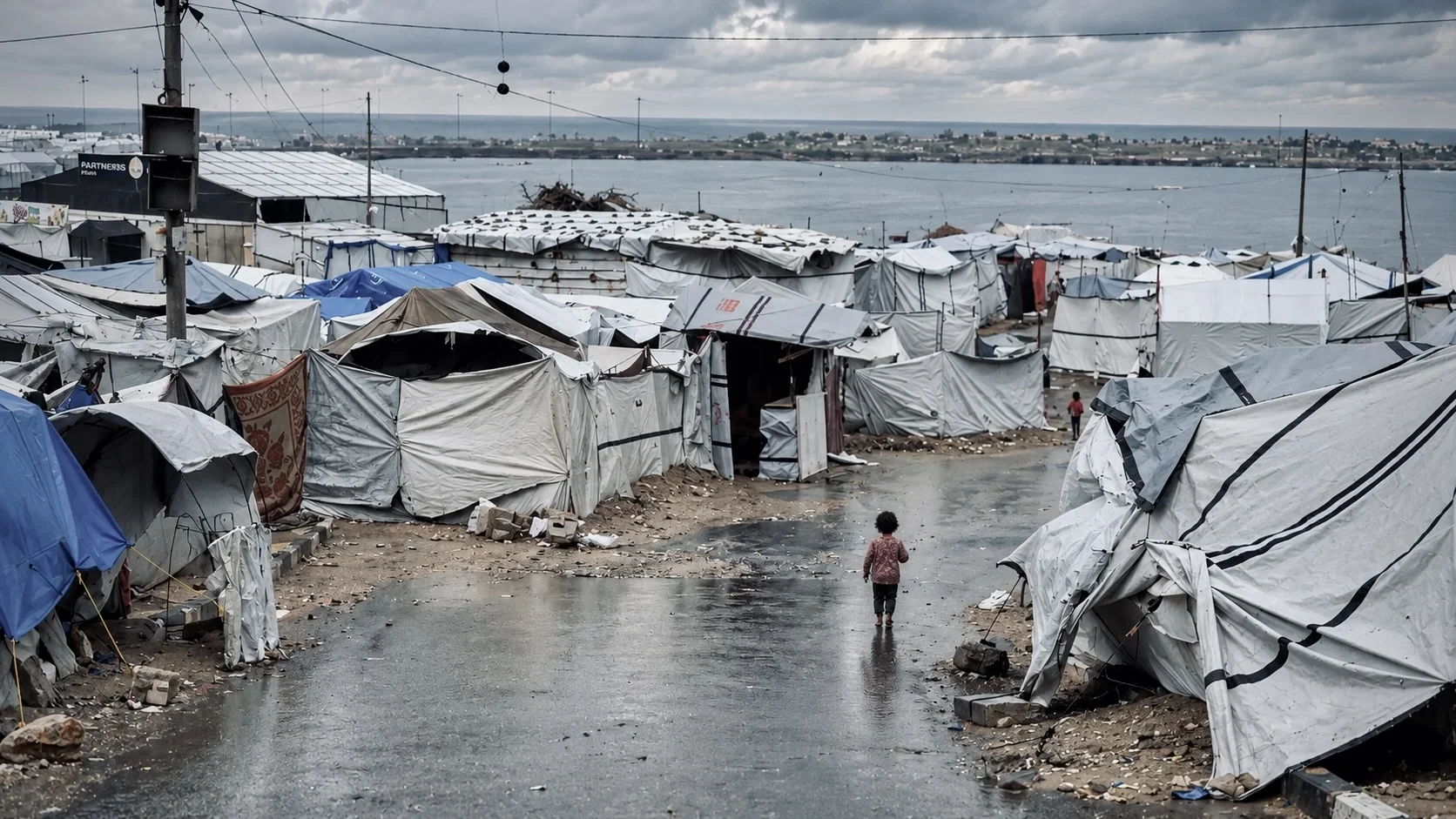
A child walks alone through the rain between tents at a Gaza displacement site. For 761,000 people here, the worst of winter is still to come.

An estimated 761,000 people in Gaza displacement sites are at risk of flooding this winter.

“Our teams in Gaza have been mobilizing with local partners to respond,” said Ryan. “They have been providing emergency tents, kitchen kits, winter clothing, emergency cash assistance, and hygiene supplies. We also aim to clear blocked drains and empty overflowing latrine pits and septic tanks, to reduce flooding and sewage around families’ shelters.

“All parties to the conflict must comply with their obligations under international humanitarian law. Civilians, humanitarians and healthcare personnel must be protected. Israeli authorities must facilitate full, rapid, safe, and unhindered humanitarian access. This includes opening all crossings for humanitarian aid and facilitating the entry of shelter and construction materials and machinery,” Ryan added.

*Names changed to protect the identity of individuals.

CARE in Palestine (West Bank and Gaza): CARE has been working in Palestinian communities since 1948, building a strong network of local partners across Gaza and the West Bank. In 2026, CARE reached 788,800 people. CARE is one of the few international organizations to have continued delivering frontline health services throughout the conflict in Gaza, including primary healthcare, maternal and reproductive health, nutrition support, and mental health services. CARE also provides humanitarian assistance including emergency shelter, cash assistance, food, water, and sanitation support.
Back to Top