CARE at 80: Eight decades of courage, compassion, and change

By Becca Mountain November 26, 2025

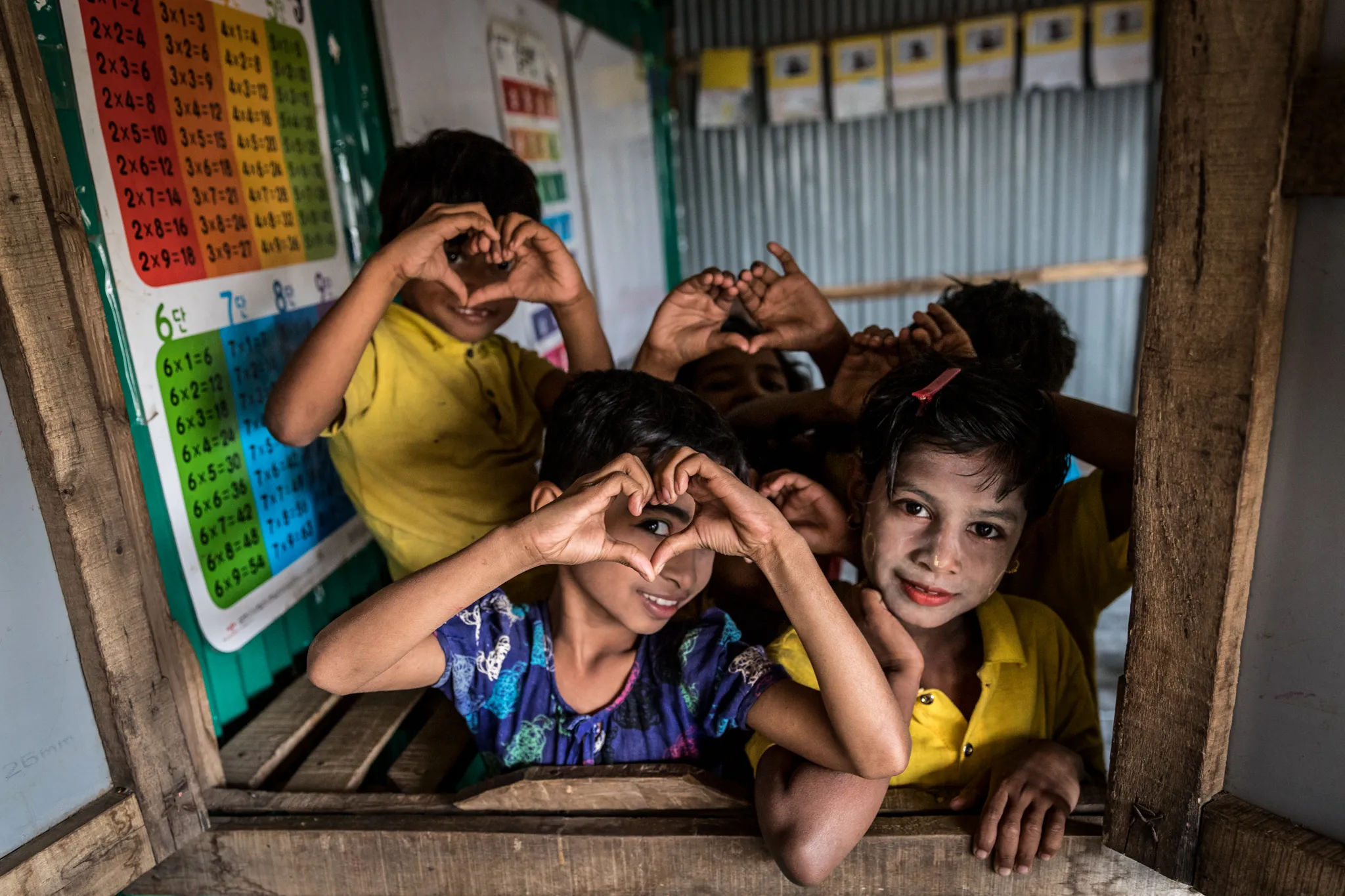
A group of refugee children in Bangladesh make heart symbols at the camera.

For 80 years, CARE has partnered with communities to deliver hope, dignity, and practical support, reaching millions of people each year with lifesaving and long-term assistance. Photo: Bithun Sarkar/CARE

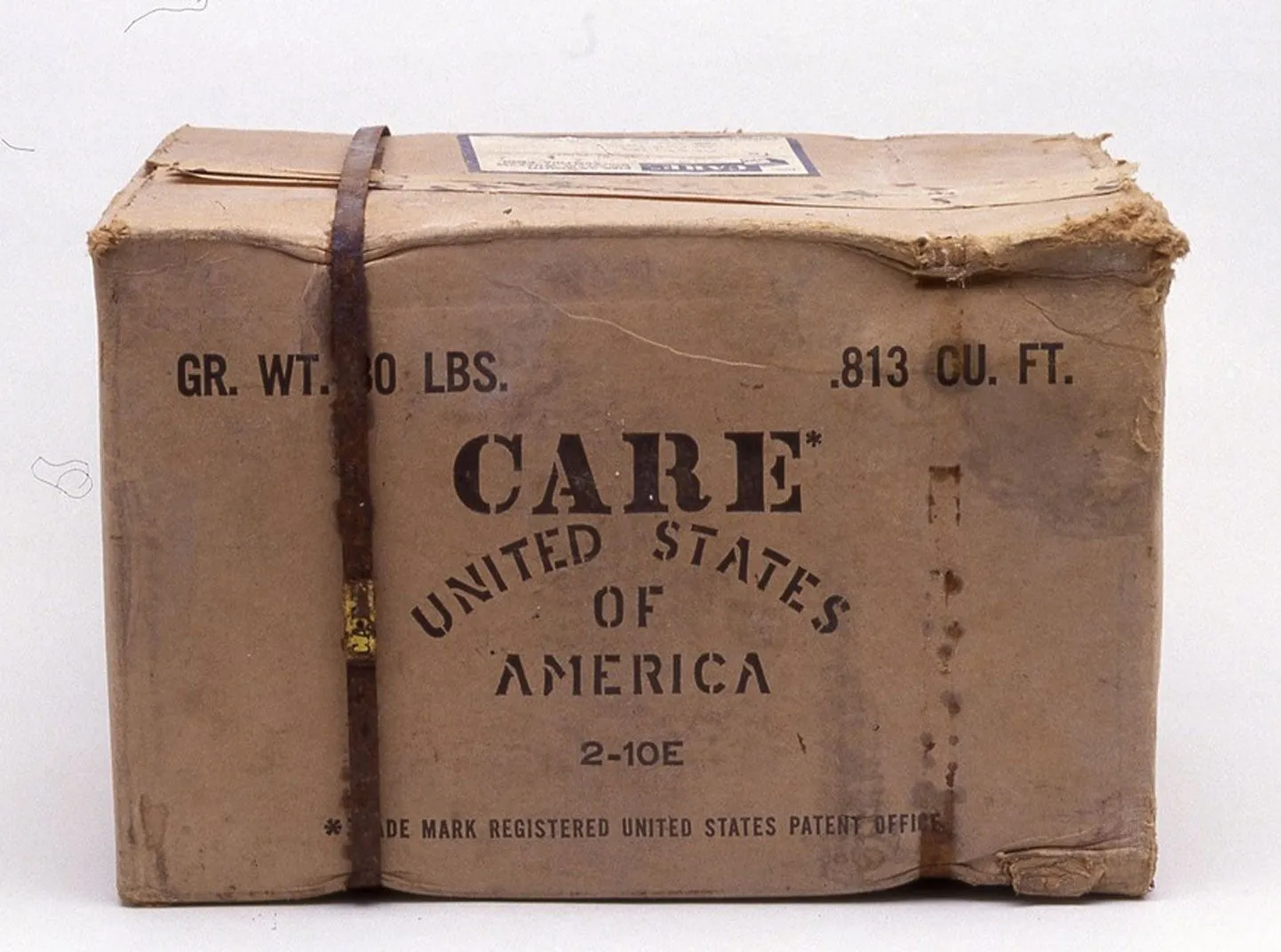
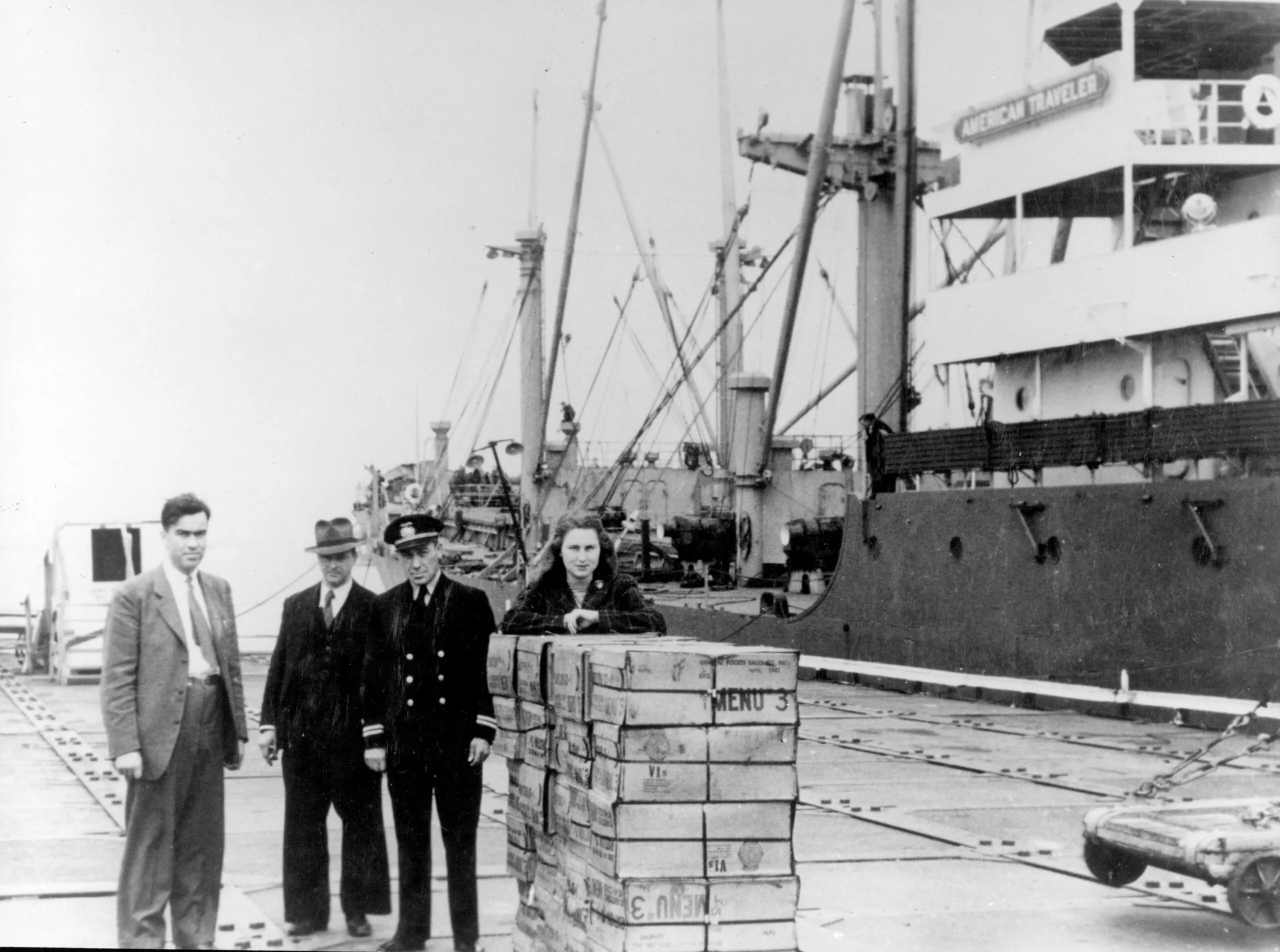
Eighty years ago, an American ship carrying 22,000 small packages neared Le Havre, a major port city in Normandy. Each box was stamped with a single word — CARE.

Want more stories like this?

Sign up for the CARE News & Stories email newsletter to find out more about what’s happening around the world through vibrant, engaging stories that put humanity at the center.

Subscribe.
Four people stand in front of a large ship beside and behind a stack of original CARE PACKAGE parcels.
The first shipment of CARE PACKAGE® parcels, greeted by CARE co-founder Dr. Lincoln Clark, left, arrived in France in May 1946. Photo: CARE

The ship, the American Traveler, was met at the docks by CARE co-founder Dr. Lincoln Clark. Le Havre had been devastated in 1944’s “storm of iron and fire.” After walking through the wreckage of the city, Clark wrote:

“Block after block does not have a building standing… Yet I distinctly had the impression that all the families I visited will somehow get back on their feet.”

That belief in human resilience — and in the power of standing with people through the darkest moments — was the foundation of CARE’s mission. The first shipment of CARE PACKAGE parcels carried more than food; they carried dignity, comfort, and the reminder that even in the aftermath of war, strangers an ocean away had not forgotten them.

But CARE’s work has always been about more than what’s inside a box. It’s about the human connection that makes change possible. Today, as CARE marks its 80th anniversary, we reflect on a legacy shaped not only by global milestones, but by the millions of individual acts of courage and compassion that have turned a simple idea into a global movement.
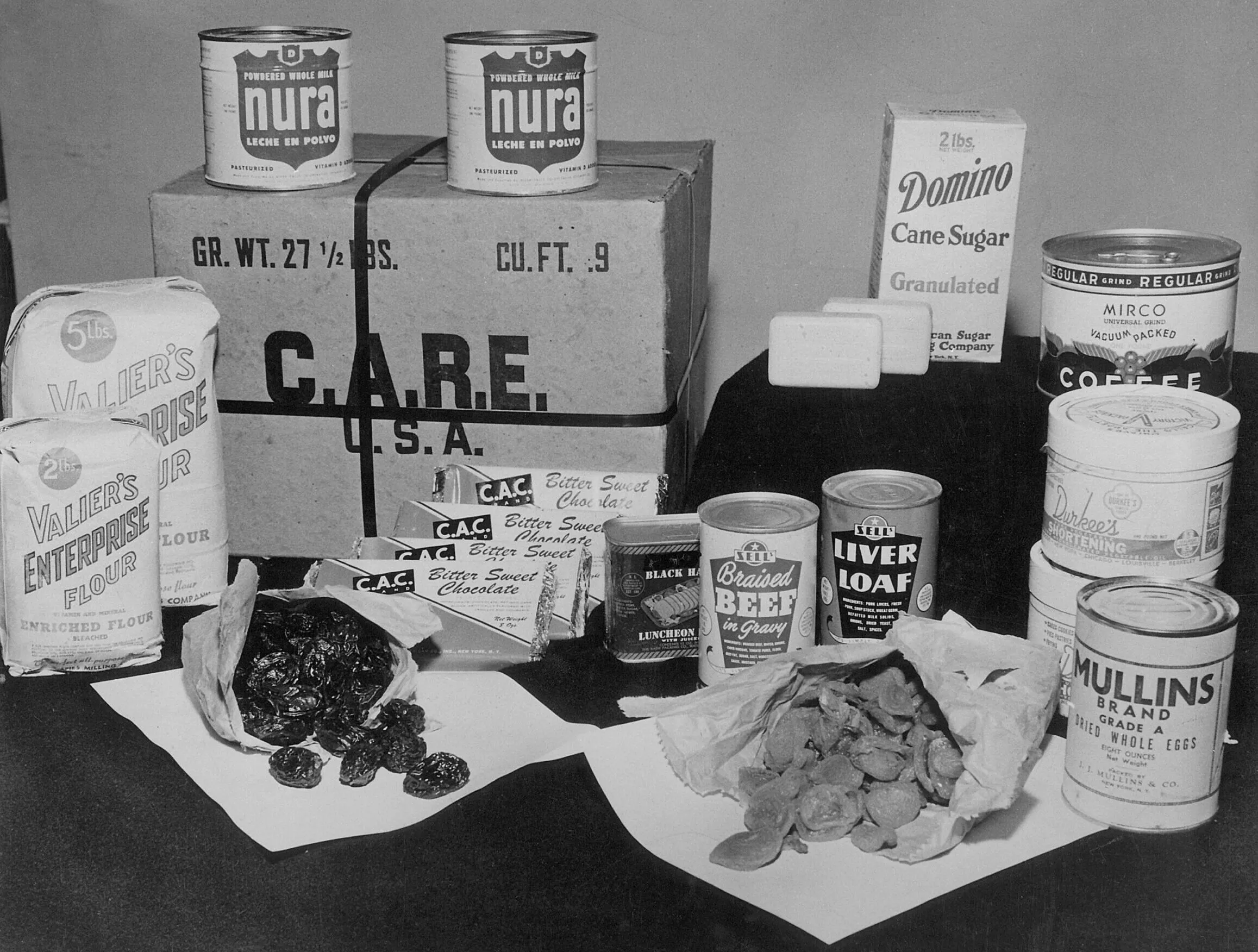
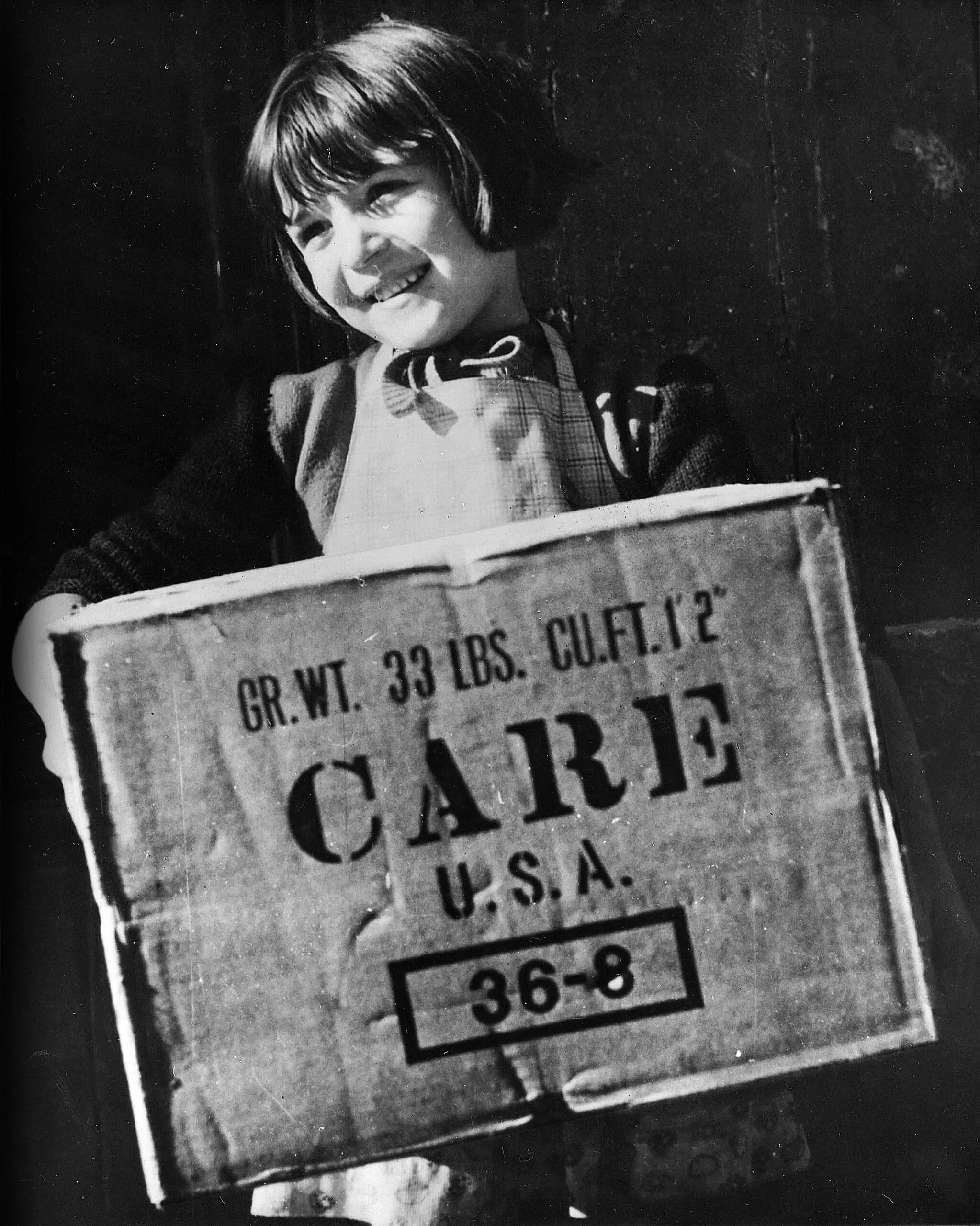
The original CARE PACKAGE parcels delivered canned and preserved foods to WWII-damaged European cities. German civilians called the planes dropping the boxes “raisin bombers.” Photo: CARE
Regine Binet of Bayeux, France, a town not far from where the Normandy invasion took place, receives a CARE PACKAGE box in 1946. Photo: CARE
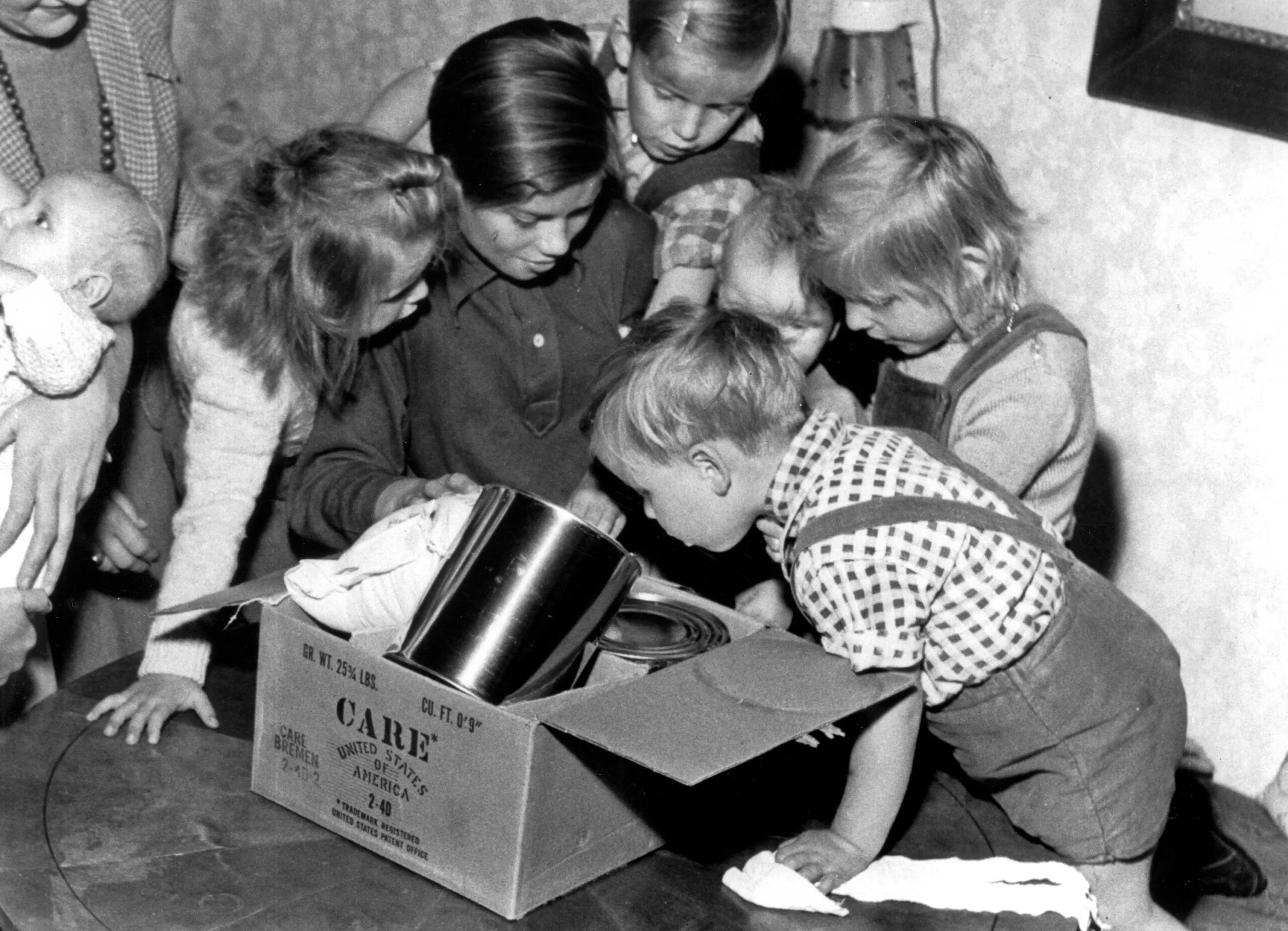
Refugee children from East Germany gather to view their CARE PACKAGE box upon arriving in West Berlin. Photo: CARE

The meaning of CARE

The same spirit that brought the first CARE PACKAGE boxes to families in France quickly grew into a broader commitment — not only to meeting immediate needs, but to standing with people as they rebuilt their lives on their own terms. In 1948, as Soviet troops blockaded Berlin, CARE chartered its own planes to participate in the historic Berlin airlift, providing about 60% of all private aid to the beleaguered city.

Postwar reconstruction eventually gave way to a new era of global challenges, and CARE evolved with the communities we served. By the early 1950s, CARE had launched programs in Asia and Latin America, responding to hunger, displacement, and disaster with a focus on practical tools and locally led recovery. Schools were rebuilt, agricultural programs took root, and families devastated by conflict began restoring their livelihoods.

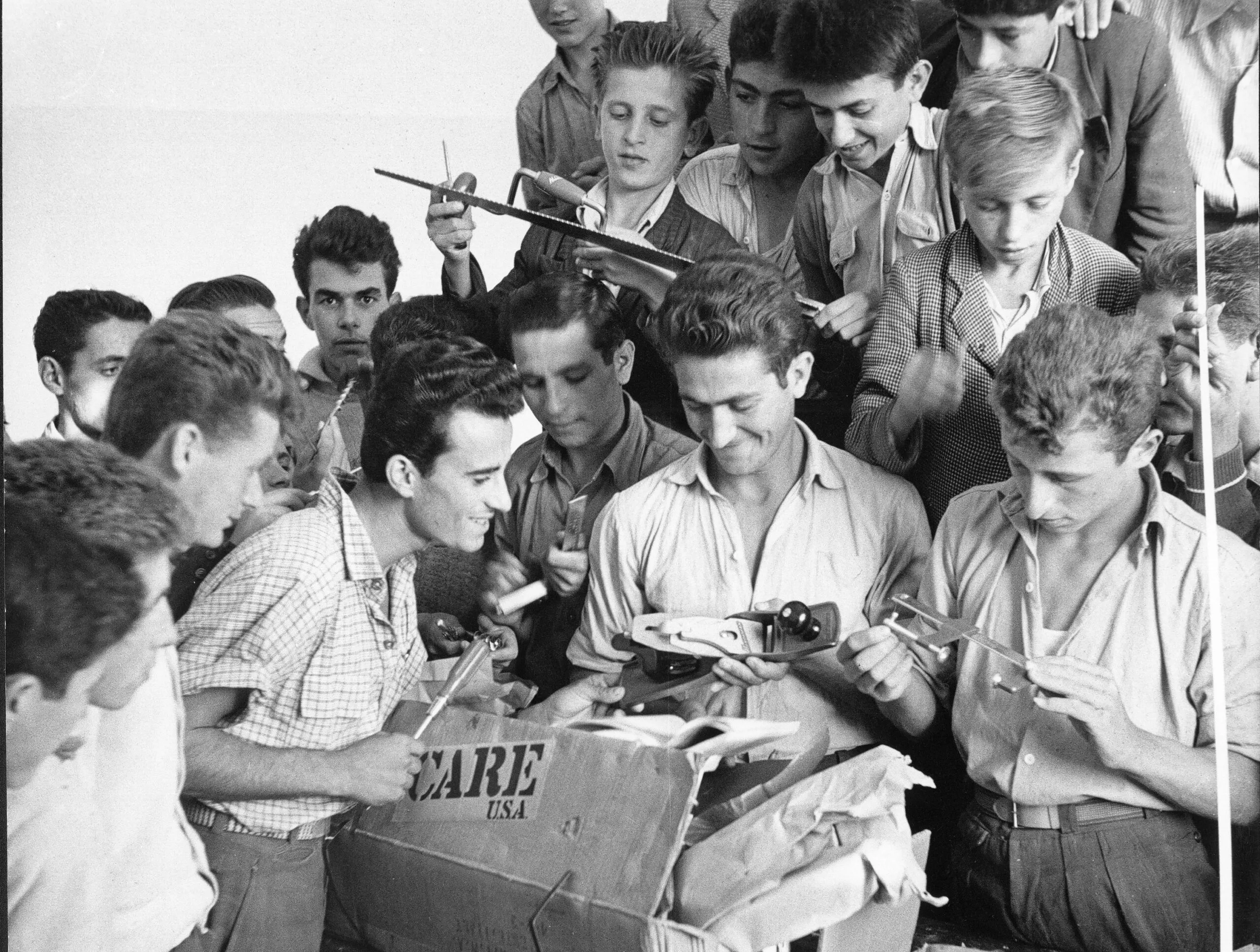
A group opening the specialty Woodworkers Tool Kit CARE PACKAGE parcel in Greece. Photo: CARE
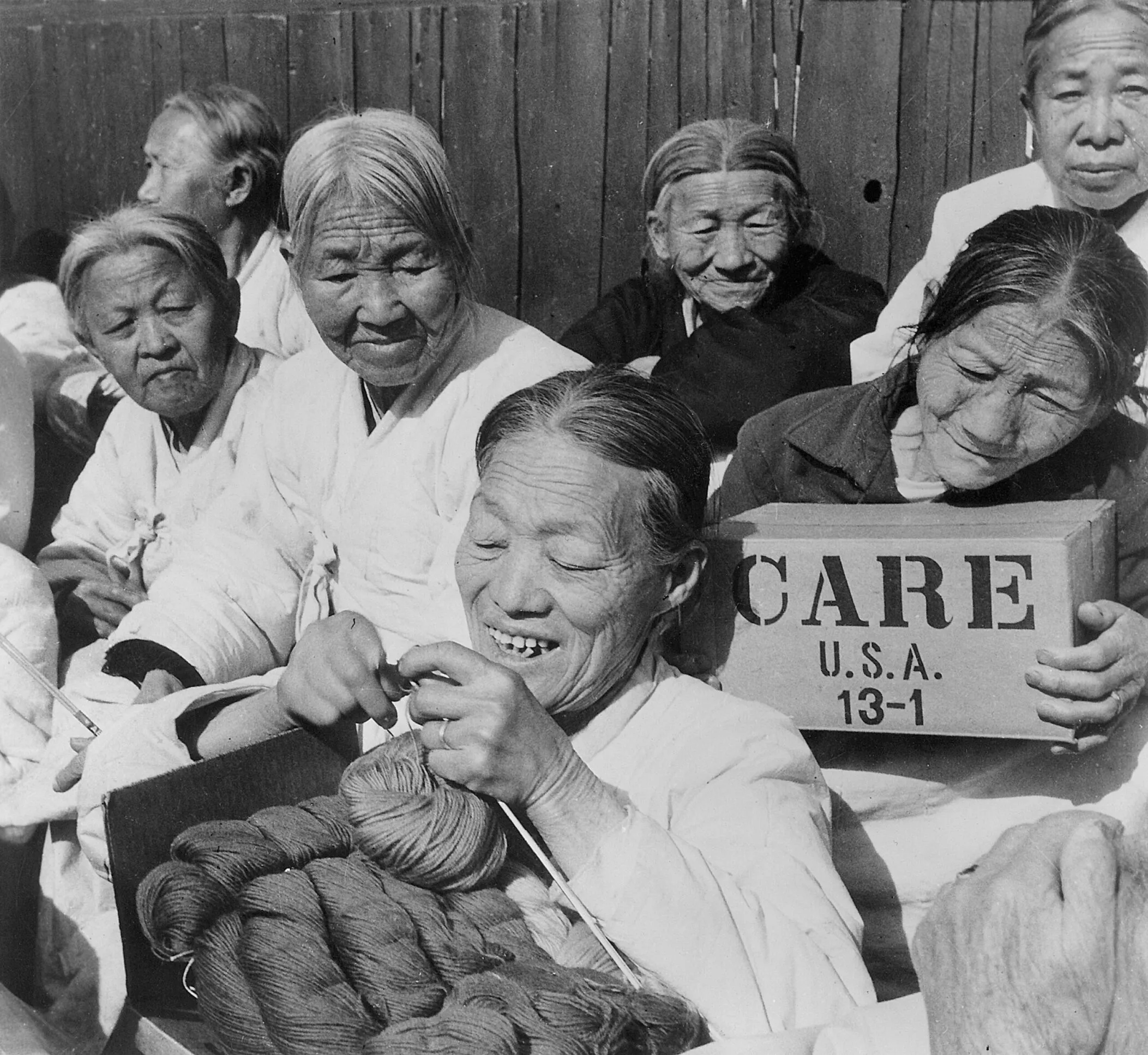
Women in Kyungsang Pukto, South Korea, received CARE PACKAGE parcels with wool, yarn, knitting needles, and other essentials. Photo: CARE

As CARE’s work expanded, so did our role in shaping the future of global development. In 1961, President John F. Kennedy asked CARE to help train the first Peace Corps volunteers before their mission to Latin America — a recognition of CARE’s deep community partnerships and practical expertise. This moment truly marked CARE’s shift from postwar relief to long-term, people-centered development.

Through every shift in geography or strategy, one constant remained: CARE’s dedication to working hand in hand with communities, placing dignity, trust, and resilience first.

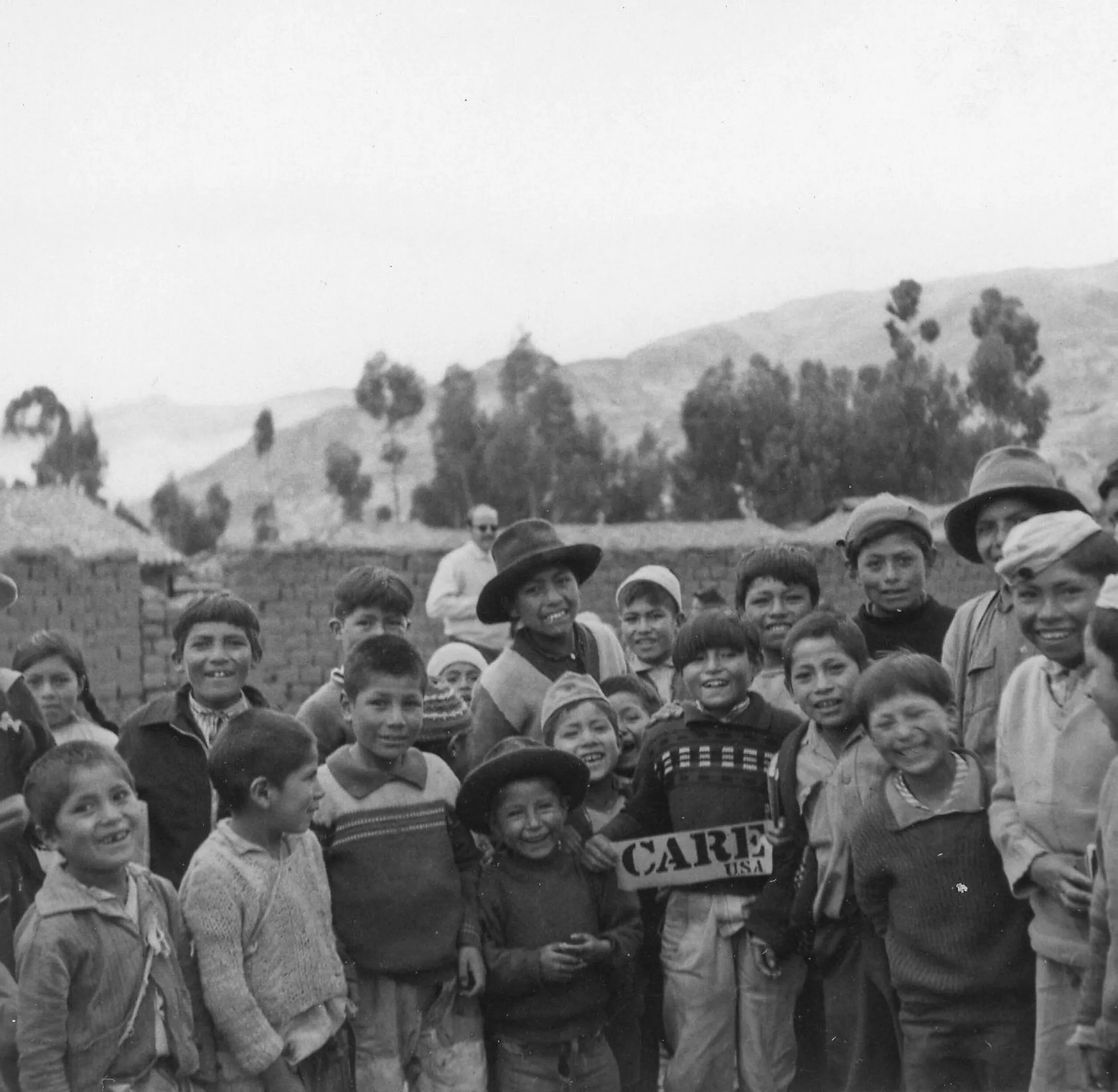
Children in Peru pose for a photo with a CARE PACKAGE. After the 1970 offshore earthquake, CARE responded with building materials and rebuilding support. Photo: CARE
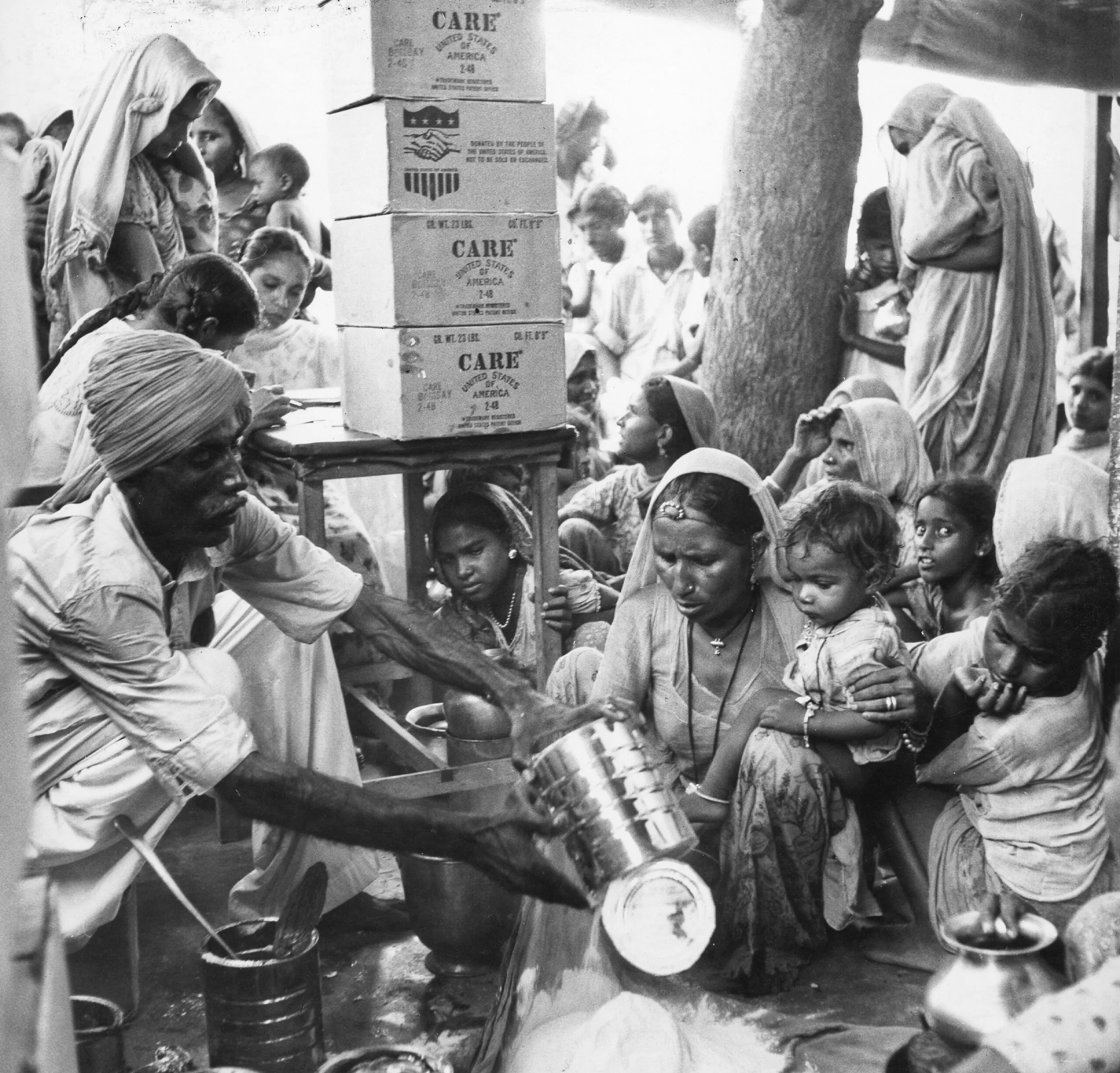
A local CARE partner distributing flour to mothers and families at a supply point in India. Photo: CARE

Evolving with a changing world

By the 1970s and ’80s, CARE had become one of the world’s leading development organizations, known for community-driven solutions and groundbreaking local partnerships. We focused on women and girls long before it became a global norm. This transformed our programming and shaped a groundbreaking approach to fighting poverty.

From the Village Savings and Loan Associations (VSLAs) that began in Niger in 1991 and have grown into a 30-million-member global movement, to the SHOUHARDO programs in Bangladesh that cut child stunting at unprecedented rates, CARE has helped develop and promote solutions now used by organizations worldwide.

And through it all, in moments of crisis, CARE’s teams and partners have been among the first to respond, and the last to leave.

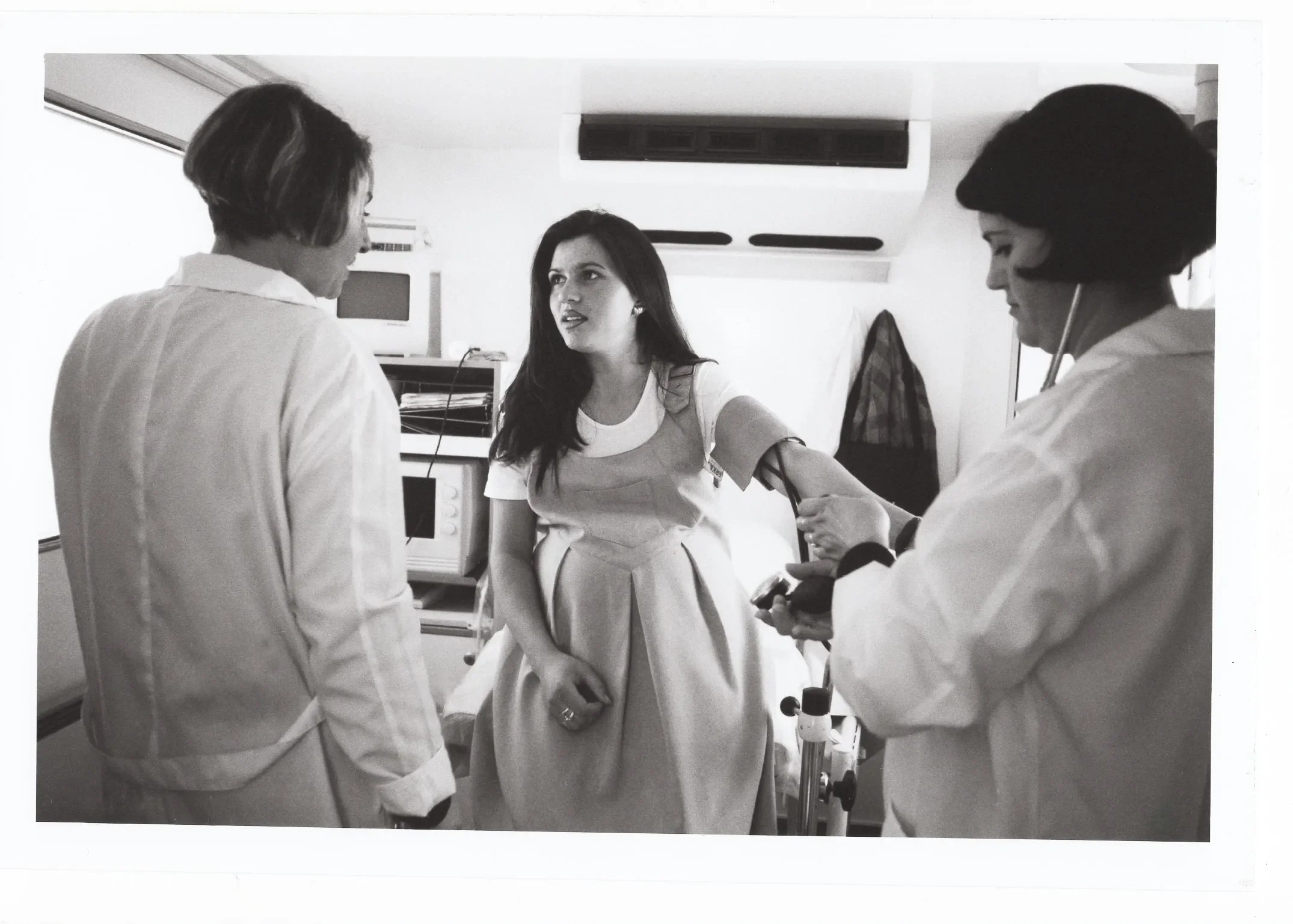
An expectant mother receives prenatal care and support in Kosovo. Photo: CARE
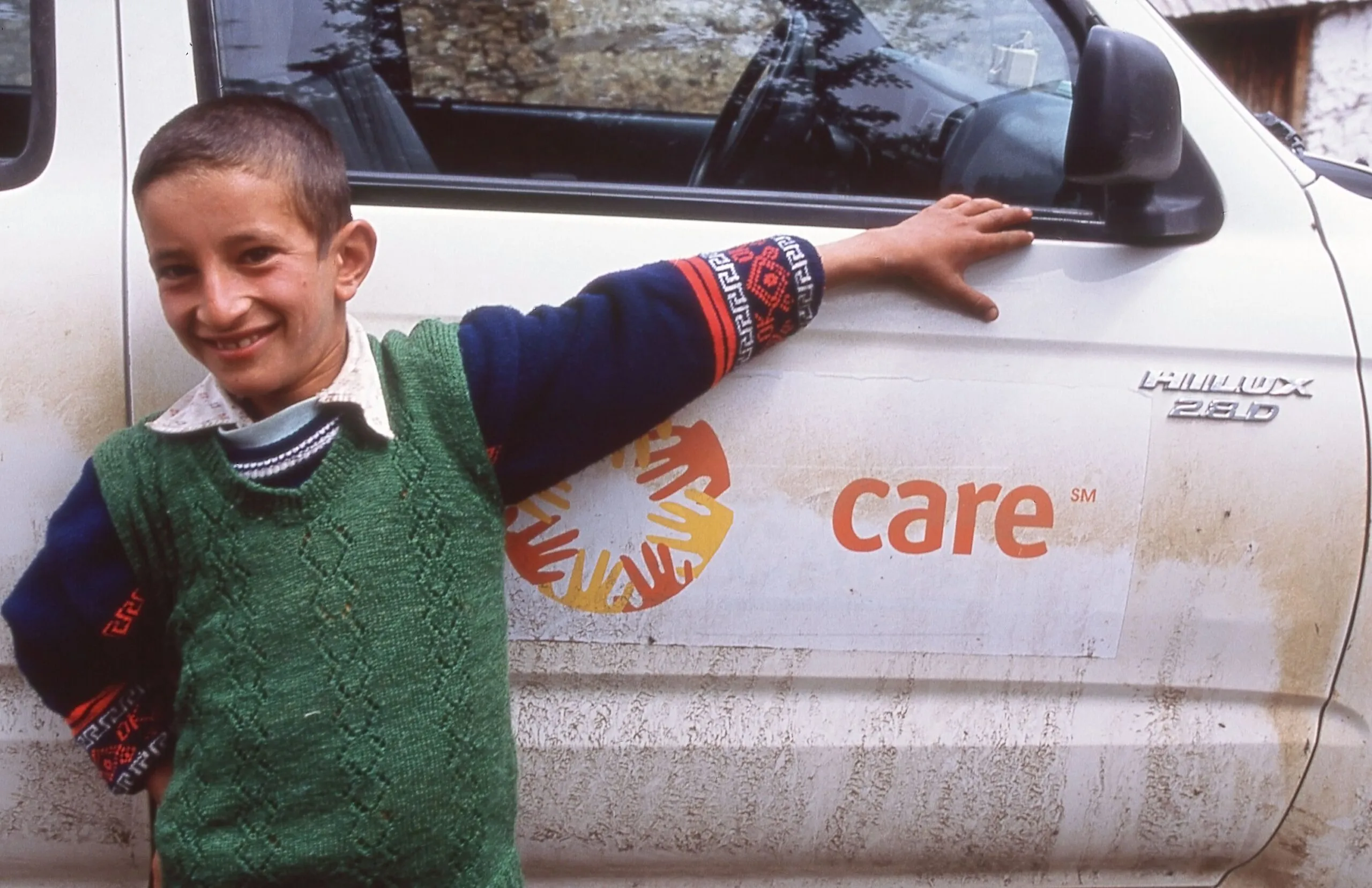
A boy poses in front of a CARE vehicle in Albania in 2002. CARE has been working in the Balkans since 1993. Photo: CARE

Humanity at the center

Behind every major CARE milestone is the steady work of local staff and community leaders who show up every day to help families recover, rebuild, and thrive. Their determination is the heartbeat of CARE’s mission.

There are leaders like Asta in Nepal, a community health volunteer whose work has improved access to safe birthing practices, information about maternal and child health, and community support for new mothers.


Like Mabinty in Sierra Leone, who began teaching children under a mango tree before becoming a local champion for girls’ education.


And like Yuditha in Tanzania, whose savings group invested in a tractor, a motorcycle, and a new business; creating what she calls “economic freedom” for the women in her community.


These stories, and countless more like them from each of the communities where we work, echo the spirit of that first CARE PACKAGE parcels: when people come together, change becomes possible.

Meeting today’s challenges

CARE’s 80th anniversary arrives during one of the most complex humanitarian moments in modern history. Conflicts are becoming more protracted, disasters more intense, and funding more uncertain. Still, CARE’s teams continue to meet these challenges head-on, often in places where few others can or will go.

Every day, around the world, our staff and partners deliver food, clean water, cash assistance, medical supplies, and more — often traveling through blockades, negotiating access with multiple authorities, and navigating intense security risks to reach families in need. CARE’s locally led teams are among the few networks still consistently operating in some of the hardest-to-reach communities, ensuring lifesaving aid reaches people who have been cut off for weeks, months, or even years.

As global access to humanitarian aid tightens, CARE is modernizing the CARE PACKAGE boxes for a new era. During the height of the COVID-19 pandemic, CARE revived the idea as a symbol of global solidarity, delivering hygiene kits, digital cash support, and essential household supplies.

Today, the modern CARE PACKAGE parcels go beyond our traditional idea of what a package can be, including access to mobile money transfers, clean water systems, menstrual health products, emergency shelter materials, mental health support, tailored assistance for women and girls facing heightened risks of violence, and more.

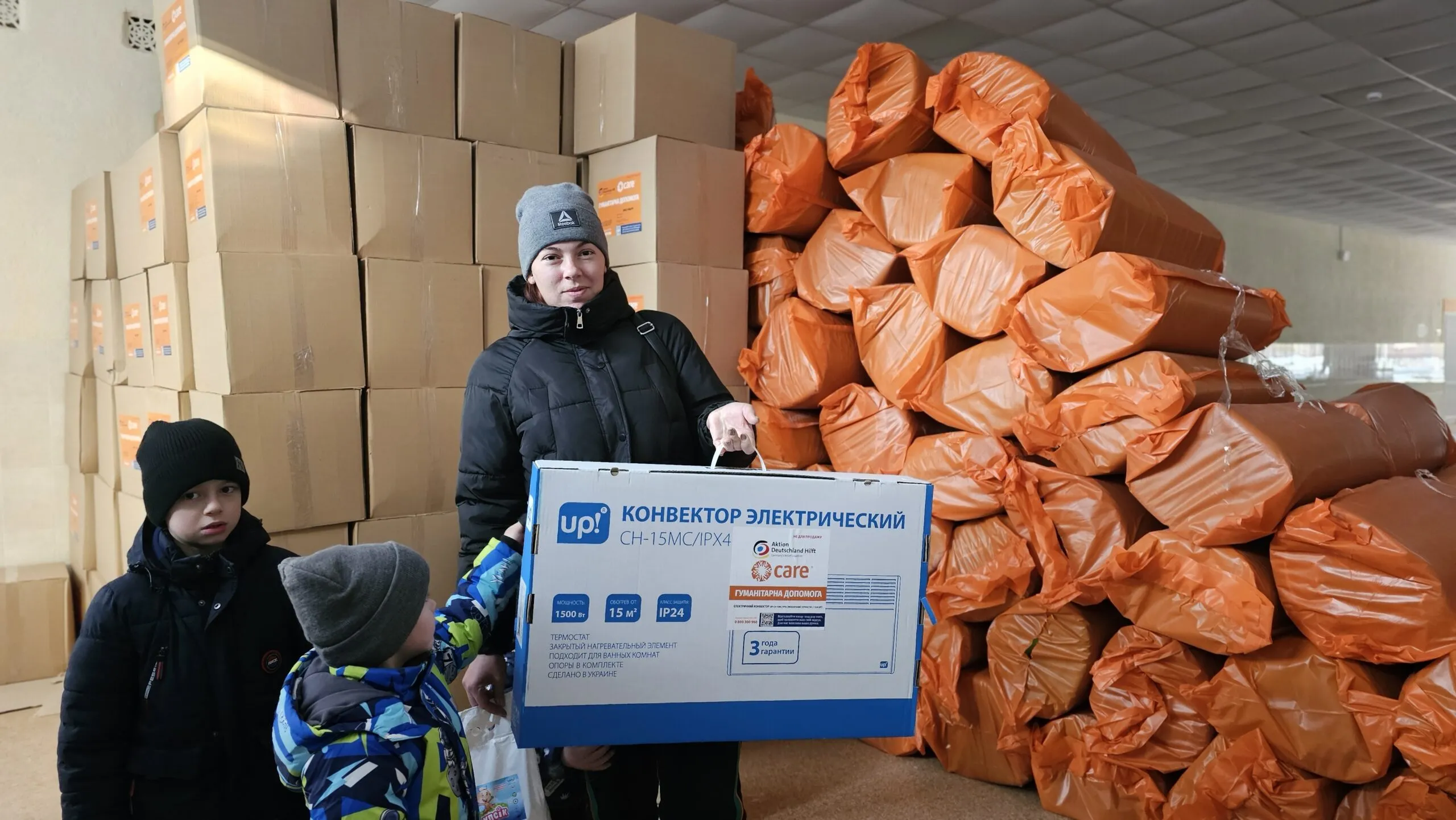
Olena and her three sons are gearing up for their third winter at war in Ukraine. In Kharkiv, CARE supplies electric heaters and winterization kits with blankets, gas cookers, and power banks. Photo: Sarah Easter/CARE
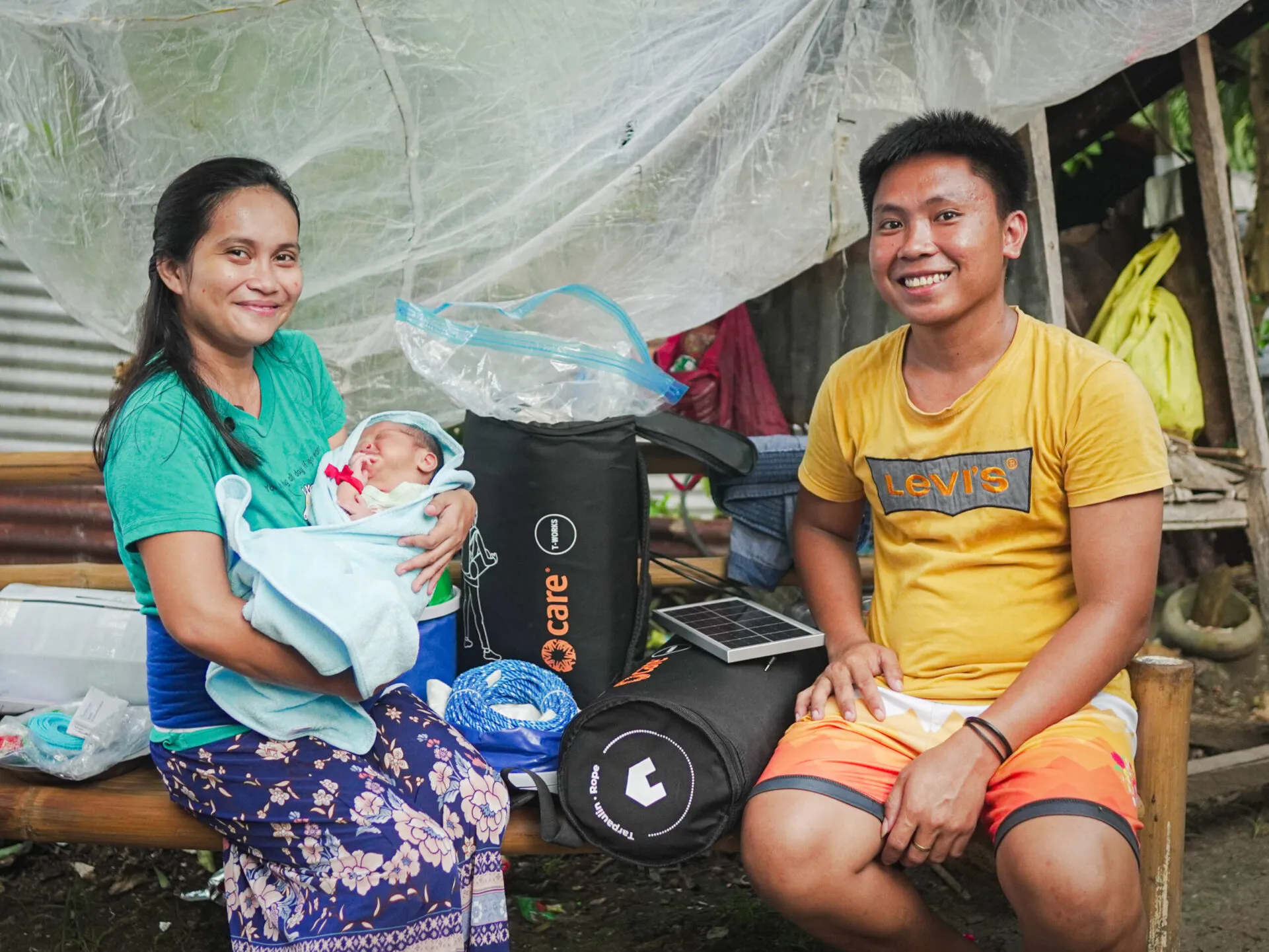
Apple and Reynaldo Oswa survived a major earthquake days after their baby's birth. CARE Philippines provided an emergency kit with tarps, a solar light, and other essentials to help their family recover. Photo: CARE Philippines
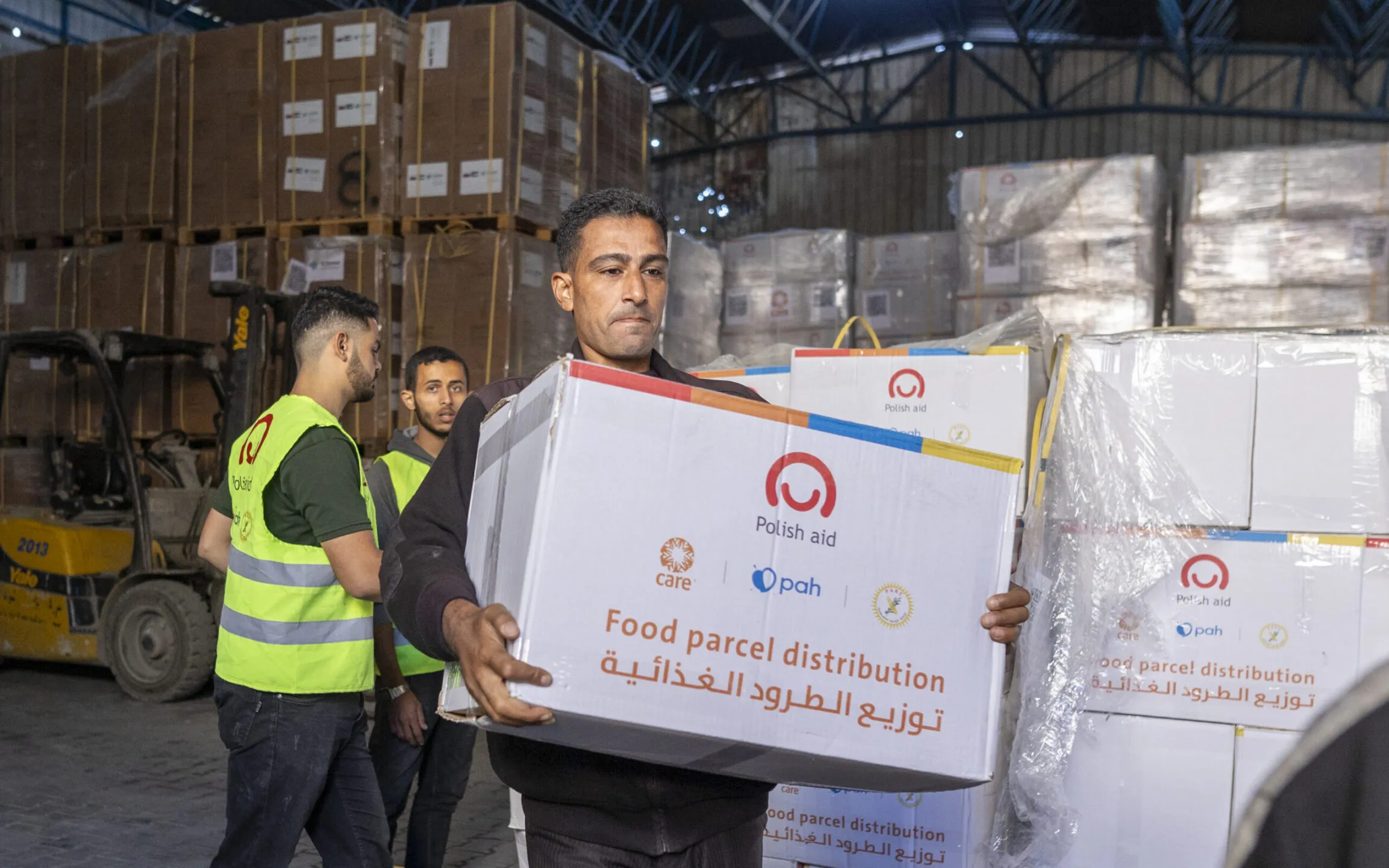
CARE was one of the first international organizations to respond to the crisis in Gaza, distributing prepositioned water and medical supplies. Photo: Zendah/CARE

Across 67 countries, more than 30 million VSLA members have collectively saved more than $11.5 billion. Now, CARE is using this massive VSLA network to expand access to digital tools, especially for women who are too often locked out of the digital economy. Through digital recordkeeping, mobile savings platforms, and new fintech partnerships, women can save, borrow, and grow their businesses more safely, more quickly, and more transparently. These digital tools are becoming lifelines in crisis zones, helping women maintain income and stability even when markets are disrupted.

CARE is also standing together with communities on the frontlines of our changing climate. The people put at most risk by these changes are often those who have the least power to fight it — indigenous leaders defending their land, young people facing displacement, and women and girls who continue to bear the greatest burdens during emergencies. Across continents, CARE partners with local organizations to expand access to essential services, advance rights, and ensure marginalized voices are heard.

Even amid historic global funding cuts, CARE’s teams continue to adapt, innovate, and deliver. Their courage, and the communities they come from and stand beside, are why our mission remains as vital now as it was 80 years ago.

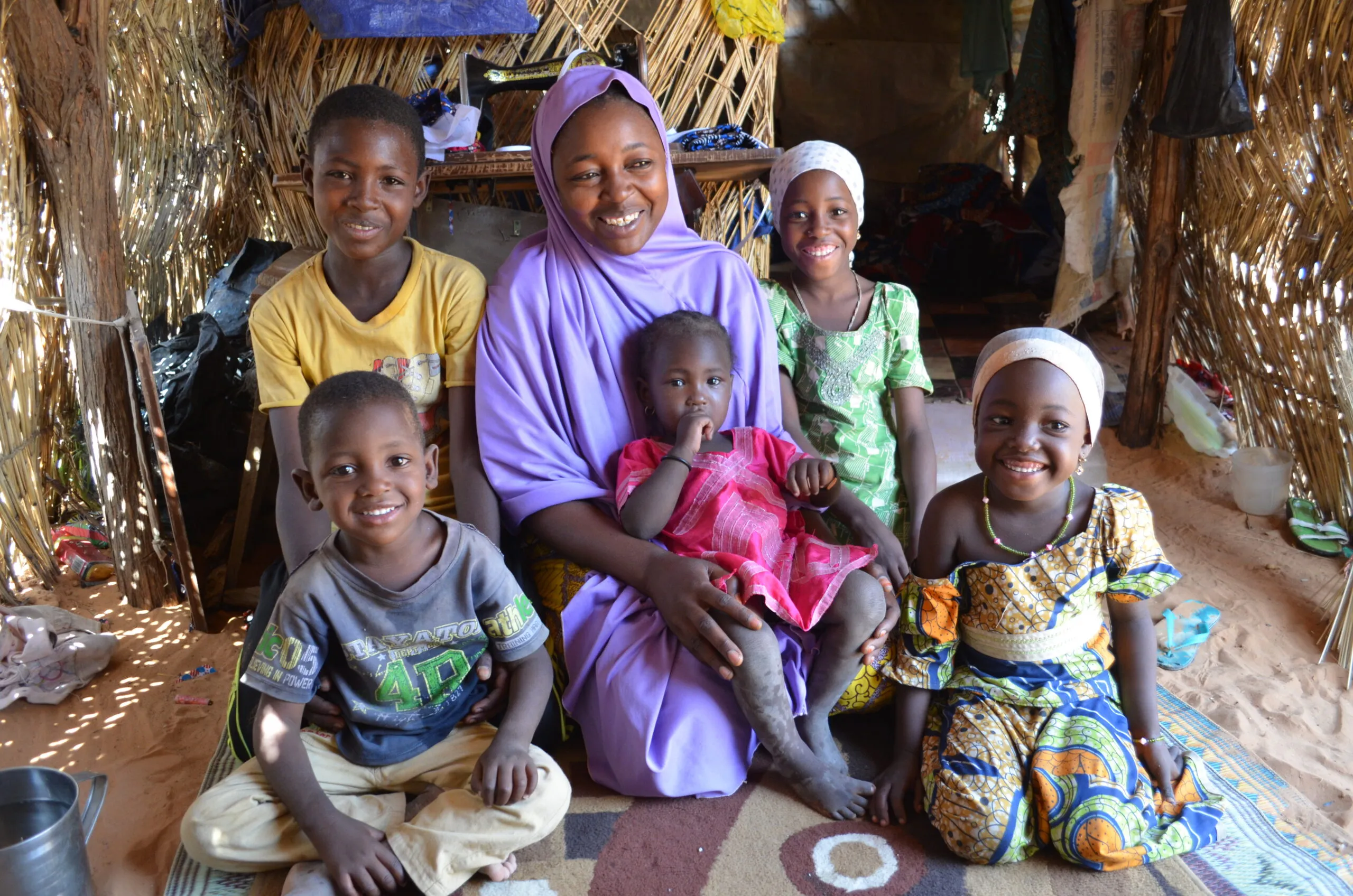
In the Niger refugee camp where Lami lives with her children, women and girls face a high risk of sexual violence. As VSLA president, Lami mobilized her group to pressure local law enforcement to act. "This was my greatest achievement," says Lami. "I was not afraid or discouraged by anyone." Photo: Ekinu Robert/CARE
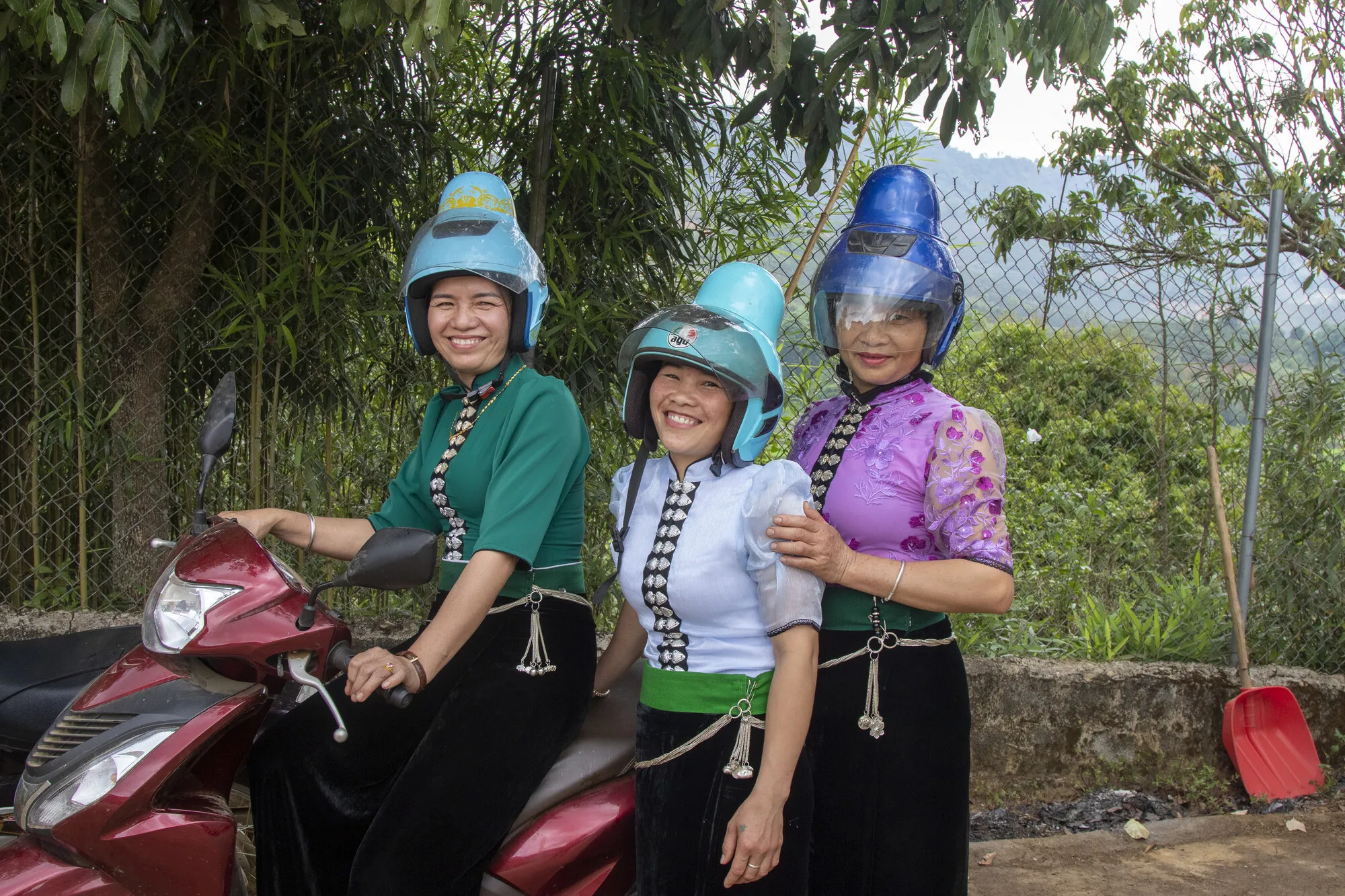
Members of the Ara Tay Coffee Cooperative, formed through collective savings in a VSLA, gear up on motorcycles for deliveries around Son La, Vietnam. Ethnic Thai women here wear their hair in a 6-inch bun after marriage, so they use custom headgear to stay safe. Photo: Laura Noel/CARE

Eighty years forward

Michelle Nunn, CARE’s president and CEO, says that the CARE story is “a story of American generosity, hope, and determination to help those in need. Amid enormous global challenges, the courage and generosity we see around the world give us hope. Together, we will continue to stand with women and families, respond to crisis, and build communities of care that foster a more just, safe, and equitable world.”

CARE’s story began with a box. Today, it continues as a global movement still carried by compassion, still driven by solidarity, and still committed to creating a world where everyone can live with dignity and hope.

Because eighty years later, the most powerful thing CARE delivers remains the same: we remind people everywhere that they are not alone.

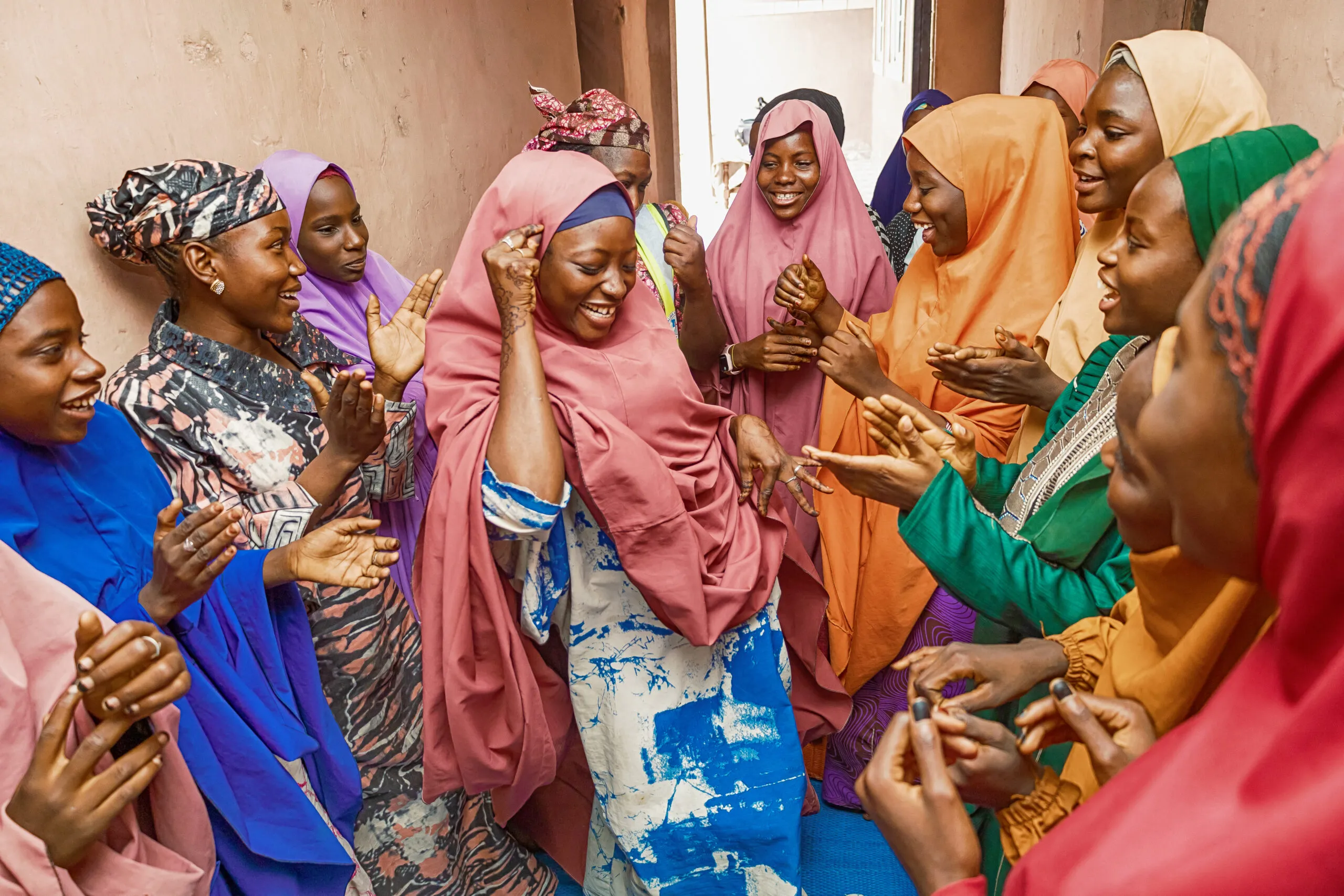
CARE focuses on women and girls because when girls get the support they need, whole communities thrive. Photo: John Peters/Care

Join the legacy of CARE.

For 80 years, CARE has stood with families facing crisis. Your donation helps us continue delivering lifesaving aid and long-term support wherever it’s needed most.

Donate today.
Back to Top