A new mobile app has a goal to ease the health worker shortage in the Philippines

By Amanda Larson September 23, 2026

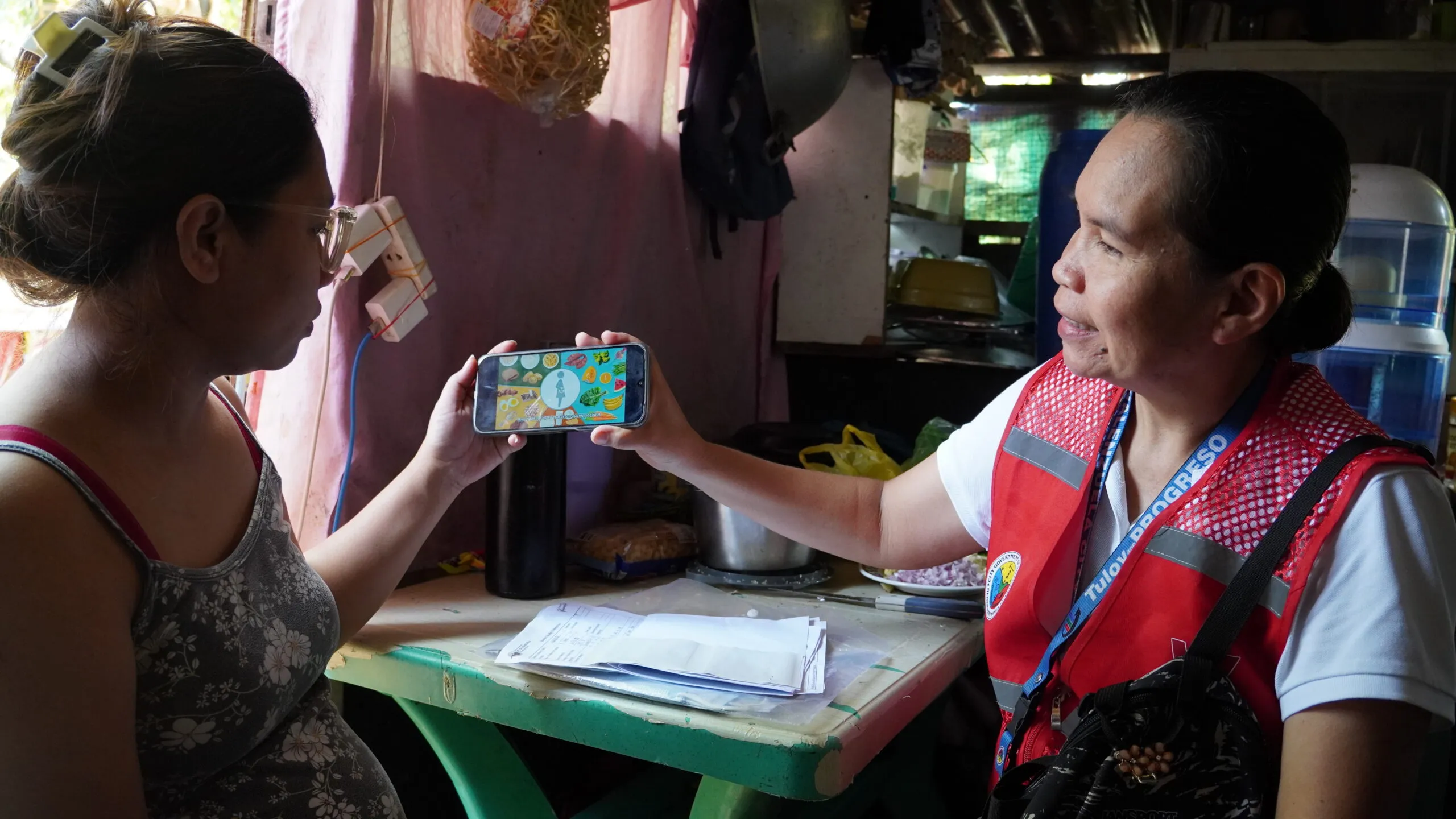
A woman in a medical vest is showing a woman sitting next to her medical advice on a phone.

Susan Nazareno is a barangay health worker who was trained through the HEAL Hub app. Photo: CARE

A year ago, Susan Nazareno became a community health worker after seeing how often her neighbors struggled to find reliable health information. Today, new training and a mobile app are helping her answer their questions, connect them with care, and become a trusted health resource in her community.

Susan Nazareno starts every morning the same way: pouring herself a cup of coffee in her kitchen, then putting on her bright red medical worker vest. She laces up her black athletic shoes and heads out for a long day on her feet.

Susan, 51, lives in Karuhatan, a neighborhood, or barangay, in Valenzuela City, Philippines. It’s a densely populated industrial center of the country with a tropical climate that makes it prone to heavy rains and floods.

But the rain doesn’t stop Susan from her walks, because she knows the community depends on her. She’s bringing health care to their door, even when they don’t know they need it.

“There are so many people who need to know about health,” she said.

The Philippines faces a significant shortage of doctors and nurses, putting a strain on its health system. Susan had seen neighbors rely on advice from friends and acquaintances instead of seeking care at the city health center. Some skipped checkups because they felt well enough that day. Others did not know where to turn with questions about pregnancy or other health concerns. She had also seen the stigma surrounding illnesses such as tuberculosis make people hesitant to talk about a diagnosis or seek care.

She wanted to help change that.

Susan, an active member of her church and community, decided to become a barangay health worker in 2025.

Barangays are the smallest local government units in the Philippines. Barangay health workers are trained community volunteers who provide frontline health information and services. They educate families, support maternal and child health services, monitor household health concerns, promote disease prevention, and connect people with health facilities and other care.

Most barangay health workers are women. Despite the important role they play, many have limited access to ongoing training and professional support.

Susan was eager to learn, but she was also new to the work. Her responsibilities included supporting prenatal care, tuberculosis follow-ups, immunization activities, and more. Turning to the nurses at the health center when she needed help, she learned how to use equipment like blood pressure monitors to help her neighbors.

Over time, she became more comfortable in the role, but she never stopped wanting to learn more.
HEAL Hub: Community Health Workers

The Healthy, Empowered, Accredited, and Linked (HEAL) Hub Project supports trained community health volunteers, like Susan, in Quezon Province and Valenzuela City in the Philippines.

HEALing technology

CARE launched the Healthy, Empowered, Accredited, and Linked (HEAL) Hub Project in 2024 to make training and ongoing support more accessible to barangay health workers like Susan in Quezon Province and Valenzuela City.

The project combines in-person training, ongoing coaching, and a mobile learning app. Participating health workers receive Android phones and complete a virtual onboarding session before using the app, which works offline and is available in English and Filipino. Training modules cover maternal and child health, family planning, pandemic preparedness, and cancer prevention and early navigation. Health workers can access modules at their own pace and return to information when they need it.

Susan was initially unsure about how to navigate the new technology. “How does it work again?” she remembers asking other health workers, but it did not take long for her to master the app. “I’m a quick learner,” she said.

CARE and local partner Southern Tagalog People’s Response Center also provide ongoing coaching and monitoring, while a dedicated Facebook group gives participating health workers another place to ask questions and share experiences.

For Susan, having reliable information at hand has made it easier to explain health guidance to her neighbors.

“It helped me a lot because I’m more confident in how to explain things to them,” Susan said. “I have proof that what I’m saying is true, and it’s done by experts. They are the ones who do it, not just me.”

She can now pull up information in the app and walk through it with community members in their homes. People come to her with questions about injuries, pregnancy, and when they should seek care at the health center.

Her familiarity with the community matters, too. Susan knows the people she visits, understands many of the concerns that can keep them from seeking care, and can help connect them with nurses and other health professionals when they need additional support.

Through the project’s second year, 1,041 barangay health workers participated in HEAL Hub training across Quezon Province and Valenzuela City. Of those, 947 — 91% — completed all of the digital learning modules.

Participating health workers have served an estimated 22,900 households.

CARE and its partners have also conducted monitoring and support visits with 628 health workers across 106 barangays in four municipalities. Participating health workers reported increased knowledge and confidence in areas including supporting pregnant women, educating families, and connecting community members with health services.

The project has a goal to train 1,500 barangay health workers by January 2027.

“Helping others isn’t just about money”

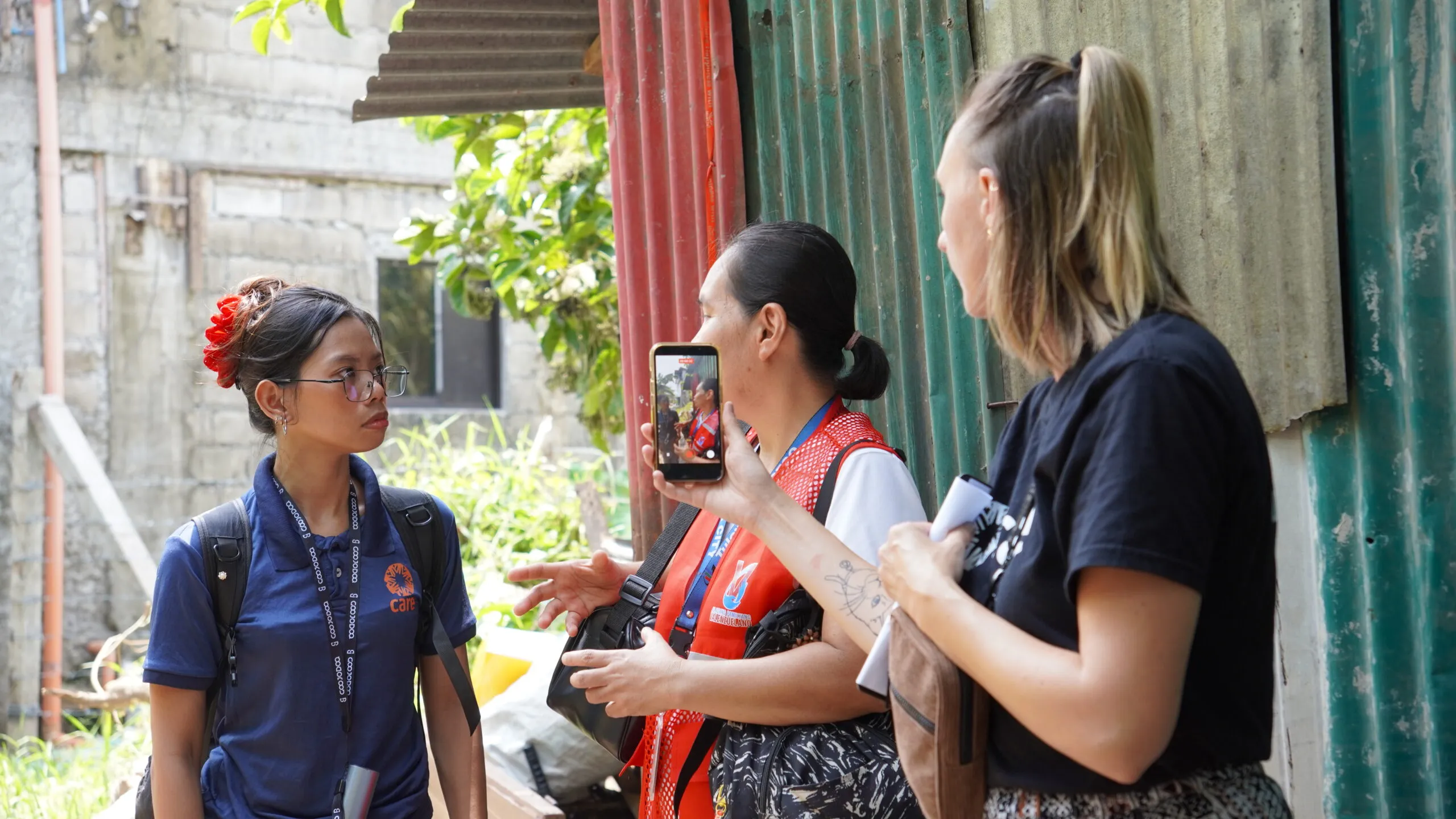
Three women in street wearing medical vests and CARE t-shirts.
CARE workers join Susan as she visits patients around her neighborhood. Photo: CARE

Becoming a barangay health worker was also about the example Susan wanted to set for her three daughters.

“I wanted them to see that helping others isn’t just about money,” she said. “Even if you don’t have financial means, you can still serve.”

A year into the role, Susan is the kind of health worker the HEAL Hub Project was built to support: knowledgeable, trusted, and firmly embedded in her community. Looking ahead, she hopes her story encourages others to follow her path.

“I want to see more people like me have the will to support our community,” she told us, “so that more people will know the importance of health in a person’s life.”

For community health workers like Susan, better health information does not start in a hospital or clinic. Sometimes, it starts with a trusted neighbor who knows the community, has reliable guidance at hand, and can help people take the next step toward care.

CARE has worked in the Philippines since 1949. In the Philippines, CARE has focused largely on disaster response, emergency preparedness, livelihoods recovery, and integrated risk management programs. CARE’s recent responses in the Philippines include natural disaster preparedness and recovery from earthquakes and typhoons. Programmatic work in the Philippines focuses on reproductive health, responses to violence against women and girls, and increased community resilience.

Support humanitarian workers around the world

Around the world, CARE staff continue serving families through conflict, disasters, and crises. Your help makes that work possible.

Donate now.
Back to Top