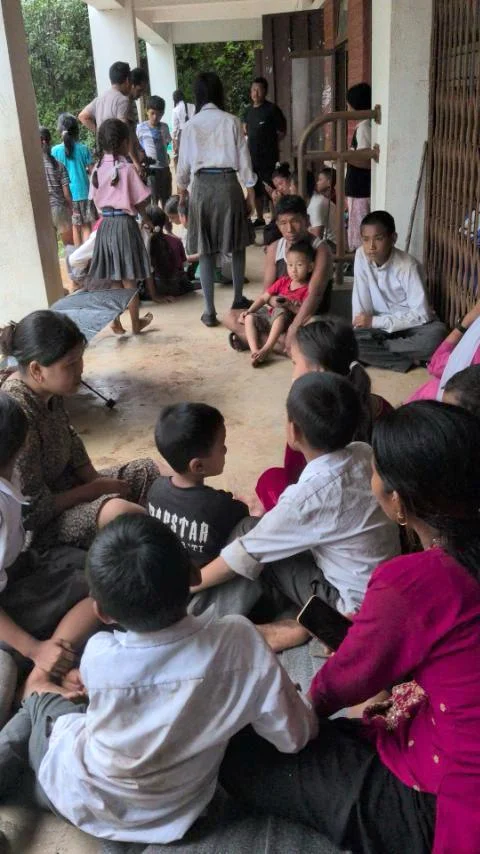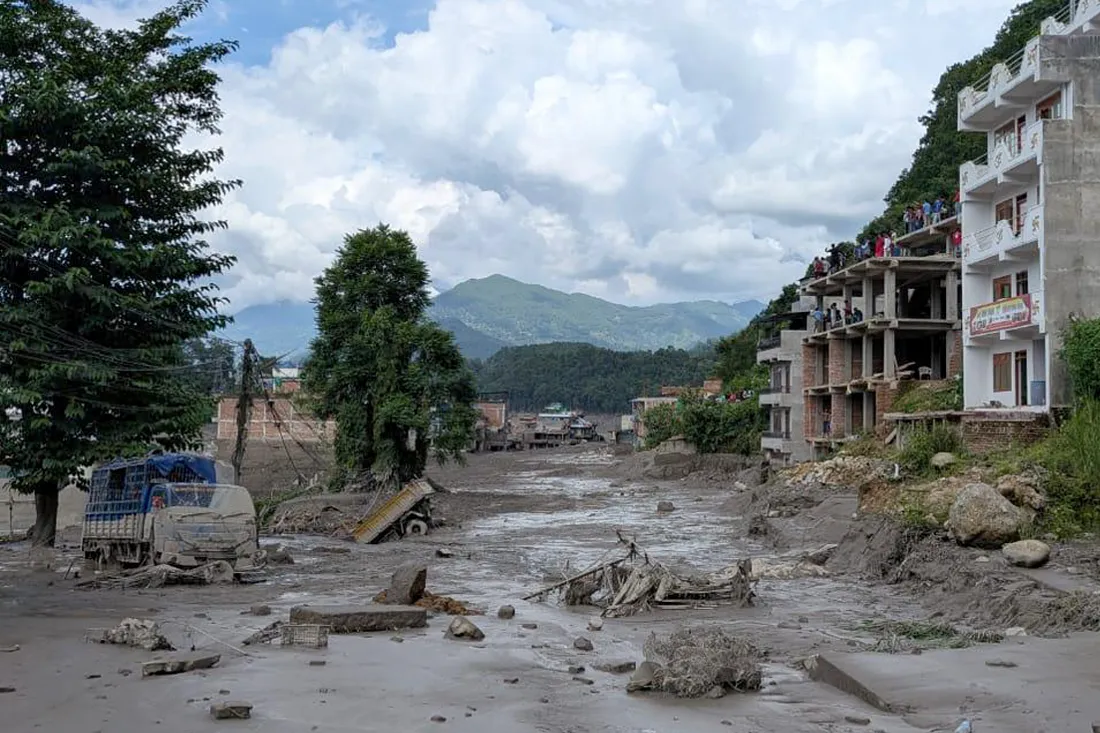

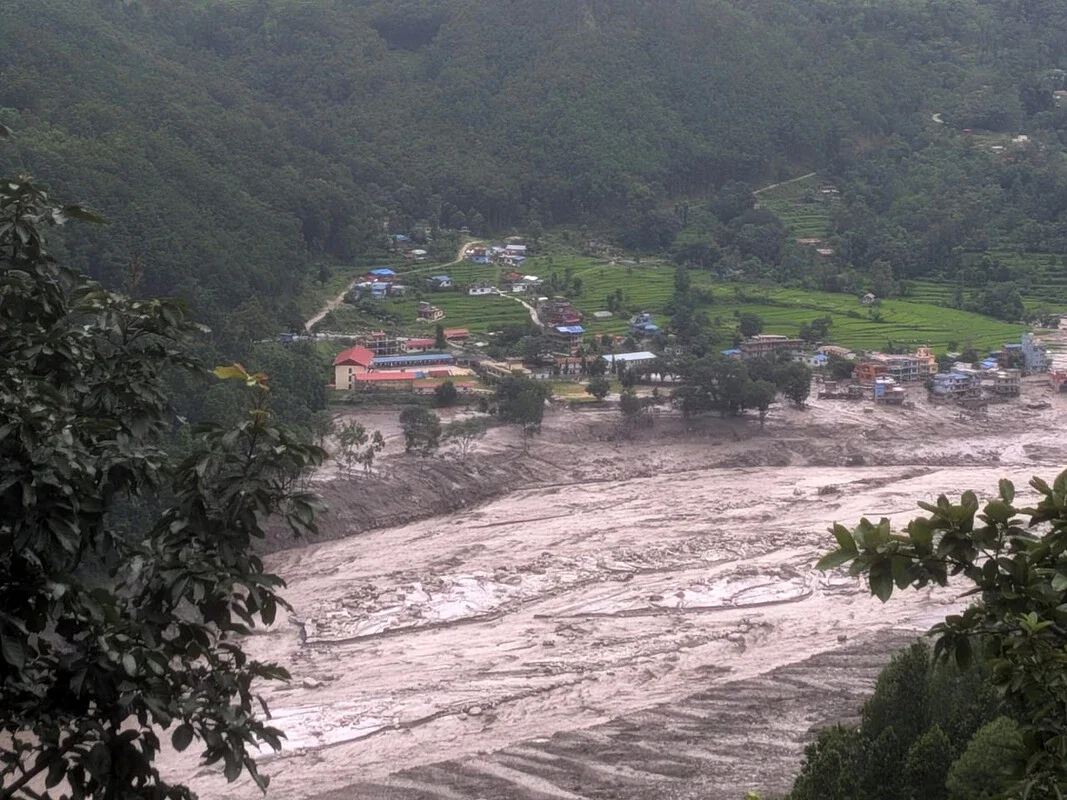
“The flooding has left affected families without homes, possessions, and livelihoods, and has raised concerns about the spread of waterborne diseases due to damaged water and sanitation infrastructure,” says Mona Sherpa, CARE Nepal‘s country director.
The flood hit shortly before 9 a.m., as many children were walking to school. Scientists at the International Centre for Integrated Mountain Development (ICIMOD) say an ice-and-rock avalanche blocked the Lhende Khola, releasing a sudden surge downstream. The precise cause is still disputed and investigations are ongoing.
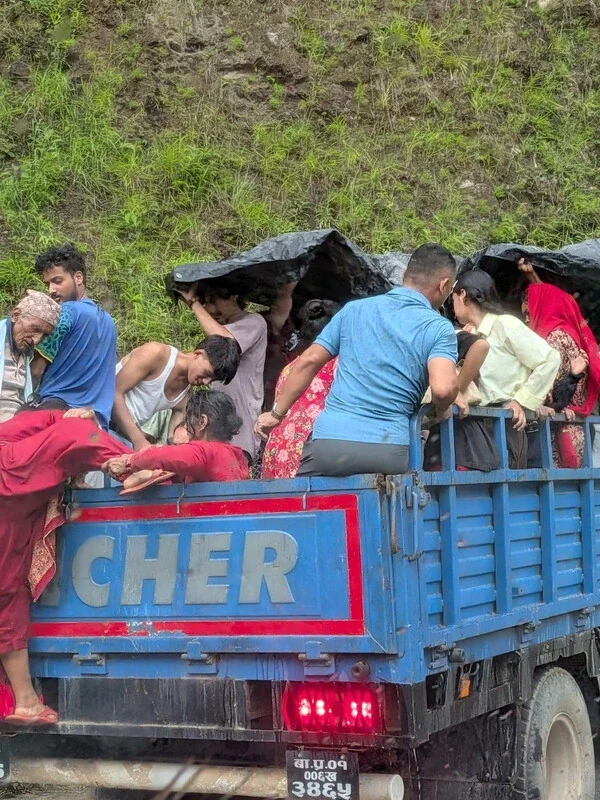
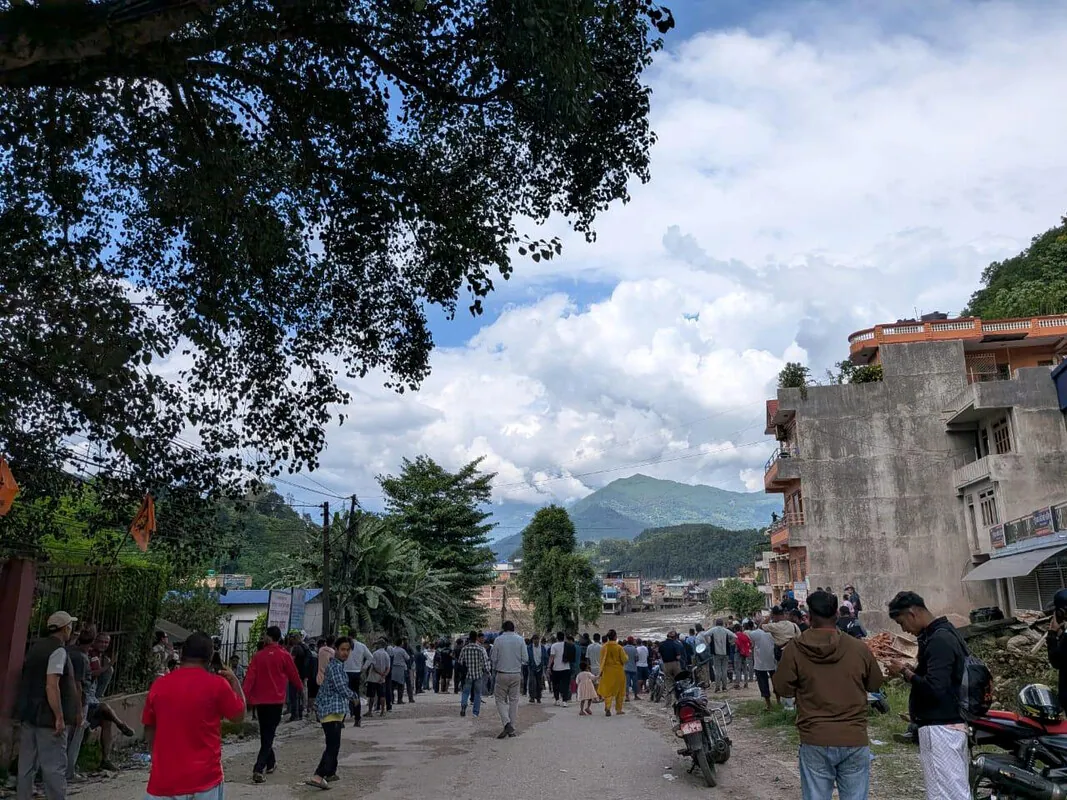
“The Lhende Khola has flooded twice in 14 months, this time triggered by an ice-and-rock avalanche from a glacier on the Nepal side that blocked the river and released a sudden surge downstream,” said Saswata Sanyal, a disaster risk reduction specialist at ICIMOD. A barrier lake formed by debris from the initial landslide broke its banks on August 28, briefly halting rescue efforts in both Nepal and China over fears of a second flood. Authorities have urged residents in high-risk zones to seek higher ground.
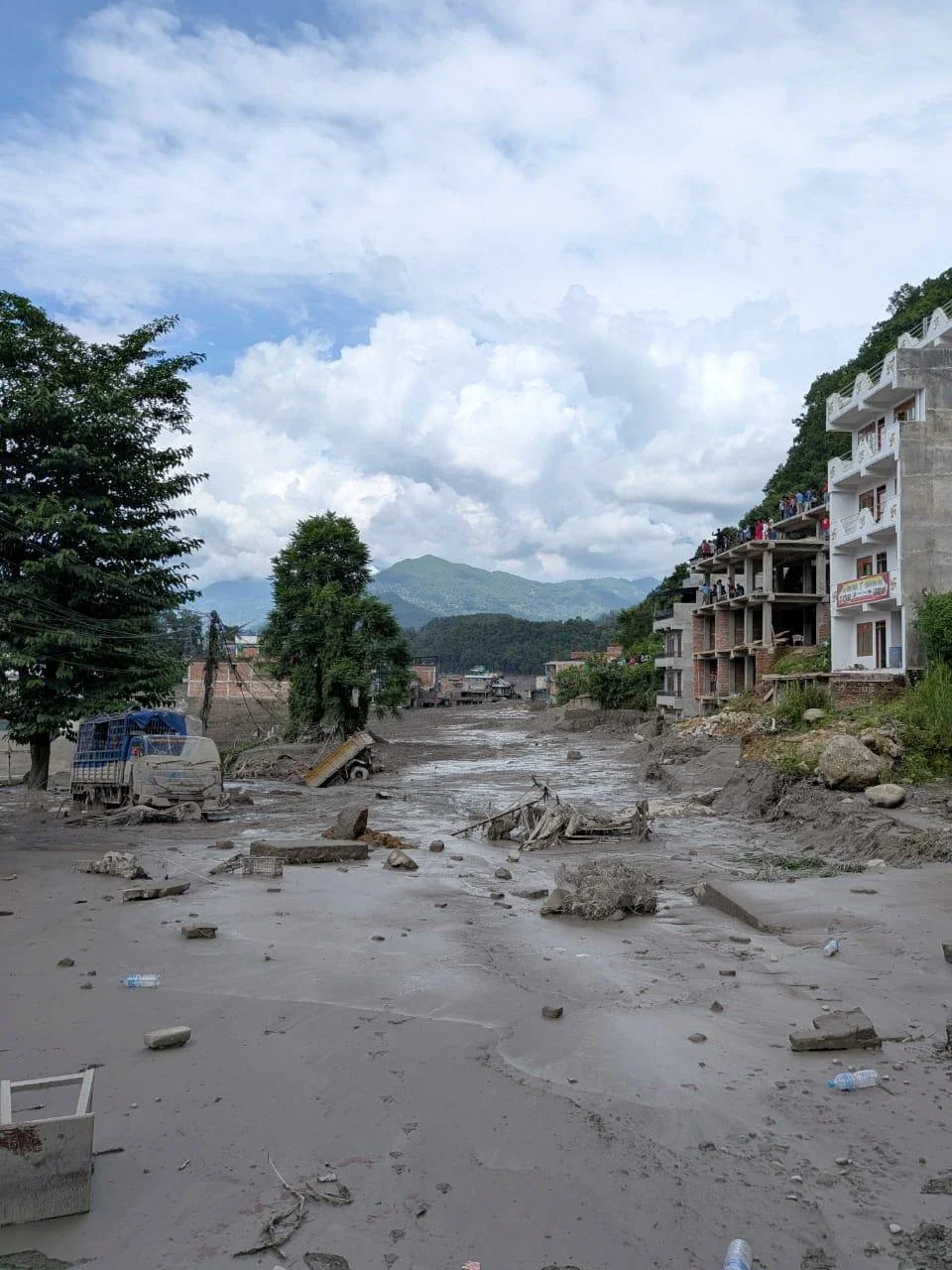
The damage is already extensive. Officials have confirmed that 32 bridges and nearly 25 miles of road were swept away, including the entire road from Betrawati in Nuwakot to the Rasuwagadhi border crossing, which links Tibet to Nepal. The worst-hit settlements include Timure and Syaphrubesi, near the border that supports much of the trade and tourism between Nepal and China. The flood affected 14 hydropower and solar projects, with a combined capacity of about 748 megawatts.