Kenya confirms second Ebola case as outbreak surpasses 9,000

By CARE Staff October 16, 2026

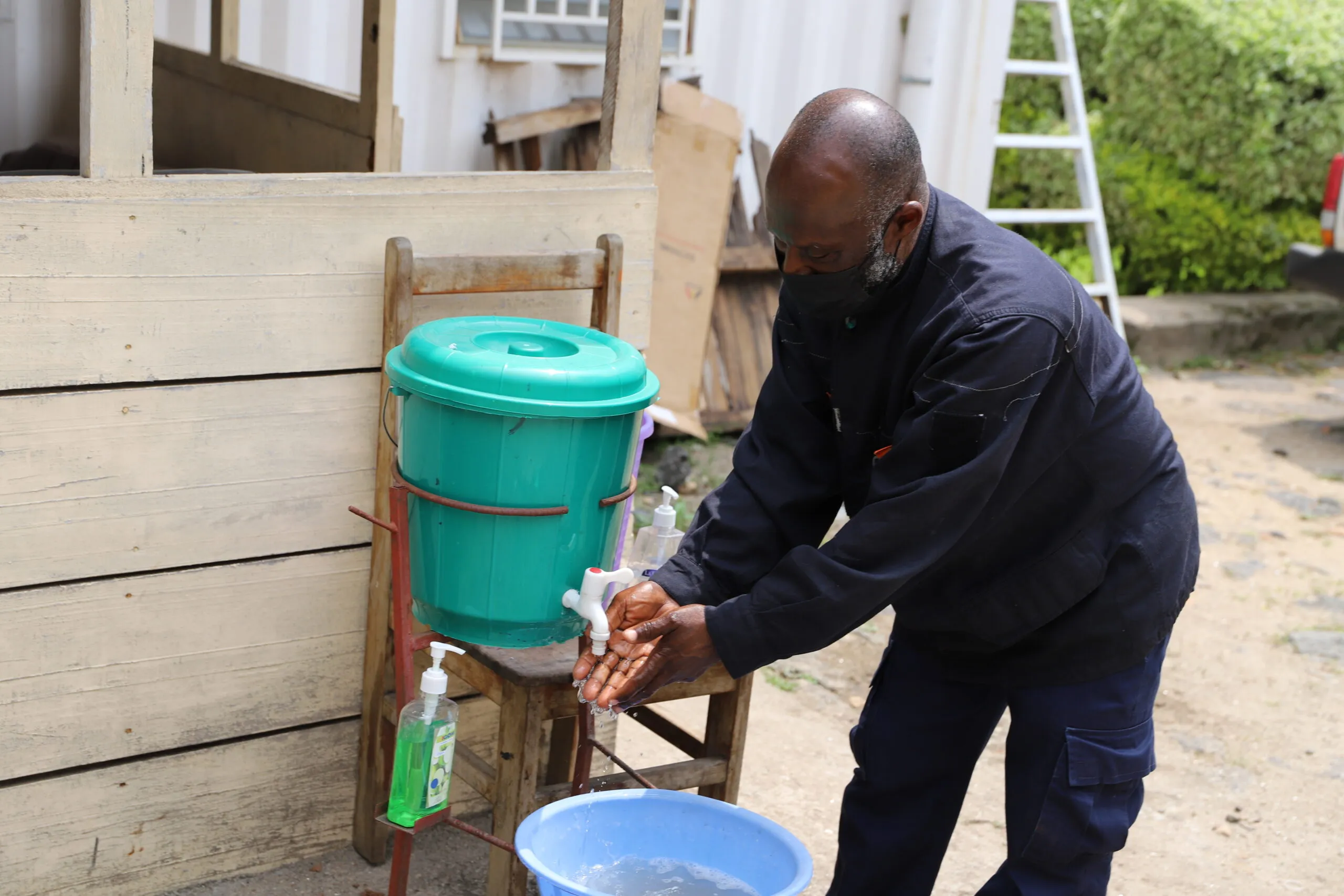
A man washing his hands at an outside handwashing station.

The CARE team at the Komanda health center in Ituri province has set-up handwashing stations and other protective measures to help stop the spread of the disease. Photo: CARE

Kenya’s Ministry of Health has confirmed a second case of Ebola in Nairobi, less than two weeks after the country’s first reported case and death. CARE teams in Kenya and the Democratic Republic of Congo (DRC) are coordinating efforts to monitor and respond as cases continue to climb.

CARE Kenya Country Director Getrude Misango is calling on governments to act quickly and work together to contain the outbreak.

“CARE Kenya is deeply concerned by the confirmed Ebola case in Nairobi and the potential risk of further transmission. As a major regional and international hub, Nairobi’s connectivity underscores the importance of swift, coordinated action to prevent any escalation of the outbreak. Our immediate priority is to closely monitor developments, support efforts to strengthen community awareness, and work alongside government authorities, health partners, and local communities to ensure rapid containment of the virus. This response must be closely coordinated with neighboring countries, particularly the Democratic Republic of Congo (DRC), where ongoing efforts continue to address the evolving public health situation.”

“The experiences from previous Ebola outbreaks demonstrate that when health systems are stretched and response resources are limited, localized cases can quickly develop into larger humanitarian crises. We urgently need investment in women-led organizations, local leaders and community groups, alongside frontline health workers, early warning systems, safe water, and targeted services that address the specific needs of women and girls, who are often at greater risk of exposure as primary caregivers. CARE Kenya remains in close contact with government agencies, health authorities, partners, and communities, and stands ready to support efforts aimed at safeguarding lives, particularly of women and girls, and strengthening preparedness and response measures across affected areas. This is a critical moment for vigilance, cooperation, and swift action. By working together, we can help contain the outbreak, protect communities, and prevent a wider public health emergency.” 
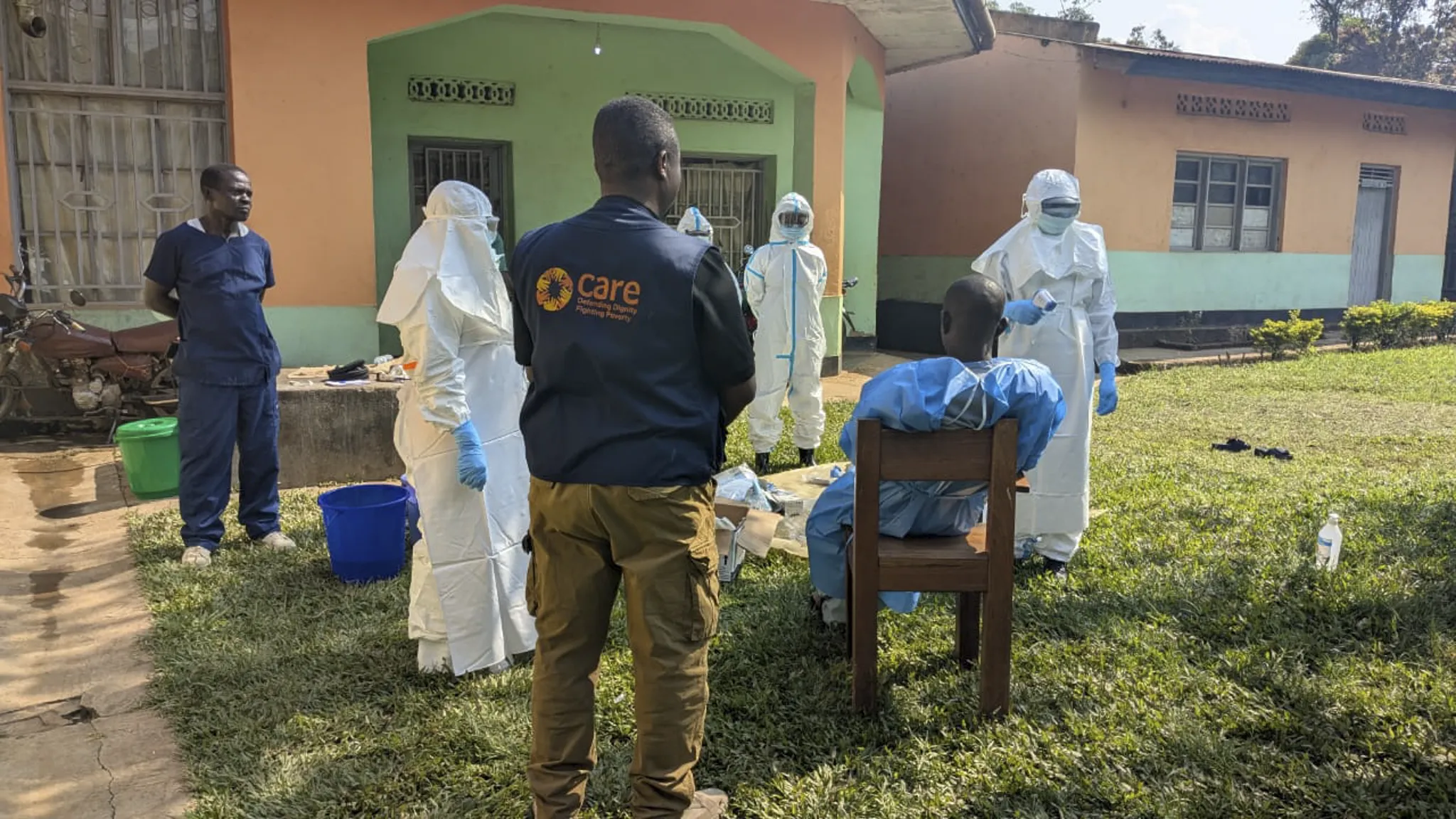
CARE health workers in hazmat outfits participate in a training exercise outside a health center with a person pretending to be a patient.
CARE team members and health workers wear personal protective equipment during a training session. Photo: CARE

Since the outbreak was confirmed in May, it has spread faster than any previous Ebola outbreak. It is now the second-largest Ebola outbreak ever recorded. Nearly all cases are in the DRC, with confirmed cases now growing closer to 10,000 and more than 4,400 deaths.

Compounding issues in the DRC have made the disease hard to contain. Funding cuts have weakened the health systems throughout the region. Medical supplies are limited or not available. Poor road infrastructure and heavy rains have complicated efforts to access remote communities. And misinformation about the disease has been widely shared, making it harder to trace and prevent new infections.

Despite these challenges, CARE staff in the DRC have worked with local officials and partners since the outbreak began. CARE has trained more than 500 community health workers, deployed outreach teams door to door to share preventive messaging, and provided support and supplies to health centers.

CARE’s efforts have reached more than 210,000 people, but more help is needed. Women and girls face particular risk because they often serve as the primary caregivers for sick family members. During the 2018-2020 outbreak, women and girls accounted for more than half of the cases. Reporting this summer showed that women and girls make up more than half of the cases in the current outbreak. The United Nations also reports that maternal deaths in Ituri province have almost doubled since the outbreak began, as fear of Ebola is preventing people from seeking medical care.

CARE is calling for an immediate increase in financial and technical support to respond to the outbreak in the DRC and stop it from spreading further.


CARE started working in the DRC in 1979. Before 1998, CARE supported Rwandan refugees who had fled to the country. CARE returned in 2002 to help people affected by the country’s long-standing conflict.

CARE’s programs in the DRC focus on humanitarian response, women’s economic empowerment, reproductive health, food and nutrition security, environment, resilience, and the right to a life free from violence.

Back to Top