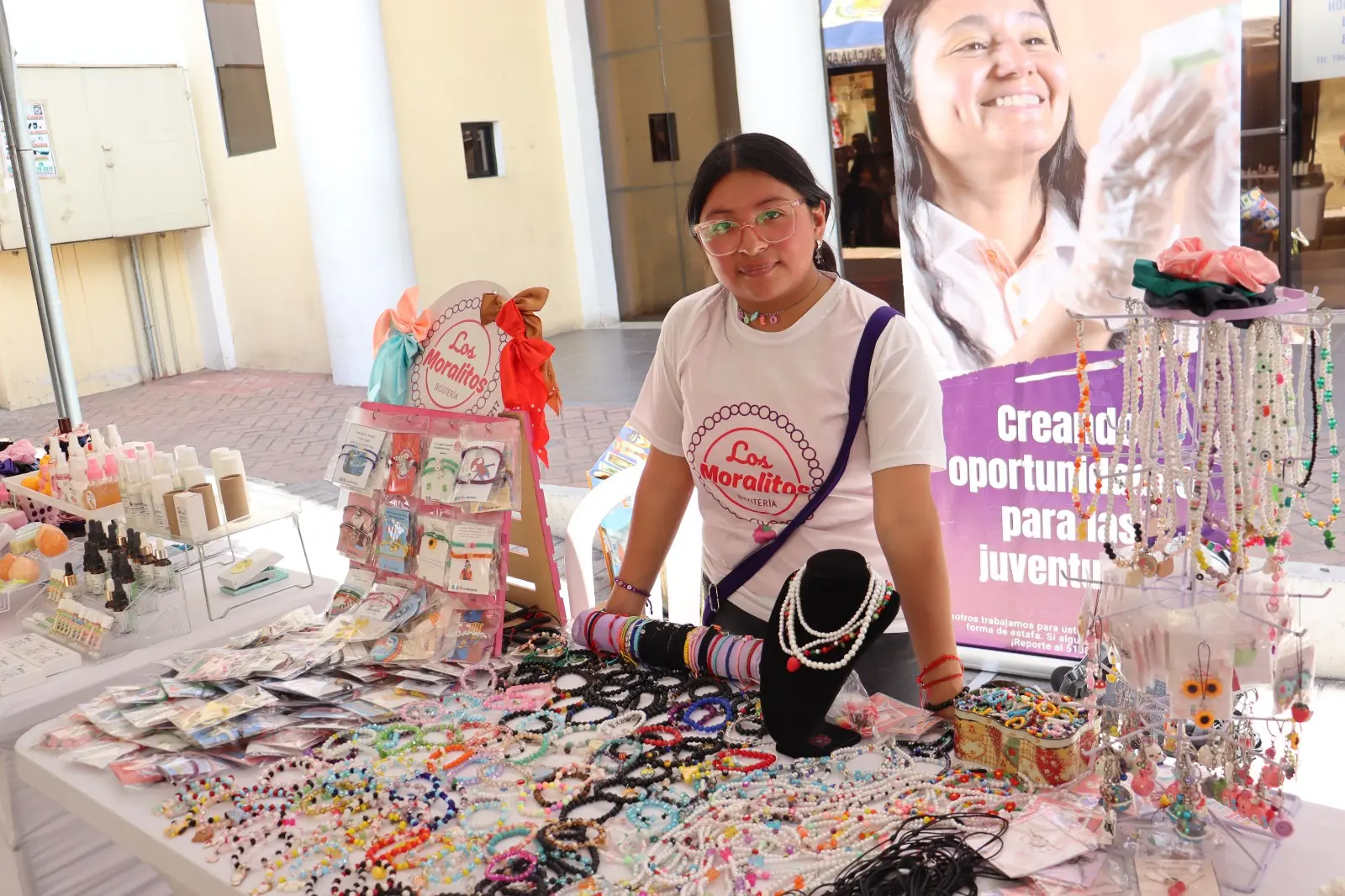
Denisse Litzy Morales is a vibrant, artistic 21-year-old living in Guatemala. From her pastel-beaded necklace to her array of charm bracelets, colorful adornments surround her.
And she made them all herself.
As a designer, Denisse specializes in costume jewelry and fashion accessories. She crafts bright, multicolored necklaces, bracelets, rings, earrings, and more. All are handmade in a modern, trendy style that would have Taylor Swift fans lining up with cash in hand. She says she only has one simple goal for her work: “To create and sell a unique product.”
To that end, Denisse launched her own business, Los Moralitos Costume Jewelry. She had the vision, creativity, and talent to make the jewelry, but making money was a challenge. Because she wasn’t keeping track of her expenses or production costs, she didn’t know what to charge for each of her unique creations.
Without access to the business training and financial education she needed, “I didn’t have the necessary information to organize my venture,” she says.
Young people around the world, face similar struggles. They have vision and talent, and they are willing to work hard. But obstacles like poverty, conflict, and limited access to training and education limit their opportunities to succeed.
They want to work and provide for themselves and their families, but they lack opportunities for job training, mentoring, and networking.
Globally, an estimated 262 million young people ages 15-24 are not in employment, education, or training. According to the UN, by 2050, 69% of the world’s youth will be living in low and lower-middle-income countries.
These statistics are not just numbers. They represent millions of young people whose ambitions, skills, and potential remain disconnected from opportunity, and millions of communities missing out on what they could contribute. These barriers can limit lifetime earnings, put strain on families, and hold back economies that depend on young people’s ideas, skills, and leadership.
But there’s hope.
The International Labour Organization and the World Bank Group reviewed youth training and employment programs across 62 countries and found they consistently improved employment and earnings outcomes for participants. The findings were particularly strong in low and middle-income countries and for young women and disadvantaged youth.
Through programs like “Creating Opportunities for Youth” in Guatemala, CARE is working to help young people, like Denisse, access the education and gain the skills they need to thrive.
From rural Nepal to conflict-affected communities in Somalia to youth entrepreneurs in Central America, CARE works with governments, local partners, and communities to help young people turn education and training into opportunities to earn a living.