"I can go out at night without fear." How solar lights are changing life for women in a Somali displacement camp

By Lul Ali and Pauline Hurungudo September 24, 2026

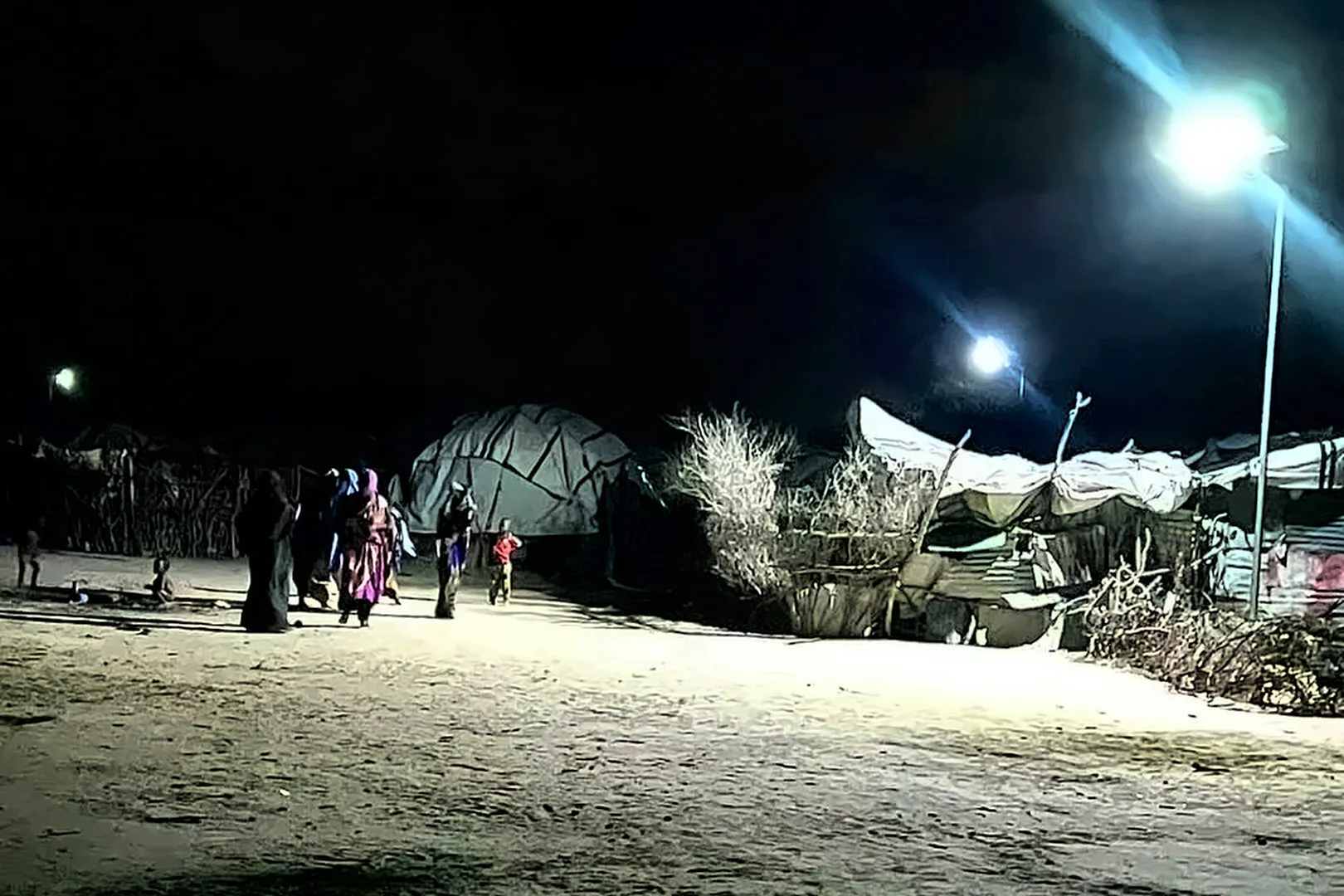
Women and children walk at night, lit by three streetlights above tarpaulin shelters.

Residents cross Daryel camp after dark. Before the solar lights, many families stayed close to home once night fell. All photos:

Sunset once determined when Kusey Ali Abdi could collect water, use communal facilities, or leave her home at Daryel displacement camp in Somalia. Now, four solar streetlights are helping women and families move around more comfortably after dark and take part in community life.

As the sun sets over Daryel camp in Somalia’s Lower Juba region, Kusey Ali Abdi is no longer forced to plan every task around available daylight.

Kusey, a mother of seven, came to Daryel after conflict and insecurity forced her family from Marka in southwest Somalia. Her family depended primarily on farming, but armed groups took control of their farmland, leaving them without a safe means of sustaining themselves. The family eventually fled their home and sought safety and humanitarian assistance in Daryel.

Kusey spends much of her day caring for her children, preparing meals, and making sure they can attend school. But after sunset, even ordinary tasks became harder.

Daryel camp is home to approximately 2,200 people. Families previously relied on moonlight and small torches to navigate the camp’s narrow pathways. Many stayed close to home once darkness fell. Kusey remembers waiting until sunrise to collect water rather than walking alone at night.

“We avoided moving outside at night,” she says. “Even simple tasks like going to the communal latrine or fetching water felt unsafe.”
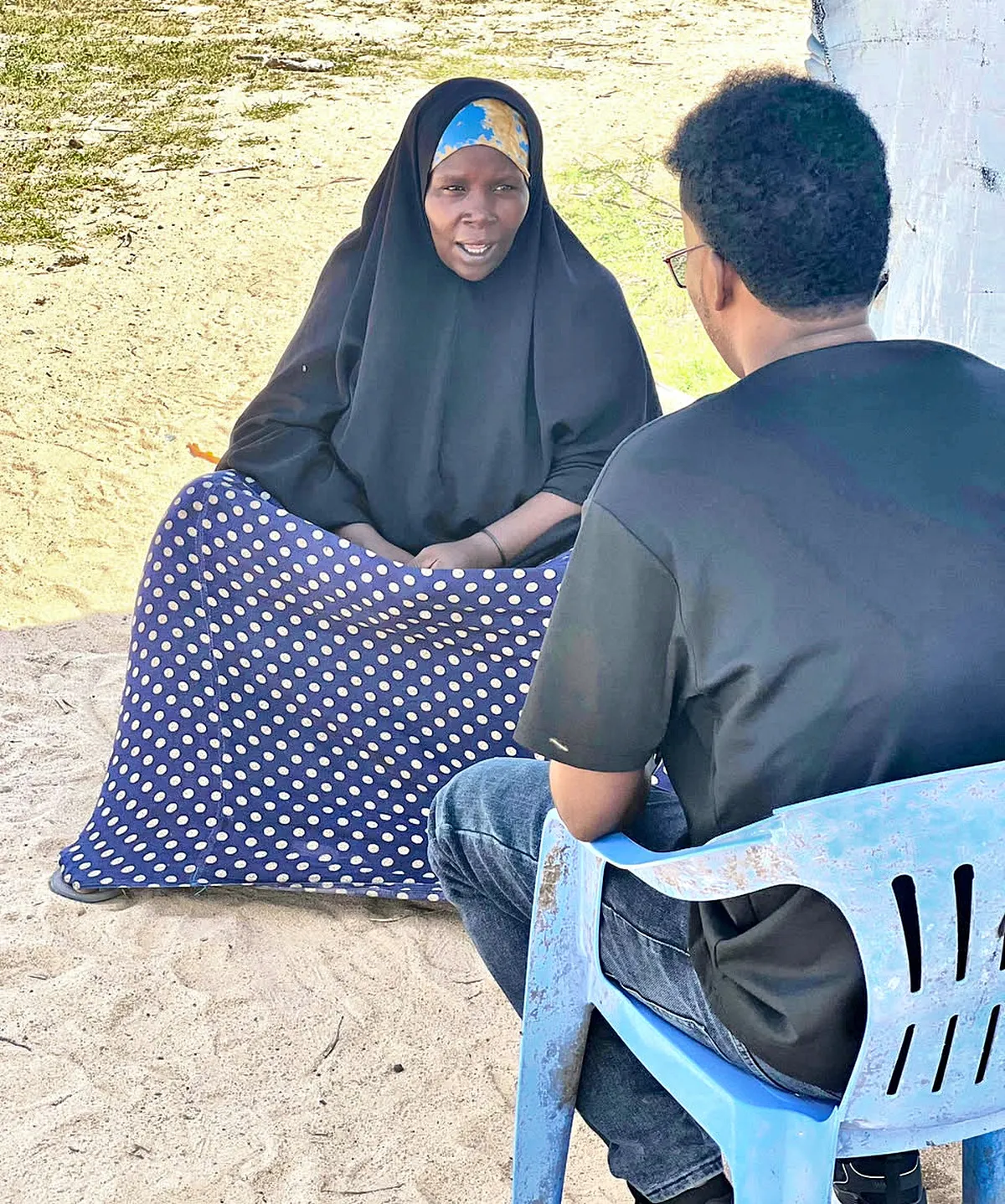
Women helped identify where light was needed most

A woman in a dark hijab sits on a patterned mat, speaking to a man seated opposite her in a plastic chair.
Kusey Ali Abdi describes what changed after dark to Sahal, a CARE psychosocial support counsellor, at Daryel camp.

That began to change when solar streetlights were installed along pathways and near water points, sanitation facilities, and community spaces. Women, girls, community leaders, other residents, and the Jubaland Commission for Refugees and Internally Displaced Persons (JUCRI) were all consulted about poorly lit areas and the places people most needed to reach after sunset. Their concerns helped determine where the lights were placed.

The lights have been operating for about two months, but for Kusey, the difference was immediately noticeable.

“Now, I can go out at night without fear,” she says. “I can collect water when it is less crowded, and I attend meetings with other women in the community. The lights have given us freedom we didn’t have before.”

Community members also reported feeling more comfortable moving around Daryel at night. Women and girls said they were better able to fetch water, reach latrines, attend community meetings, and participate in other activities after sunset.

What light can and can’t fix

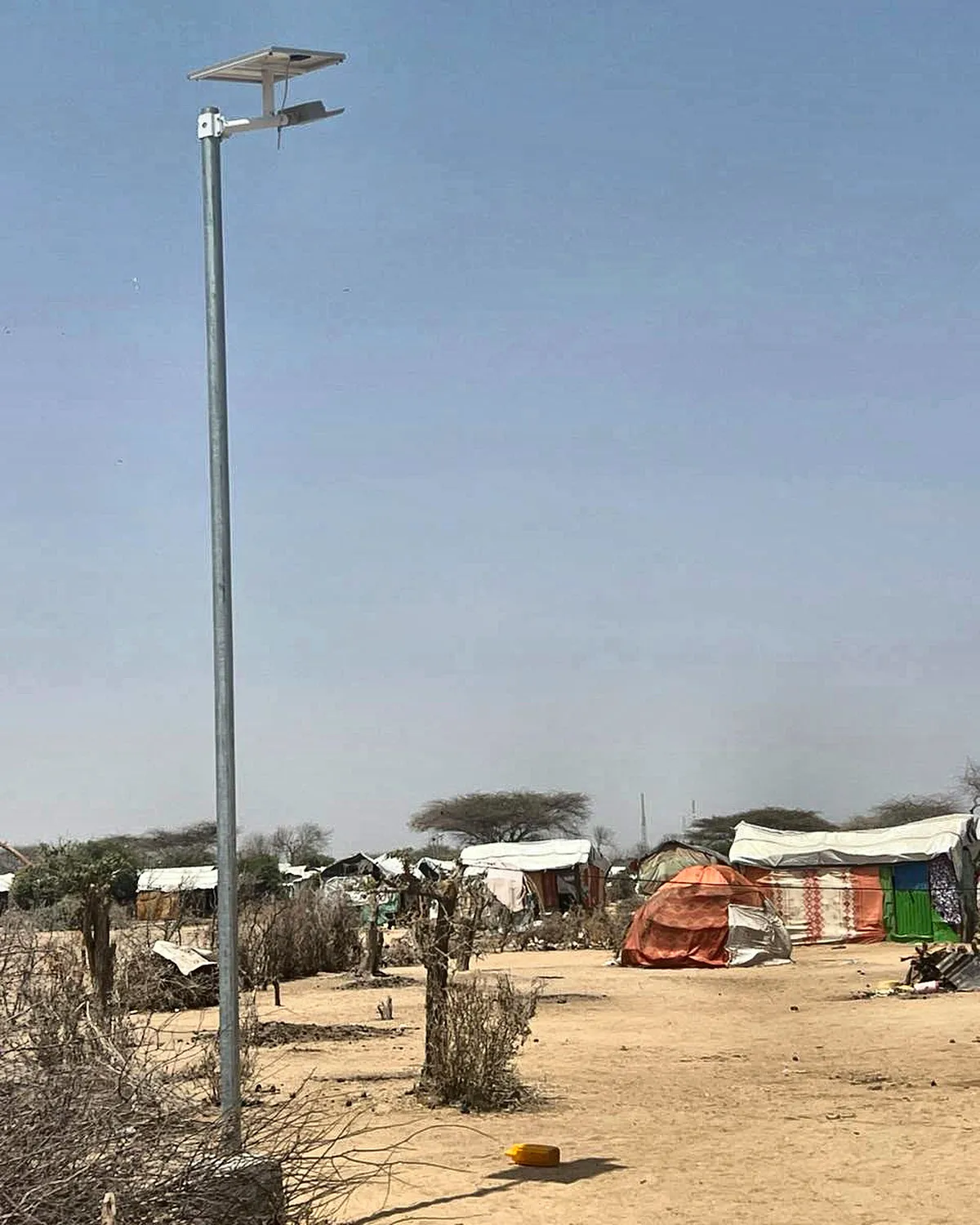
A tall streetlight with a solar panel and lamp at the top stands in sandy ground in front of tarpaulin shelters.
One of four solar streetlights at Daryel camp in Lower Juba. Residents helped choose where each light would go.

For women and girls, better lighting can be especially important. Before the streetlights were installed, residents said that limited lighting was a major protection concern, particularly for women and girls moving through the camp at night. Community members worried about potential theft, harassment, violence, and other risks in poorly lit areas.

Lighting cannot eliminate all of those risks. But better visibility can make frequently used routes easier to navigate and reduce one barrier that limits when people feel comfortable reaching essential services or participating in community life.

Residents say the difference extends beyond individual errands. Children play outside beneath the lights. Women gather nearby to talk and share news. Neighbors spend more time outdoors instead of retreating indoors as soon as daylight disappears.

For Kusey, one of the simplest changes is also one of the most meaningful: she can watch her children play outside in the evening.

A small intervention within a much larger crisis

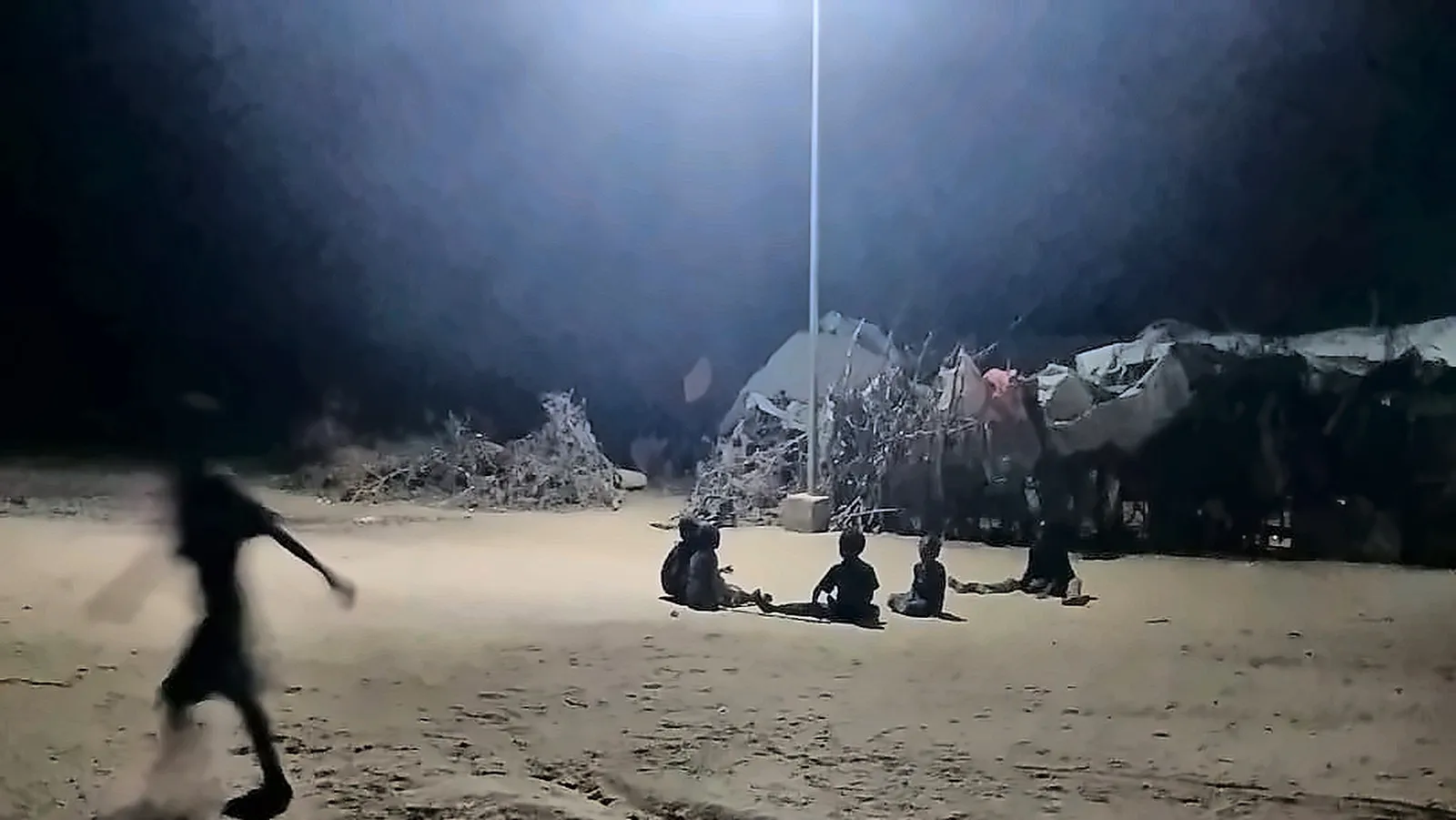
Children sit together on the ground in the pool of light from a streetlight. Another child runs past in the foreground.
Children gather beneath one of Daryel's four solar streetlights. Residents say children now play outside after dark.

The changes in Daryel are taking place within one of the world’s most complex displacement situations, with people continuing to flee their homes because of conflict and insecurity, drought, flooding, and the loss of livelihoods. In the first three months of 2026, more than 511,000 internal displacements were recorded across the country, according to the UNHCR. Women and children accounted for about 85% of those displaced.

For families living in displacement sites like Daryel, daily life often depends on shared infrastructure: water points, latrines, pathways, and communal spaces.

The four solar streetlights are designed to make some of those spaces more accessible after dark.

The intervention is part of CARE’s French Ministry of Foreign Affairs-funded project, Integrated Support through Protection and Resilience Action for Crisis-Affected and Displaced Communities in Lower Juba, Somalia. CARE worked with JUCRI and community members to identify priority locations for the lights.

After installation, CARE formally handed the lights over to camp management leaders, who oversee their day-to-day condition and use. If a light develops a technical problem, residents can report it to camp leaders, who coordinate with JUCRI on repairs or replacement.

The lights are community infrastructure intended to benefit Daryel’s wider population, with particular relevance for women, girls, children, older people, and others who need to move around the settlement after dark.

Four streetlights cannot address the circumstances that displaced Kusey’s family, or the many challenges families in Daryel continue to face, but for now, darkness no longer dictates quite as much of their days.


Since 1981, CARE has worked in Somalia to provide lifesaving humanitarian assistance and support communities facing conflict, displacement, drought, hunger, and other crises.

Today, CARE works with local partners and communities, including in Puntland and Somaliland, to improve access to health and nutrition services, clean water and sanitation, food and cash assistance, education, and economic opportunities. CARE also supports communities to strengthen livelihoods and prepare for and recover from emergencies, with a special focus on the needs of women and girls.

Help families access lifesaving healthcare.

CARE works with local communities to strengthen health systems, train frontline health workers, and ensure families can access the care they need before, during, and after emergencies.

Donate now.
Back to Top