
From local buy-in to local ownership: What we’re learning about building stronger sanitation systems in Zambia

By CARE Zambia and the CARE Water+ Team October 2, 2026

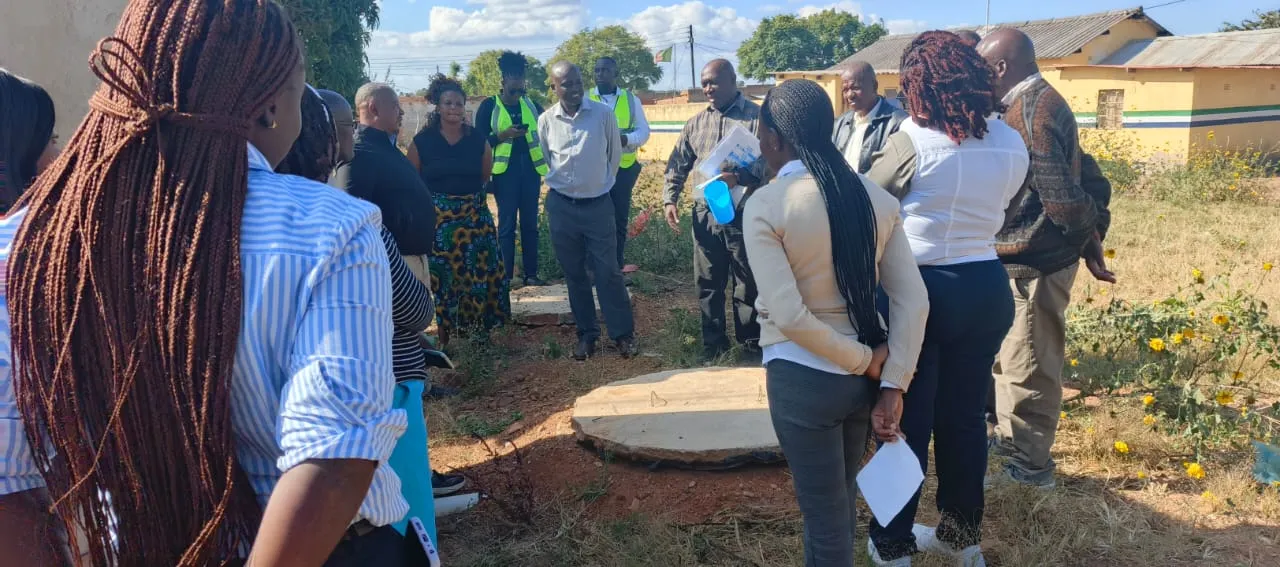
A group of people visiting a WASH program in the field.

Monze’s DWASHE Committee makes a field visit to Chisekesi to learn firsthand about the Latrine Business Owner’s (LBO) product offering and process. Photo: CARE.

A simple test for any sanitation program: if the funding stopped today, would the district government, the water utility, and local businesses keep it running?

The partnership between CARE, iDE, and IDinsight shares one ambition: to explore whether a lean market-based sanitation (MBS) model can ultimately be delivered, financed, and sustained by local actors themselves, as part of Zambia’s strategy to reach universal sanitation by 2030. As CARE has explored pathways to sustainable scale over the past several years, our focus has increasingly shifted – from government participating in something CARE and partners lead, toward government owning both the intervention and the systems that sustain sanitation gains over time.

Development efforts often treat government “buy-in” as the finish line: if key stakeholders endorse an intervention, the job is considered done. But endorsement and ownership aren’t the same thing – governments often support interventions they can’t or won’t uphold on their own. The more useful indicator isn’t whether the government supports the work; it’s whether development partners are supporting local stakeholders – including government, utilities, businesses, and communities – to play their roles effectively and strengthen the sanitation system together, in a way that will hold up without us.

That framing tracks with the Water+ Team’s own experience and the wider evidence on what helps interventions scale under real ownership. In a 2018 essay, former Water+ Team Director Peter Lochery described CARE’s role as most impactful when we “shifted from implementer to influencer,” leaving ownership with government rather than holding onto it ourselves. A recent Spring Impact report on scaling with government reinforces the point: models are far more likely to scale when they respond to the questions government itself is asking, and are co-created with them, not when they’re handed over ready-made.

As our Zambia MBS partnership unfolds, one question has remained central: what would it take for local government and other system actors to not just support an MBS model, but to lead it – and keep leading it long after external support ends? We’re keeping three things top of mind as we work to answer that question: harnessing existing systems, defining clear roles, and building ownership not just partnership.
Working through existing systems, not around them

The Water+ Team has long worked to strengthen the capacities of local actors as the central node of our work, with a particular focus on existing institutional mechanisms. This way of working has provided an important foundation, but our MBS pilot is pushing us further, toward a sharper definition of what ownership actually requires: not local actors participating in or supporting an approach, but their ability to shape, adapt, and sustain it according to their own priorities, capacities, and resources. It’s hard: it takes a more unpredictable timeline, requires that development partners answer to local actors’ priorities and not just our own, and calls for a more nuanced measure of success in addition to counting toilets built.

In the MBS pilot, that means leaning on three structures Zambia already has, rather than creating parallel ones.

The first is the District Water, Sanitation, and Hygiene Education Committee (DWASHE), led by district government and responsible for the district coordination system around WASH. Engaging district stakeholders has meant working through the existing DWASHE committee, rather than creating a project-specific structure. We began with a DWASHE coordination meeting in Monze District, where CARE, iDE, and IDinsight introduced MBS and solicited feedback from local system actors on whether it could help address the district’s priorities around rural sanitation. Rather than positioning MBS as a standalone project, the conversation then focused on how it could build on systems already in motion; local government and the local water and sanitation utility (Southern Water and Sanitation Company, or SWSC) identified their own roles, assets, and action items. That engagement has since moved beyond the meeting room: in May 2026, DWASHE members convened their monthly meeting in Chisekesi to speak directly with a local sanitation business owner trained by iDE, and work through operational challenges firsthand – a visit that has already generated a list of next steps that DWASHE members, not CARE, will lead.

The second is local financing. We’re linking MBS to financial mechanisms local government already enables or owns: Savings Groups (VSLAs), which district and provincial governments already establish and train, and which give households a channel to finance sanitation improvements; and Constituency Development Funds (CDF), public funds distributed through local government that support community development and can grant or lend to eligible local groups and businesses. Successfully leveraging these channels would be a measurable sign of progress: it shows local actors putting their own money behind the work, not just their attention.

The third is SWSC. Achieving rural sanitation is part of SWSC’s newly revised mandate, per Zambia’s national policy. But SWSC works primarily with urban and peri-urban customers and has few existing models for how commercial utilities can support rural households to install, maintain, or upgrade unsewered household toilets. Our partnership is helping SWSC to test and cost a viable MBS model that SWSC can lead to strengthen supply and uptake of rural sanitation services, and better fulfill their mandate.

DWASHE, local financing, and SWSC are all institutions Zambia already has; our job is to connect MBS to them, not build something new beside them.

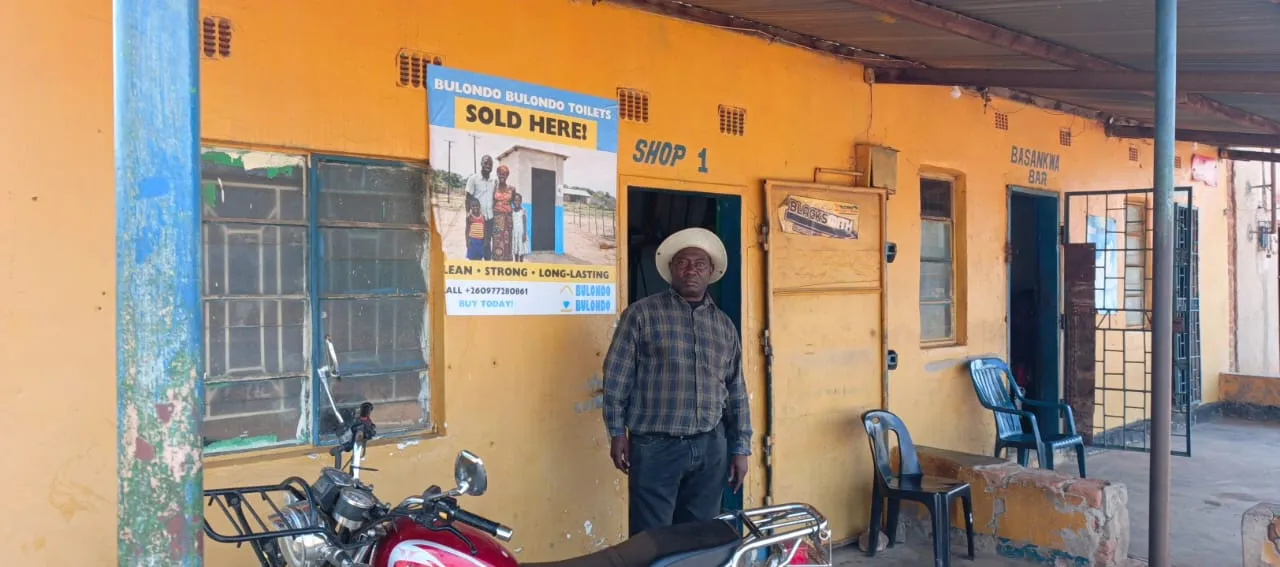
An individual stands in front of a storefront bearing a poster offering Bulondo Bulondo Latrines.
Bulondo Bulondo Latrine Business Owner (LBO) in Chisekesi prepares for the visit of the Monze DWASHE Committee. Photo: CARE.

Defining roles for sanitation, not just affirming ‘buy-in’

Concrete commitments have followed. In our work together to date, stakeholders have identified ways to promote sanitation products through agricultural events, traditional ceremonies, schools, churches, and community networks. Local government has committed to folding MBS into routine DWASHE meetings and monitoring. SWSC has agreed to provide technical guidance on sanitation standards. Each commitment connects entrepreneurs to a wider ecosystem – rather than treating them as isolated service providers – that can help create demand and strengthen quality, regulation, and growth.

We recognize that these are commitments, not yet habits, and that the gap between the two is often one of coordination and accountability rather than policy. By local stakeholders’ own account, Zambia already has strong sanitation policies; what’s missing is consistent implementation, monitoring, and follow-through at the local level. DWASHE convenes people well; whether it can also hold members to account, month to month, once facilitation fades, is the open question this pilot still has to answer.

That’s why we’re trying to go beyond naming commitments and toward defining roles explicitly, as early as possible. Rather than waiting to see who steps up once a project ends, we will be working with SWSC and local government in the coming months to map which specific pieces of the MBS model and surrounding system – related to demand generation, supply development, entrepreneurial support, technical standards, financing, and monitoring, for instance – each actor is best placed to carry forward, so those assumptions can be tracked and tested rather than taken on faith.

Helping local actors define their roles has meant revisiting our own – part of the same shift Peter Lochery described in his 2018 essay. Rather than being the organization that delivers or invents the solution, we know our focus needs to shift to facilitating partnerships and strengthening the capacities of government, utilities, communities, and private-sector actors to lead system-level problem-solving. That role isn’t passive: it means recognizing where the gaps are – in capacity, coordination, or finance – and helping mobilize the expertise to close them, so local actors can reach objectives they already share.

This raises a genuinely open question we’re still working through, in Zambia and beyond: how does a development organization help strengthen a system without becoming a permanent part of it? We don’t have a full answer yet. What’s become clear so far is that change hasn’t come from getting local actors to adopt CARE’s solutions. It comes from local actors testing and adapting models that work within their own constraints, and from strengthening their ability to play their own roles more effectively within systems they will continue to lead long after we’ve stepped back.

Looking beyond outputs to ownership

We think the real measure of sustainable scale is not just how far a model spreads on its own, but whether the institutions, relationships, and processes behind it are robust and enduring. A useful test: if the project ended today, would local system actors still have the authority, incentive, resources, and commitment to keep leading?

Tracking this requires nuanced metrics and new indicators, which we’re working on developing. But we know that over the course of the pilot, a few concrete, if modest, signs will tell us whether we’re moving in the right direction: local government committing its own budget and staff time, not just attention; system actors leading their own next steps rather than waiting for us to propose them; and existing local financing structures – like VSLAs and CDF – actually being drawn on to finance sanitation, rather than remaining relatively untapped.

Reflecting on insights from Spring Impact research, we think that scalability won’t be based on whether Monze hosted this model while we were here, or how many toilets are installed and upgraded this year. It will be based on whether the MBS model answers the questions Monze District and local actors actually have about achieving rural sanitation at scale. Ultimately, the measure of success will be whether the coordination holds, the financing starts to shift, and local actors and institutions hold each other accountable for sustaining gains through the systems they lead – long after development partners are gone.

Back to Top