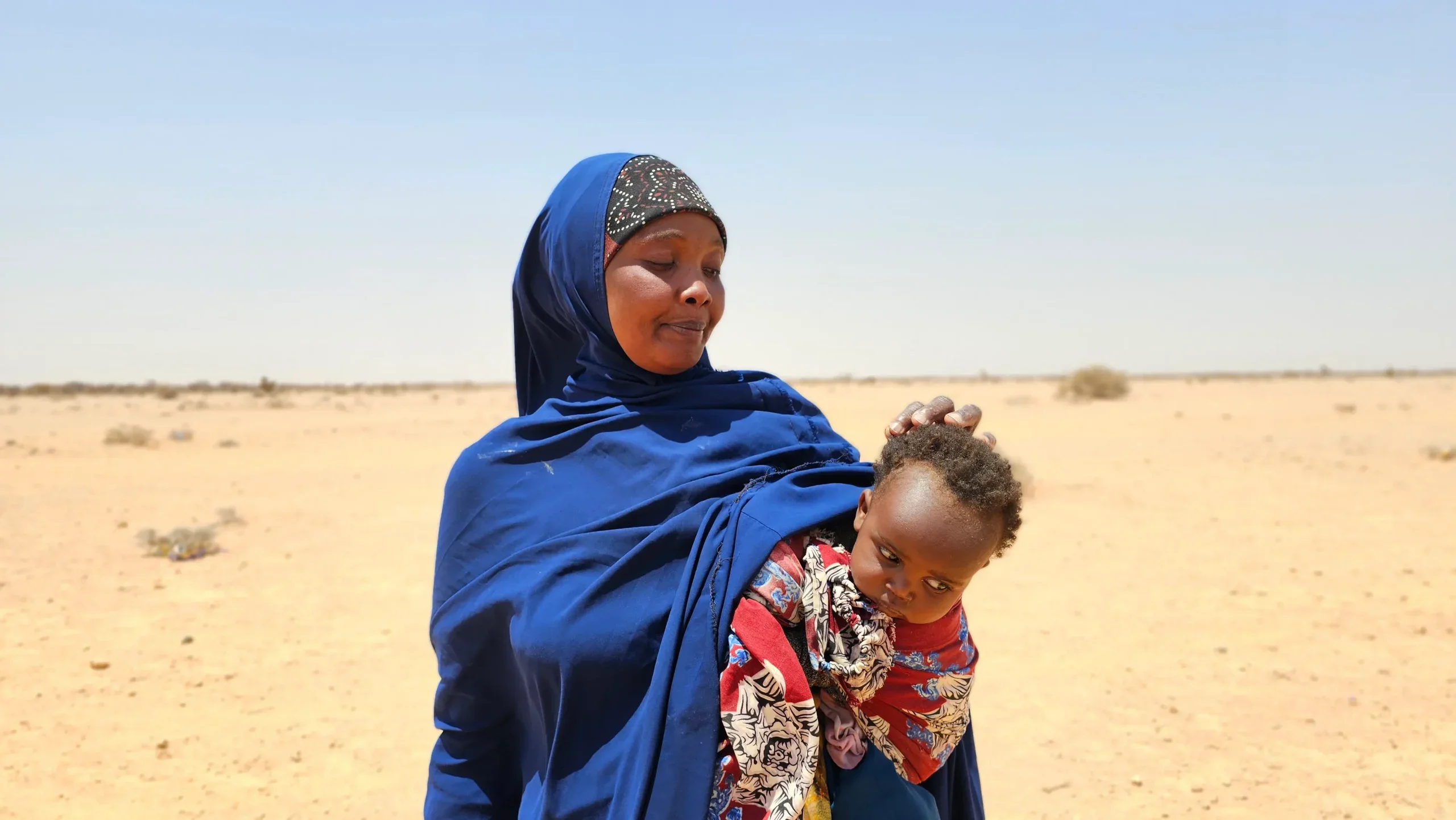
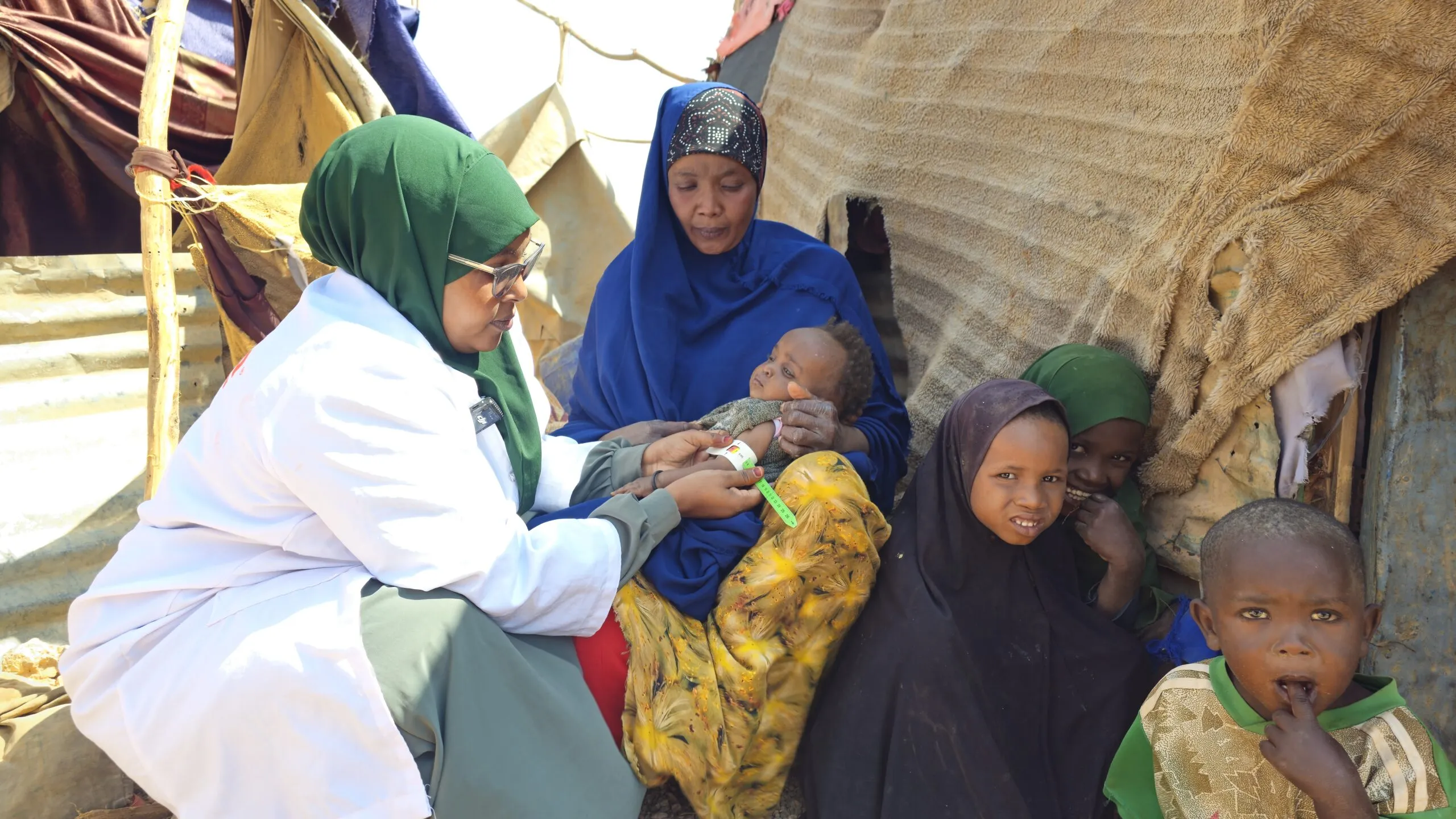
The settlement where Aisha and her children live is home to around 30 displaced households. Most of the structures are made from corrugated iron sheets, sticks, and torn cloth.
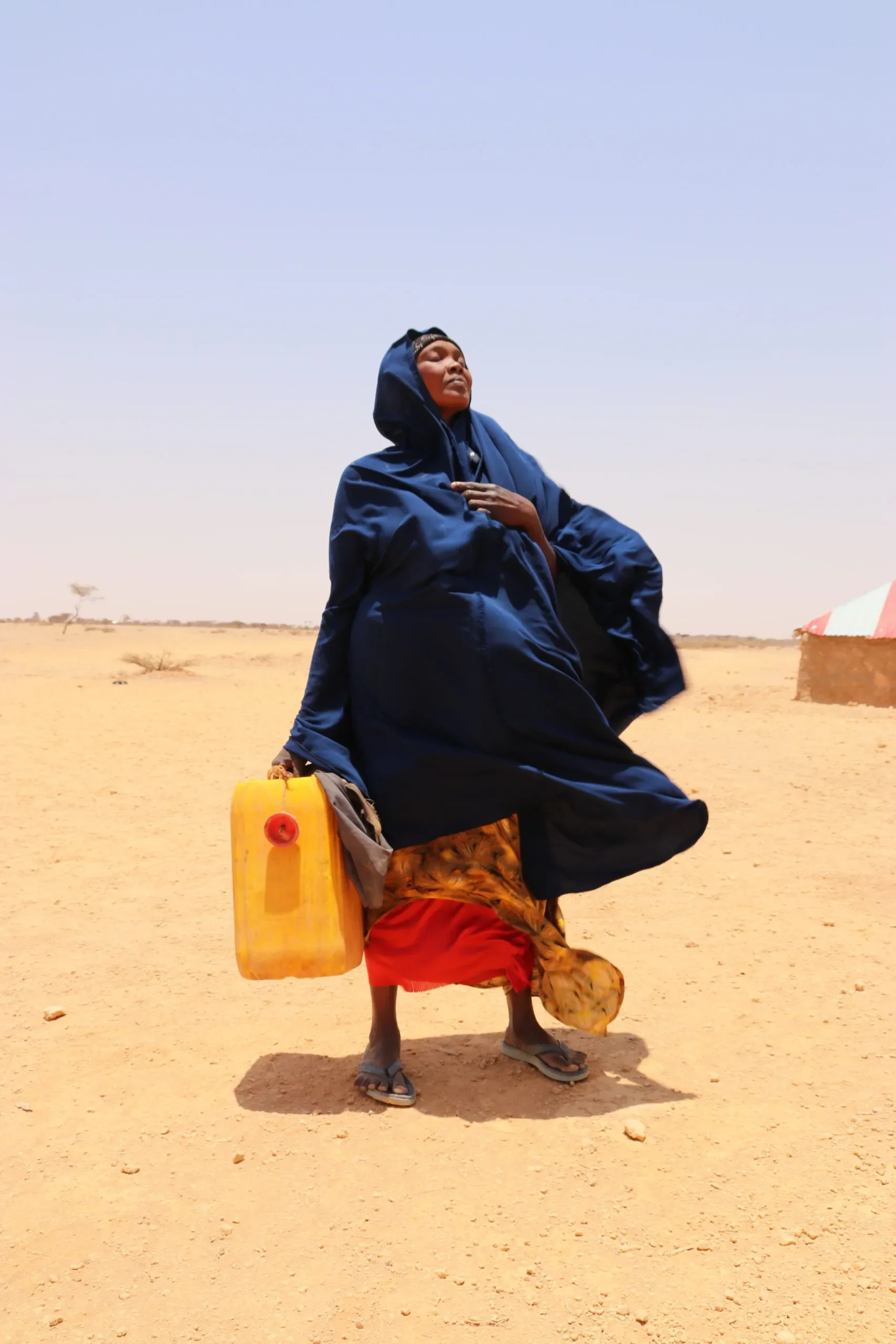
The wind here is fierce. It shreds the cloth walls throughout the camp until only a few strips remain, whipping in the air. There are no trees, no bushes, and no solid walls to act as windbreaks.
“We fear the wind here. It destroys everything that we have left,” Aisha tells us. “We have nothing, and the wind takes even that.”
Her journey to this camp began years ago. Aisha once lived in south-central Somalia, where armed groups killed her husband. His death left the family without its primary source of income. Aisha fled with her children to Bosasso.
“One day, we heard several gunshots very close to our hut,” Aisha says. “Only cloth and sticks protected us from the bullets flying towards us. The children were screaming. I was so afraid for them.”
The gunfire grew louder. They could hear bullets passing overhead. “We laid down on the floor. I covered the children with my body as well as I could. I was having a panic attack and no hope left. For the first half hour I could not even move and did not dare to check outside what was happening.”
When the shooting paused, Aisha gathered her courage and stepped outside.
“I saw the dead bodies of my neighbors. A mother of three young children. She was pregnant and dead,” Aisha says. “We ran and never returned.”
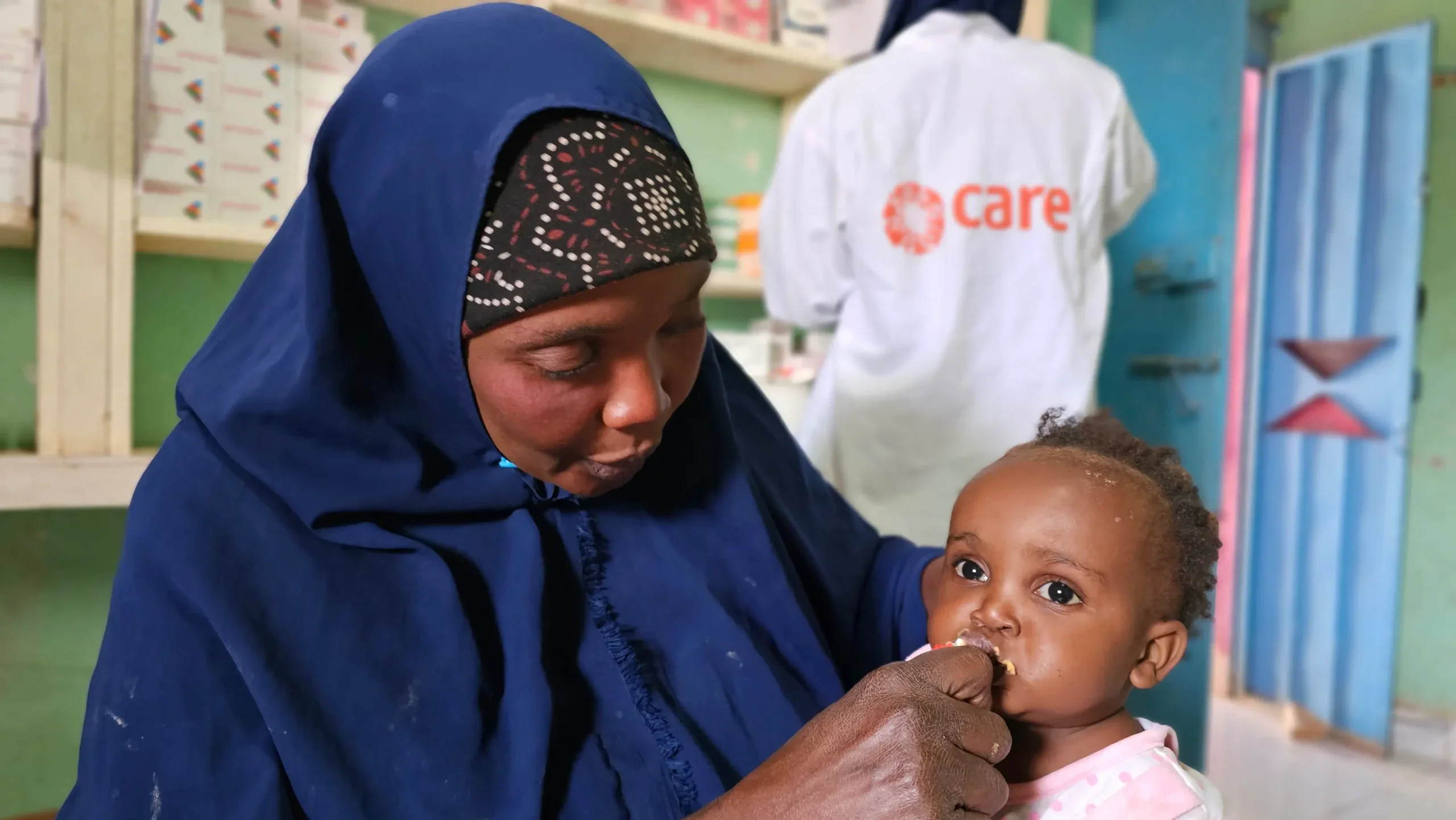
Since then, the family has been living in this camp in Dhahar. The dangers around her have changed, but her role has not. Years ago, she covered her children with her own body to shield them from gunfire. Today, she protects them in quieter ways: making sure they drink first, eat first, and receive care before she attends to her own needs.
The shoeshine boys
Women and children make up almost everyone in Aisha’s camp. There are hardly any boys older than six, because every morning they head to town to try to earn money shining shoes.
At 7 a.m., Aisha’s three boys, aged 11, 9, and 7, walk to Dhahar carrying an old cloth and a little bit of shoe polish. They spend the day waiting in public squares and near restaurants, hoping someone will pay to have their shoes shined. They earn about 10 cents per pair. Together, the boys might earn about $2.50 on a good day — enough to buy rice and a few tomatoes. Sometimes they come home with nothing.
“All boys go. There is no other option if we want to survive. On bad days, we go to sleep when we are hungry and wake up even hungrier,” Aisha says quietly, wiping sand from her face.
“Three or four days a week we don’t eat at all. The children ask me for food, and I tell them we are waiting for their brothers to return with money, but then they often just fall asleep exhausted.”
The children aren’t the only ones exhausted. Hunger is especially concerning for Aisha because she has diabetes. Regular meals are an important part of managing the disease, and going without food can cause dangerous changes in blood sugar.
“They are more important than me”