What did we accomplish?
School attendance increased dramatically across all grade levels in just three months, rising from 55%-69% in April 2026 to 72%-86% by June. Kindergarten attendance increased from 56% to 72%, Basic 1–6 from 55% to 82%, and Junior High School attendance grew from 69% to 86%. Girls attended school at a slightly higher rate than boys — 82.1% compared with 78.5%.
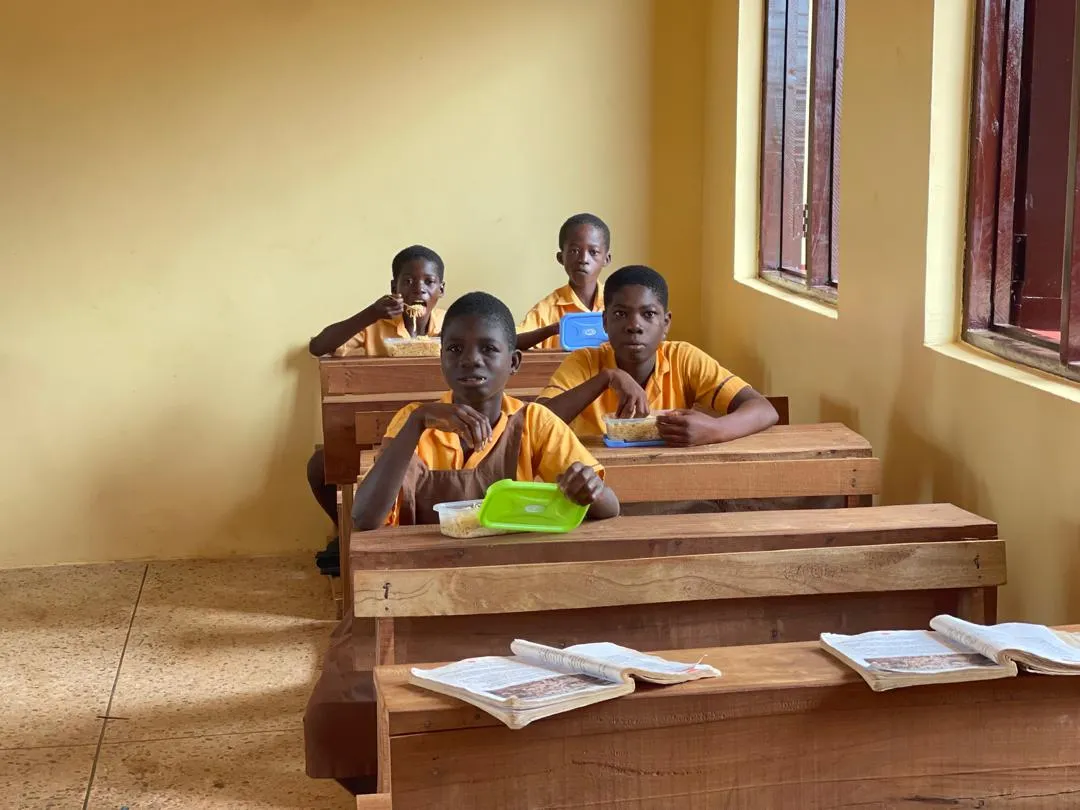
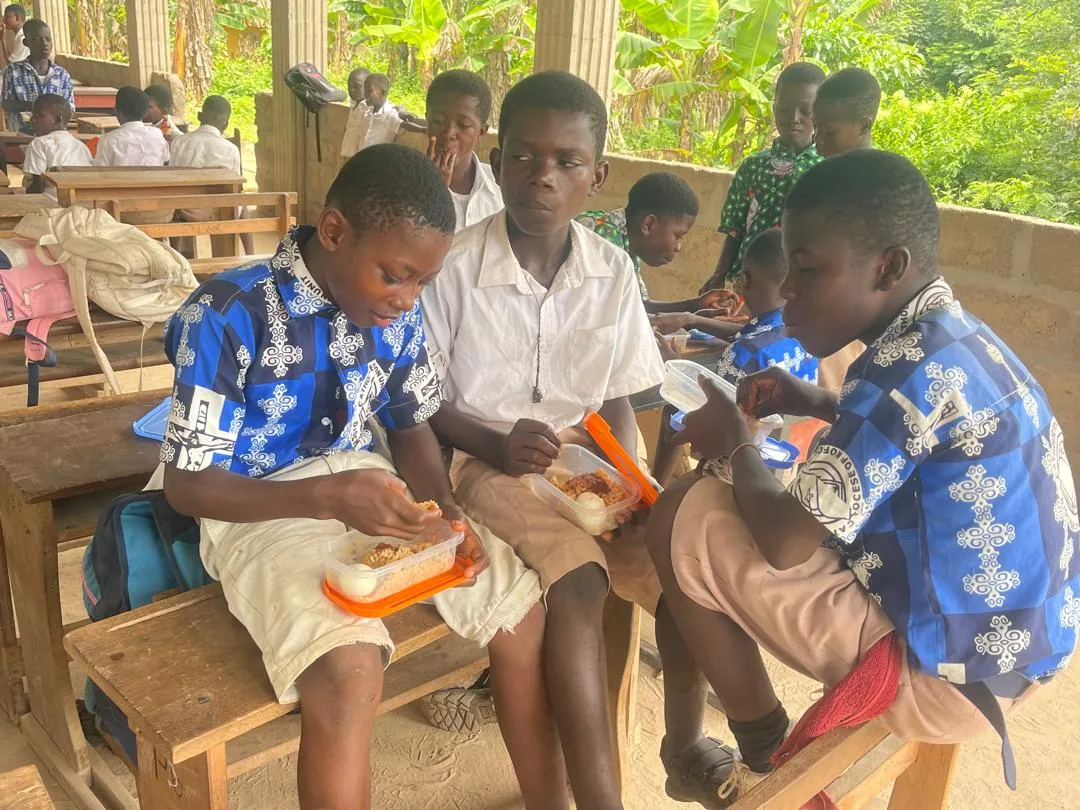
Meals became healthier and more diverse, with every school meal including protein-rich foods by June (up from 17% in May) and more meals containing vegetables, fruit, and safe drinking water. Addition of leafy greens to the meals has more than doubled from 33% to 71%, vitamin A-rich vegetables rose to 43%, and fruits are appearing on menus for the first time. Safe drinking water was available in every participating school by June, up from 67% at baseline.
Food safety improved significantly across participating schools. By June, all school kitchens had water and detergent available, and unsafe food storage practices declined sharply. Availability of detergent rose to 100% from 67% at the baseline. Storage practices improved, with 86% of the kitchens storing food off the floor, compared to 50% at baseline.
The program is helping build stronger local food systems. Daakye set up a school farm that demonstrates regenerative agriculture practices for local farmers and models the production of climate-resilient nutritious crops. Daakye’s partner Gold Coast Nutrition Fund sources food from local farmers, stimulating the production of nutritious crops using regenerative agriculture practices in the Eastern Region. This approach helps channel school feeding investments into local livelihoods while increasing local production of nutritious foods and strengthening farmers’ capacity to withstand environmental shocks.
How did we get there?
Daakye is enabling 2000 children from nine schools in low-income communities to have a nutritious meal waiting for them at school every day, helping reduce barriers to attendance and creating a stronger incentive for families to keep children in class.
Daakye sources food from local farmers, stimulating increased production of nutritious crops and the use of regenerative agriculture practices – serving 202,402 meals between April and June. This approach strengthens local livelihoods, protects the local environment, and reduces carbon footprint, while also improving the quality of school meals.
We helped schools improve food safety and hygiene practices, creating healthier environments where children can eat and learn safely.
We supported schools to set up gardens and one school farm. With support from CARE, schools and communities have started six school gardens to grow food for school meals. Three are complete, and three are halfway built. One school also has a demonstration farm, where local farmers can see regenerative agriculture in practice.
We strengthened local oversight of school meals through daily community-led checks on meal quality and provision, including food safety, handwashing with soap, and ensuring all children get their portions correctly. Daakye is also working with Ghana’s School Feeding Programme district staff, ensuring government engagement and oversight. To enhance sustainability, Daakye conducted scorecards with school communities, supporting parents, school staff and local leaders to identify issues affecting student attendance and meal provision and developing locally led solutions.
Learn more
Learn more about the Daakye School Meals Program and how CARE’s school feeding programs help children come to school ready to read, ready to learn, and ready to thrive.
For more information, contact education.global@care.org