Beyond the pitch: How soccer and Jordan’s first World Cup team is inspiring refugees looking to make a fresh start

By Ryan Bergeron June 26, 2026

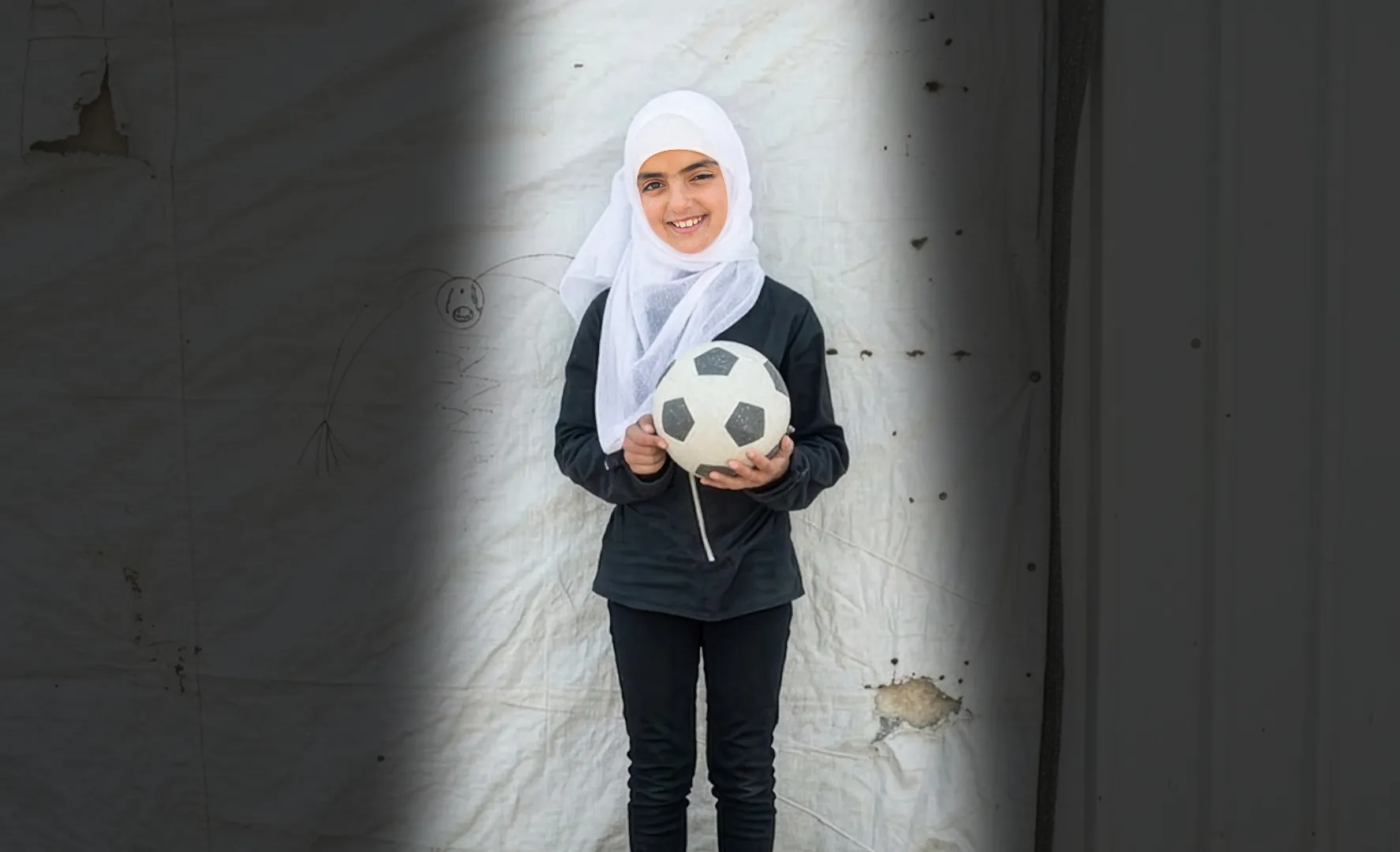
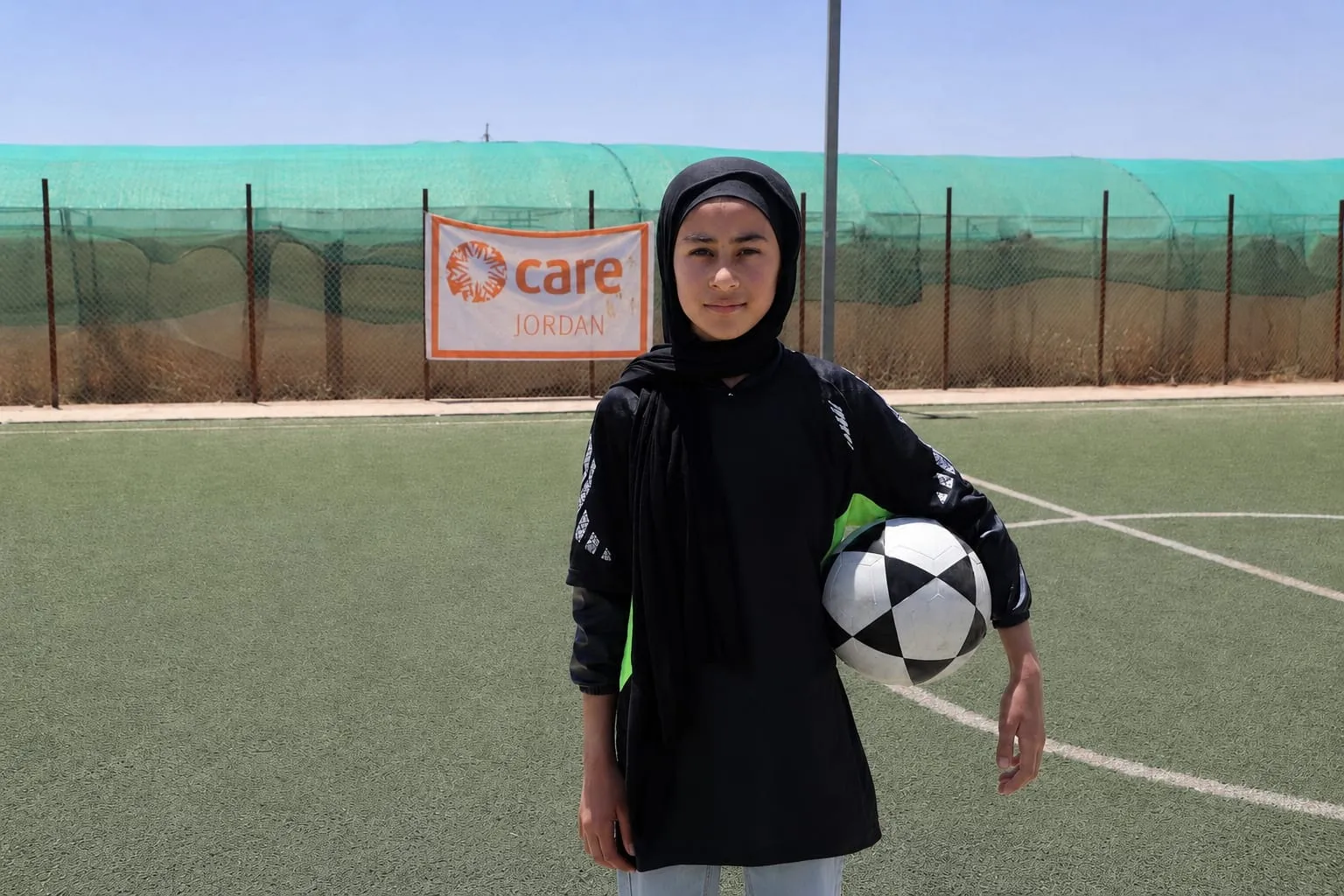
Young girl holding a soccer ball while standing on field.

Norhan is a Syrian refugee who came to Jordan as a toddler and is now part of CARE Jordan's soccer program. Photo: CARE.

Every four years, people around the world unite to celebrate soccer’s greatest event, the World Cup. For Jordanians, the 2026 games mark a historic moment when their team is playing in the tournament for the first time. The occasion is bringing excitement, pride, and hope to people across the country, including refugees who now call it home.

Want more stories like this?

Sign up for the CARE Newsletter to find out more about what’s happening around the world through vibrant, engaging stories that put humanity at the center.

Subscribe

Almost every World Cup team has an official nickname. Australias “The Socceroos, France’s “Les Bleus, Côte d’Ivoire’s “The Elephants,” and Curaçao’s “The Blue Wave.” Even though Jordan is playing in their first-ever World Cup, their fans have given them a nickname as well Al-Nashama 

But it’s not just Jordan’s World Cup team’s nickname. It’s also a term Jordanians use to describe themselves.

In Jordan, “Nashama means bravery, honor, courage, and standing by others during difficult times.

“It’s a nickname that is given to the entire Jordanian population and carries a lot of characteristics to it.” Najati Al Huneidi, CARE Jordan’s program manager explains.  

It’s an important term for many Jordanians who are taking great pride in watching their team, “Al-Nashama,” take to the world stage.

Jordanians are always cheering for international clubs like Barcelona or Real Madrid, but it has never been the case that we cheered for our own national team at a global tournament,” Al Huneidi said.  

“Everyone is happy, everyone is celebrating, said Malek Abdeen, CARE Jordan’s country director.  

Everybody. Even people in the most remote parts of the country, like the inhospitable eastern desert, will be cheering on Jordan’s team. Here, barren terrain stretches for miles, broken up by nothing but rocks, sand, and extreme heat for much of the year. But it’s also a place 35,000 Syrian refugees currently call home, and a place where the spirit of “nashama” runs deep. 
The beautiful game 

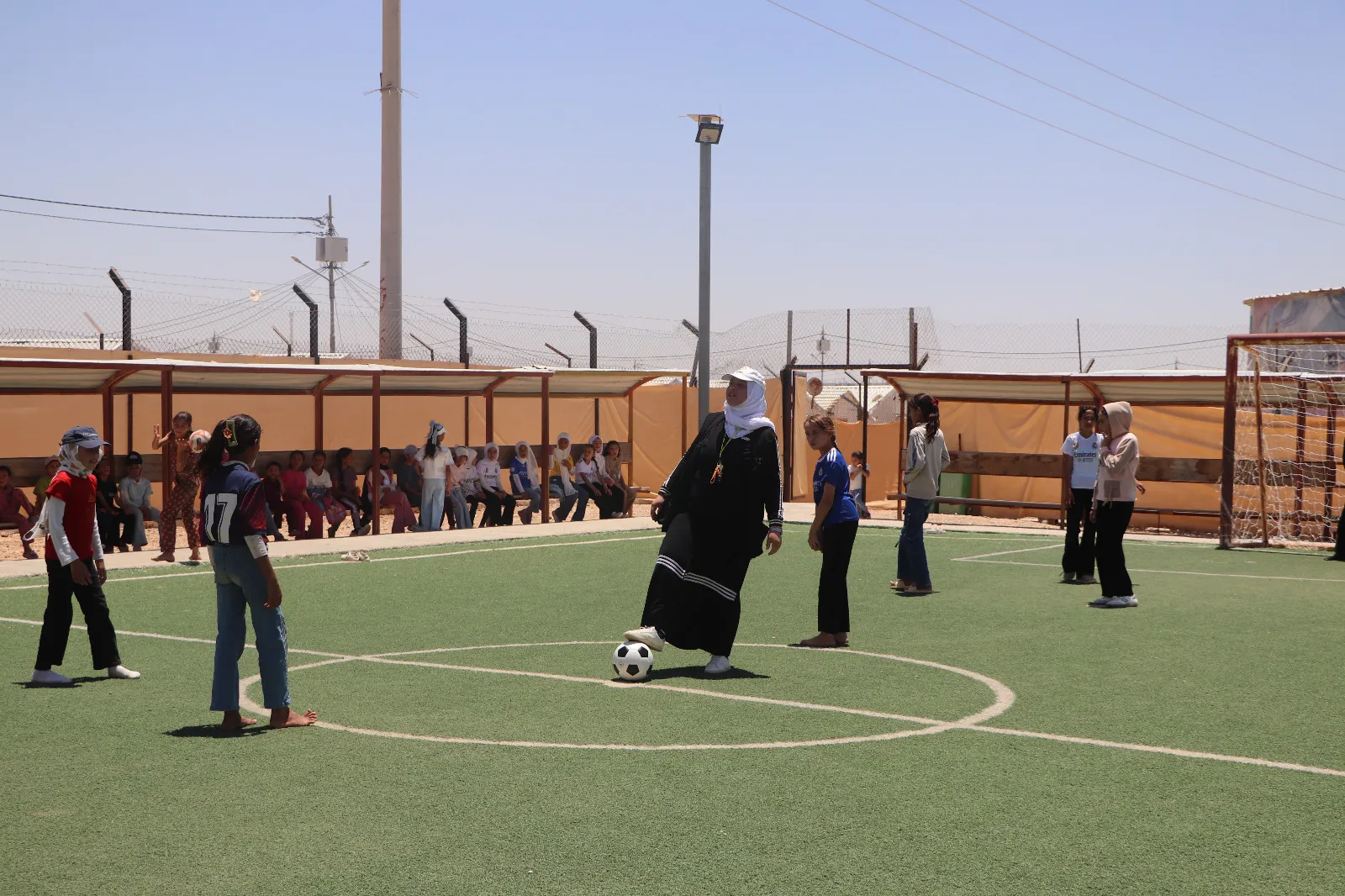
A woman standing in the middle of a soccer field with players around her.
Heba is a Syrian refugee who brought her love of soccer with her to Jordan and is now coaching in CARE Jordan's soccer program. Photo: CARE.

About 50 miles from the Syrian border, that eastern desert region is also home to the Azraq refugee camp. Azraq was founded in 2014 to shelter people fleeing the Syrian Civil War and stretches five and a half miles. The nearest city is almost an hour’s drive away. 

“Whoever decides to stay in this camp is considered one of the most at-risk people in Jordan because they have no other options,” said Abdeen. 

Despite the harsh circumstances, the camp has a special feature that is providing some excitement and hope: a soccer pitch. 

For refugees like Heba Mohammad, soccer is “the bridge” to the life she left behind.

Heba has been playing soccer over half her life. She started playing in Syria at nine years old and quickly discovered it was her “talent and passion.” But in 2015, in the midst of the Syrian civil war, she had to flee her home, leaving nearly everything from her life behind. She was only 13 years old.  

But soccer remained a constant, the thing that kept her moving forward even as her family settled in Azraq. 

“We came here as refugees, and you have to start all over again. It helps you overcome that and put your goals in front of you. It’s a new beginning,” Heba said while speaking with CARE’s Ola Sharif, CARE Jordan’s communications coordinator.

Now 24 years old, Heba helps lead CARE’s soccer program in the Azraq Camp. She’s paid to coach girls who play soccer as part of the Incentive-Based Volunteer program. She says her favorite part about coaching though is the chance to be “helpful and supportive for the girls.” 

During a recent practice, Heba places practice cones up and down the pitch and directs the girls through weaving drills. Despite the heat of the desert sun, the girls are running, laughing, and celebrating together. They’re sharpening their soccer skills through practice, but also strengthening their bonds off the pitch.

Unfortunately, people living in the camps are not allowed to leave the camps [except] under extreme conditions and circumstances with approvals,” Najati Al Huneidi said. Azraq residents can only leave through an official leave permit system. Activities like sports are the “only getaway for them.” 

CARE was the first organization to introduce sports programs at the Azraq Camp, which includes not only soccer, but also basketball, tennis, and volleyball. CARE Jordan says soccer is the most widely played and preferred sport among girls, with about 100 athletes participating, making new friends, and encouraging each other’s dreams.

“We’re all sharing the same goal when we’re playing as a team,” says Norhan, one of the players. 

Heba wants the girls to view the pursuit of their new lives the same way they play soccer.  

“There’s always a goal that you have to pursue.” 

The golden goal  

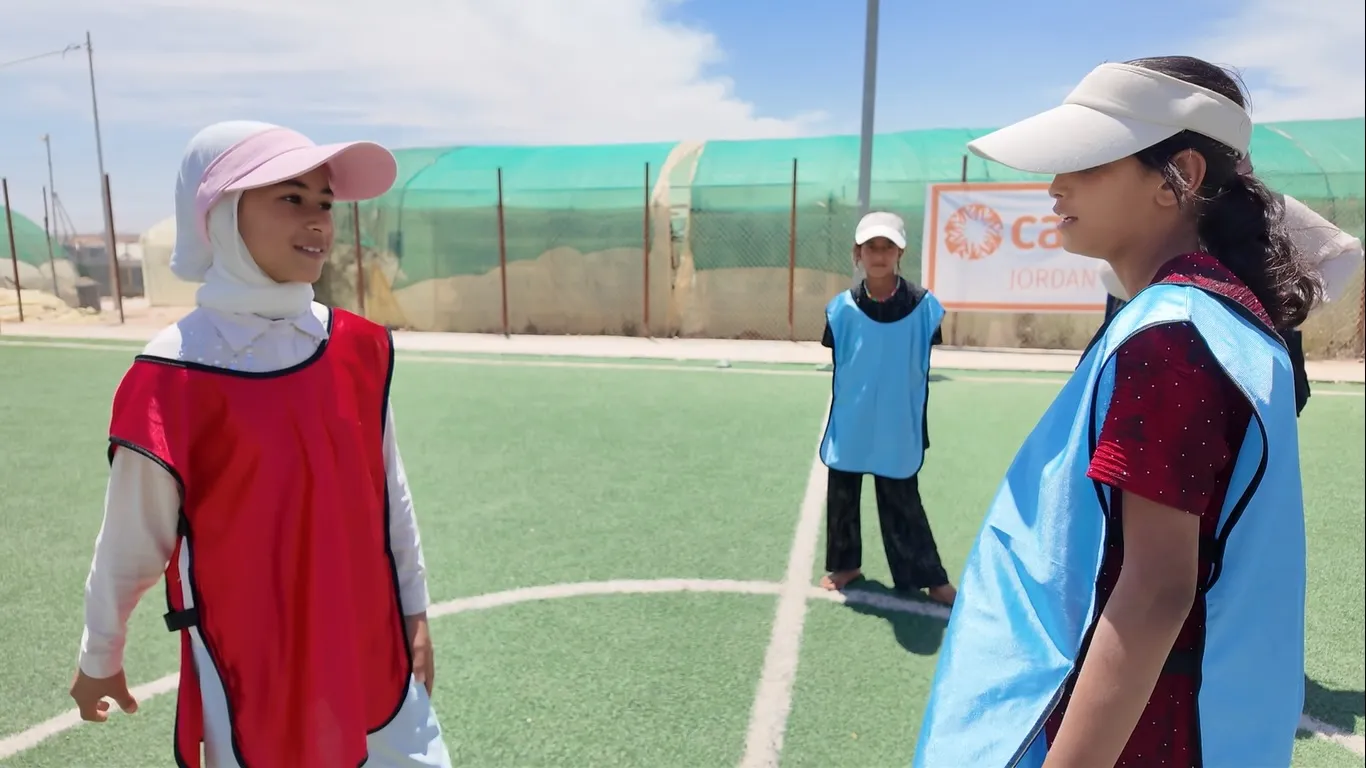
Two young girls stand looking at each other on a soccer field.
“It wasn’t easy to find a place to practice this sport because most of the pitches and sports activities were dedicated to boys." - Norhan, 12-year-old Syrian refugee.

For Norhan, a Syrian refugee who came to Azraq camp as a toddler, it’s a chance to chase her dream of being a professional soccer player.  

Penalty kicks, corner kicks, and any plays near the goal are Norhan’s favorite things about soccer. She’s a natural striker, who is always looking for ways to create scoring opportunities. But she hasn’t always had the opportunity to play the game she loves.

It wasn’t easy to find a place to practice this sport because most of the pitches and sports activities were dedicated to boys,” she said in a video produced by CARE Jordan. “But when I discovered the CARE organization’s pitch, I finally had dedicated time to play. 

Suhaib Al Jeezawi, CARE Jordan’s community coordinator, says the sports programming at the camp is providing much more than exercise for the girls, and their families.  

It’s a safe space. We invite parents to come see and encourage the girls to play,” said Al Jeezawi. “Parents and community leaders in the camp see the impact in the confidence and self-esteem in the girls.” 

When people support us, there’s a lot of confidence,” said Norhan.  

Recent funding cuts forced CARE to shut down sport activities for about a year, but four months ago, CARE was able to resume the programs. With the pitches open again, these budding athletes can pursue their own dreams of one day playing on the world stage.

Shift on the pitch

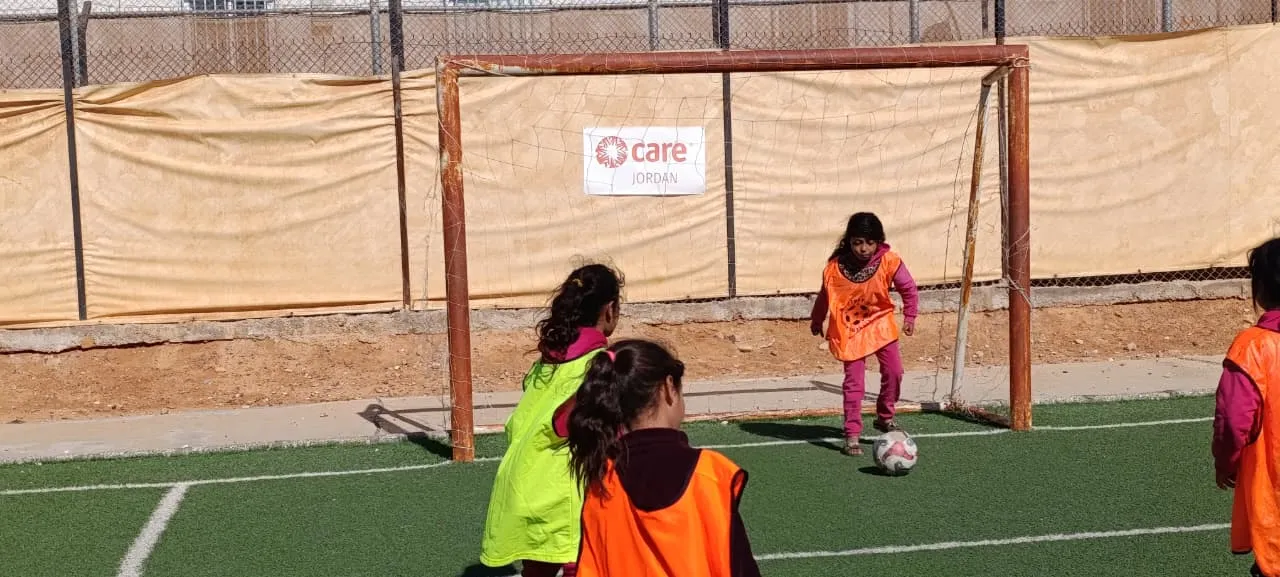
Girls playing soccer
Around 100 girls are participating in CARE's soccer program in Azraq which had to shut down for a year because of funding cuts. Photo: CARE.

Soccer culture in Jordan is largely built around men and boys, but Heba sees a shift happening. 

It is built and dedicated for boys, but it’s not the current situation,” she told us. “There’s more encouragement between girls for soccer nowadays.” She hopes the support for girls’ athletics continues, saying it needs to expand to be at a “bigger scale.” 

Jordan’s World Cup team is generating a lot of excitement across the country, but the Men’s National Team has some high expectations to live up to. The Jordanian Women’s National Team are the current West Asia Football Champions 

“That motivated the men to actually follow the dream, because the females did it first here in Jordan,” said Najati Al Huneidi. 

Norhan is very proud of the Jordan World Cup team and gave some advice to them and players everywhere.  

Take all the opportunities to go after your dreams and don’t let boundaries limit your ambitions.”  

Norhan is now almost the same age as Heba was when she arrived at Azraq. But Norhan is experiencing the shift in soccer culture firsthand. She has a woman coach who is teaching her soccer is more than a game. It’s a chance to move freely, build confidence, support others, and imagine what comes next.

As Jordan steps onto the World Cup stage for the first time, Norhan, Heba, and their teammates are carrying that same spirit forward and showing everyone the true meaning of AlNashama: courage, dignity, and togetherness.

CARE has been working in Jordan since 1948 to meet the needs of refugees and displaced persons who had been forced to flee their homes in Palestine, as a result of the 1948 Arab-Israeli war and the subsequent creation of Israel. 

Today, Jordan continues to be a safe haven for many people fleeing conflict, and supporting displaced communities is a central part of our work in the country.  

CARE International works at the Azraq refugee camp to meet the needs of close to 35,000 refugees who have fled from Syria. It’s estimated that there are hundreds of thousands of refugees in Jordan who have fled from violence and insecurity in Iraq and the Syrian conflict. 

In addition to refugees, CARE International focuses on assisting poor farmers and women, all affected by conflict, economic disparity, discrimination, or a fragile resource base. Economic participation of women remains lower in Jordan than in other countries in the region despite comparatively higher educational attainment. Traditional values that restrict women’s rights are compounded by discrimination in the workplace. 

Back to Top