Sudan humanitarian crisis: When roads become impassable, help cannot wait

By Shakir Elhassan and Hillol Sobhan August 19, 2026

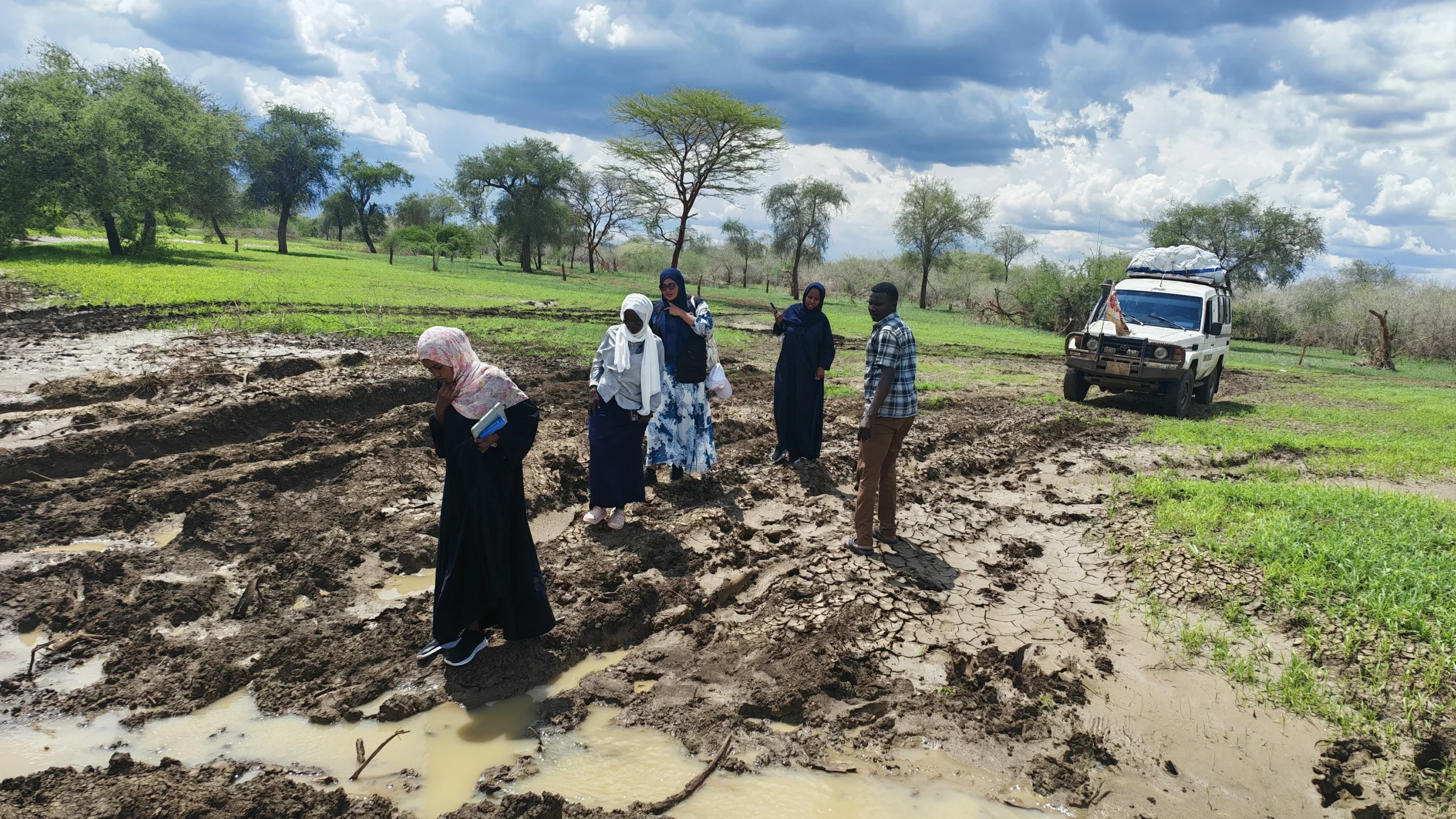
Four female CARE Sudan team members and a male colleague walk on foot through deep mud toward their vehicle under stormy skies while traveling to deliver cash assistance in South Kordofan.

CARE staff make their way on foot through mud after their vehicle got stuck, on their way to deliver cash assistance in South Kordofan. All photos: CARE Sudan

“I am glad that the cash team made the tough journey to reach us. Now I have hope that I will buy the seeds I need to produce food for my large family,” said Hawa, 48, a mother in South Kordofan, where conflict and seasonal rains have turned roads to mud, deepening Sudan's humanitarian crisis and cutting off aid.

Hawa lives with her family in Abu Noura village, in South Kordofan — one of Sudan’s states — about 31 miles from the town of Abu Jubayhah. Getting there isn’t easy.

Hawa is struggling to feed her family. Food prices have skyrocketed during the lean season, and the sweltering heat signals the rains are close behind. She hopes she can get assistance in time to plant her small farm and buy food for her family.

South Kordofan, a southern state along the border with South Sudan, remains among the states hardest hit by Sudan’s humanitarian crisis. Conflict, mass displacement, and blocked access to aid have worn the region down.

Fighting between the Sudanese Armed Forces (SAF), the Rapid Support Forces (RSF), and affiliated armed groups has intensified across parts of the state, especially around Kadugli, the state capital, and Dilling. Families are displaced again and again, and basic services keep breaking down.

South Kordofan hosts an estimated 385,850 internally displaced persons (IDPs), according to International Organization for Migration (IOM) reports on displacement in the area.

IOM reports that the renewed escalation of conflict in the region since October 2025 has triggered more than 219,000 new displacements across the three states by June 2026 — with South Kordofan absorbing a significant share of them.

“Humanitarian needs are immense, and we are doing our best to support vast numbers of struggling people in South Kordofan with food, access to health, and WASH [water, sanitation, and hygiene] services, cash assistance, and enabling under-resourced families to access livelihood opportunities despite the huge operational and security challenges,” said Yousif Abdelhakam from the CARE Sudan office.
Cash assistance becomes a lifeline amid Sudan’s humanitarian crisis

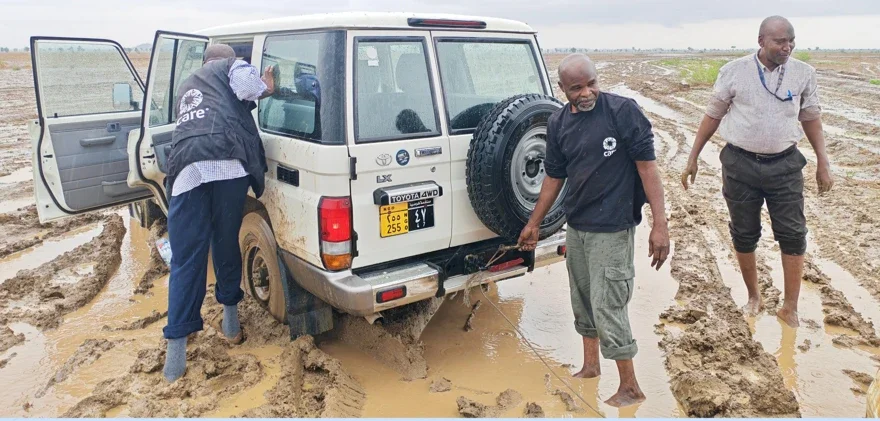
Three CARE Sudan staff members work to free a mud-stuck 4x4 vehicle on an impassable road during the Sudan humanitarian crisis in South Kordofan.
CARE Sudan staff work to free their 4x4 vehicle from the mud while trying to reach the people we work with in South Kordofan.

“Sometimes, when our 4×4 vehicle gets stuck in the mud and we spend hours pulling it out, we think of giving up, but when we remember the people waiting for us, we find more courage to push hard to move the vehicle out,” said Amna Gareeg, a cash team volunteer with CARE.

Thousands of people like Hawa depend on cash assistance to buy seeds and tools they need to cultivate food for their families and get income. However, delivering assistance, including cash, is a tough task in the remote areas of South Kordofan, especially during the rainy season when roads become impassable.

CARE Sudan teams selected Hawa’s village for cash assistance, prioritizing the most at-risk households, including female-headed families, widows, internally displaced people, and people with disabilities. Reaching her and hundreds of other families was still a real challenge during the rainy season.

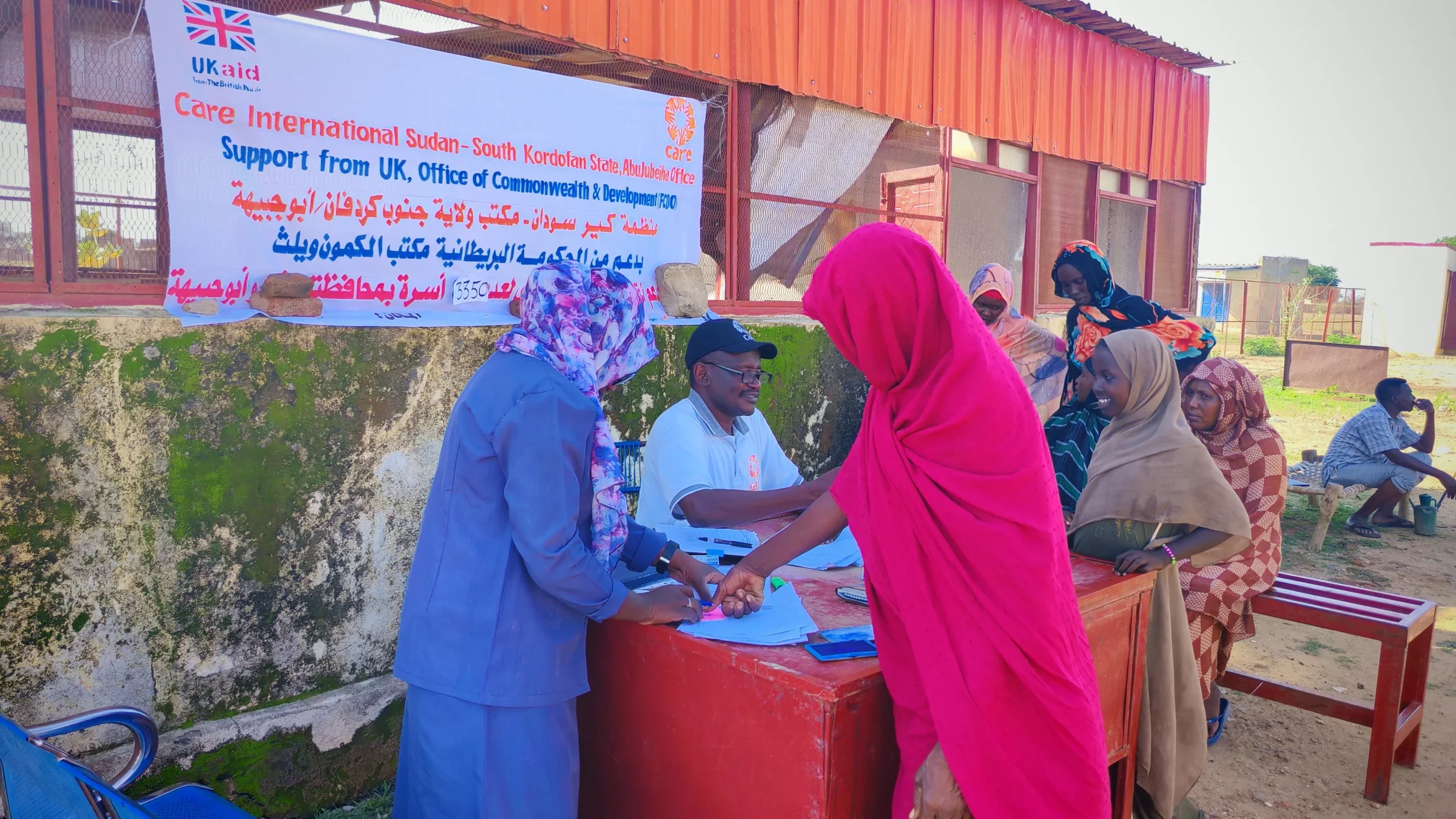
Hawa, seen from behind to protect her identity, gives her fingerprint to register for cash assistance at a desk in Abu Jubayhah, South Kordofan, while other community members wait nearby.
Hawa gives her fingerprint to register for cash assistance at the CARE office in Abu Jubayhah, South Kordofan.

“As a team, we were aware that this mission would not be easy due to security challenges, the harsh nature and poor road conditions. The journey that usually takes two hours during the dry season could take us two or more days during the wet season,” said Ahmed Mohammed Hassan, a CARE cash officer.

Multipurpose cash assistance in South Kordofan supports villagers who lack access to work, health services, and clean water. Without proper sanitation facilities, many face serious health hazards from open defecation, especially during the rainy season.

Hawa also worries about others in her village. “We are struggling to help our children eat enough. I know some other villagers are patiently waiting for cash assistance to buy medication for illnesses that cannot wait,” she said.

Seeds of hope grow despite the humanitarian crisis in Sudan

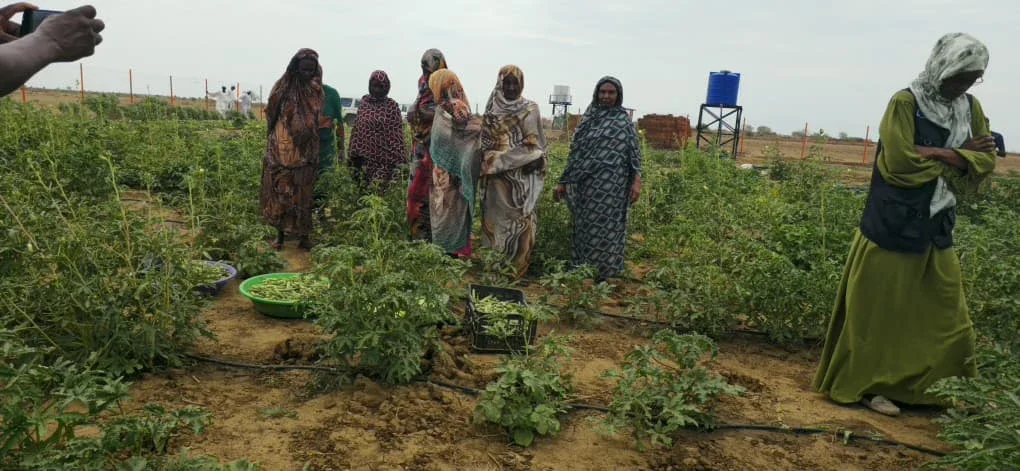
A group of women in South Kordofan, Sudan, wearing patterned headscarves standing in an agricultural field near harvested crops placed in plastic basins and crates.
Members of a women farmers' group in Rashad locality, South Kordofan, harvest okra from their CARE-supported fields.

CARE Sudan supports 16 women farmers’ groups in the area — 30 members each — with improved groundnut and sorghum seeds and agricultural tools.

South Kordofan contains some of Sudan’s most food-insecure populations. The Integrated Food Security Phase Classification (IPC) report and a more recent IPC analysis point to the same concern: the risk of famine remains serious in the state, particularly around Kadugli and Dilling, as conflict, restricted humanitarian access, and disrupted food and livelihood systems compound one another.

“Our support to women farmers in South Kordofan includes technical training on improved cultivation technologies. We continue monitoring their progress in deep cultivation fields despite the huge challenges posed by poor road infrastructure,” said Shukrey Omer from the CARE livelihoods team.

Through Farmer Field and Business School (FFBS) training sessions on demonstration plots, CARE teams continue working with women farmers throughout the season to strengthen their farming knowledge and skills. FFBS is a hands-on, practical learning approach that helps small-scale farmers, especially women crop-cultivators, livestock herders, pastoralists, and fisherfolk, improve their farms and incomes.

“The rain turns the land into mud, and villages become harder to reach; even so, farmers keep working to feed their families despite immense challenges,” said Jerome Olowo, CARE Sudan’s livelihoods and resilience coordinator.

Through the various Women’s Savings Groups, CARE helps women share knowledge and strengthen their financial and farming skills. Some now grow more food for their families. Others sell their surplus for extra income. All of it adds up to more resilience against the next shock.

“Receiving seeds, tools, and technical support was a turning point in my life. I feel valued as I can produce some of the food we eat and get some income to support my extended family,” said Fatima, a member of the women farmers’ groups in Rashad locality, South Kordofan.

Rebuilding a bridge to markets and life amid Sudan’s humanitarian crisis

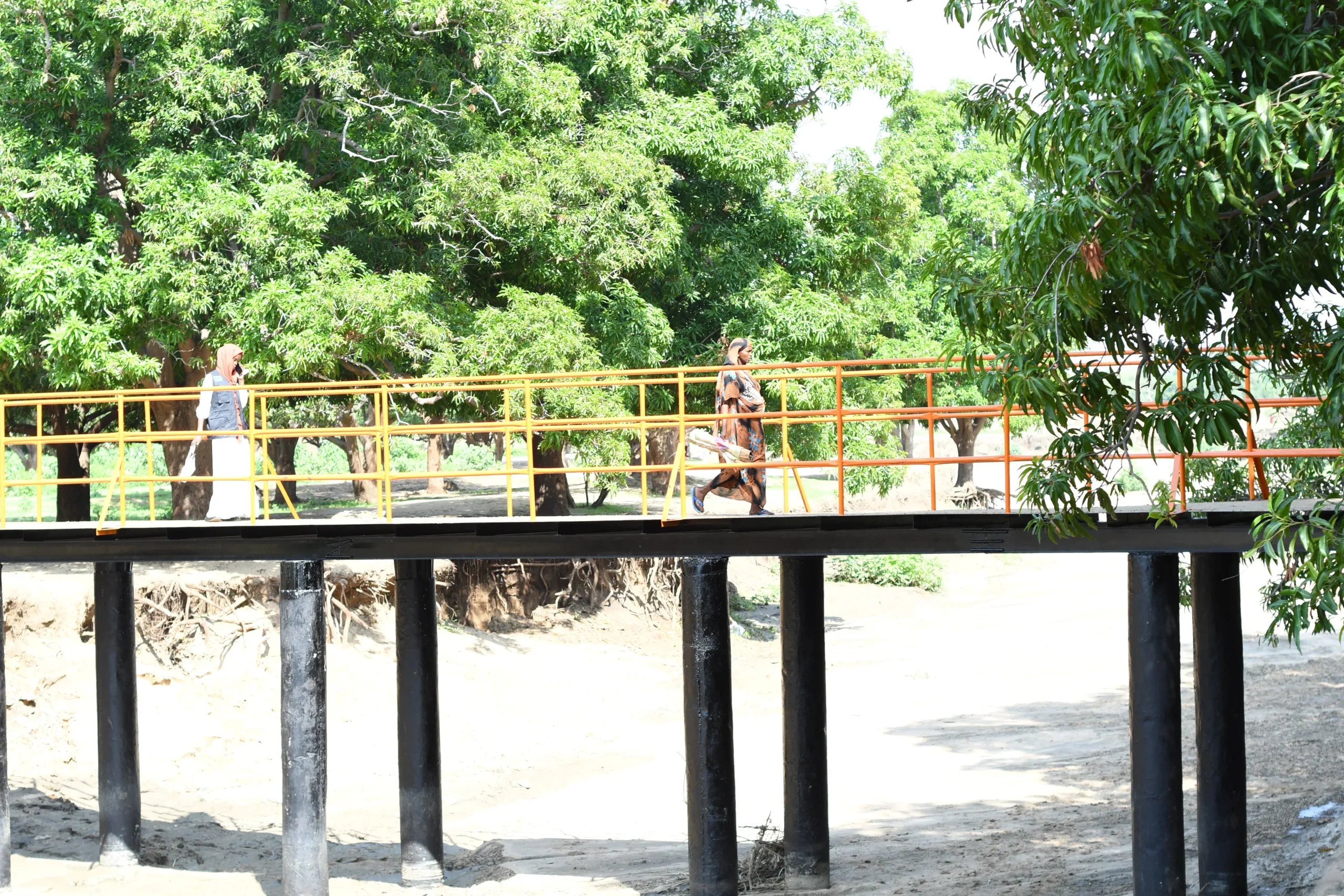
People walking across a newly constructed footbridge with bright yellow and orange handrails, built over a dry riverbed in Alabassiya.
The new bridge CARE Sudan built helps residents of more than a dozen villages in Alabassiya access markets and other services.

South Kordofan is known for its large agricultural production, especially fruits, groundnuts, and sorghum. But farmers and traders often can’t reach markets or their own fields — poor roads make sure of that, especially once the rains come.

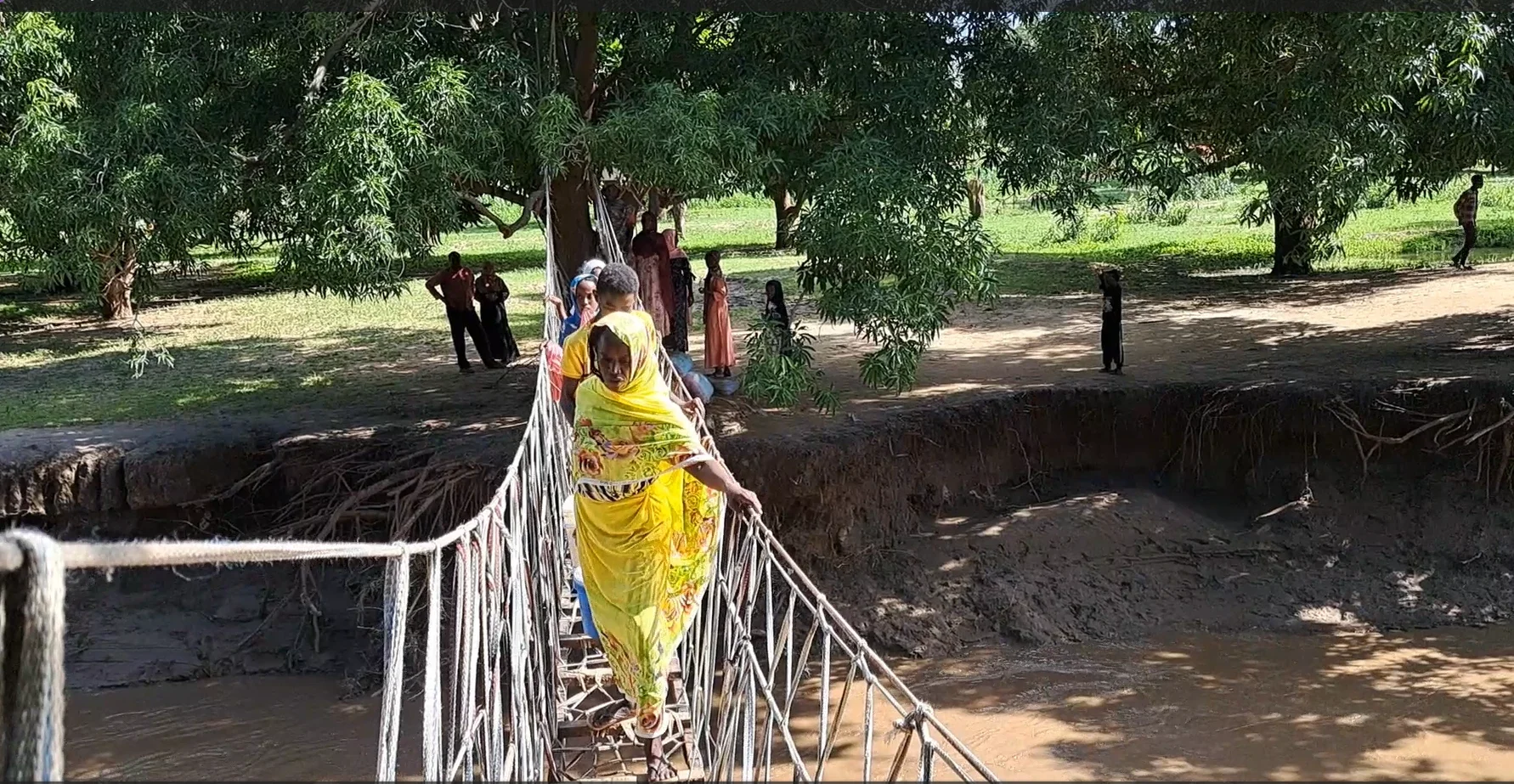
To help farmers, traders, and residents access markets in the hard-to-reach areas of Alabassiya, CARE rehabilitated a bridge that had originally been built from local materials, reconstructing it with concrete for greater durability.

A woman in a bright yellow wrap carefully crosses a narrow, makeshift footbridge suspended over a murky river in Alabassiya, South Kordofan.
A resident crosses the old bridge, built from local materials, which once proved difficult and dangerous during the rainy season.

“The old bridge was difficult to cross, especially during the rainy season, and many children and women lost their lives trying to do that. Now it is easy to cross and access markets and hospitals without fear; this has made the lives of more people living in more than 13 villages easy and safe,” said Hosna, 36, a woman farmer from Alabassiya.

The new bridge is already paying off. Trade is picking up, short-term jobs opened up during construction, and people can reach clinics and markets they once had to risk their lives to cross.

Funding shortfalls deepen the Sudan humanitarian crisis in South Kordofan

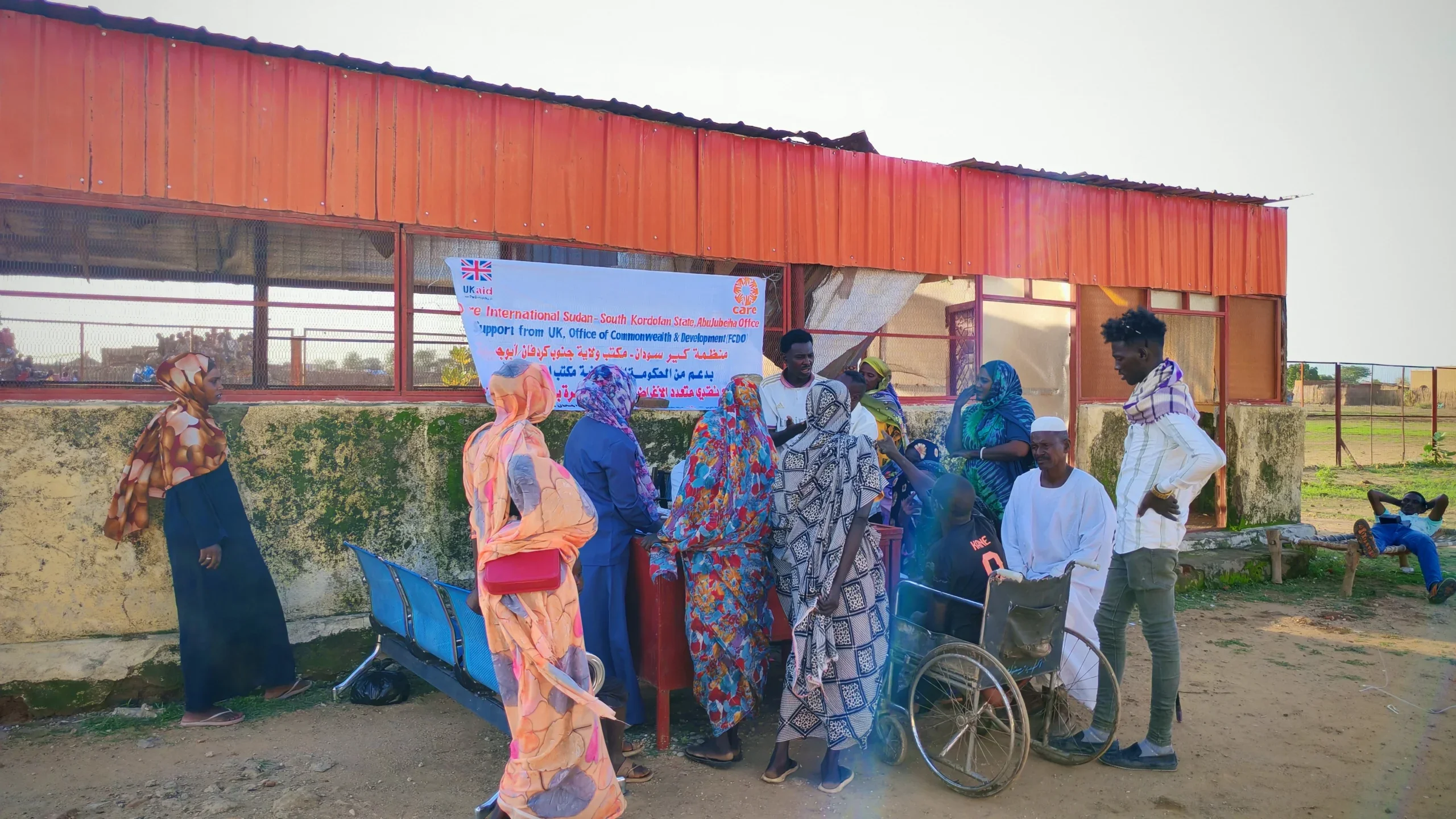
A diverse group of community members, including a man using a wheelchair, gather to register for multipurpose cash assistance at the CARE office in Abu Jubayhah, South Kordofan.
Community members register for cash assistance at the CARE office in Abu Jubayhah, South Kordofan, a lifeline for families caught in Sudan's humanitarian crisis that funding shortfalls now put at risk.

Sudan’s humanitarian response is facing a critical funding gap just as needs are climbing to levels not seen in years, especially in food-insecure areas like South Kordofan.

The 2026 Sudan Humanitarian Needs and Response Plan requires US$2.87 billion to aid people in need across the country. As of August 2026, only around US$1,173.4 million — less than 50% of the required funding (40.9%) — had been received.

This shortfall is already forcing humanitarian organizations to make hard choices about which life-saving services survive. Millions of people are left facing hunger, displacement, disease, and a lack of access to basic services.

“Aid workers in South Kordofan continue to serve some of the most at-risk communities despite extremely challenging conditions, particularly during the rainy season when poor road infrastructure severely restricts access,” said Hussein Araban, CARE Sudan deputy country director. As humanitarian needs continue to grow, Araban said, CARE calls on donors to provide urgent and flexible funding to ensure life-saving assistance reaches those who need it most and to prevent further deterioration of an already critical situation.

CARE in Sudan: CARE has worked in Sudan since 1979, providing humanitarian assistance and long-term development support. Today, CARE operates in South Kordofan and several other states, focusing on emergency aid, food security, health, and support for women and girls affected by conflict and displacement.

Support humanitarian workers around the world

Around the world, CARE staff continue serving families through conflict, disasters, and crises. Your help makes that work possible.

Donate now.
Back to Top