World Humanitarian Day: In Lebanon, aid workers are also survivors

By Sarah Easter and Becca Mountain August 18, 2026

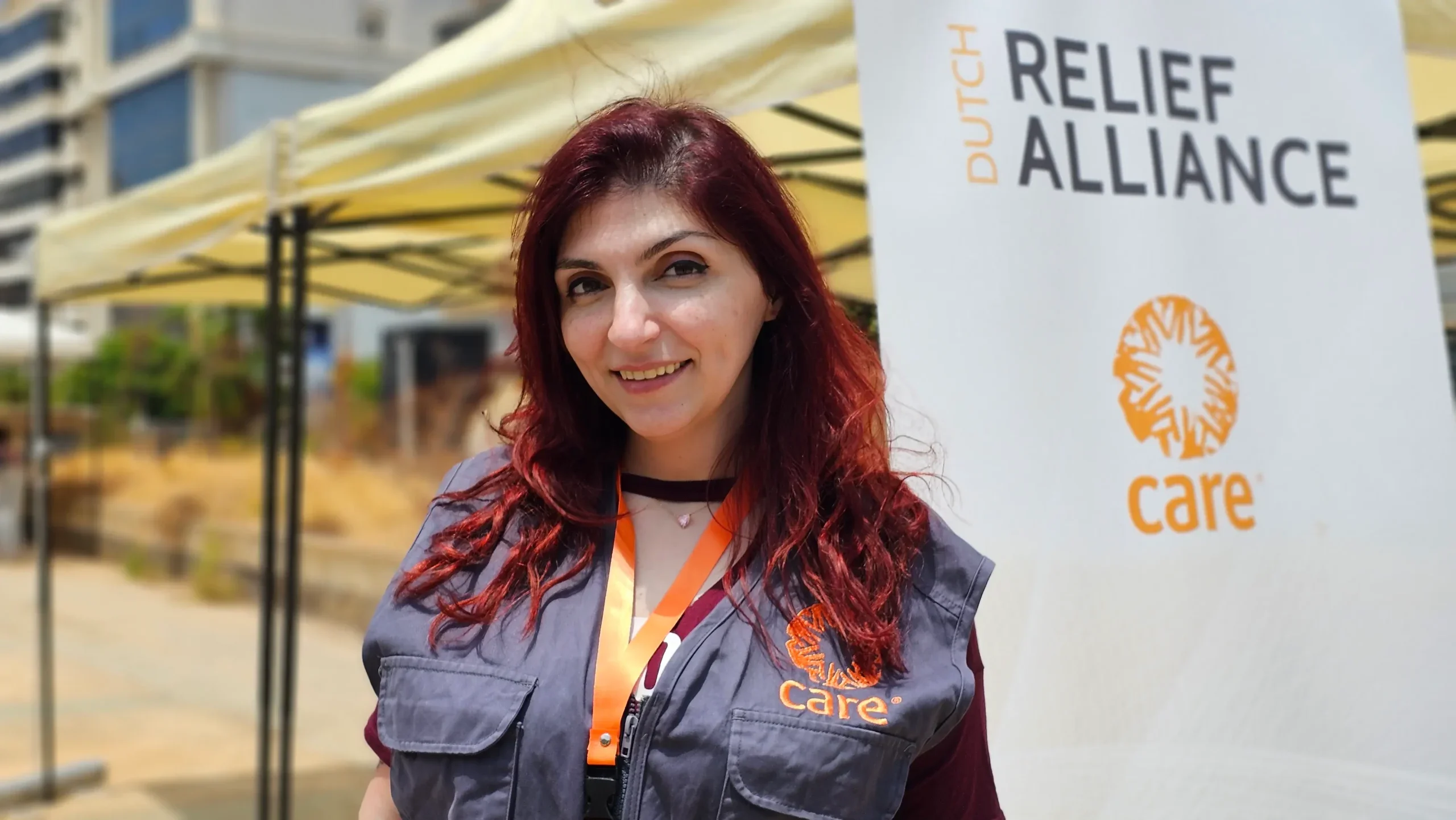
Woman aid worker in Lebanon smiling into the camera.

"Helping others eases the guilt of being safe when so many others are not,” says CARE Lebanon humanitarian worker Hiba Jaber. “So, I do what I can to give back." All photos: Sarah Easter/CARE.

Around the world, the people delivering humanitarian assistance are often living through the same crises they are responding to. On World Humanitarian Day, Hiba’s story from Lebanon offers a glimpse into what it means to help others while navigating displacement, trauma and bombardment yourself.

The humanitarian workers delivering emergency assistance in Lebanon are living through the same war as the families they support.

Hiba Jaber is one of them.

She spends her days helping displaced families find safety, cash assistance, and protection. At night, she worries about the next airstrike, sleeps little, and comforts her own children through the sound of bombs.

“I lived through five wars,” Hiba says, counting them on her fingers. “I know what war is. I know what displacement is. I know what it means to lose everything. My earliest memory is of my father carrying me down the stairwell to a safe room.”

Hiba has worked in humanitarian response for 13 years, including the last two with CARE. Since conflict along Lebanon’s southern border escalated in 2023 and intensified in 2024, hundreds of thousands of people have been forced from their homes, including many humanitarian workers. The UN estimates that 620,000 women and girls have been displaced since March 2026.

Every day, Hiba and other CARE teams in Lebanon meet families trying to rebuild their lives. CARE helps provide emergency cash assistance, protection services, and other support for families affected by the conflict.

Originally from Nabatieh in southern Lebanon, one of the areas hardest hit by the conflict, Hiba has lived in Beirut since 2017. A family home in southern Lebanon was severely damaged. Another is still standing, but there is no running water or electricity. Her mother, brother, and sister now live with Hiba, her husband, and their two young sons.

“You cannot live in a damaged home,” she says. “There are no open supermarkets, and the attacks are still happening.”
Raising children during the conflict in Lebanon

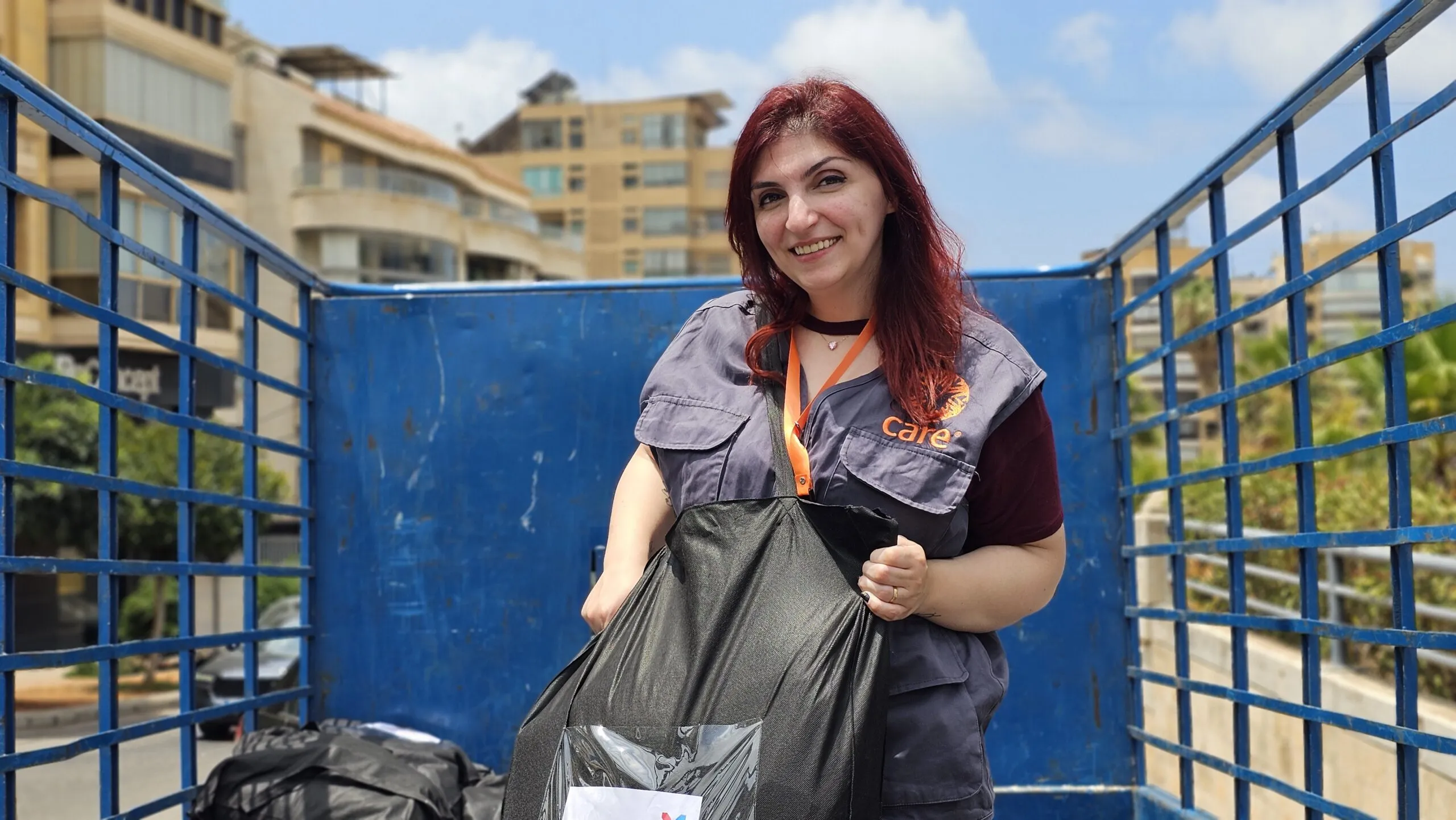
A woman humanitarian worker in Lebanon moves dignity kits at a distribution event.
Hiba tries to manage the competing strains of being a mother to two young boys while also continuing to serve her community through her work with CARE.

Loss is not new to Hiba. In August 2020, the Beirut port explosion destroyed much of the building where she lived. She persevered and rebuilt her life in another part of the city.

Then war uprooted her family once again.

“It hits differently when you’re the mother of young children and war breaks out,” she says. “I was scared to leave my children at home, but I had to go to the office and keep working. I am a frontline worker. I am needed, but my sons need me as well.”

When the conflict escalated, she and her family had to flee again.

“I didn’t know where to go. I had my baby in my arms, and there was smoke everywhere. I didn’t know where to turn: the bathroom, the stairs, or the street. The voices were so loud.”

Hiba doesn’t describe the cacophony as sounds. She calls them “voices.”

“You hear the plane coming above you. You hear it firing. You don’t know what will be hit. Then you hear the hiss of the missile flying through the air. The loud boom of the impact. Then the building collapsing.”

She pauses.

“I feel those voices throughout my whole body. I tense up and think, ‘I’m going to hear them again. It’s coming.’ And then I do.” She pauses, then says, “I’ve lived through war before. But when it started again in 2024, I couldn’t bear the voices.”

Now, her sons are beginning to hear those ‘voices’ too.

“When the bombs fall, my three-year-old says, ‘Mommy, Mommy, it’s thunder.’ And I tell him, ‘Yes, it’s thunder.’ Then he looks out the window and asks why there isn’t any rain. So, I tell him maybe it’s fireworks. He’s too young to understand war.”

She remembers being that innocent.

“Whenever there was fighting when I was little, my father would bring the mattresses into the hallway and lay them side by side. We all slept there together. I felt safe. It’s one of my good memories because I didn’t understand what war was then.”

Today, she is the one trying to create that same feeling of safety for her children.

Supporting displaced families while living through war

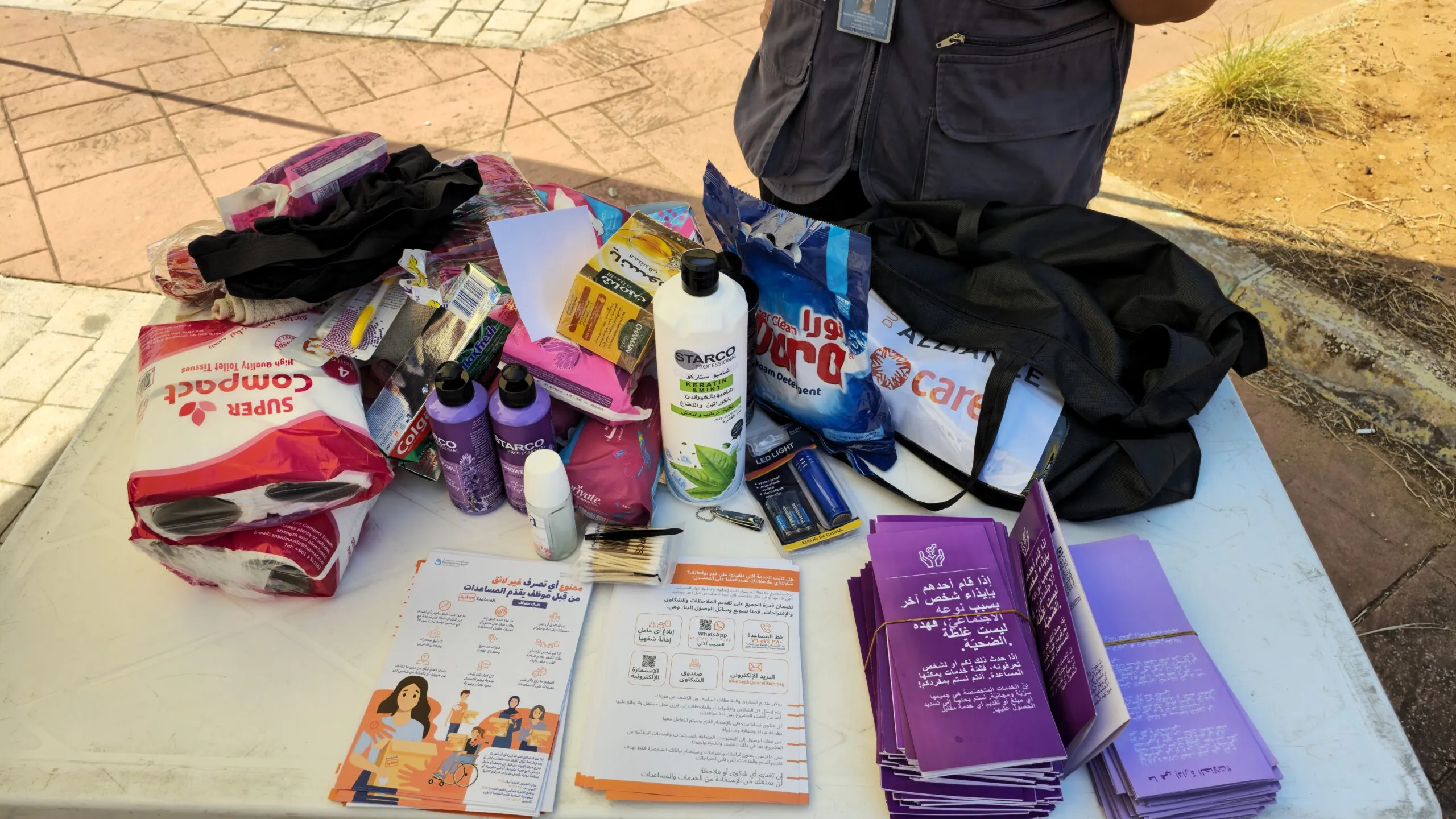
An array of dignity items from a distribution in Beirut, including menstrual supplies, hygiene supplies, and more.
Part of CARE Lebanon's work is distributing dignity kits like these, which include essential hygiene and comfort items people might not prioritize when fleeing their homes or seeking safe shelter.

The next morning, Hiba goes back to work.

“When you’re living through war, you have to go into survival mode if you want to keep helping people.”

In Lebanon and other places around the world, many CARE staff have been displaced and are now balancing concern for their loved ones while helping others access safety, food, shelter, cash assistance, and protection.

For Hiba, those two realities are impossible to separate. She remembers a distribution on a beach where displaced families had set up temporary shelters because there was nowhere else to go.

“Just a few hours later, that exact beach was bombed during the night.”

The thought still haunts her.

“We were so worried about the people staying there. Families had only a thin tarp between them and the bombs. Some were sleeping on the sidewalk with nowhere else to go. We had phone numbers for some families, so we called to check on them.”

The work takes a mental, physical, and emotional toll on humanitarian workers. CARE has introduced wellbeing sessions for staff — a chance to paint, work with clay, draw, or simply talk for an hour.

“One task was to draw something that represents us. I drew a cup of coffee,” Hiba says with a laugh. “I’ve started drinking a lot of coffee since the war escalated. When you can’t sleep because of the bombings or the constant buzzing of drones, caffeine is the only way I can function the next day.”

Working with people who have experienced the same trauma she has is both a burden and a source of strength.

“Helping others eases the guilt of being safe when so many others are not,” she says. “So, I do what I can to give back.”

Returning home after displacement

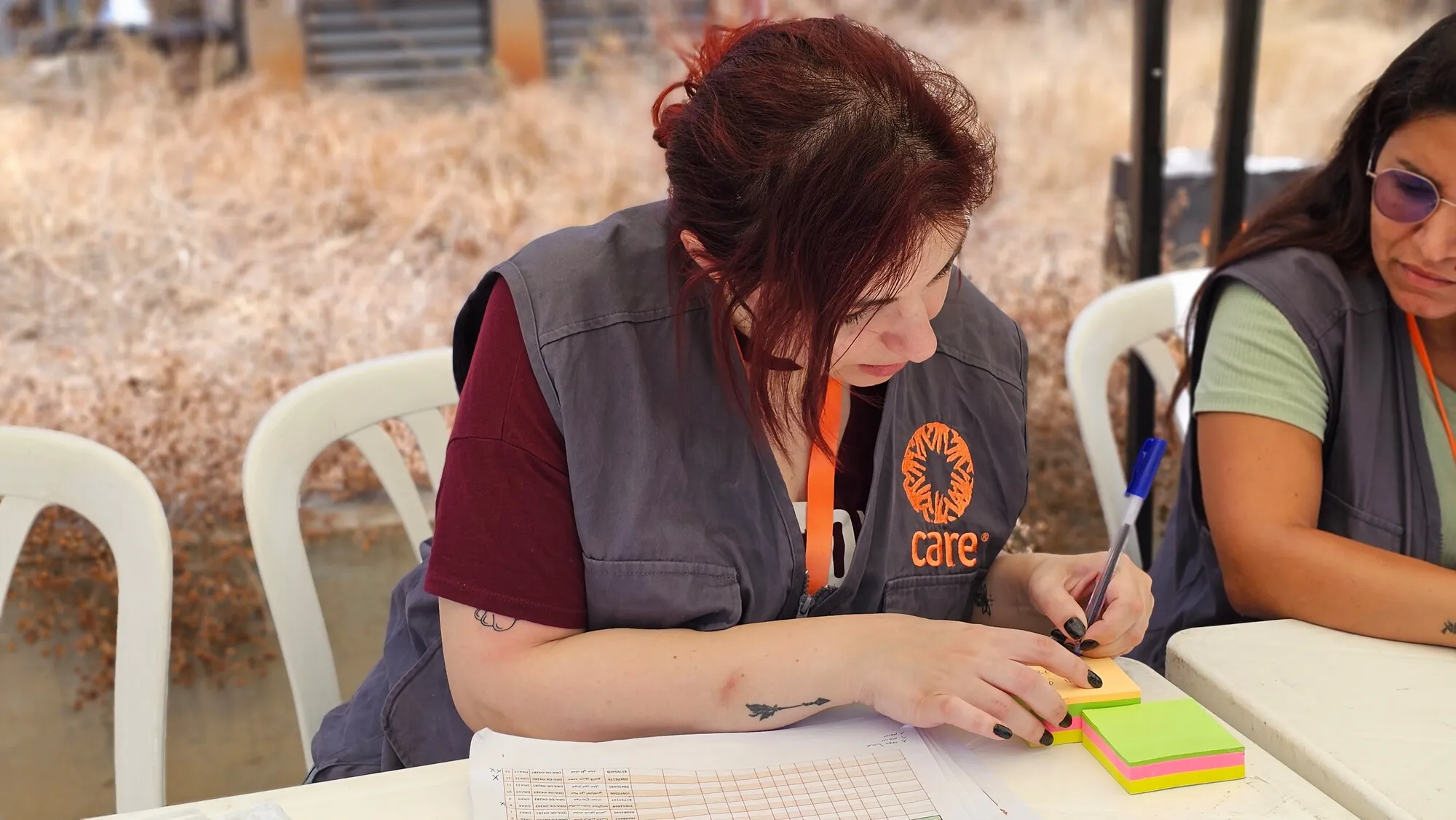
A woman humanitarian worker takes notes during a distribution event in Beirut, Lebanon.
Originally from Nabatieh, Hiba now lives and works in Beirut. She and her family have been displaced numerous times over the past several years.

That feeling truly came into focus during a distribution at a school-turned-shelter in Beirut.

“A woman asked if I was from Nabatieh. She said, ‘You used to come and buy shoes from me.’ She remembered me from when I was younger.”

For a moment, the distance between aid worker and displaced person disappeared.

“Meeting her was very hard. Now I’m the one assisting her.”

Soon, Hiba plans to return to Nabatieh to support another aid distribution.

“Going home will destroy me,” she tells us. “Seeing all that destruction and my neighbors suffering.”

She has returned only once since the ceasefire.

“I grabbed only summer clothes and some childhood photos. Then security told us we had to leave immediately. We could hear the bombs falling behind us as we drove back to Beirut.”

When Hiba thinks about home, she remembers not only what has been lost, but what existed before.

“We had rivers. Beautiful scenery. Hiking trails. Historic houses. It was like a city and a village at the same time. We had a beautiful life there.”

What keeps humanitarian workers going

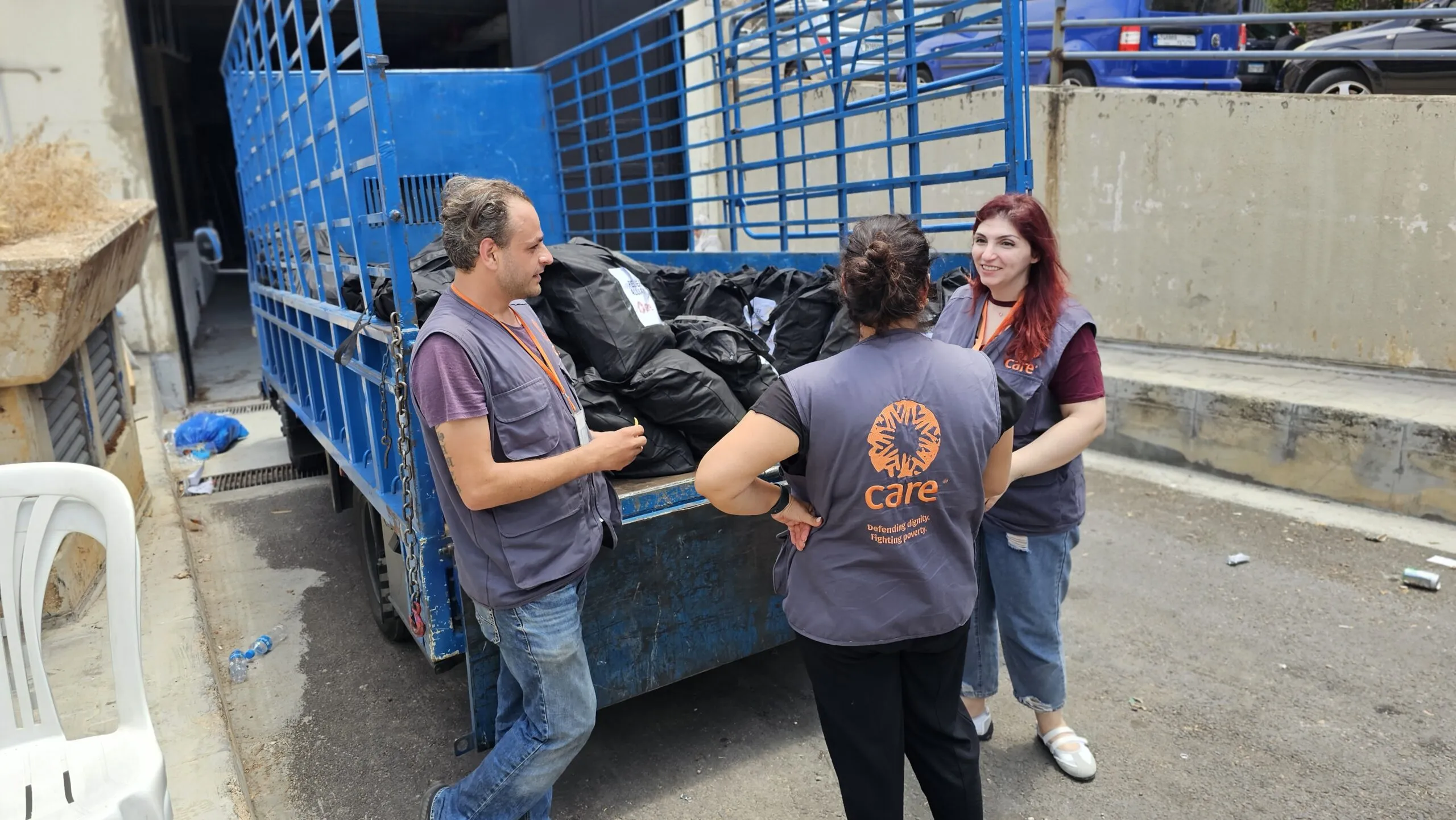
Three CARE humanitarian workers in Lebanon distribute dignity kits.
Hiba and her colleagues, like countless humanitarian workers around the world, remain committed to their mission despite living through the same crises as the communities they serve.

Despite everything she has experienced, Hiba hopes her children will grow up knowing a different life.

“I want my sons to have an easier childhood than I had. War leaves scars and a deep pain that I can’t describe.”

She also thinks about the women she meets through her work.

“We Lebanese have a very high tolerance because we’ve had to. We haven’t had a break since 2019. Especially women and mothers — we must have superpowers.”

After a pause, she adds, “We worked so hard to build our lives. No one has the right to take that from us.”

That determination gets Hiba through another sleepless night and back to the families who need her the next morning.

“As women, we have the power to carry this pain on our shoulders and keep going.”

Hiba’s experience reflects the reality many humanitarian workers face in Lebanon: responding to emergencies while navigating the same dangers, losses, and uncertainty as the people they serve.

On World Humanitarian Day, Hiba’s story reflects a growing reality in humanitarian crises around the world: the people delivering emergency assistance are increasingly the same people displaced, grieving, and rebuilding alongside the communities they serve.

Since 2006, CARE has worked in Lebanon to support people affected by conflict and displacement.

Today, CARE works alongside local partners to serve Lebanese communities, refugees, migrant workers, and families displaced by conflict. Our programs address urgent needs like access to food, clean water, sanitation supplies, shelter, health care, and protection, while helping people strengthen their livelihoods and economic security amid ongoing instability.

Women and girls are at the center of CARE’s work in Lebanon. We work to improve their access to essential services, reduce the risks they face during emergencies, and expand opportunities for women to earn an income and take part in decisions that affect their lives.

Support humanitarian workers around the world

Around the world, CARE staff continue serving families through conflict, disasters, and crises. Your help makes that work possible.

Donate now.
Back to Top